Category Archives: History

General Franco’s Intentions in the Second World War

By Kyle Orton (@KyleWOrton) on 25 June 2021

Writing recently about the first meeting between Adolf Hitler and Francisco Franco at Hendaye on 23 October 1940, where the Führer tried to enlist Spain into the Axis, I concluded, drawing on Franco: The Man and His Nation by George Hills, a former BBC journalist and Fellow of the Royal Historical Society:

Continue reading

Dating the Gospels

By Kyle Orton (@KyleWOrton) on 19 June 2021

The dates that the four canonical Gospels of the New Testament were composed has a great impact for Christians, of course, but also for historians, particularly on the matter of whether Jesus ever existed, and really for everybody living in the civilisation this religion has built. Continue reading

Franco and Hitler: A Meeting and its Consequences

By Kyle Orton (@KyleWOrton) on 17 June 2021

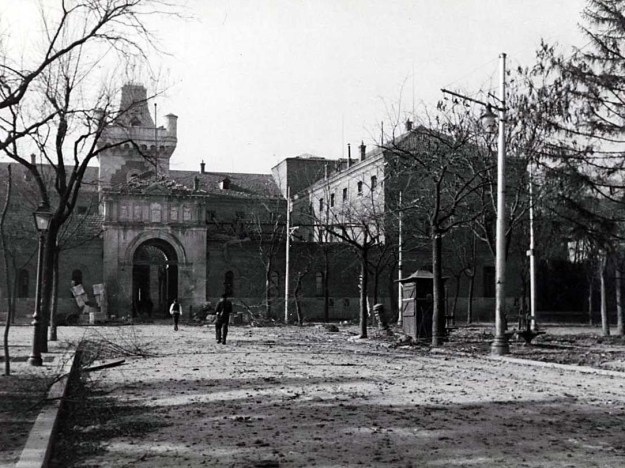
By the autumn of 1940, the entirety of Western Europe except Spain and Portugal lay under Nazi control, as did much of the Centre and parts of the East: Austria, Czechoslovakia, Poland, Denmark, Norway, the Netherlands, Belgium, Luxembourg, and France had all fallen without serious resistance, and Britain’s refusal to take the German offer of leaving the Continent to the Nazis and the Nazis would leave the British with India had incurred the wrath of the Luftwaffe with night after night of air-raids.

It was in this context that a meeting was held, on 23 October 1940, between Adolf Hitler and Spain’s ruler, Francisco Franco. The meeting, taking place at the railway station in Hendaye, within conquered France, on the western-most point of the Franco-Spanish border, was also attended by the foreign ministers, Ramón Serrano Súñer (Spain) and Joachim von Ribbentrop (Germany). The Germans arranged the meeting to try to get Spain into the war, and General Franco attended the meeting intent on refusing—politely. Continue reading

When Did the “Roman” Empire Become the “Byzantine” Empire?

By Kyle Orton (@KyleWOrton) on 12 June 2021

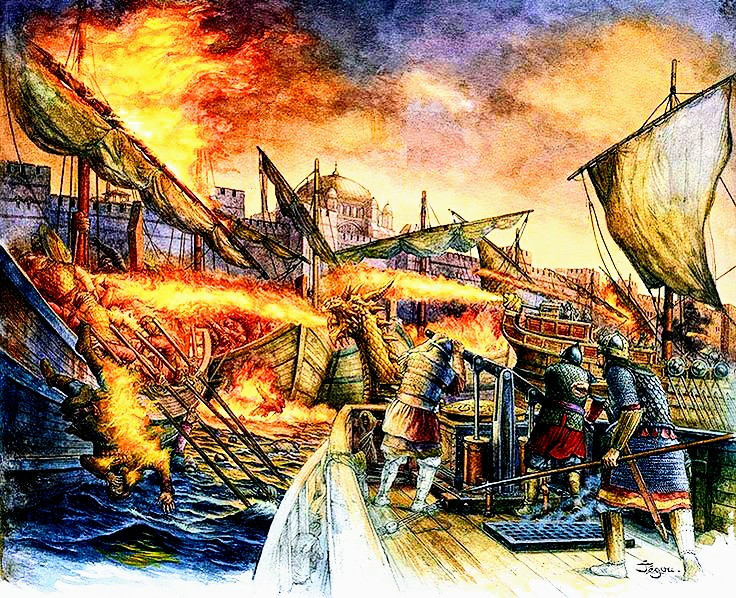
A painting representing the Byzantines use of “Greek fire” to repel the Arab siege of Constantinople, 674-78

The use of the word “Byzantium” for the Eastern Roman Empire is inescapable, though it is best thought of as a term of convenience rather than definition. For one thing, the inhabitants never called themselves “Byzantines”: they always thought of themselves as “Romans”, though using the Greek work “Romaioi”. The easiest way to see the problem is to ask: When did the Byzantine Empire begin? Continue reading

How Many Christians Were There in the Roman Empire?

By Kyle Orton (@KyleWOrton) on 11 June 2021

The numbers on the growth of Christianity in the Roman Empire are very uncertain, but there are enough data points to hazard a reasonable estimate. Continue reading

The History of “Central Europe”

By Kyle Orton (@KyleWOrton) on 7 June 2021

The Idea of Central Europe: Geopolitics, Culture and Regional Identity (2018), by Otilia Dhand, is an engaging and rather ambitious book, a work of intellectual history. Dhand’s core argument is that from the introduction of the term “Central Europe” in the nineteenth century, it did not describe a set geographical zone and the definition was always contested since the term was an attempt to construct local identities, a self separate from some other, as an instrument in the pursuit of geopolitical interests, always revisionist: these were attempts to will something into existence by influencing political behaviour. Continue reading

The Last Coup of the Russian Tsardom

By Kyle Orton (@KyleWOrton) on 29 March 2021

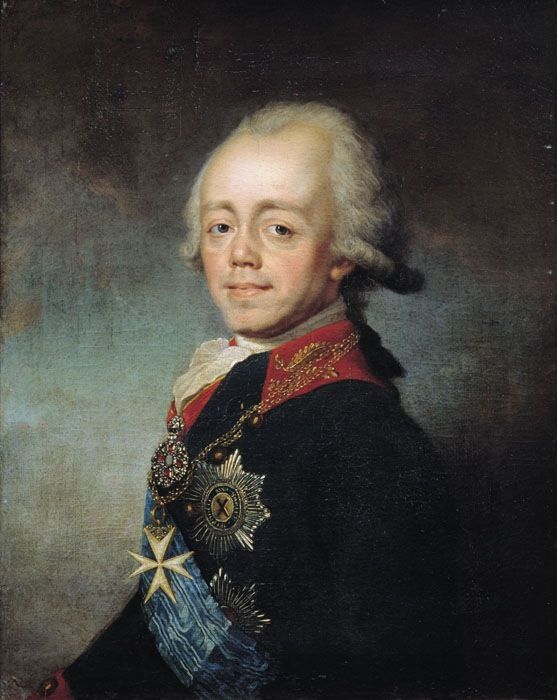
Tsar Pavel I

A few days ago, it was the 220th anniversary of the palace coup that, in the early hours of 24 March 1801, deposed the Russian Tsar, Pavel (Paul) I, the last of the Russian monarchs to fall in this way.[1] Continue reading

The Impact of Plague: From Antiquity to the Present

By Kyle Orton (@KyleWOrton) on 21 March 2021

Almost exactly a year ago, the British government announced the first lockdown to counter the effects of the coronavirus pandemic, and around the same time such measures were adopted in almost every other country. With Britain having now vaccinated nearly half the country, including all of the most vulnerable, and Prime Minister Boris Johnson having set out a timetable for the lifting of restrictions, it is possible to think of the post-COVID 19 situation and to wonder about how or if it will be different to what came before. Continue reading

The Munster Millenarians: Anabaptism and the Radical Reformation

By Kyle Orton (@KyleWOrton) on 21 February 2021

Execution of Jan Beuckelszoon // Illustration in a book by Lambertus Hortensius

In 1534, shortly after the onset of the Protestant Reformation, a radical sect from this new movement, the Anabaptists, seized the city of Munster in Germany and governed it for sixteen months as a millenarian cult in a manner so alarming it managed to bring together Catholic and Lutheran forces to put it down. The experience had a profound influence not only on the development of Anabaptism thereafter, but on the manner in which the Reformation more generally unfolded. Continue reading

The Confrontation that Began the Protestant Reformation

By Kyle Orton (@KyleWOrton) on 28 January 2021

“Luther at the Diet at Worms”, by Anton von Werner, 1877

The Diet of Worms convened 500 years ago today.[1] Four years earlier, Martin Luther had sent his Ninety-five Theses as part of a letter to the Archbishop of Mainz, Albert of Brandenburg. The date on which Luther sent this letter, 31 October 1517, is now celebrated as “Reformation Day”, but the Reformation in a serious sense did not begin until after Luther was summoned before the 1521 Diet of Worms. Continue reading