By Kyle Orton (@KyleWOrton) on August 8, 2016

On 6 July 2016, the Islamic State’s al-Furqan Media released its first video for over a year, which was in English and was entitled, “The Structure of the Caliphate“. Continue reading
By Kyle Orton (@KyleWOrton) on August 8, 2016
On 6 July 2016, the Islamic State’s al-Furqan Media released its first video for over a year, which was in English and was entitled, “The Structure of the Caliphate“. Continue reading
By Kyle Orton (@KyleWOrton) on August 5, 2016
Published at Newsweek
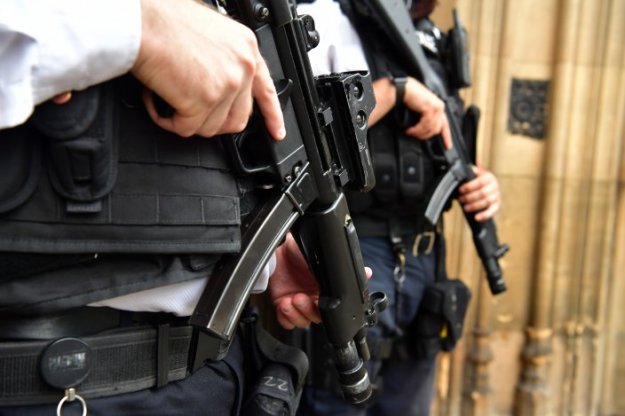
In the past two years, and especially over the last month, the Islamic State militant group has launched a coordinated campaign of terrorism in Europe. Among these recent attacks was the murder of 84 people in Nice by a man who ploughed a truck into Bastille Day crowds, and the brutal killing of a priest in Normandy when two young men stormed a church.
Now, the number of armed police in London, and ultimately across the U.K., is set to increase significantly. These additional forces will patrol landmarks and other areas where large numbers of people congregate. An attack in Britain is “highly likely … a case of when, not if,” according to the commissioner of the Metropolitan Police Sir Bernard Hogan-Howe. A stabbing in the British capital Wednesday is not currently being treated as an extremist act but has underlined the perceived need for an increased police presence. Continue reading
By Kyle Orton (@KyleWOrton) on August 2, 2016
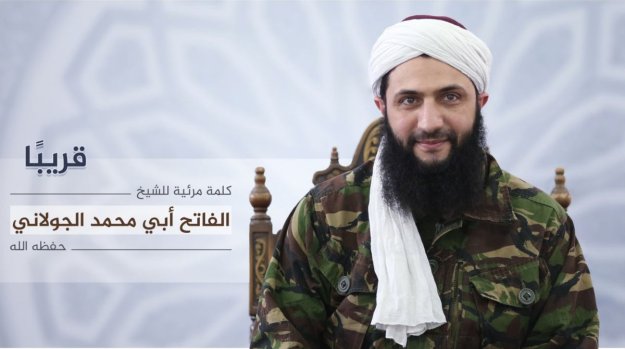
First ever picture of the leader of Jabhat al-Nusra (al-Qaeda in Syria), Ahmad al-Shara (Abu Muhammad al-Jolani), 28 July 2016
The leader of Jabhat al-Nusra (al-Qaeda in Syria), Abu Muhammad al-Jolani, whose real name is Ahmad al-Shara, ostensibly broke the link between his organization and al-Qaeda last week. This is another stage in al-Qaeda’s long-term strategy of embedding itself into local societies so that it can more effectively reshape the faith and shield itself from the international community. Continue reading
By Kyle Orton (@KyleWOrton) on July 29, 2016

A new report by me for the Henry Jackson Society (accessible here) is out today. It looks at those governing the statelet held by the Islamic State in parts of Syria and Iraq, and those who are orchestrating IS’s foreign terrorist attacks, including in Europe. The wave of attacks over Ramadan has been described as a “lone wolf” epidemic by many, but IS is coordinating this mayhem through its Amn al-Kharji, foreign intelligence service, and the report looks at who staffs this institution and the dangers of writing-off these attacks as the work of lone radicals with no connection to each other or IS. Continue reading
By Kyle Orton (@KyleWOrton) on July 29, 2016
Published in The Telegraph

Muhammad Riyad (Wurzburg) [top left], Mohammed Daleel (Ansbach) [top right], Adel Kermiche (Normandy) [bottom left], Abdelmalik Petitjean (Normandy) [bottom right]
The infiltration of IS’s enemies for the purposes of espionage and terrorism, whether this is government-held areas of Iraq and Syria or Western Europe, is led by Amn al-Kharji, the foreign service within IS’s sophisticated intelligence apparatus, as explained in a new report by The Henry Jackson Society. Continue reading
By Kyle Orton (@KyleWOrton) on July 16, 2016
A version of this article was published at Radio Free Europe/Radio Liberty, “Under the Black Flag“
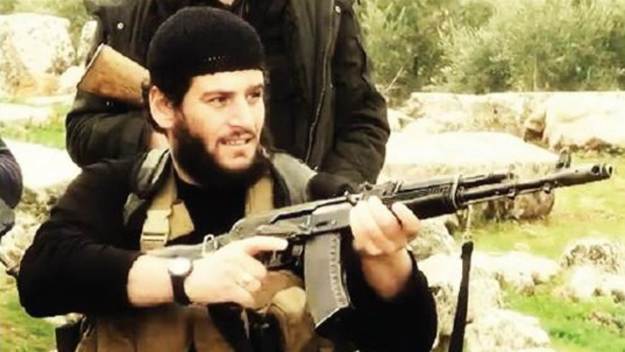
Islamic State’s spokesman and Syrian governor, Taha Subhi Falaha (Abu Muhammad al-Adnani)
The extremist group now known as Islamic State (IS) first claimed statehood, with clear pretentions to a new caliphate, in 2006—and eight years later made it explicit.
“Now the dream has become a reality,” Taha Falaha (Abu Muhammad al-Adnani) said in his speech on June 29, 2014, declaring that the territory IS held in Syria and Iraq constituted the rebirth of the caliphate. “The State will remain.”
Two years later, this looks like an unsafe proposition. Continue reading
By Kyle Orton (@KyleWOrton) on June 29, 2016
The New York Post had a symposium on the progress of the U.S.-led campaign against the Islamic State. This is my contribution:

The American-led effort to defeat the Islamic State is yielding significant tactical and military results. But the campaign is deeply flawed: It’s being waged as if the politics can be worked out after the fall of ISIS’s statelet, and in the process providing ISIS the conditions that will ensure its revival. Continue reading
By Kyle Orton (@KyleWOrton) on June 13, 2016
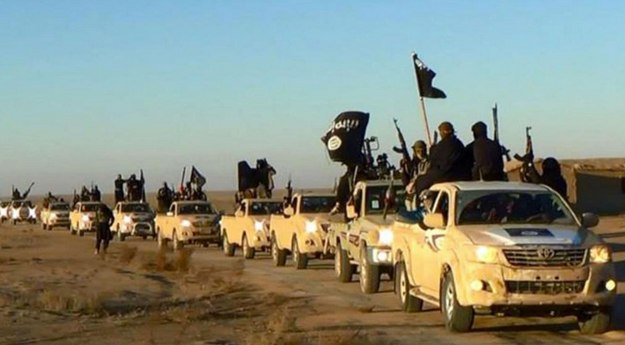
Islamic State convoy, Anbar Province, January 2014
In Libya, the government of national accord (GNA)—in this case militias largely from western Libya, specifically Misrata, and the guards from the oil installations—claimed to have driven the Islamic State (IS) from Sirte on 11 June. Backed by artillery and airstrikes, with tanks moving in on the ground and some street clashes, the GNA-flagged troops had reached the city centre on 9 June. Expelled from Derna in the east in June 2015 and cleared from Sabratha in western Libya after a brief occupation earlier this year, this left Sirte as IS’s only major urban stronghold.
At the end of 2015, IS had controlled about 200 miles of coastline, from Abuqrayn (100 miles west of Sirte) to Nawafaliya (80 miles east of Sirte). On 12 May, an offensive began to take Sirte, coordinated through al-Bunyan al-Marsoos (The Solid Structure) Operations Room. The attack began from the Misratan militias in the west and by late May the eastern front had been opened up. At the end of May, IS lost Nawafaliya, and the collapse of territorial control has been steady since then, with IS now controlling about forty miles of coastline. A Libyan government official was quoted saying, “The battle wasn’t as difficult as we thought it would be.” While this is true—100 pro-GNA troops were killed and 500 wounded—there are reasons to be sceptical of the idea that this is the end for IS in Libya, and not just because IS still holds even areas of the Sirte.
IS had been in occupation of Sirte for almost exactly a year, meaning it has been able to accrue considerable resources, and had between 4,000 and 6,000 fighters in the city—composed of defectors from Ansar al-Shari’a (al-Qaeda), local tribes, elements of the fallen regime of Muammar al-Qaddafi, and operatives from IS core. IS has made a show of resistance, but the number of reported IS casualties is low, and the speed with which IS has fallen back makes such early reports plausible. In combination with the continued politico-military dysfunction of the ostensible governing authorities, this is very worrying.
By Kyle Orton (@KyleWOrton) on June 7, 2016
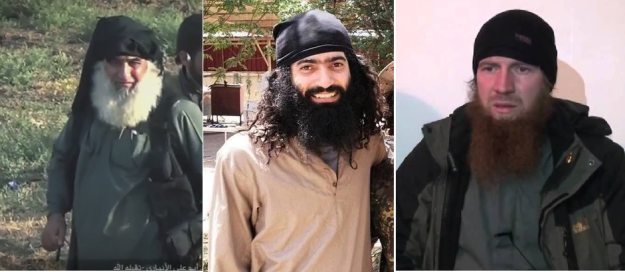
Abd al-Rahman al-Qaduli, Amr al-Absi, Tarkhan Batirashvili
The Associated Press reported on Sunday that after a senior Islamic State (IS) commander was struck down by the international coalition in March it set off a witch-hunt inside the organization that led to the killing of thirty-eight IS jihadists at the hands of their own leaders. By AP’s account, IS is now consumed with internal suspicion. The story has some problems, however. Continue reading
By Kyle Orton (@KyleWOrton) on May 23, 2016

Taha Falaha (Abu Muhammad al-Adnani) is the governor Islamic State-held territory in Syria and oversees the foreign attacks, a roster of duties which indicates that Falaha so powerful that he is effectively the caliph’s deputy after the demise of Abd al-Rahman al-Qaduli (Abu Ali al-Anbari) in March. Falaha is also IS’s official spokesman, and on 21 May 2016 he gave a very significant speech entitled, “That They Live By Proof”. The speech, released by Al-Hayat Media Centre, is reproduced below with some minor alterations in transliteration, some important sections highlighted in bold, and some notes added for explanation.
Falaha made three major points. First, Falaha was especially adamant that territorial control by IS should not be considered a measure of IS’s success: it lost all urban holdings and went into the deserts last time, after the strategic defeat in 2008, but it held to its cause and America withdrew, and this ideological cohesiveness and determination led it to be more powerful than ever within five years. Second, Falaha made use of the savage conduct of the coalition made up of the Assad regime, Iran, and Russia—and the Western indifference to same—to argue for Sunnis to see IS as a protective barrier against such sectarian foes. And, third, Falaha called for foreign attacks by Western Muslims, saying that if IS’s loyalists were unable to journey to IS-held areas this should not be considered a problem since attacks in the West are “more beloved to [IS] than the biggest act done [within the caliphate]”. Continue reading
 Kyle Orton's Blog