Category Archives: Jihadi Biographies

America Sanctions Operatives of the Islamic State’s Chemical Weapons Department

By Kyle Orton (@KyleWOrton) on 13 June 2017

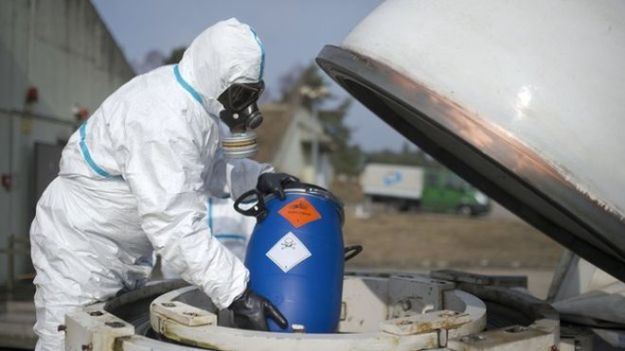
The U.S. Treasury Department’s Office of Foreign Assets Control (OFAC) announced financial sanctions against an individual involved in the “development” of chemical weapons of mass destruction (CWMD) for the Islamic State (IS) on 12 June. Simultaneously, the State Department labelled another individual involved in the development of CWMD for IS as a Specially Designated Global Terrorist (SDGT). These are the first sanctions of their kind. Continue reading

Senior Islamic State Cleric Turki al-Binali Killed in an Airstrike

By Kyle Orton (@KyleWOrton) on 11 June 2017

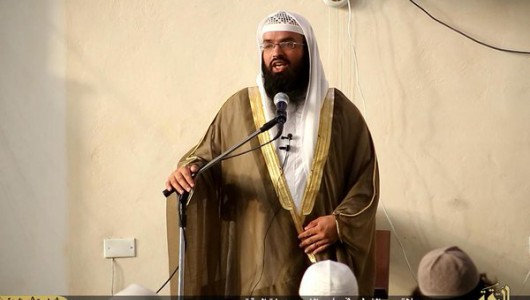
Turki al-Binali at prayers in Raqqa, July 2015

It was reported on jihadist websites and by local activists that Turki al-Binali (Abu Hammam al-Athari), a senior cleric of the Islamic State (IS) and perhaps the most important public proponent of the caliphate’s formation, had been killed in Syria by an airstrike from the U.S.-led Coalition on 29 May. IS has been silent on this despite releasing their newsletter al-Naba and the tenth edition of their English-language propaganda magazine Rumiyah since then. On Tuesday, the intelligence services of the Kurdistan Regional Government (KRG) in northern Iraq confirmed that al-Binali had been killed. Continue reading

Jihadist Terror Remains a Significant Problem for Britain

By Kyle Orton (@KyleWOrton) on 4 May 2017

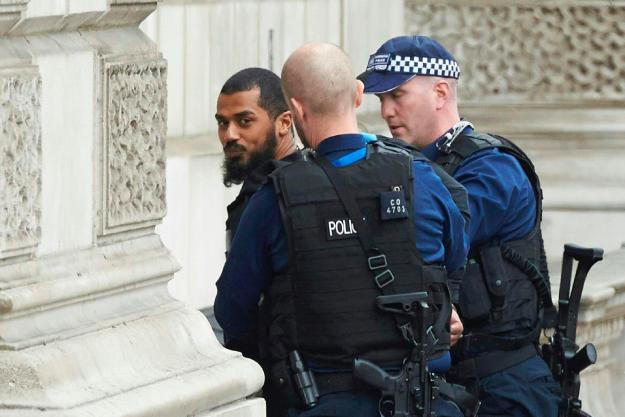
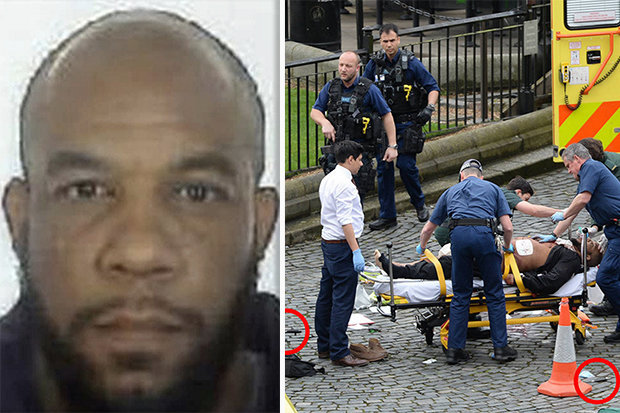
Khalid Mohamed Omar Ali being arrested (image source)

Over the past week, the authorities have disrupted two potential terrorist attacks in London. This follows the Westminster Bridge attack in March, which was claimed by the Islamic State (IS). Britain has been one of the most targeted states by IS’s campaign of global terror, and these latest incidents—whether or not they transpire to be IS-linked—underline the scale of the terrorist threat to Britain. Security forces prevented thirteen attacks in the U.K. between June 2013 and March 2017, and at any one time there are five-hundred live investigations into potential terrorist incidents, with 3,000 Britons believed to be capable of committing an act of domestic terrorism. Continue reading

How Powerful is the Islamic State in Saudi Arabia?

Originally posted at The Henry Jackson Society

By Kyle Orton (@KyleWOrton) on 27 April 2017

The U.S. Department of State designated Mubarak Mohammed Alotaibi, also transliterated as Mubarak Muhammad al-Utaybi, as a Specially Designated Global Terrorist (SDGT), because he has “committed, or pose[s] a significant risk of committing, acts of terrorism that threaten the security of U.S. nationals or the national security, foreign policy, or economy of the United States.” Al-Utaybi is a citizen of Saudi Arabia and is the “Syria-based deputy leader” of the Islamic State’s (IS) branch in the Saudi Kingdom. Continue reading

Don’t Assume the Westminster Terrorist is a ‘Lone Wolf’

By Kyle Orton (@KyleWOrton) on 18 April 2017

The 22 March attack outside Westminster by Khalid Masood is the most significant act of Islamist terrorism since the 7 July 2005 bombing by al-Qaeda of the London public transport system. Masood’s attack highlights a number of historic trends in British jihadism and starkly poses the question of the extent of IS’s penetration of the United Kingdom. Continue reading

Islamic State Operative Connected to Charlie Hebdo Attack Might Still Be Alive

By Kyle Orton (@KyleWOrton) on 15 April 2017

Boubaker al-Hakim (Abu Muqatil al-Tunisi) in Dabiq

Earlier today, an Iraqi military statement made public that the Iraqi government had provided coordinates to Bashar al-Assad’s air force, via the intelligence-sharing cell set up in Baghdad with Russia and Iran, for targets in Raqqa and al-Bukamal. One of the targets was Boubaker al-Hakim (Abu Muqatil al-Tunisi), a French-Tunisian Islamic State (IS) operative. Whether the Syrian regime’s strikes against al-Hakim were successful was not made clear. The interest here is that the U.S. announced on 10 December 2016 that it had killed al-Hakim in an airstrike near Raqqa on 26 November 2016, meaning that either the U.S. was mistaken or the Iraqis are. Al-Hakim is a very interesting figure in his own right with an extensive history in the jihadist movement and also highlights some broader trends, notably the assistance the Assad regime has provided to the IS movement. Continue reading

State Department Designates Two Canadian Jihadists in Syria

By Kyle Orton (@KyleWOrton) on 14 April 2017

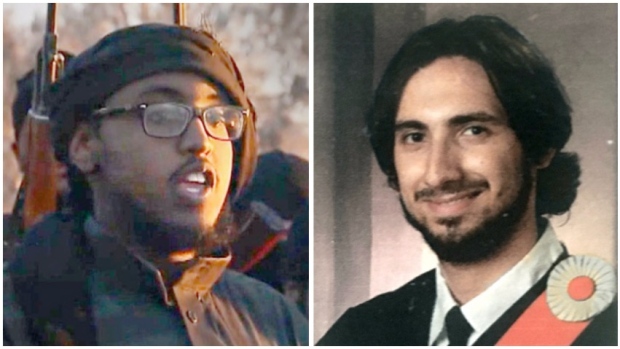
Farah Mohamed Shirdon, Tarek Sakr (image source)

The U.S. State Department added two Canadians to the list of Specially Designated Global Terrorists (SDGT) on 13 April. One of them, Tarek Sakr, of Syrian descent, is associated with Jabhat al-Nusra, al-Qaeda’s Syrian branch, which has since been through two rebrands to Jabhat Fatah al-Sham (JFS) and currently Hay’at Tahrir al-Sham (HTS). The other, Farah Mohamed Shirdon, of Somali background, is a member of the Islamic State (IS). Continue reading

An American Jihadist At the Top of the Islamic State

Originally published at The Henry Jackson Society

By Kyle Orton (@KyleWOrton) on 9 April 2017

The eighth edition of the Islamic State’s magazine, Rumiyah (Rome), was released on 5 April 2017, and contained an obituary for one of the architects of the magazine itself. Named by his kunyas, Abu Sulayman al-Shami, Abu Sulayman al-Halabi, Abu Maysara al-Shami, and Ahmad Abdul-Badi Abu Samrah, the jihadist referred to is Ahmad Abousamra, a U.S.-Syrian dual citizen. Abousamra is quite possibly the most senior American ever to have been in IS’s ranks, and the Rumiyah article gives a very interesting glimpse more generally of IS’s hierarchy. Continue reading

America Sanctions Anjem Choudary and other British Islamic State Jihadists

By Kyle Orton (@KyleWOrton) on 30 March 2017

Anjem Choudary (image source)

The State Department designated five individuals on 30 March 2017 as Specially Designated Global Terrorists (SDGTs), imposing sanctions on them for having “committed, or [for] pos[ing] a significant risk of committing, acts of terrorism that threaten the security of U.S. nationals or the national security, foreign policy, or economy of the United States.” Four of those sanctioned are members of the Islamic State (IS), including two key British operatives in the group’s global network, and the other is a member of al-Qaeda. On the same day, the Treasury Department sanctioned two IS operatives involved in funding and guiding external IS operations in the Far East and Southeast Asia. Continue reading

Al-Qaeda’s Deputy Killed in Syria

By Kyle Orton (@KyleWOrton) on February 27, 2017
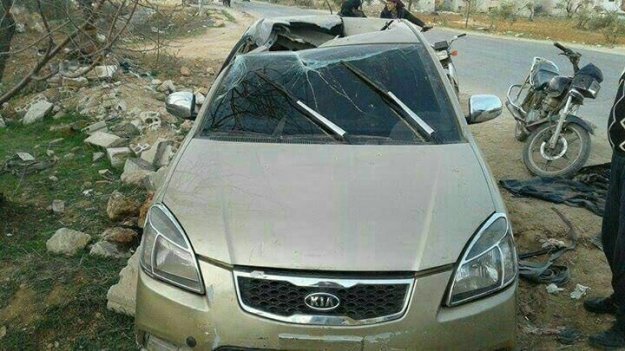
abu-al-khayr-car-killed-in

Last night it was reported that al-Qaeda’s overall deputy, Abu Khayr al-Masri, had been killed by the U.S.-led Coalition in Syria with a drone strike. This was soon seemingly confirmed by pro-Qaeda channels, and Abu al-Khayr was said to have been buried this morning. Though the emphasis on targeting jihadist leaders can be overdone, the demise of Abu al-Khayr is an important development, and one with significance beyond itself.

Abu al-Khayr’s career is demonstrative of a few interesting trends within the Jihadi-Salafist movement, primary among them the willingness of the Iranian revolution to work with the Sunni jihadists, al-Qaeda very much included, when it suits its purposes, particularly in undermining Western interests. Abu al-Khayr also elucidates the changed nature of al-Qaeda, where the “centre” (AQC) could now be said to be more in Syria than the Afghanistan-Pakistan, and where al-Qaeda operates both an overt and covert presence to try to secure a durable foothold in the Levant, which might in time be a base for attacks against the West, currently suspended only for tactical reasons. Continue reading