Category Archives: Syria

Russia’s Plans in Syria Falter, Opening Chance for the West

By Kyle Orton (@KyleWOrton) on 29 December 2017

The Astana track of Syrian “peace” negotiations began on 23 January 2017, under Russian guidance in the Kazakh capital, with Iran and Turkey also invited as “guarantor countries” of the various sides in Syria. The process, initiated in the shadow of the savage conquest of Aleppo city in December 2016 that signalled the total strategic defeat of the insurrection against the Bashar al-Asad regime, was an attempt by Moscow to convert the military gains it had enabled by Asad and Iran on the ground into political facts that could then be imported into the internationally-recognized Geneva process. This “Astana-isation of Geneva” was Russia’s bid to take control of the political process and redefine it: rather than having Asad’s removal as its end-goal, it would set the terms of reintegration into the Asad state. Abetted by a purblind Western campaign against the Islamic State (IS) and a strategic reorientation in Turkey, the pro-Asad coalition has more or less had its way for the last year. But there are now signs that this approach is beginning to unravel. Continue reading
Further Details Emerge of Obama’s Failed Iran Policy

Published at The New Arab.

By Kyle Orton (@KyleWOrton) on 21 December 2017

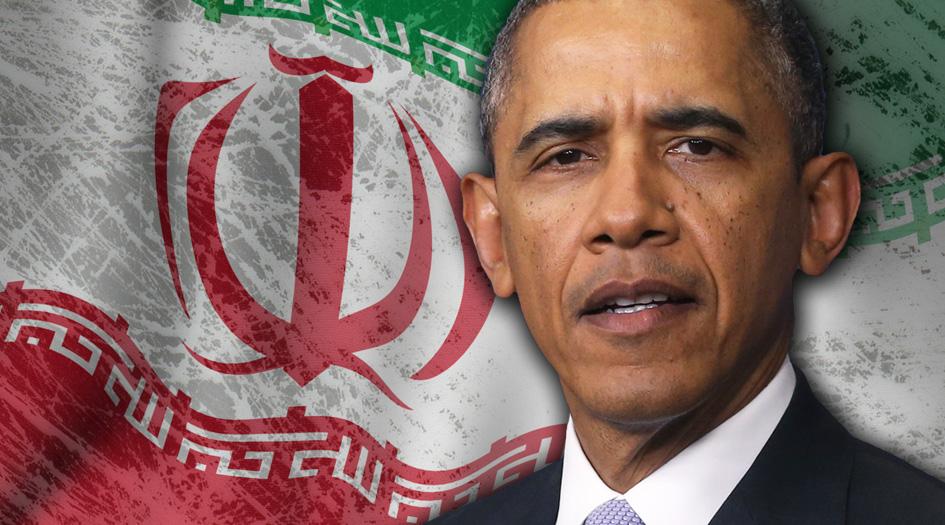
A widely reported, 15,000-word article by Josh Meyer in Politico on Sunday moves us another step closer to finding out the actual terms of President Barack Obama’s nuclear deal with the Islamic Republic of Iran.

Though the Obama administration sold the Iran deal on the narrowest possible terms as an arms control agreement, the reality was that this agreement was intended to facilitate a strategic tilt in Iran’s favour—against traditional allies—that left a regional balance requiring less American commitment.

Because the administration wanted the paper agreement, Iran had the leverage to threaten to walk away, and was therefore appeased on multiple fronts ostensibly unrelated to the nuclear issue.

Continue reading

Coalition, Hindered By the Syrian Regime, Kills Islamic State Leaders

By Kyle Orton (@KyleWOrton) on 19 December 2017

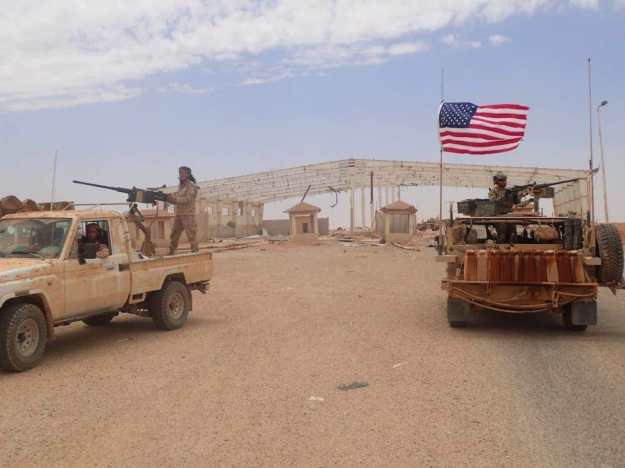
Maghaweer al-Thawra fighters next to American forces at at-Tanf. (Hammurabi’s Justice News/AP)

The U.S.-led Coalition against the Islamic State (IS) has killed several more leaders of the terrorist group, but continues to find that the campaign is hindered by the incompetence and/or complicity of the regime of Bashar al-Asad and his supporters in Iran and Russia. Continue reading

A Year In, Trump’s Syria Policy Looks A Lot Like Obama’s

Originally published at Ahval

By Kyle Orton (@KyleWOrton) on 18 December 2017

Nearly a year into Donald Trump’s administration, the president has followed the track laid down by his predecessors in Syria, accelerating it in some cases, and reinforcing the negative trends of Barack Obama’s defective policy that will undo even apparent successes, like the destruction of the Islamic State’s (ISIS) “caliphate”. Continue reading

Hay’at Tahrir al-Sham Gives Its Version of Its Own History and Ties to Al-Qaeda

By Kyle Orton (@KyleWOrton) on 5 December 2017

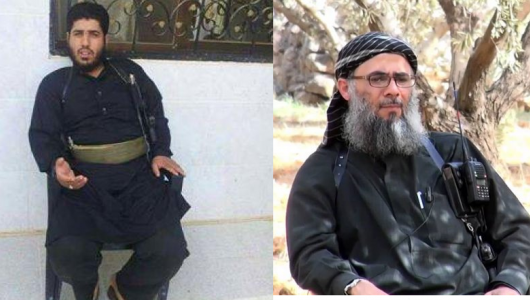
Abdurraheem Atun

Abd al-Rahim Atun (Abu Abdallah al-Shami), the leading cleric of Hayat Tahrir al-Sham (HTS), released a statement on 29 November 2017, dated 13 October 2017, laying out the history of HTS, its evolution from Jabhat al-Nusra to Jabhat Fatah al-Sham to HTS, and its relationship with al-Qaeda. Atun’s statement was a response to a speech a day earlier by al-Qaeda’s leader, Ayman al-Zawahiri, which said that HTS remained bound to him and al-Qaeda through a bay’a (oath of allegiance) and HTS’s attempts to get out of this were un-lawful manipulations of the kind used by the Islamic State. Atun’s statement was translated by Al-Maqalaat and an edited version is posted below. Continue reading

Former Al-Qaeda in Syria Branch Arrests Members of Al-Qaeda in Syria

By Kyle Orton (@KyleWOrton) on 28 November 2017

Iyad al-Tubaysi (Abu Julaybib), Sami al-Uraydi (Abu Mahmud al-Shami)

Hay’at Tahrir al-Sham (HTS), a powerful jihadi group in northern Syria, formally broke from al-Qaeda’s command over the last year. In the morning of 27 November, HTS arrested the leaders of a splinter group from HTS that remained loyal to al-Qaeda. The arrests were first reported by pro-al-Qaeda media, and HTS has since released a statement explaining that, having found this al-Qaeda group unwilling to even engage in reconciliation talks, it placed “the heads of turmoil” before a “just shari’a court” to answer for spreading demoralizing lies about HTS. Continue reading

Iran Claims to “Defeat” the Islamic State in Syria, a “Dangerous Conspiracy” by America and Israel

By Kyle Orton (@KyleWOrton) on 22 November 2017

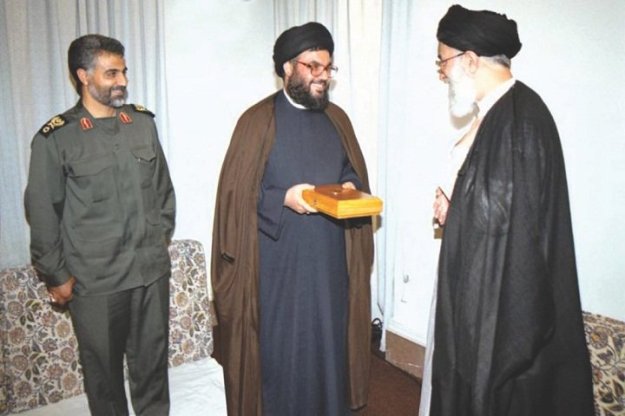
Qassem Sulaymani, Hassan Nasrallah, Ali Khamene’i (c. 2000)

The leader of the Quds Force, the expeditionary unit of Iran’s Islamic Revolutionary Guard Corps (IRGC), Qassem Sulaymani, sent a public letter to Iran’s Supreme Leader, Ali Khamene’i, on 21 November. Sulaymani’s letter followed the apparent expulsion of the Islamic State from its last urban stronghold in Syria, al-Bukamal, on 19 November, by Quds Force-led troops—foreign Shi’a jihadists and the battered remnants of Bashar al-Asad’s army. Sulaymani informs Khamene’i that in overcoming the Islamic State and its caliphate, a “U.S.-Zionist-made” terrorist entity has been defeated. Sulaymani’s letter is reproduced below, with some noteworthy sections highlighted in bold. Continue reading

Don’t Celebrate the Fall of Raqqa Just Yet

By Kyle Orton (@KyleWOrton) on 24 October 2017

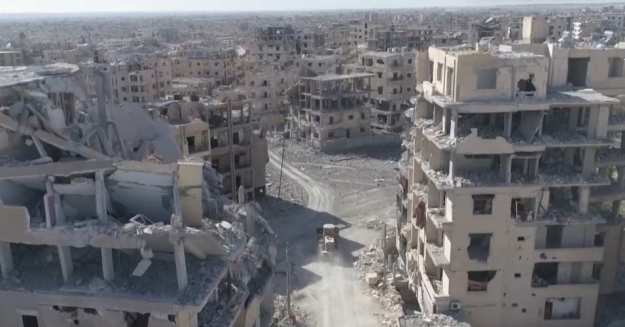
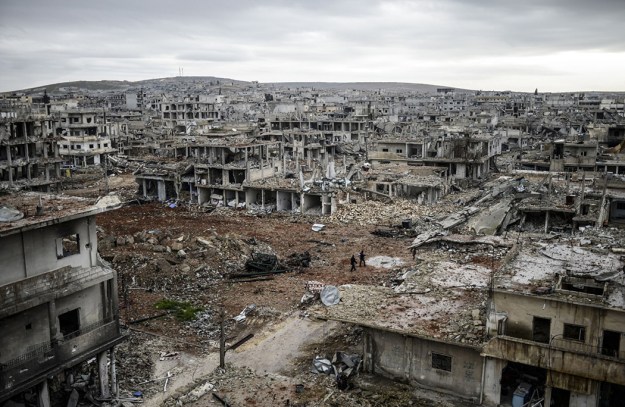
Raqqa city has been destroyed (image source)

The Islamic State (IS) captured Raqqa city, its first provincial capital, in January 2014. Six months later, IS declared its caliphate and Raqqa became its de facto capital. Last Tuesday, the partner force of the US-led anti-IS Coalition, the “Syrian Democratic Forces” (SDF), entered the city centre in Raqqa. A deal had evacuated most of the remaining jihadists over the prior weekend, though a determined core remained and still held about 10 per cent of the city. The caliphate is crumbling and the Coalition says IS has 6,500 fighters left. According to the Coalition, this puts IS “on the verge of a devastating defeat”. Unfortunately, there is no reason to believe this is true. To the contrary, IS is more powerful at this point, in theatre, even after the military reverses inflicted on it by the Coalition, than in the period after the “defeat” of 2008, and the outlook is more favourable now to IS. Moreover, IS now has an international reach, physically and ideologically, it did not previously possess. Continue reading

Russia Takes Advantage of the Schism in NATO Between America and Turkey

Originally published at The International Business Times

By Kyle Orton (@KyleWOrton) on 9 October 2017

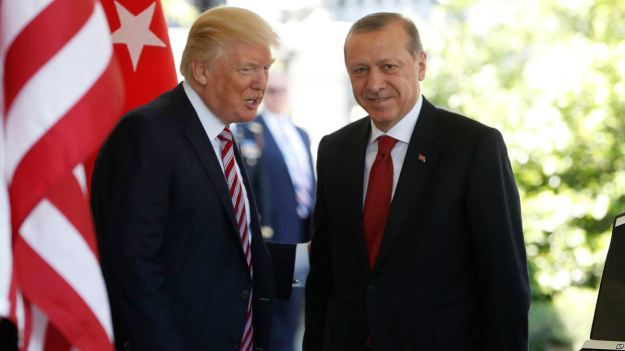
President Donald Trump meets Turkey’s President Recep Tayyip Erdogan at the White House, 16 May 2017. (AP Photo/Pablo Martinez Monsivais)

Relations between Turkey and the United States hit a new low on Sunday 8 October. The U.S. State Department suspended “all non-immigrant visa services at all U.S. diplomatic facilities in Turkey”.

The Turkish government retaliated—citing concerns about the “commitment of the government of the United States to the security of the Turkish Mission facilities and personnel”—by “suspend[ing] all non-immigrant visa service[s] at all Turkish diplomatic facilities in the U.S..” Continue reading

By Strengthening Iran, the Coalition Has Ensured the Islamic State’s Survival

Published at The Telegraph

By Kyle Orton (@KyleWOrton) on 6 October 2017

The “defeat” of the Islamic State (ISIL), signified by its eviction from Mosul in July, its impending loss of Raqqa, and an apparent resurgence of Bashar al-Assad’s regime in Syria, seemed to augur a new era of stability for the Middle East. The jihadists would be gone and Iranian-backed governments in Syria and Iraq consolidated.

True, Assad murdering those who resisted him with poison gas and concentration camps, and hiding the evidence by installing crematoria, would nag at our conscience. But foreign policy is a cold-blooded business and it has been decreed that ISIL is the greatest—really the only—threat emanating from the region.

It would not be justice, but it would be peace. Or something like that. Continue reading