Category Archives: Syria

Turkey’s Intervention in Syria Improves the Prospects for Peace

By Kyle Orton (@KyleWOrton) on August 25, 2016
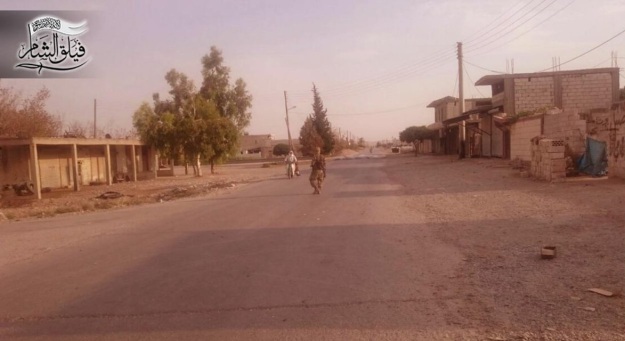
Picture put out by Faylaq al-Sham of Jarabulus soon after the Islamic State was expelled (Telegram, 24 August 2016)

Picture put out by Faylaq al-Sham of Jarabulus soon after the Islamic State was expelled (Telegram, 24 August 2016)

After a horrific suicide bombing by the Islamic State (IS) at a Kurdish wedding in eastern Turkey had slaughtered more than fifty people on Saturday, Turkey moved to expel IS from Jarabulus in eastern Aleppo Province at about 4 AM on Wednesday morning. IS was swept from this last major border town in Syria, a key gateway for resources to the outside world, around ten hours later.

Operation EUPHRATES SHIELD saw Turkey put troops and tanks over the border publicly for the first time, and allow the Free Syrian Army (FSA)-branded and other mainstream Syrian rebels who have been battling IS for years to use Turkish territory to launch the assault. It was supported by airstrikes from the international anti-IS coalition.

For Turkey, this is a strong indication of a change in her threat-perception vis-à-vis IS, but it is also about a (correctly) perceived threat of what was to follow IS. Continue reading
Dehumanization and Murder in Assad’s Prisons

By Kyle Orton (@KyleWOrton) on August 19, 2016

1

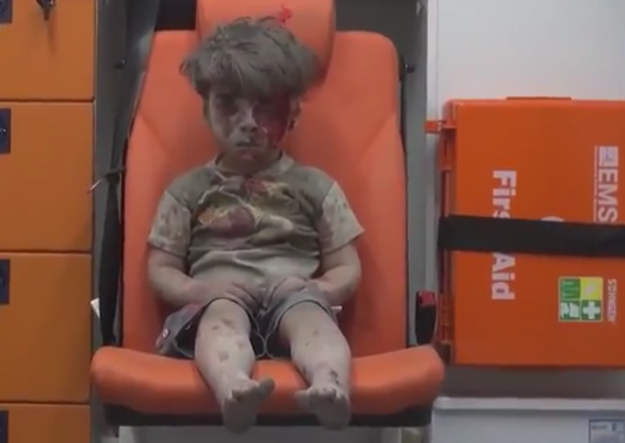
The picture above “went viral” on Thursday. The boy, five-year-old Omran Daqnees, was pulled from a building in rebel-held eastern Aleppo City after an airstrike either by the regime of Bashar al-Assad or Russia.

Like Alan Kurdi last September, Omran’s is hardly a unique case—twelve children were treated at just that one medical centre in Aleppo on Wednesday. But it seemed to capture something of the indiscriminate brutality that has been visited on the Syrian population, which rose against Assad five-and-a-half long years ago.

On the same day this shocking image came to global attention, Amnesty International released a report documenting in greater detail the monstrous scale of the cruelty and murder inflicted on Syrians who fall into the regime’s grasp. Continue reading

The Structure of Al-Qaeda

By Kyle Orton (@KyleWOrton) on August 14, 2016

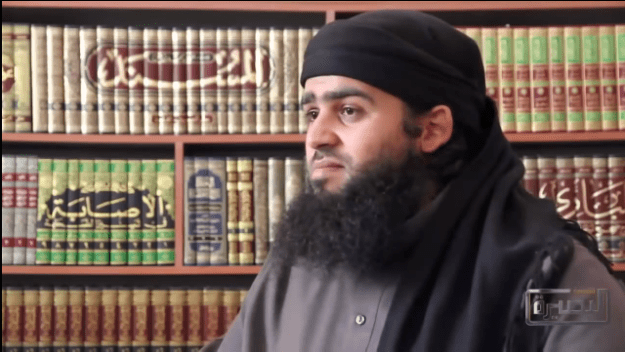
Screenshot of Mostafa Mahamed (Abu Sulayman al-Muhajir) during a video interview, 12 April 2014

Screenshot of Mostafa Mahamed (Abu Sulayman al-Muhajir) during a video interview, 12 April 2014

Mostafa Mahamed (Abu Sulayman al-Muhajir) is an Australian citizen who was born on 14 February 1984 in Port Said, Egypt. Mahamed currently occupies a “senior leadership position” within al-Qaeda in Syria—formerly Jabhat al-Nusra, now Jabhat Fatah al-Sham (JFS)—according to the sanctions levied against him in May by the U.S. Treasury. In an indication of Mahamed’s seniority, he moved from Australia to Syria in late 2012 and within a few months led the mediation efforts between al-Nusra and the then-Islamic State of Iraq and Syria (ISIS), now the Islamic State (IS), that began with a breach in April 2013 and ended with al-Qaeda expelling ISIS from its command structure in February 2014. Mahamed is also one of the public faces of al-Qaeda in Syria, now calling himself the “Director of Foreign Media Relations of JFS”. In this capacity, Mahamed has inter alia recently communicated with CNN to further the narrative that al-Nusra/JFS has “split” with al-Qaeda—something, let it be noted, neither the leader of al-Nusra/JFS nor Mahamed have actually said.

With regard to both the ongoing narrative war between IS and al-Qaeda over what their actual relationship was in the lead-up to the schism and al-Qaeda’s structure—the two things very much interlinked—Mahamed gave a very useful interview on 12 April 2014, about ten weeks before ISIS became IS when it declared its caliphate. Mahamed also touches on other interesting matters, such as those jihadi ideologues al-Nusra/JFS regards as guides, and—small point—al-Qaeda’s continuing claim that IS’s founder, Abu Musab al-Zarqawi would have sided with them. (This is matched on the other side by IS continuing to feature Usama bin Ladin in their propaganda as one of their forebears, while regarding Ayman al-Zawahiri as deviant.)

In watching the video back, I ended up taking notes, which turned into a partial (though fairly substantial) transcript that will perhaps be of use to others as well, so it’s posted below. Continue reading

The West’s Kurdish Allies in Syria Can’t Escape Their Authoritarian Legacy

By Kyle Orton (@KyleWOrton) on August 13, 2016

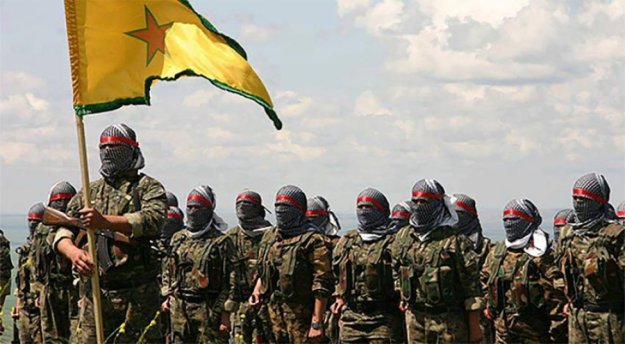
PYD/YPG fighters

PYD/YPG fighters

The Islamic State (IS) was driven from the city of Manbij yesterday, a key supply route to the Turkish border in northern Syria, the conclusion of an operation launched on 31 May by the Syrian Democratic Forces (SDF), a front-group for the Kurdistan Workers’ Party (PKK), represented in Syria by the Democratic Union Party (PYD) and its armed wing, the People’s Protection Units (YPG). The SDF was backed by U.S. airstrikes. It is difficult not to see the defeat of IS as a positive development. It is, however, worth more closely examining the forces that are being enabled by Western power to fasten their rule across northern Syria, whose vision is deeply problematic—even in narrow terms of the fight against IS. Continue reading

Did Assad Recruit the Leader of Al-Qaeda in Syria?

By Kyle Orton (@KyleWOrton) on August 11, 2016

1

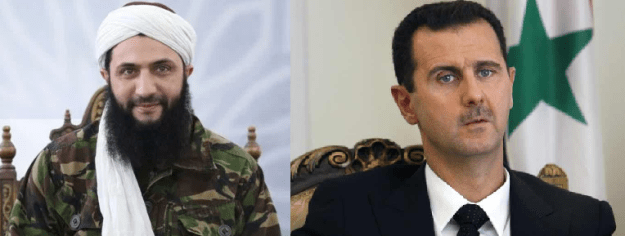
In the course of al-Qaeda’s rebranding operation in Syria two weeks ago—the full implications of which are discussed here—the organization showed the face of its leader, Abu Muhammad al-Jolani, for the first time. Soon afterward it was revealed that al-Jolani’s real name was Ahmad al-Shara, originally from Deraa in southern Syria, who had lived in Damascus. A report in Al-Monitor has now added details that purportedly show the hand of Bashar al-Assad’s regime in al-Shara’s path to joining the predecessor organization of the Islamic State (IS), from which he eventually split, and underlines the role the Assad regime has played in fostering the terrorism it now claims to be defending the Syrian population and the world from. Continue reading

The Structure of the Islamic State

By Kyle Orton (@KyleWOrton) on August 8, 2016

On 6 July 2016, the Islamic State’s al-Furqan Media released its first video for over a year, which was in English and was entitled, “The Structure of the Caliphate“. Continue reading

Al-Qaeda Rebrands, Marches on in Syria

By Kyle Orton (@KyleWOrton) on August 2, 2016

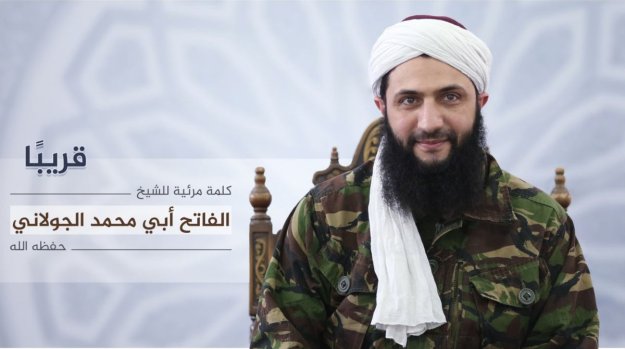
First ever picture of the leader of Jabhat al-Nusra (al-Qaeda in Syria), Ahmad al-Shara (Abu Muhammad al-Jolani), 28 July 2016

First ever picture of the leader of Jabhat al-Nusra (al-Qaeda in Syria), Ahmad al-Shara (Abu Muhammad al-Jolani), 28 July 2016

The leader of Jabhat al-Nusra (al-Qaeda in Syria), Abu Muhammad al-Jolani, whose real name is Ahmad al-Shara, ostensibly broke the link between his organization and al-Qaeda last week. This is another stage in al-Qaeda’s long-term strategy of embedding itself into local societies so that it can more effectively reshape the faith and shield itself from the international community. Continue reading

Governing the Caliphate: Profiles of Islamic State Leaders

By Kyle Orton (@KyleWOrton) on July 29, 2016

A new report by me for the Henry Jackson Society (accessible here) is out today. It looks at those governing the statelet held by the Islamic State in parts of Syria and Iraq, and those who are orchestrating IS’s foreign terrorist attacks, including in Europe. The wave of attacks over Ramadan has been described as a “lone wolf” epidemic by many, but IS is coordinating this mayhem through its Amn al-Kharji, foreign intelligence service, and the report looks at who staffs this institution and the dangers of writing-off these attacks as the work of lone radicals with no connection to each other or IS.  Continue reading

‘Lone Wolf’ Attacks in Europe Are Nothing of the Sort

By Kyle Orton (@KyleWOrton) on July 29, 2016

Published in The Telegraph

Muhammad Riyad (Wurzburg) [top left], Mohammed Daleel (Ansbach) [top right], Adel Kermiche (Normandy) [bottom left], Abdelmalik Petitjean (Normandy) [bottom right]

Since early 2014, at the latest, the Islamic State (IS) has been plotting terrorist attacks in Europe. There has been a tendency, including during the wave of attacks in the last month in Europe, to favour the “lone wolf” explanation for IS-claimed terrorist attacks, where the killer’s only connection to IS is to be “inspired” by their online propaganda, but in reality the institutions of the caliphate stand behind this campaign.

The infiltration of IS’s enemies for the purposes of espionage and terrorism, whether this is government-held areas of Iraq and Syria or Western Europe, is led by Amn al-Kharji, the foreign service within IS’s sophisticated intelligence apparatus, as explained in a new report by The Henry Jackson Society. Continue reading

A Rebel Crime and Western Lessons in Syria

By Kyle Orton (@KyleWOrton) on July 24, 2016

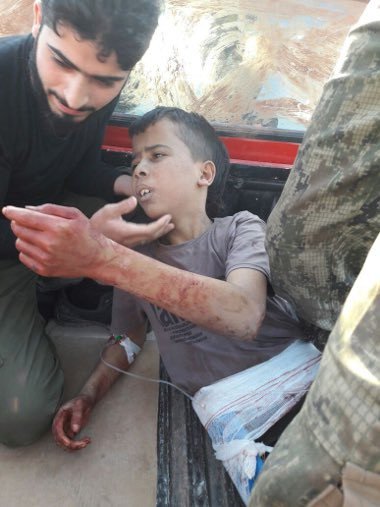
Abdullah Issa on the back of a truck with Harakat Nooradeen al-Zengi fighters who will soon behead him

Abdullah Issa on the back of a truck with Harakat Nooradeen al-Zengi fighters who will soon behead him

A horrifying video emerged on Tuesday of a teenage boy being beheaded. This had occurred the day before around Handarat in Aleppo, northern Syria. The boy had been fighting for Liwa al-Quds, a militia of the regime of Bashar al-Assad, composed mostly of Palestinians from the Nayrab camp and likely also from the unofficial settlement at Ayn al-Tal near Handarat. The rebel group that took him captive and then murdered him was Harakat Nooradeen al-Zengi, which had previously received support, including TOW anti-tank missiles, from the United States’ covert program run by the Central Intelligence Agency, though that support ended nearly a year ago. The episode is important in itself, and underlines some trends, namely al-Zengi’s evolution and the dynamics underway in northern Syria, where the U.S. is preparing to intensify its de facto policy of collaborating pro-Assad coalition against Jihadi-Salafist terrorist groups, which are strengthening al-Qaeda. Continue reading