Surrendering To North Korea Over ‘The Interview’ Sets (Another) Bad Precedent

By Kyle Orton (@KyleWOrton) on December 18, 2014

1

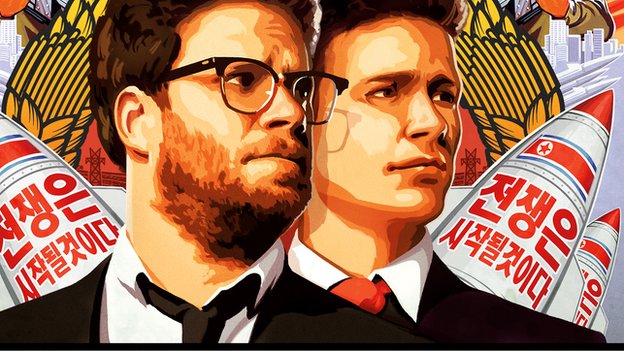
Last night, Sony Pictures pulled its planned release of The Interview. The film, a satire starring Seth Rogen and James Franco, had been based around a plot to kill the North Korean tyrant. About a month ago, Sony was hacked, and there is every indication that the North Korean regime was behind it. Under threats of further hacks, Sony backed down, apparently prepared to liquidate a forty-million dollar investment. Continue reading

Iraq Is Still Suffering The Effects Of Saddam Hussein’s Islamist Regime

By Kyle Orton (@KyleWOrton) on December 17, 2014

Throughout his entire trial, Saddam Hussein was never without a Qur'an

Throughout his entire trial, Saddam Hussein was never without a Qur’an

In June, Samuel Helfont published a paper for the Middle East Institute entitled, ‘Saddam and the Islamists: The Ba’thist Regime’s Instrumentalization of Religion in Foreign Affairs’. Relying on “newly released Iraqi state and Ba’th Party archives,” Helfont’s central argument is:

Saddam maintained deep reservations about Islamism until the end. However, this did not prevent his regime from working extensively with Islamists and Islamic activists outside Iraq. Indeed, religion played a leading role in the country’s foreign policy throughout the 1990s.”

Continue reading

A Freeze In Aleppo Won’t Help Save Syria—But It Might Help Assad

By Kyle Orton (@KyleWOrton) on December 15, 2014

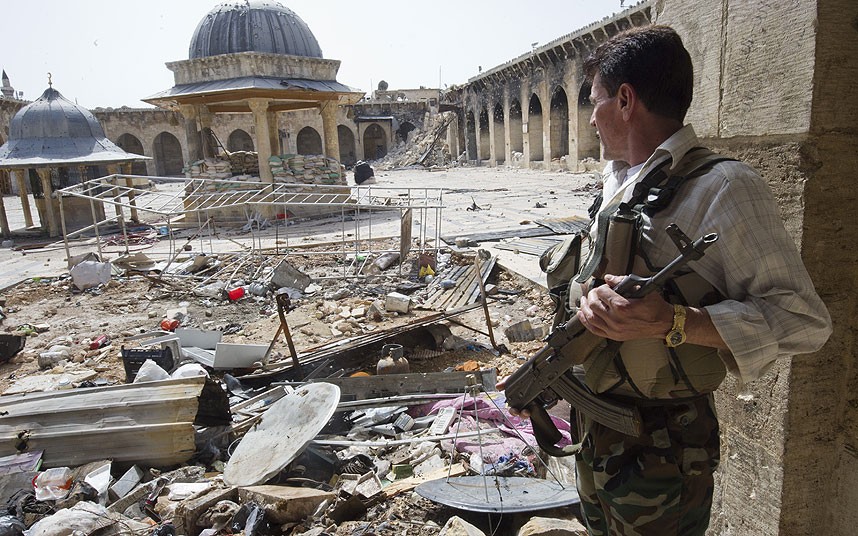
Great Mosque in Aleppo


On October 30, the United Nations peace envoy Staffan de Mistura presented an “action plan” for Syria, which included a plan for a “freeze zone” in Aleppo to give “an opportunity for some type of humanitarian improvement”. De Mistura wanted this to re-focus efforts of fighting units on all sides against the Salafi-jihadists of the Islamic State and Jabhat an-Nusra (al-Qaeda). Small wonder then that Assad’s U.N. envoy, Bashar Jafaari, said the regime was giving the proposal “due consideration”.

This freeze idea had emerged just after the Obama administration had, through surrogates, said it was sympathetic to the idea of trying to use local “ceasefires” Continue reading

The Other Side of the “Torture” Debate

By Kyle Orton (@KyleWOrton) on December 11, 2014

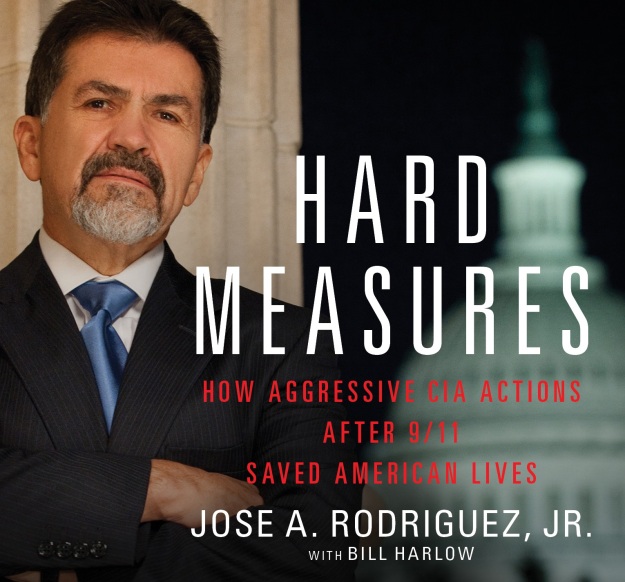
As a final act while the Democrats hold their majorities in Congress, the United States Senate Select Committee on Intelligence (SSCI) released a report on December 9, the “Committee Study of the Central Intelligence Agency’s Detention and Interrogation Program”, known to the Twitterverse as the “Torture Report”. This has reignited the debate about America’s use of harsh interrogation methods, the so-called “enhanced interrogation techniques” (EITs), against al-Qaeda operatives in the shadow of the 9/11 massacre. The politics surrounding this matter—even on basic questions, such as whether discomfort works to induce cooperation in detainees—are poisonous, and the publication of this partisan Committee Study has done nothing to assist this environment. One means of trying to get at the truth is to examine a counterpoint, the 2012 book, Hard Measures: How Aggressive CIA Actions After 9/11 Saved American Lives, a memoir by Jose Rodriguez, the man who oversaw the Central Intelligence Agency’s Counterterrorism Centre from 2001 to 2004. Continue reading

The Islamic State Creates Foreign “Provinces”

By Kyle Orton (@KyleWOrton) on December 6, 2014

Abu Bakr al-Baghdadi gave his eighth speech[1] since becoming the leader of the Islamic State (ISIS), entitled, “Even if the Disbelievers Despise Such”, on November 13, 2014. The speech was notable for two things. First, it taunted the American-led coalition about the lack of success their campaign has had against ISIS since it began in June and was extended into Syria in September, and invited the U.S. and other Western states to deploy ground troops. Secondly, the speech accepted the pledges of allegiance from groups outside Syria and Iraq for the first time, from Saudi Arabia, Yemen, Egypt, Libya, and Algeria. In Saudi Arabia and Yemen, the groups that have joined ISIS are unknown. In Egypt, the group is Ansar Bayt al-Maqdis (The Partisans of Jerusalem). In Libya, the group is al-Majlis Shura Shabab al-Islam (The Islamic Youth Consultation Council). And in Algeria the group is Jund al-Khalifa (Soldiers of the Caliphate). These areas will now become wilaya (provinces) of the caliphate, al-Baghdadi says, and ISIS will send a governor to oversee them. An English transcript of the speech was produced by ISIS and is reproduced below with important sections highlighted in bold. Continue reading

ISIS’s Leader Calls for the Syrian Rebels to Cease Attacking the Jihadists

By Kyle Orton (@KyleWOrton) on December 6, 2014

The leader of the Islamic State in Iraq and Syria (ISIS), Abu Bakr al-Baghdadi, gave an untitled speech on January 19, 2014. It was a response to the Syrian rebellion having launched a full-scale offensive against ISIS on January 3, 2014, which had driven them from large swathes of territory in northern Syria and was ongoing at the time. The rebel offensive continued for six months—until Mosul fell to ISIS in June, and the captured resources were fed into eastern Syria, breaking the rebels. Al-Baghdadi struck a relatively conciliatory note, though did accompany this with threats, should the rebels continue resisting the jihadists. A translation of the speech was made by Pieter Van Ostaeyen, and is reproduced below. Continue reading

Nuclear Negotiations With Iran Go On—And On And On

By Kyle Orton (@KyleWOrton) on December 2, 2014

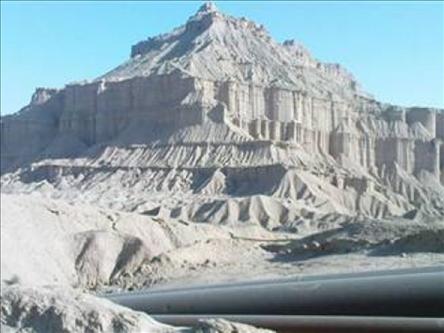
Fordow, an Iranian nuclear enrichment facility near Qom—easily mistaken for the volcano lair of a Bond villain

Fordow, an Iranian nuclear enrichment facility near Qom—easily mistaken for the volcano lair of a Bond villain

It wasn’t exactly a nail-biting finish in the end was it? In Vienna on Nov. 24, the P5+1 and Iranian negotiators decided to extend for another seven months the “interim” deal, the Joint Plan of Action (JPA), made in November 2013 on Iran’s nuclear weapons program, until June 2015. Conditions always favoured an extension but I was not absolutely sure that this is what would happen until Secretary of State John Kerry said on Nov. 21: “We are not discussing an extension.” Continue reading

There Have Been Real Achievements In Afghanistan, But Leaving Puts Them At Risk

By Kyle Orton (@KyleWOrton) on November 22, 2014

1

Since President Obama’s 2009 announcement of a ‘surge’ in Afghanistan that simultaneously announced the date of withdrawal, the western focus in Afghanistan has shifted to the exits.

The steady drizzle of bad news since then has reinforced this sense that it’s over, we’ve had enough and we’re leaving.

American and British troops quit Helmand in late October, basically ceding it to Taliban control. On Tuesday John Sopko, the head of the American auditor mechanism (SIGAR) said that efforts to promote economic growth in Afghanistan have ‘accomplished nothing.’ Continue reading

Islamic State Claims Responsibility for Terror Attacks in Australia, Canada, and America

By Kyle Orton (@KyleWOrton) on November 21, 2014

The Islamic State released the fifth edition of its English-language propaganda magazine, Dabiq, on November 21, 2014. In it, the Islamic State claimed responsibility for the terrorist attacks: in Australia by Numan Haider on September 23, in Canada by Martin Couture-Rouleau on October 20 and Michael Zehaf-Bibeau on October 22, and in America by Zale Thompson on October 23. The Islamic State says these attacks were in response to the call on September 22 by the organization’s spokesman, Abu Muhammad al-Adnani. The article is reproduced below with some minor editions for transliteration and some important sections highlighted in bold. Continue reading

Russian Propaganda and Western Self-Respect

By Kyle Orton (@KyleWOrton) on November 17, 2014

Abby Martin and George Galloway: Both host conspiracy-laden shows on RT

Abby Martin and George Galloway: Both host conspiracy-laden shows on RT

While having lunch on Saturday I got stuck for fifteen minutes in a room where the television was tuned to Russia’s English-language propaganda station, RT, formerly Russia Today. I once saw James Kirchick write that “after 20 minutes of watching RT … I did what any sensible person would do: turned RT off.” I conclude from this that he is a much braver man than I. Continue reading