Al-Qaeda Responds to Trump’s Jerusalem Embassy Move

By Kyle Orton (@KyleWOrton) on 6 December 2017

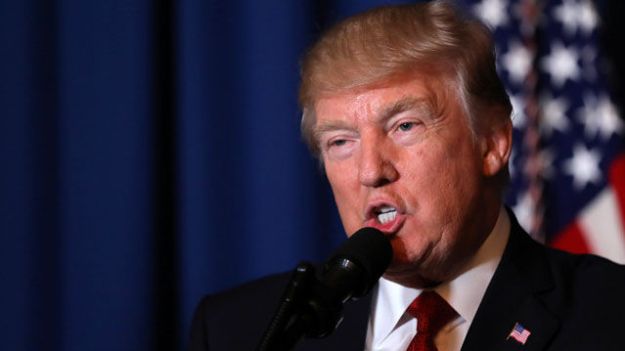
Responding to President Donald Trump’s announcement earlier today that he will move the American Embassy in Israel from Tel Aviv to Jerusalem, al-Qaeda have put out a statement that threatens retaliatory strikes against U.S. interests. Notably, al-Qaeda singles out Saudi Arabia as a government that has to be attacked for enabling Western operations against the jihadists. The statement is reproduced below. Continue reading

Hay’at Tahrir al-Sham Gives Its Version of Its Own History and Ties to Al-Qaeda

By Kyle Orton (@KyleWOrton) on 5 December 2017

Abdurraheem Atun

Abd al-Rahim Atun (Abu Abdallah al-Shami), the leading cleric of Hayat Tahrir al-Sham (HTS), released a statement on 29 November 2017, dated 13 October 2017, laying out the history of HTS, its evolution from Jabhat al-Nusra to Jabhat Fatah al-Sham to HTS, and its relationship with al-Qaeda. Atun’s statement was a response to a speech a day earlier by al-Qaeda’s leader, Ayman al-Zawahiri, which said that HTS remained bound to him and al-Qaeda through a bay’a (oath of allegiance) and HTS’s attempts to get out of this were un-lawful manipulations of the kind used by the Islamic State. Atun’s statement was translated by Al-Maqalaat and an edited version is posted below. Continue reading

Hay’at Tahrir al-Sham Announces a Ceasefire With Syrian Rebels, Forms a “Settlement Committee”

By Kyle Orton (@KyleWOrton) on 4 December 2017

Hay’at Tahrir al-Sham (HTS), the Syrian jihadi group previously under al-Qaeda’s command structure, which has recently arrested some al-Qaeda loyalists in Syria, has been engaged in assaults on the Syrian rebellion for many years in an effort to assert its own hegemony. On 2 December, HTS declared a ceasefire with all other insurgent units and the formation of a Settlement Committee or Reconciliation Committee. Though HTS claims this Committee is independent, it is quite clearly within HTS’s shari’a department. The Committee issued its first statement on the same day it was announced, a translation of which was made by Al-Maqalaat, and is republished below. Continue reading

Ayman al-Zawahiri Finally Addresses the Problems with Al-Qaeda’s Syrian Branch

By Kyle Orton (@KyleWOrton) on 4 December 2017

The leader of al-Qaeda, Ayman al-Zawahiri, gave a thirty-five-minute speech on 28 November 2017, entitled: “Let Us Fight Them As A Solid Structure” (or “Let Us Fight Them As One Body” or “Let Us Fight Them With Solid Foundations”), dealing with the vexed question of al-Qaeda’s relationship with the Syrian jihadi group, Hay’at Tahrir al-Sham, a situation that escalated again in recent days. The mention of an impending Turkish intervention into Idlib—which began on 7 October—suggests that al-Zawahiri recorded this speech in the last days of September or the first few days of October. An English transcript of the speech was released by As-Sahab Media, and is reproduced below with some edits for syntax and transliteration. Continue reading

The Gulf Crisis and British Interests

By Kyle Orton (@KyleWOrton) on 4 December 2017

The decision by Saudi Arabia, the United Arab Emirates, Bahrain, and Egypt to impose a boycott on Qatar this summer was an out-of-character development for the Gulf, where all too much politics is conducted behind closed doors between the ruling families and elites. To go public, the schism between Qatar and the so-called Quartet must have been very serious.

It was the end-point of a dispute that began in the 1990s about Qatar’s foreign policy, which at that point became independent of the Saudi-led Gulf Cooperation Council (GCC), and indeed actively competitive with Saudi interests. Doha wanted to alter the Saudi-oriented status quo and did so by empowering groups—almost invariably Islamists—in its cause. Those Islamists not only had agendas running counter to the other Gulf states’ conception of regional order, but which the Quartet regarded as threatening to their internal security. Continue reading

Islamic State Profiles a Libyan Jihadist Killed in Eastern Syria

By Kyle Orton (@KyleWOrton) on 4 December 2017

Al-Naba 108, page 7

The latest edition of the Islamic State’s newsletter, Al-Naba 108, released on 1 December 2017, has a profile on page 7 of a fighter named Abu Sulayman al-Libi, a Libyan jihadist who came to Syria soon after the caliphate declaration in June 2014 and became the senior religious official in Homs. Abu Sulayman was killed in the fighting between IS and the pro-Asad coalition in the deserts of eastern Homs Province, near the T3 oil pumping station. This probably means Abu Sulayman was killed in the last days of September or the first few days of October during the IS counter-attack to the regime coalition’s push into Deir Ezzor. A rough translation of the Naba obituary is published below. Continue reading

A “Syrian Democratic Forces” Defector Speaks About the Role of the PKK and America in Syria

By Kyle Orton (@KyleWOrton) on 3 December 2017

Talal Silo

Talal Silo was the leader of an ethnic Turkoman unit within the Syrian Democratic Forces (SDF), the ground partner in Syria of the American-led international coalition against the Islamic State (IS). Having defected recently, Tilo has now given an interview about his experiences, the nature of the SDF, and the SDF’s links to the Bashar al-Asad regime and its supporters, Russia and Iran. Continue reading

The Islamic State Urges Caution About Beliefs in the Apocalypse

By Kyle Orton (@KyleWOrton) on 2 December 2017

Al-Naba 107, page 8, 27 November 2017

The 107th edition of Al-Naba, the Islamic State’s newsletter, was released on 27 November 2017. On page 8 there was an article that cautioned against applying apocalyptic prophecies to the present day. A very rough translation is produced below. Continue reading

Qatar and the Gulf Crisis

By Kyle Orton (@KyleWOrton) on 30 November 2017

I released a report today, published by the Henry Jackson Society, Qatar and the Gulf Crisis. The intent was to examine the charges made against the Qatari government by its Gulf neighbours with regard to the funding of terrorism, the hosting of extremists, the dissemination of hate speech and incitement, among other things. Having separated fact from fiction with regards to he accusations against Qatar, the report proposes how Britain might proceed in such a way as to press Doha on issues of concern, while avoiding being drawn into the middle of the Gulf dispute, and trying to foster reconciliation between allies, especially at a time when a united front is necessary to oppose the far larger challenge of the Iranian theocracy.  Continue reading

Former Al-Qaeda in Syria Branch Arrests Members of Al-Qaeda in Syria

By Kyle Orton (@KyleWOrton) on 28 November 2017

Iyad al-Tubaysi (Abu Julaybib), Sami al-Uraydi (Abu Mahmud al-Shami)

Hay’at Tahrir al-Sham (HTS), a powerful jihadi group in northern Syria, formally broke from al-Qaeda’s command over the last year. In the morning of 27 November, HTS arrested the leaders of a splinter group from HTS that remained loyal to al-Qaeda. The arrests were first reported by pro-al-Qaeda media, and HTS has since released a statement explaining that, having found this al-Qaeda group unwilling to even engage in reconciliation talks, it placed “the heads of turmoil” before a “just shari’a court” to answer for spreading demoralizing lies about HTS. Continue reading