Tag Archives: Abdul Munim al-Badawi

Former Islamic State Leader Advises on Jihadist Conduct

By Kyle Orton (@KyleWOrton) on January 6, 2015

dabiq-6

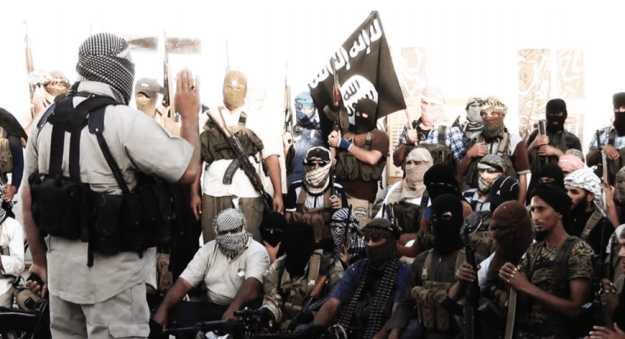
The sixth edition of the Islamic State’s English-language magazine, Dabiq, published on 29 December 2014, reproduced a “speech” by Abu Hamza al-Muhajir, entitled, “Advice for the Soldiers of the Islamic State”, which dates from 23 September 2007.[1] It is reproduced below with some editions in transliteration and some important sections highlighted in bold. Continue reading

Islamic State Biography of the Spokesman: Abu Muhammad al-Adnani

By Kyle Orton (@KyleWOrton) on November 8, 2014
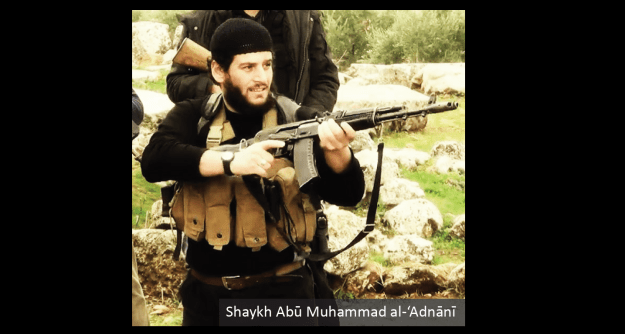
Picture of Abu Muhammad al-Adnani from the second edition of Dabiq magazine (July 27, 2014)

A Bahraini jihadist ideologue, Turki al-Binali, who has become a cleric in the Islamic State, put out a profile of the Islamic State’s official spokesman, Abu Muhammad al-Adnani, on November 1. By this account, al-Adnani took up jihadism in 2000 and was among a small cadre of people who joined the Islamic State’s founder, Ahmad al-Khalayleh, the infamous Abu Musab al-Zarqawi, when he journeyed through Syria on a recruitment-drive in 2002. Learned in Islamic jurisprudence and rigid in doctrinal literalness, al-Adnani was associated with some of the titans of the Islamic State’s legend like Abu Muhammad al-Lubnani and Abu Anas al-Shami. Appointed as emir of a small town in Anbar, Haditha, the first leader after the declaration of “the State” in 2006, Hamid al-Zawi (Abu Umar al-Baghdadi), worked under al-Adnani’s command. Al-Adnani then moved on to be an ideological instructor. Such was al-Adnani’s status, he did not have to consult al-Zarqawi before ordering operations; he only had to brief al-Zarqawi afterwards. Al-Adnani was arrested by the Americans in Iraq in May 2005, thereafter spending six years behind the wire, though never giving up his missionary activity. Indeed, the profile says al-Adnani developed the first full training program, academic and physical, for jihadi inmates. Upon release, al-Adnani took the post of official spokesman and has maintained it ever since. This profile is reproduced below with some minor editions for transliteration, syntax, and spelling. Continue reading

Al-Qaeda Provides Evidence ISIS Was Its Iraqi Branch, Calls For It To Return

By Kyle Orton (@KyleWOrton) on May 3, 2014

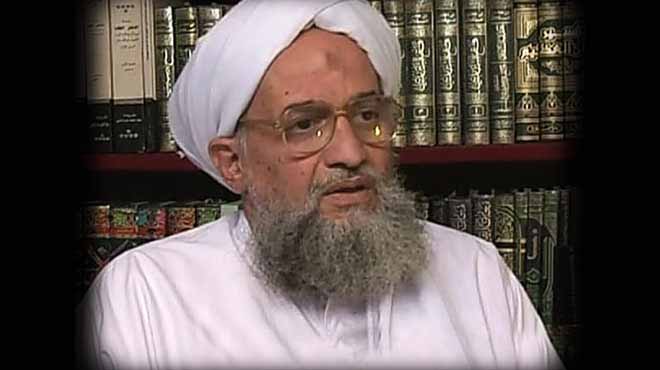
As-Sabah Media released a video on 2 May 2014 that contained a speech from Ayman al-Zawahiri, the leader of al-Qaeda, responding to the ferocious statement by Abu Muhammad al-Adnani, the spokesman of the Islamic State of Iraq and Syria (ISIS), which denied that ISIS was ever under al-Qaeda’s command and thus al-Zawahiri’s expulsion of ISIS from al-Qaeda in February was a meaningless gesture. Al-Zawahiri presents a compelling case to the contrary, drawing on documents sent by ISIS’s leaders, past and present, to al-Qaeda, some of which are public—taken in the raid that killed Usama bin Laden. Al-Zawahiri concludes with a call for ISIS to return to the fold, to accept al-Zawahiri’s order that ISIS leave Syria and return to Iraq—even if they think it is unjust—for the sake of jihadi unity and avoiding the shedding of Muslim blood.  The speech is entitled, “Testimony to Preserve the Blood of the Mujahideen in Syria” (Shahada li-Haqn Dima al-Mujahideen bil-Sham). A rough translation is given below with some important sections highlighted in bold. Continue reading

The Spokesman of ISIS Says Al-Qaeda is Deviant

By Kyle Orton (@KyleWOrton) on April 17, 2014

The spokesman of the Islamic State of Iraq and Syria (ISIS), Abu Muhammad al-Adnani, gave a speech on 17 April 2014, “This Is Not Our Methodology, Nor Will It Ever Be”. This was released by  al-Furqan Media, which also produced an English-language version, reproduced below.

Al-Adnani delivered the most ferocious attack from ISIS against al-Qaeda so far. Al-Adnani said that the dispute is not related to pledges of allegiance, which he says ISIS never had to al-Qaeda, but to al-Qaeda under Ayman al-Zawahiri deviating from the path of Usama bin Ladin, encouraging collaboration with heretics and unbelievers, and inciting divisions within the ranks of the jihadists, particularly by accepting the bay’a (pledge of allegiance) from the leader of Jabhat al-Nusra, Abu Muhammad al-Jolani, whom al-Adnani says owed his allegiance to ISIS.
Continue reading