Tag Archives: Abu Bakr al-Baghdadi

The End of the Beginning for the Islamic State in Libya

By Kyle Orton (@KyleWOrton) on December 7, 2016
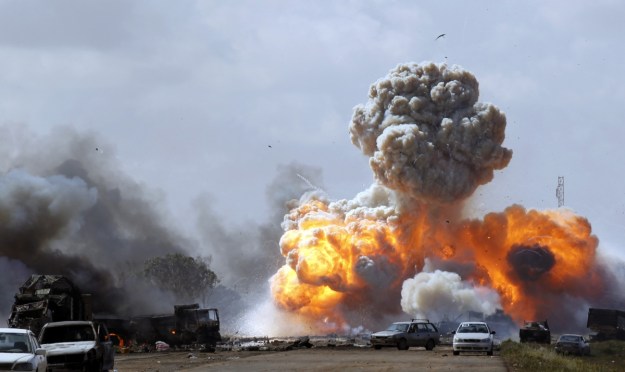
The “capital” of the Islamic State (IS) in Libya, Sirte, has fallen to pro-government militias. “Our forces have total control of Sirte,” claimed one spokesman on Monday. “Islamic State’s rule over Sirte is now over,” said another. That was slightly premature, though it does appear that the city fell entirely around mid-afternoon yesterday. Regardless, it is clear that IS’s hold on Sirte is soon to be at an end. Positive as this development is, it is what happens after IS’s grip on urban areas is broken that will determine the durability of this victory. IS will remain a disruptive force for some time no matter what happens next, and for that reason it is important to continue military operations in pursuit of IS in its rural sanctuaries. But IS is a symptom of Libya’s political problems, not their cause. Without a government that solves some of those original problems, and has the legitimacy and capacity to keep IS out, the group will rise again. Continue reading
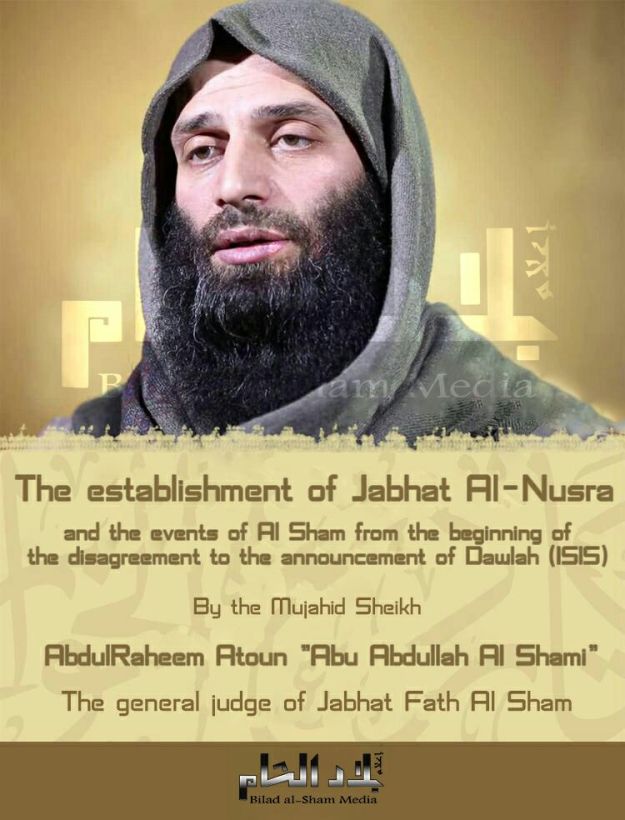
Al-Qaeda Explains its Split with the Islamic State

By Kyle Orton (@KyleWOrton) on December 6, 2016

1

On 20 November 2016, Jabhat Fatah al-Sham (JFS), al-Qaeda’s rebranded presence in Syria, published its first official account of how JFS, previously known as Jabhat al-Nusra, split from its parent organization, the group we now know as the Islamic State (IS). The statement was composed by Abd al-Rahim Atun (Abu Abdullah al-Shami), identified as the General Judge of JFS. It is apparently drawn from the book, “Under the Shade of the Tree of Jihad” (p. 177-194), and the post was entitled, “The Establishment of Jabhat al-Nusra and the Events of al-Sham [Syria] from the Beginning of the Disagreement to the Announcement of al-Dawla [the State]”. On 27 November, Bilad al-Sham Media released an English language version of this statement, which is reproduced below with some editions for spelling, grammar, and so on, and some especially notable sections bolded. Continue reading

Defeating the Islamic State for Good

Originally published at The Henry Jackson Society

By Kyle Orton (@KyleWOrton) on December 2, 2016

Islamic State fortifications in Deir Ezzor (from an IS video, 11 July 2016)

The Islamic State (IS) is nominally under attack now in its twin capitals, Mosul in Iraq and Raqqa in Syria. This is necessary task, of course, but, as I’ve written repeatedly over the last few months, clearing IS from its urban centres is not sufficient. IS lost its overt urban holdings once before and nonetheless rebuilt in the deserts between 2008 and 2013, rising again to seize increasingly-large tracts of territory that were eventually declared a caliphate. IS was able to do this because of the success of its long-term method of war-making, and political changes in Baghdad—toward greater sectarianism and authoritarianism—that gave it more space to manoeuvre. The flaws in the strategy and partners the U.S.-led international Coalition have chosen to eliminate IS are creating a situation in which what will be called “victory” is really the resetting of the cycle. More evidence of this has recently come to the fore. Continue reading

The Islamic State’s Terrorism Guides

By Kyle Orton (@KyleWOrton) on November 27, 2016

Junaid Hussain

Junaid Hussain

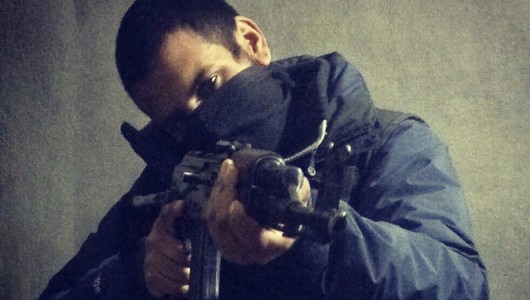
The Islamic State (IS) has been putting a lot of effort recently, especially over the summer, into directing attacks outside its caliphate, particularly in Europe. While many of these attacks are initially reported as “lone wolf” incidents, it has become increasingly clear by IS’s method of claiming these attacks that IS’s Amn al-Kharji, or foreign intelligence service, is guiding these attacks—walking the would-be murderers through the attacks emotionally, ideologically, and logistically. Continue reading

A Frenchman Directing the Islamic State’s Foreign Attacks

By Kyle Orton (@KyleWOrton) on November 23, 2016

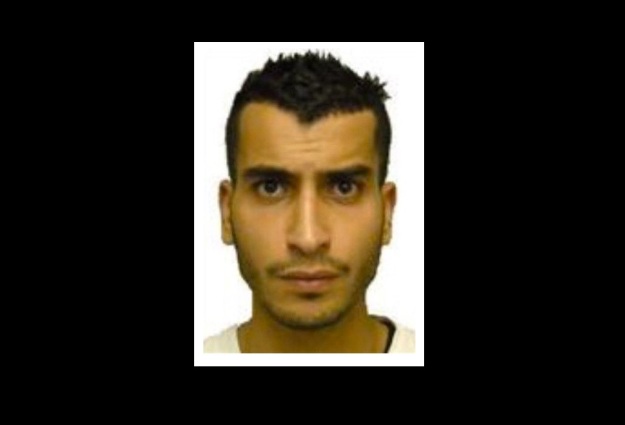
Abdelilah Himich (Abu Sulayman al-Firansi) [image source]

The United States released sanctions yesterday that confirmed the identity of Abu Sulayman al-Firansi, a senior commander in the external operations division of the Islamic State (IS). Abu Sulayman is Abdelilah Himich, a French citizen, as was first reported last month. Among the interesting aspects of this are the revelation that a European made it to a very senior position within the structure of IS’s foreign intelligence service, the amn al-kharji. Continue reading

Abu Bakr al-Baghdadi Calls for the Islamic State to Stand Firm in Mosul

By Kyle Orton (@KyleWOrton) on November 11, 2016

1

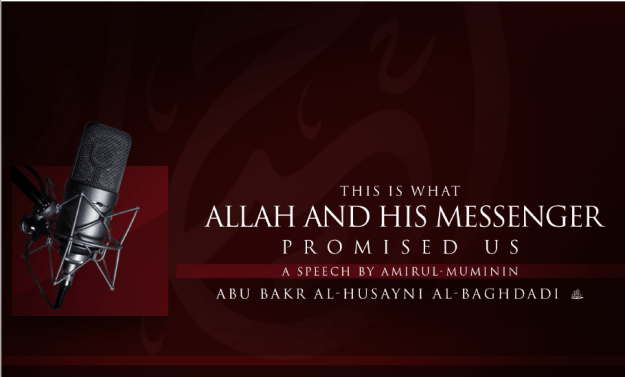
On 2 November 2016, a speech by the leader of the Islamic State, Ibrahim al-Badri (Abu Bakr al-Baghdadi), was released, entitled, “This Is What Allah and His Messenger Promised Us”. On 11 November, the third edition of IS’s English-language magazine, Rumiya, printed a transcript of the speech, which is reproduced below with some editions in transliteration, explanations added in square brackets, and notable or important sections shown in bold. Continue reading

The Coalition’s Flawed Endgame Strategy for the Islamic State

By Kyle Orton (@KyleWOrton) on November 6, 2016

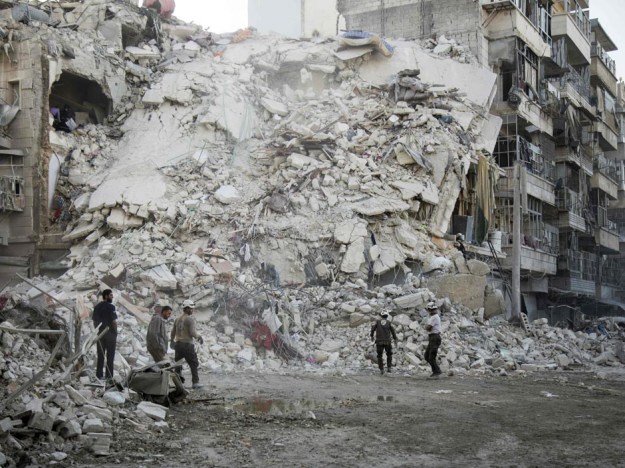
After some (perhaps wilful) confusion over the timing, the operation to expel the Islamic State (IS) from Raqqa City, its Syrian capital, got underway this morning, running concurrent with the effort to evict IS from its Iraqi capital, Mosul. There are deep concerns about the methods adopted in both cases. The ground forces the U.S.-led Coalition has chosen to support in Raqqa cannot lead to sustainable stability in Syria, something that is essential to defeat IS. While the Mosul operation has proceeded generally to plan, there are increasing signs of trouble within the operation itself and the most troubling aspect—the aftermath—still appears to be unplanned. Beyond this is the continued assault on Aleppo City by Bashar al-Assad’s regime and its Russian and Iranian patrons that is systematically destroying the forces needed if there is to be any settlement to Syria’s war that ends the space given to international terrorists. Continue reading

Activist Group Lists Ten Most Important Islamic State Leaders Killed

Originally published at The Henry Jackson Society

By Kyle Orton (@KyleWOrton) on October 22, 2016

Coalition airstrikes in Mosul (source)

The activist group, Raqqa is Being Slaughtered Silently (RBSS), which works against the Islamic State (IS) in its Syrian capital, published a list on Thursday on Twitter of the eleven “most important” IS leaders who have been killed in Raqqa Province. Continue reading

The Fall of the Islamic State’s Terrorism Director

By Kyle Orton (@KyleWOrton) on August 31, 2016

Taha Falaha (Abu Muhammad al-Adnani) in al-Naba

Taha Falaha (Abu Muhammad al-Adnani) in al-Naba

The Islamic State confirmed yesterday, via their “news” agency Amaq, that Taha Subhi Falaha had been killed in Aleppo. Falaha had gained global notoriety under his kunya, Abu Muhammad al-Adnani, after his September 2014 speech calling on Muslims in the West to “kill any disbeliever” in range, and to at least “spit in his face” if one was unable to find a knife or a car or a rock to do murder with.

Falaha was often referred to as the spokesman of IS, and so he was—the voice of the organization since 2011. He was also from the first generation of the organization, recruited before the invasion of Iraq, one of the few within the organization of that stature. But, as I explained recently in a paper for the Henry Jackson Society that compiled what is known of IS’s leadership, Falaha was much more than a figurehead.

Falaha was the governor of IS-held areas in Syria and the man who oversaw the external terrorist attacks. By now he was the caliph’s effective deputy. Heretofore, IS’s impressive bureaucracy has managed to replace individuals with minimal perturbation. IS will experience few perturbations quite like this.
Continue reading

The Islamic State’s Relationship With Al-Qaeda

By Kyle Orton (@KyleWOrton) on August 30, 2016

1

Since al-Qaeda broke ties with the Islamic State (IS), then the Islamic State of Iraq and Syria (ISIS), in 2014 there has been an ongoing war of narratives about what happened. Below is an attempt to work through this murky situation. Continue reading