By Kyle Orton (@KyleWOrton) on 17 July 2025
By Kyle Orton (@KyleWOrton) on October 23, 2020
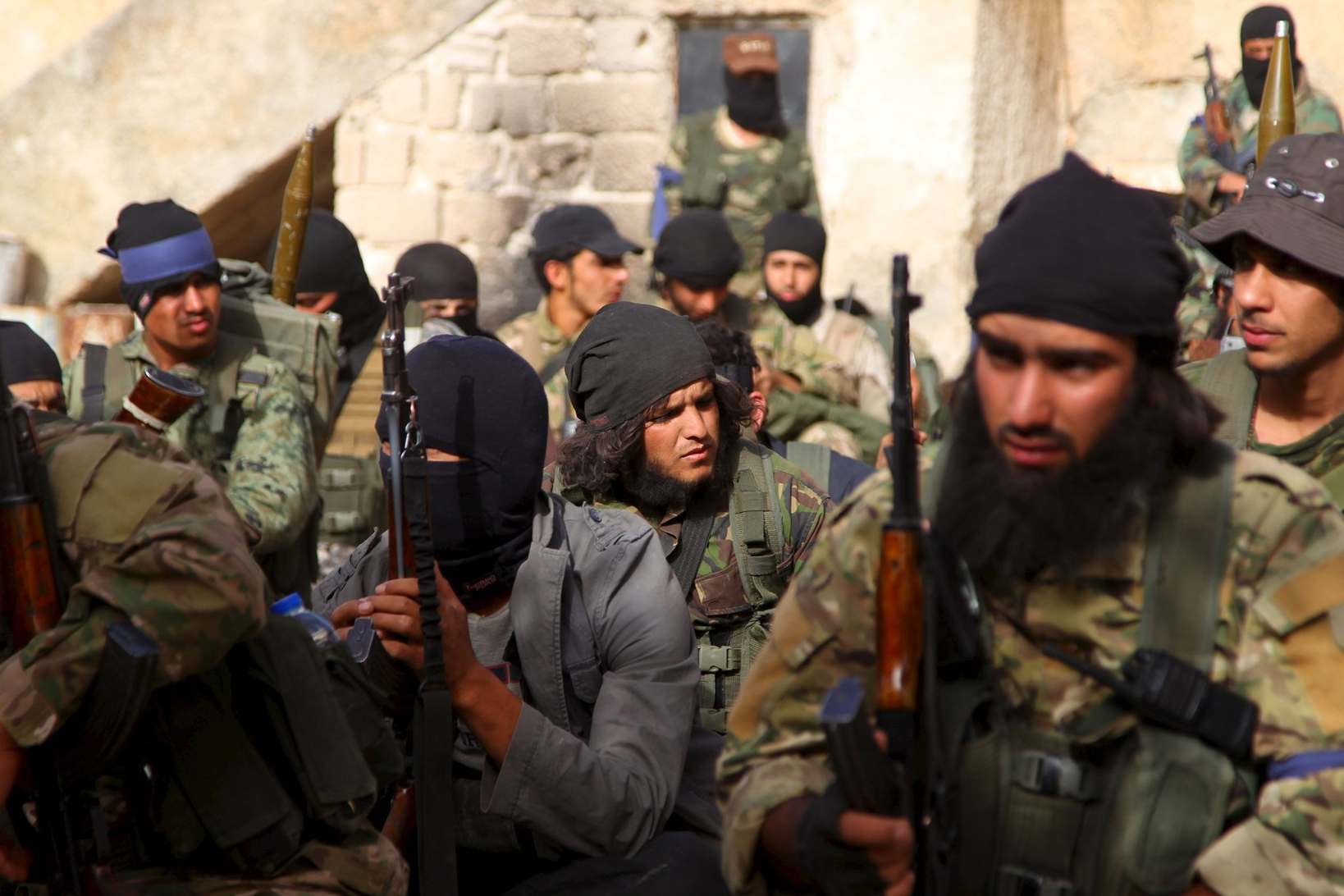
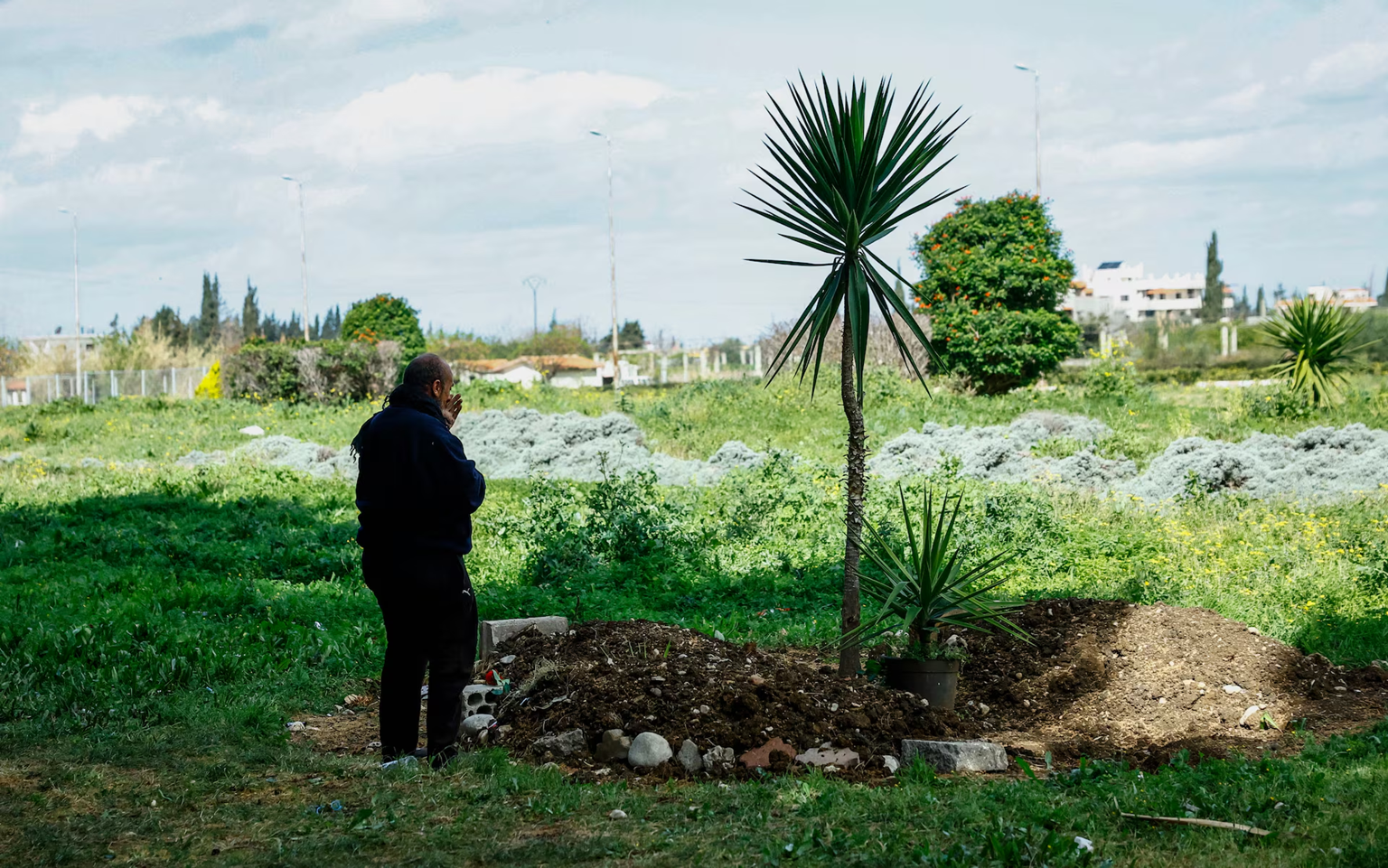
A chapter about Islamism in Syria I wrote for the American Foreign Policy Council’s (AFPC) ‘World Almanac of Islamism’ was published today. Do check it out, and the broader site, which is a great, accessible resource. The format of the website necessitated that the chapter as I submitted it was edited, condensed, and split up to fill out the various categories. In case it is of any interest, the original version of the chapter is reproduced below.
By Kyle Orton (@KyleWOrton) on 23 May 2020
There is now, with various caveats, a general agreement that the Islamic State (IS) is on the upswing—in Iraq, particularly, but also in the Badiya, the desert regions of eastern Syria, and more recently in the south of Syria around Deraa. Still, there have been some recent notable gains against the terrorist group. Continue reading
A version of this article was published at The Arab Weekly.
By Kyle Orton (@KyleWOrton) on 12 October 2019
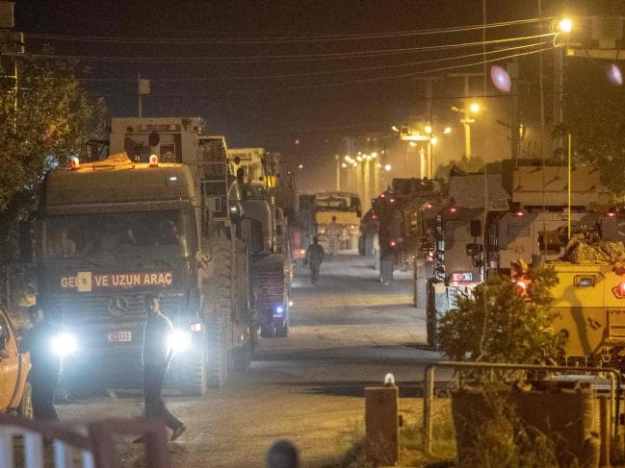
Turkish Armed Forces heading towards the border with Syria, 8 October 2019 // BULENT KILIC / AFP
The beginning of Turkey’s third incursion into Syria on Wednesday, this time dubbed Operation PEACE SPRING and aimed at the areas east of the Euphrates River, is the culmination of an American policy started under Barack Obama that has been continued by Donald Trump. That it is inevitable makes it no less tragic for the innocents caught up in this mess. It does mean that the emotive posturing on social media, and attempts by Obama era officials to cast the blame for the Syria catastrophe onto Trump, are more-than-usually grotesque. Continue reading
By Kyle Orton (@KyleWOrton) on 2 June 2018
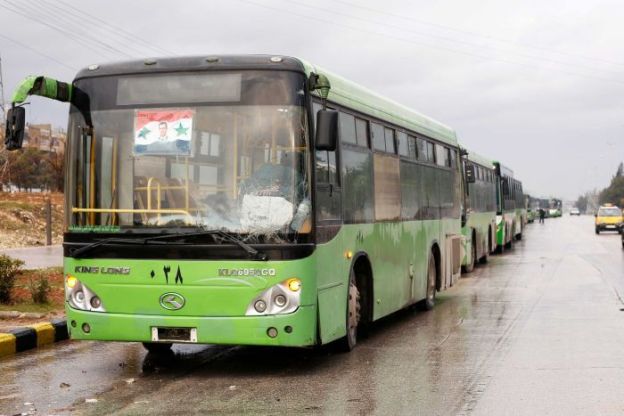
The green buses that have become a symbol of the Syrian regime’s siege and deportation policy (picture source)
The Independent International Commission of Inquiry on the Syrian Arab Republic, set up by the United Nations Human Rights Council (UNHRC) in 2011, released a report on 29 May 2018, “Sieges as a Weapon of War: Encircle, Starve, Surrender, Evacuate”. The report examined the effects of the sieges and “evacuation agreements”—deportations—between November 2012 and April 2018.
The Commission notes that the report is based on “over 400 interviews”, though the Commission continues to struggle in gathering information because it is banned from Syria by Bashar al-Asad’s regime and because of the threat the regime poses to potential interviewees. Continue reading
A version of this article was published in CapX
By Kyle Orton (@KyleWOrton) and James Snell on 8 May 2018
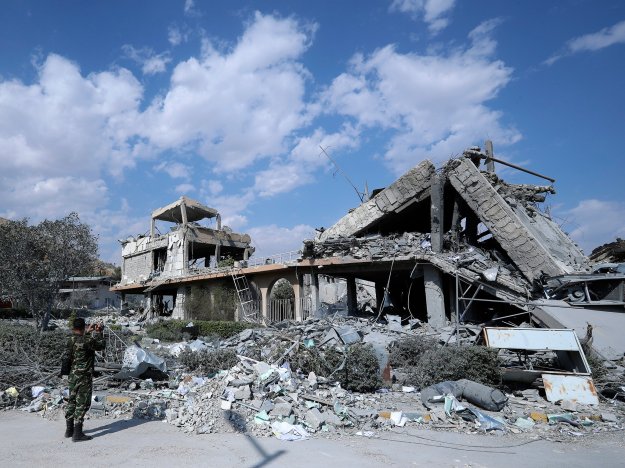
The Barzeh chemical weapons facility in Damascus, Syria, demolished by U.S. cruise missiles on 14 April 2018 (image source)
The United States and its allies, Britain and France, launched over 100 missiles at the Syrian regime of Bashar al-Assad in the early hours of 14 April. This was retaliation for the regime’s use of poison gas in the town of Douma, east of the capital, Damascus, exactly a week earlier, which massacred at least 43 people and wounded 500 more. The military strikes were an important signal and will likely be some deterrent against the future use of chemical weapons in Syria, but ultimately this was another missed opportunity by the West to meaningfully affect the course of the war. Continue reading
By Kyle Orton (@KyleWOrton) on 5 May 2018
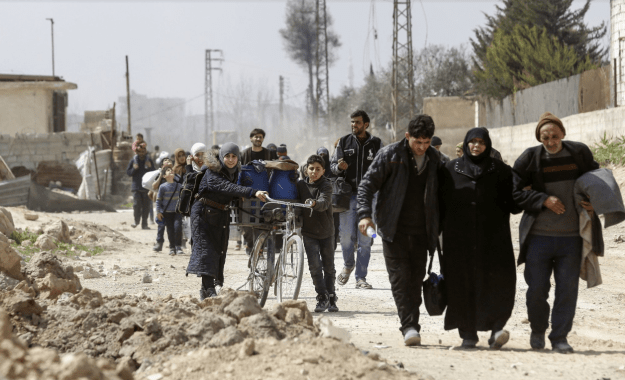
Syrians being deported from East Ghuta after the regime conquest, 15 March 2018 // Credit Louai Beshara, Agence France-Presse
There has been an unprecedented wave of assassinations, and assassination attempts, in Idlib, beginning on 26 April and lasting about two days, targeting mainstream, Free Syrian Army-branded rebels, opposition activists, and journalists, as well as Islamist and jihadist insurgents.
By Kyle Orton (@KyleWOrton) on 25 March 2018
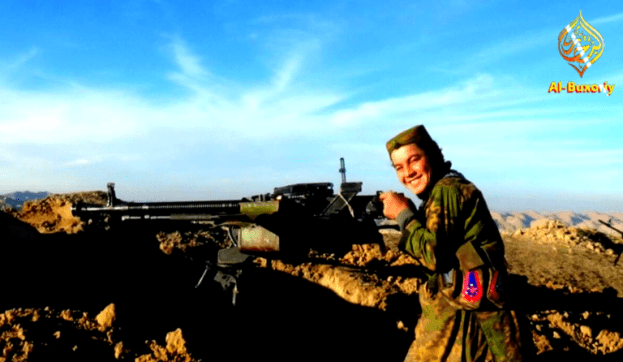
Katibat al-Imam al-Bukhari (image source)
The United States Department of State designated Katibat al-Imam al-Bukhari (KIB), the Taliban-loyal insurgent unit in Syria, as a Specially Designated Global Terrorist (SDGT) on 22 March. Over the last few days, KIB and other insurgent groups have issued statements in response. Continue reading
By Kyle Orton (@KyleWOrton) on 30 November 2017
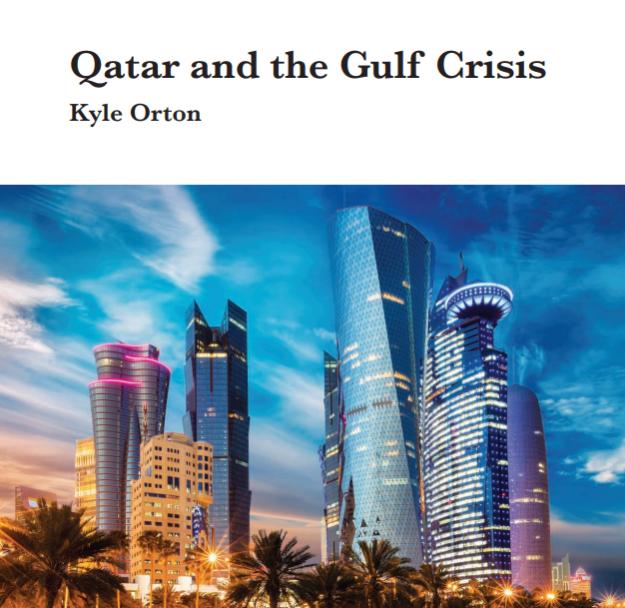
I released a report today, published by the Henry Jackson Society, Qatar and the Gulf Crisis. The intent was to examine the charges made against the Qatari government by its Gulf neighbours with regard to the funding of terrorism, the hosting of extremists, the dissemination of hate speech and incitement, among other things. Having separated fact from fiction with regards to he accusations against Qatar, the report proposes how Britain might proceed in such a way as to press Doha on issues of concern, while avoiding being drawn into the middle of the Gulf dispute, and trying to foster reconciliation between allies, especially at a time when a united front is necessary to oppose the far larger challenge of the Iranian theocracy. Continue reading

 Kyle Orton's Blog