Tag Archives: Ahrar al-Sham

Russia Takes Advantage of the Schism in NATO Between America and Turkey

Originally published at The International Business Times

By Kyle Orton (@KyleWOrton) on 9 October 2017
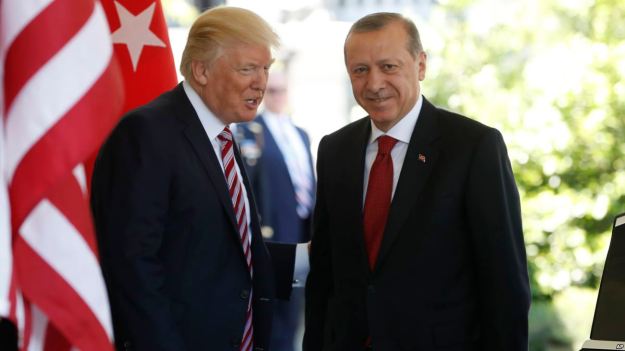
President Donald Trump meets Turkey’s President Recep Tayyip Erdogan at the White House, 16 May 2017. (AP Photo/Pablo Martinez Monsivais)

Relations between Turkey and the United States hit a new low on Sunday 8 October. The U.S. State Department suspended “all non-immigrant visa services at all U.S. diplomatic facilities in Turkey”.

The Turkish government retaliated—citing concerns about the “commitment of the government of the United States to the security of the Turkish Mission facilities and personnel”—by “suspend[ing] all non-immigrant visa service[s] at all Turkish diplomatic facilities in the U.S..” Continue reading
The Islamic State’s Obituary for Abu Ayman al-Iraqi

By Kyle Orton (@KyleWOrton) on 12 September 2017

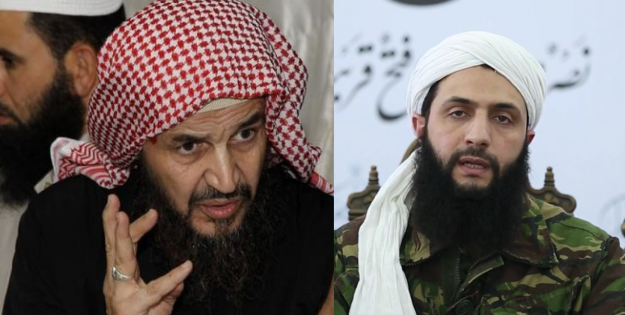
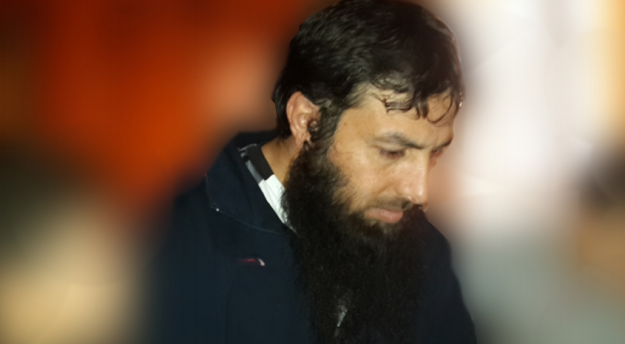
Ali al-Aswad (Abu Ayman al-Iraqi), al-Naba, 20 July 2017

In the ninetieth edition of its newsletter, al-Naba, released on 20 July 2017, the Islamic State (IS) published an obituary for one of its most senior operatives, Ali Aswad al-Jiburi, much better known as Abu Ayman al-Iraqi, who had been serving as the caliph’s “security advisor” when he was killed on 18 May 2016. Continue reading

The Campaign to Weaken An Al-Qaeda-Affiliated Group in Syria

By Kyle Orton (@KyleWOrton) on 12 September 2017

Abdallah al-Muhaysini and Muslah al-Alyani, two senior clerics in Hay’at Tahrir al-Sham (HTS), the former al-Qaeda branch in Syria, resigned on 11 September 2017 after leaked recordings showed HTS commanders musing about assassinating al-Muhaysini. There is clearly a well-orchestrated campaign underway to weaken HTS by discrediting and dividing it, and the sophistication of the campaign gives every indication of being the work of a state intelligence service, almost certainly Turkey’s. Continue reading

The Role of Turkey in Syria

By Kyle Orton (@KyleWOrton) on 16 August 2017

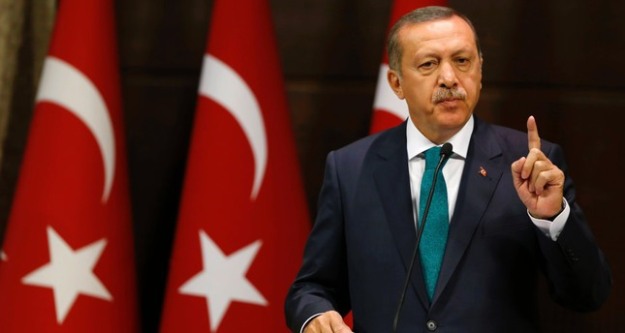
Recep Tayyip Erdogan (image source)

The Turkish government has gotten more and more deeply involved in Syria since the uprising began in 2011. But Turkey now finds its original aim, namely the overthrow of Bashar al-Assad’s regime, unattainable, creating tensions with the Syrian armed opposition, its primary lever inside Syria, and there are considerable problems stabilizing the zone of Syria that came under Turkish occupation after Ankara’s direct intervention in 2016. The defeat of Turkey’s primary objective has been accompanied by the rise of further problems, notably the exacerbation of its longest-standing internal security threat, that posed by the Kurdistan Workers’ Party (Partiya Karkerên Kurdistan – PKK), and the generation of new internal threats, from the Islamic State (IS) and potentially from al-Qaeda-linked groups. The options for solving these problems are constrained and unpalatable. Continue reading

Whither Al-Qaeda in Syria?

By Kyle Orton (@KyleWOrton) on 15 August 2017

A statement from Issam al-Barqawi, far better known as Abu Muhammad al-Maqdisi, the Jordan-based Palestinian jihadi-salafist cleric, was released in English on Telegram on 15 August 2017. The statement dealt with his view of Hay’at Tahrir al-Sham (HTS), highlighting again the questions around this Syrian-based jihadi group and its relations with al-Qaeda. Continue reading

The Coalition’s Partner in Syria: The Syrian Democratic Forces

Originally published at The Henry Jackson Society

By Kyle Orton (@KyleWOrton) on 9 July 2017

Syrian Democratic Forces (SDF) logo

The offensive to expel the Islamic State (IS) from its primary urban stronghold in Syria, Raqqa city, began on 6 November 2016 with shaping operations and commenced in earnest on 6 June 2017. Backed by the U.S.-led Coalition, the operation, known as EUPHRATES WRATH, is being carried out on the ground by the Syrian Democratic Forces (SDF) or Quwwat Suriya al-Dimoqratiyya (QSD). The SDF is formally a coalition of Kurds and Arabs—its announcement of the Raqqa operation named eighteen distinct sub-units. But the predominant force within the SDF is the Kurdistan Workers Party (PKK), and the Arab SDF play a “secondary role of maintaining local security,” which is to say providing an acceptable face for the PKK’s administration in the Arab-majority areas it has captured. Examining the SDF’s composition, and the recent marginalization of Arab SDF groups, underscores the point. Continue reading

Coalition Policy Risks Replacing Islamic State With Other Islamists

By Kyle Orton (@KyleWOrton) on 7 July 2017

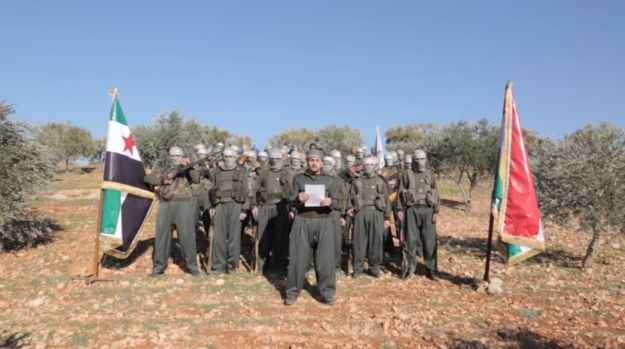
Announcement of the Kurdish Salvation Movement, 12 March 2017

As the operation proceeds to expel the Islamic State (IS) from its last major Syrian urban stronghold, Raqqa city, a statement was published on 5 July by a number of clerics, which points to the danger that the Coalition campaign, by partnering exclusively with Kurdish forces, is preparing conditions that will allow other Islamists to fill the vacuum after IS loses overt control of eastern Syria.
Continue reading

Raqqa Doesn’t Want to Be Liberated By the West’s Partners

By Kyle Orton (@KyleWOrton) on 30 May 2017

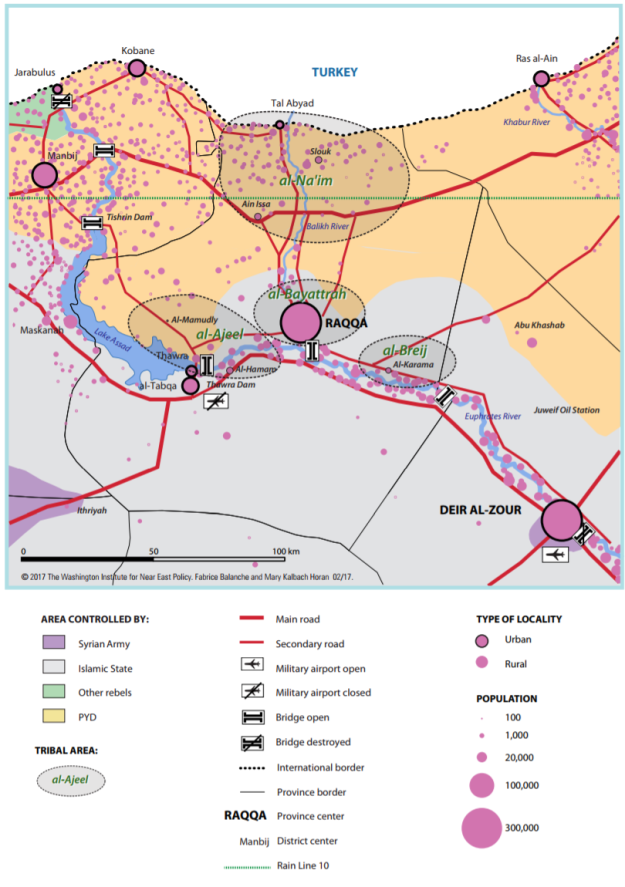
Map of the tribes around Raqqa city (source: WINEP report)

We are now on the eve of the operation to evict the Islamic State (IS) from its Syrian capital, Raqqa, and, as expected, the United States will partner with the Syrian Democratic Forces (SDF), the front-group for the Democratic Union Party (PYD) and its armed wing, the People’s Protection Units (YPG), which President Donald Trump’s administration has committed to directly arming.

Many of the doubts voiced about this course relate to Turkey, since the PYD/YPG is—despite continued efforts to obfuscate the fact—the Syrian department of the Kurdistan Workers’ Party (PKK), the premier internal security threat to Turkey for many decades. The discussion then tends to fall into one of two grooves. Continue reading

Al-Qaeda in Syria Declare War on Rebels Taking Part in the Astana Process

By Kyle Orton (@KyleWOrton) on 10 May 2017

1

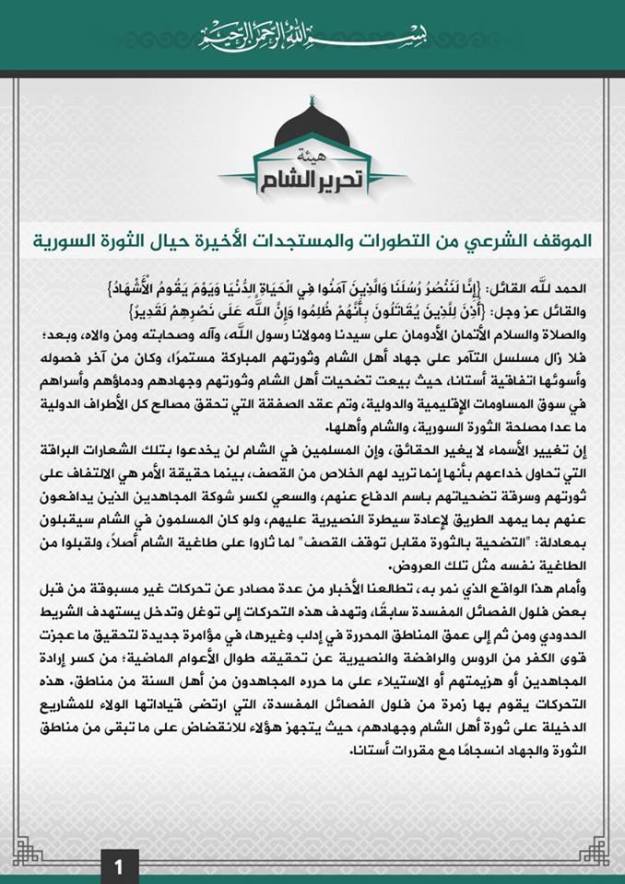
In response to the recent rounds of the Russian-organized “peace” talks in Astana, Hay’at Tahrir al-Sham (HTS), al-Qaeda’s restructured presence in Syria, put out a statement through its Fatwa Council on 9 May 2017, “The legal position concerning the latest events and developments facing the Syrian revolution”. HTS’s fatwa was a declaration of war against all parts of the rebellion participating in the Astana conferences, which HTS labelled a conspiracy to defeat the revolution and secure Bashar al-Assad in power. The statement is clearly intended against the mainstream rebellion, which operates under the colours of the Free Syrian Army (FSA) and has shown signs of coalescing into an anti-HTS alliance. HTS’s paranoia about the rebels being repurposed against it has led to previous “pre-emptive” attacks that might well have precipitated the very thing it feared. Perhaps most interesting, however, is HTS saying that it would treat as an enemy actors who “allow [the Astana-compliant factions] to work under their banner”. The reference here is to Ahrar al-Sham, a heretofore close ally of HTS, its key enabler in infiltrating and co-opting large sections of the northern insurgency, which in January sheltered various groups that survived the first wave of HTS attacks to prevent their destruction. The statement was translated by al-Maqalaat and is reproduced below with some editions in transliteration and the key sections highlighted in bold.
Continue reading

The Problems With the West’s Partners Against the Islamic State

By Kyle Orton (@KyleWOrton) on 10 May 2017

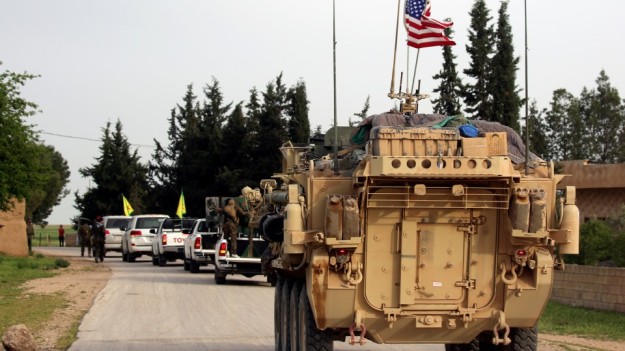
U.S. troops patrolling with the YPG/PKK in the village of Darbasiyah, northern Syria, on the border with Turkey, 28 April 2017

The United States has tried to engage in Syria almost solely in a counter-terrorism capacity, against Daesh (IS) and—in a recently-escalating campaign—against al Qaeda. The narrowness of the focus on jihadist terrorists led to the US disregarding wider political dynamics in the war in Syria—and to a degree in Iraq, too—and partnering with forces that over the long term will undo even this narrow mission.

The announcement yesterday that President Donald Trump will now arm the Kurdish People’s Protection Units (YPG) to expel Daesh from its Syrian capital, Raqqa, is the end-point of this policy, setting up a very dangerous medium- and long-term situation that will redound to the benefit of terrorists. Continue reading