Tag Archives: Amr al-Absi

Islamic State Operative Connected to Charlie Hebdo Attack Might Still Be Alive

By Kyle Orton (@KyleWOrton) on 15 April 2017

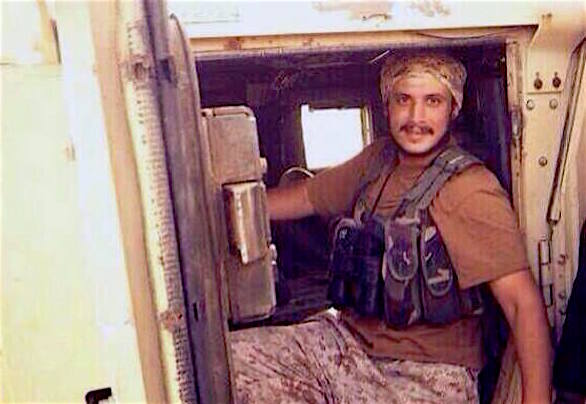
Boubaker al-Hakim (Abu Muqatil al-Tunisi) in Dabiq

Earlier today, an Iraqi military statement made public that the Iraqi government had provided coordinates to Bashar al-Assad’s air force, via the intelligence-sharing cell set up in Baghdad with Russia and Iran, for targets in Raqqa and al-Bukamal. One of the targets was Boubaker al-Hakim (Abu Muqatil al-Tunisi), a French-Tunisian Islamic State (IS) operative. Whether the Syrian regime’s strikes against al-Hakim were successful was not made clear. The interest here is that the U.S. announced on 10 December 2016 that it had killed al-Hakim in an airstrike near Raqqa on 26 November 2016, meaning that either the U.S. was mistaken or the Iraqis are. Al-Hakim is a very interesting figure in his own right with an extensive history in the jihadist movement and also highlights some broader trends, notably the assistance the Assad regime has provided to the IS movement. Continue reading

An American Jihadist At the Top of the Islamic State

Originally published at The Henry Jackson Society

By Kyle Orton (@KyleWOrton) on 9 April 2017

The eighth edition of the Islamic State’s magazine, Rumiyah (Rome), was released on 5 April 2017, and contained an obituary for one of the architects of the magazine itself. Named by his kunyas, Abu Sulayman al-Shami, Abu Sulayman al-Halabi, Abu Maysara al-Shami, and Ahmad Abdul-Badi Abu Samrah, the jihadist referred to is Ahmad Abousamra, a U.S.-Syrian dual citizen. Abousamra is quite possibly the most senior American ever to have been in IS’s ranks, and the Rumiyah article gives a very interesting glimpse more generally of IS’s hierarchy. Continue reading

America Sanctions Anjem Choudary and other British Islamic State Jihadists

By Kyle Orton (@KyleWOrton) on 30 March 2017

Anjem Choudary (image source)

The State Department designated five individuals on 30 March 2017 as Specially Designated Global Terrorists (SDGTs), imposing sanctions on them for having “committed, or [for] pos[ing] a significant risk of committing, acts of terrorism that threaten the security of U.S. nationals or the national security, foreign policy, or economy of the United States.” Four of those sanctioned are members of the Islamic State (IS), including two key British operatives in the group’s global network, and the other is a member of al-Qaeda. On the same day, the Treasury Department sanctioned two IS operatives involved in funding and guiding external IS operations in the Far East and Southeast Asia. Continue reading

U.S. Treasury Targets Al-Qaeda in Syria

By Kyle Orton (@KyleWOrton) on February 24, 2017

The U.S. Treasury on Thursday imposed sanctions on two senior operatives associated with al-Qaeda in Syria (AQS). This is undoubtedly part of the escalating campaign against AQS. The two men are interesting on their own account, however, and give a glimpse at some of the things that have shaped jihadism across the Fertile Crescent. In the one case, that of Iyad Nazmi Salih Khalil, better-known as Iyad al-Tubaysi or Abu Julaybib, this history begins with the earliest days of the Islamic State (IS), from which AQS splintered, in Iraq before Saddam Husayn was deposed. The other case, that of Bassam al-Hasri (Abu Umar al-Filistini), highlights the events at the outset of the Syrian uprising, when the regime of Bashar al-Assad set in motion its strategic plan to militarize and radicalize the nascent insurgency in order to present the population and the world a binary choice—the dictator or a terrorist takeover. Continue reading

Kuwaiti Islamic State Military Official Killed in Syria

By Kyle Orton (@KyleWOrton) on February 1, 2017

abdul-al-taresh-abu-jandal-al-kuwaiti-2

In September 2014, Kuwait undertook a series of raids against terrorists loyal to the Islamic State (IS). It was found by authorities that one of the “great influence[s]” over the jihadi-Salafists in Kuwait was Abdulmuhsin al-Taresh (Abu Jandal al-Kuwaiti). Al-Taresh was an important propagandist-recruiter for IS at this time, and would later become a senior military official. He was killed near IS’s Syrian capital, Raqqa, by the U.S.-led Coalition at the end of December. Continue reading

The Man Who Planned the Islamic State’s Takeover of Mosul

By Kyle Orton (@KyleWOrton) on January 31, 2017

Adnan al-Bilawi

Adnan al-Bilawi

Adnan Ismail Najem al-Bilawi al-Dulaymi (Abu Abdulrahman al-Bilawi), the leader of the Islamic State’s Military Council when he was killed on the eve of the Mosul offensive that he had planned in June 2014, was eulogized by IS’s official spokesman, Taha Falaha (Abu Muhammad al-Adnani), explaining his importance to the organization. Below is a profile of al-Bilawi and the section of Falaha’s speech dedicated to al-Bilawi. Continue reading

Abdallah Najem al-Jawari: A Key Early Leader of the Islamic State

By Kyle Orton (@KyleWOrton) on January 28, 2017

1

Abdallah Najem al-Jawari (Abu Azzam al-Iraqi) was something like the Islamic State (IS) movement’s first Finance Minister and a senior regional official, first in his native Anbar—he was from Fallujah—and later in Baghdad. Joining the group quickly after the collapse of the Saddam Husayn regime, al-Jawari was killed in 2005. Al-Jawari remains among those commemorated by IS as founders who set the stage for the current rise of “the State”.
Continue reading

The Assad Regime Admits to Manipulating the Islamic State

By Kyle Orton (@KyleWOrton) on January 6, 2017

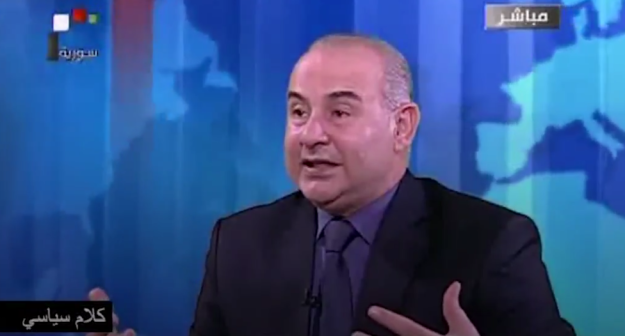
Khaled Abboud

From the beginning of the uprising in Syria in 2011, there have been accusations that Bashar al-Assad’s regime was in a de facto partnership with the Islamic State (IS) against the mainstream opposition. These accusations have a considerable basis in fact: during the entirety of the Anglo-American occupation of Iraq, Assad collaborated with IS jihadists in the destabilization of Iraq, killing thousands of Iraqi civilians and hundreds of American and British troops. Once the Syrian uprising was underway, the regime undertook various measures to bolster extremists in the insurgency. Assad and IS worked in tandem to leave Syria as a binary choice between themselves: Assad was sure this would rehabilitate him in the eyes of the world and transform his criminal regime into a partner of the international community in suppressing a terrorist insurgency, and IS wanted to rally Sunnis to its banner. The Secretary of the Syrian Parliament has now come forward to underline this. Continue reading

The Islamic State’s Media Apparatus and its New Spokesman

Originally published at The Henry Jackson Society.

By Kyle Orton (@KyleWOrton) on December 16, 2016

1

The Islamic State (IS) has named a new official spokesman, Abu Hassan al-Muhajir. Abu Hassan is the fourth man to hold the position of spokesman within the IS movement, and the third since it declared statehood in 2006. Very little is known about Abu Hassan but assessing the history of IS’s media enterprise offers some hints about his profile. In this regard, a new paper by Dr. Craig Whiteside of the International Centre for Counter Terrorism Terrorism is instructive. Looking forward, examining Abu Hassan’s inaugural speech offers some clues about the direction IS’s messaging and behaviour will take now as its statelet shrinks under pressure from the U.S.-led Coalition. Continue reading

Trump Might Continue Obama’s Dangerous Syria Policy

Originally published at The Henry Jackson Society

By Kyle Orton (@KyleWOrton) on November 24, 2016

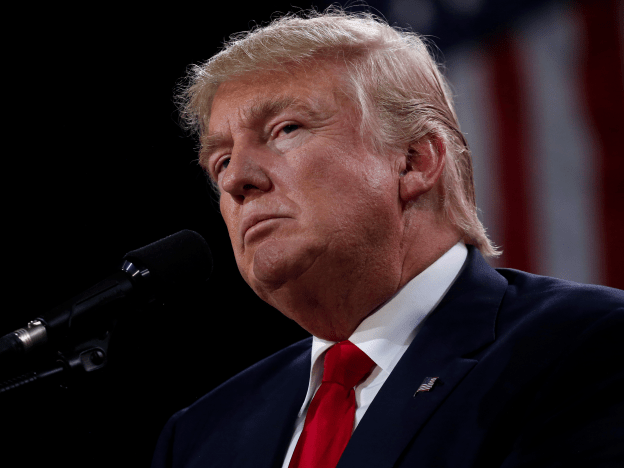
There is not yet any clarity with regard what Donald Trump would do about Syria once he becomes President. Virtually everything about the incoming administration is in the “wait and see” phase. Still, on the current evidence, Trump’s Syria policy would appear to be a continuation of President Barack Obama’s policy of prioritizing the threat of the Islamic State (IS) and other non-state Sunni jihadist groups, while effectively aligning with the pro-regime coalition, made up of Russian air power and a ground force led by the Islamic Republic of Iran, stitched together out of the battered remnants of Bashar al-Assad’s army and his sectarian militias, Iranian paramilitary and regular forces, and foreign Shi’a jihadist groups under Iran’s control. The only potential difference is that Trump may formally repudiate the anti-Assad forces. The effect of this would be to destroy the mainstream Syrian opposition and empower al-Qaeda, but it would not bring stability to Syria. There are hints, however, that Trump is recruiting senior officials who will alter this policy. Continue reading