Tag Archives: Bashar al-Assad

The West’s Plan for Defeating the Islamic State in Syria is Fatally Flawed

By Kyle Orton (@KyleWOrton) on 6 June 2017

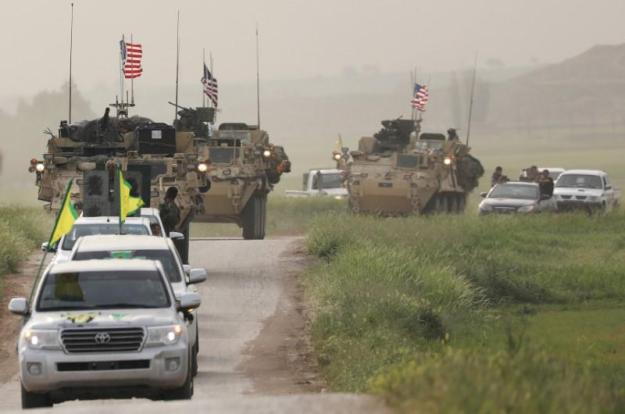
A member of the YPG/PKK militia, Delil Souleiman/Agence France-Presse — Getty Images

The United States recently committed itself to arming the Kurdish People’s Protection Units, known as the Y.P.G., to help evict the Islamic State from its Syrian stronghold, Raqqa. This decision is likely to prove deeply troublesome, risking the regional stability necessary for the lasting defeat of the Islamic State.

The Y.P.G. denies that it is, in effect, a wing of the Kurdistan Workers’ Party, or P.K.K., but the evidence is clear. The P.K.K., a Marxist-leaning Kurdish nationalist organization, was founded in Turkey in 1978, and took up arms against the Turkish state in 1984. The group’s leader, Abdullah Ocalan, was expelled from Syria in 1998, when his old patron, the regime of Hafez al-Assad (Bashar’s father), came under military threat from Turkey. Mr. Ocalan was soon arrested by the Turks, and the tide of war turned against the P.K.K. Continue reading

Raqqa Doesn’t Want to Be Liberated By the West’s Partners

By Kyle Orton (@KyleWOrton) on 30 May 2017

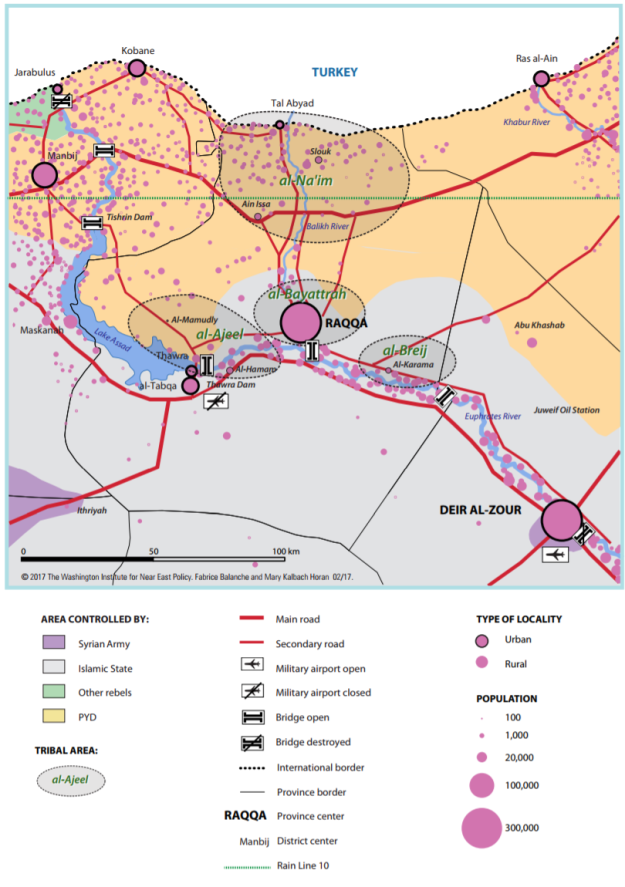
Map of the tribes around Raqqa city (source: WINEP report)

We are now on the eve of the operation to evict the Islamic State (IS) from its Syrian capital, Raqqa, and, as expected, the United States will partner with the Syrian Democratic Forces (SDF), the front-group for the Democratic Union Party (PYD) and its armed wing, the People’s Protection Units (YPG), which President Donald Trump’s administration has committed to directly arming.

Many of the doubts voiced about this course relate to Turkey, since the PYD/YPG is—despite continued efforts to obfuscate the fact—the Syrian department of the Kurdistan Workers’ Party (PKK), the premier internal security threat to Turkey for many decades. The discussion then tends to fall into one of two grooves. Continue reading

Coalition on the Verge of Repeating the Mistakes of the Past Against the Islamic State

This article was published at BICOM

By Kyle Orton (@KyleWOrton) on 16 May 2017

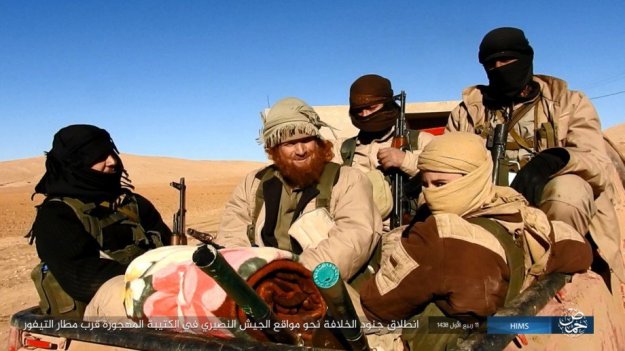
Within the next month, the Islamic State (IS) will likely lose its grip on its Iraqi capital, Mosul, and the operation to drive it from its Syrian capital, Raqqa, will begin. The destruction of IS’s caliphate, however, is not even close to the end of the road for the movement, not least because of the manner in which it is being accomplished.

At its core the IS movement is waging a revolutionary war, and as Craig Whiteside, a fellow with The International Centre for Counter-Terrorism has explained, this means that the focus is on legitimacy. Military victories come and go but if IS is, over the long-term, gaining acceptance—whether from support, resignation, or fear—among the population it hopes to govern (the Sunni Arabs), then it is winning. It is for this reason that IS tries to embed political victories within its military defeats. Continue reading

Al-Qaeda in Syria Declare War on Rebels Taking Part in the Astana Process

By Kyle Orton (@KyleWOrton) on 10 May 2017

1

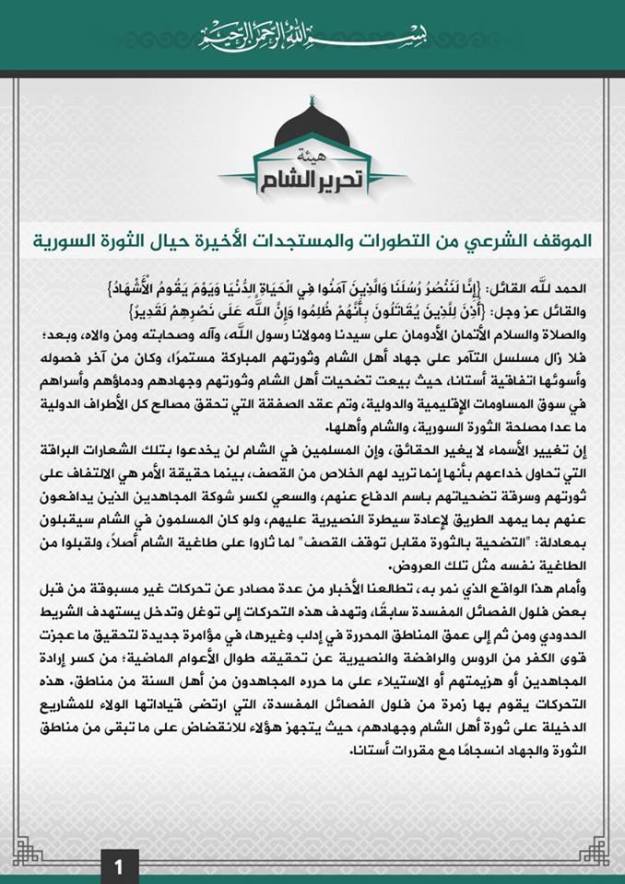
In response to the recent rounds of the Russian-organized “peace” talks in Astana, Hay’at Tahrir al-Sham (HTS), al-Qaeda’s restructured presence in Syria, put out a statement through its Fatwa Council on 9 May 2017, “The legal position concerning the latest events and developments facing the Syrian revolution”. HTS’s fatwa was a declaration of war against all parts of the rebellion participating in the Astana conferences, which HTS labelled a conspiracy to defeat the revolution and secure Bashar al-Assad in power. The statement is clearly intended against the mainstream rebellion, which operates under the colours of the Free Syrian Army (FSA) and has shown signs of coalescing into an anti-HTS alliance. HTS’s paranoia about the rebels being repurposed against it has led to previous “pre-emptive” attacks that might well have precipitated the very thing it feared. Perhaps most interesting, however, is HTS saying that it would treat as an enemy actors who “allow [the Astana-compliant factions] to work under their banner”. The reference here is to Ahrar al-Sham, a heretofore close ally of HTS, its key enabler in infiltrating and co-opting large sections of the northern insurgency, which in January sheltered various groups that survived the first wave of HTS attacks to prevent their destruction. The statement was translated by al-Maqalaat and is reproduced below with some editions in transliteration and the key sections highlighted in bold.
Continue reading

Syrian Opposition Statement on the Failure of the Astana Process

By Kyle Orton (@KyleWOrton) on 4 May 2017

Seven Syrian armed opposition groups, who have participated in the Russian-directed Astana process, put out a statement today that denounced Russia’s failure to enforce the terms of the agreements already made for a ceasefire and criticized the broader international community for its inaction in the face of barbarous crimes by the Russians’ client regime. Continue reading

France Presents Evidence Assad Committed Chemical Weapons Atrocity

By Kyle Orton (@KyleWOrton) on 26 April 2017

The French government has released its assessment of the 4 April chemical weapons attack in Syria, and “independently and categorically confirms that sarin was used”. France “deployed the required resources to obtain its own samples,” the report notes, and “collected biomedical and environmental samples and munitions and pieces of munitions” from this attack site and several prior. Continue reading

Don’t Assume the Westminster Terrorist is a ‘Lone Wolf’

By Kyle Orton (@KyleWOrton) on 18 April 2017

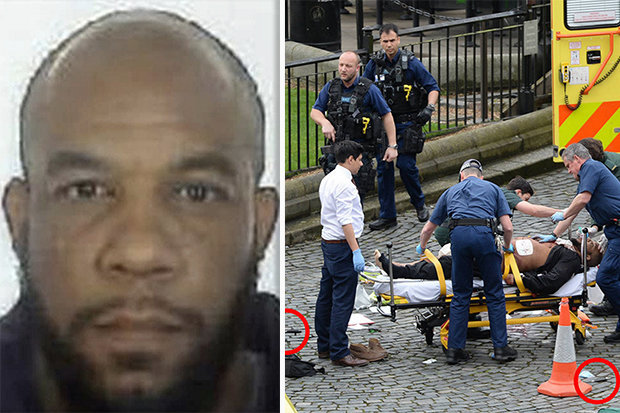
The 22 March attack outside Westminster by Khalid Masood is the most significant act of Islamist terrorism since the 7 July 2005 bombing by al-Qaeda of the London public transport system. Masood’s attack highlights a number of historic trends in British jihadism and starkly poses the question of the extent of IS’s penetration of the United Kingdom. Continue reading

Islamic State Operative Connected to Charlie Hebdo Attack Might Still Be Alive

By Kyle Orton (@KyleWOrton) on 15 April 2017

Boubaker al-Hakim (Abu Muqatil al-Tunisi) in Dabiq

Earlier today, an Iraqi military statement made public that the Iraqi government had provided coordinates to Bashar al-Assad’s air force, via the intelligence-sharing cell set up in Baghdad with Russia and Iran, for targets in Raqqa and al-Bukamal. One of the targets was Boubaker al-Hakim (Abu Muqatil al-Tunisi), a French-Tunisian Islamic State (IS) operative. Whether the Syrian regime’s strikes against al-Hakim were successful was not made clear. The interest here is that the U.S. announced on 10 December 2016 that it had killed al-Hakim in an airstrike near Raqqa on 26 November 2016, meaning that either the U.S. was mistaken or the Iraqis are. Al-Hakim is a very interesting figure in his own right with an extensive history in the jihadist movement and also highlights some broader trends, notably the assistance the Assad regime has provided to the IS movement. Continue reading

State Department Designates Two Canadian Jihadists in Syria

By Kyle Orton (@KyleWOrton) on 14 April 2017

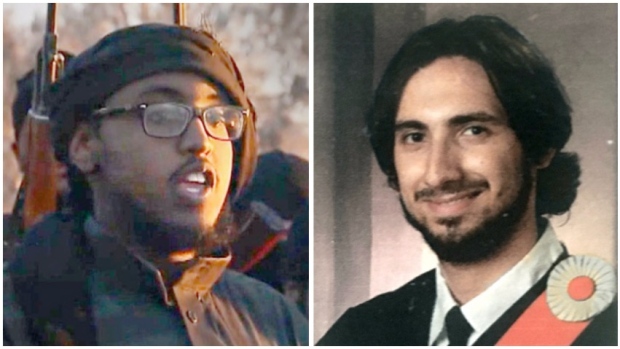
Farah Mohamed Shirdon, Tarek Sakr (image source)

The U.S. State Department added two Canadians to the list of Specially Designated Global Terrorists (SDGT) on 13 April. One of them, Tarek Sakr, of Syrian descent, is associated with Jabhat al-Nusra, al-Qaeda’s Syrian branch, which has since been through two rebrands to Jabhat Fatah al-Sham (JFS) and currently Hay’at Tahrir al-Sham (HTS). The other, Farah Mohamed Shirdon, of Somali background, is a member of the Islamic State (IS). Continue reading

America Officially Blames Assad for the Chemical Attack in Khan Shaykhun

By Kyle Orton (@KyleWOrton) on 12 April 2017

Aftermath of the Khan Shaykhun chemical attack (source)

The United States’ cruise missile strikes in Syria in the early hours of 7 April devastated the Shayrat airbase from which, U.S. intelligence assesses, the regime of Bashar al-Assad launched the nerve agent attack on Khan Shaykhun on 4 April. The U.S. has now released its fuller assessment of the chemical attack, which includes a record of Assad’s routine use of chemical munitions since 2013. This comes amid ongoing gridlock at the United Nations Security Council, where, during a volatile session yesterday, Russia’s deputy representative, Vladimir Safronkov, accused Britain supporting the Islamic State—before vetoing the proposed resolution to have an international investigation into this latest chemical attack, a fairly strong indication that Moscow knows its client regime in Syria would be found guilty. This is the eighth time Russia has used its veto to shield Assad, though this time it was notable that China abstained, rather than join Russia in a double-veto.
Continue reading