Tag Archives: Bashar al-Assad

Chemical Weapons, Syria, and Trump

By Kyle Orton (@KyleWOrton) on 9 April 2017

President Donald Trump launches cruise missiles against the Syrian regime in retribution for its chemical attack (image source)

This week, the regime of Bashar al-Assad struck the town of Khan Shaykhun with chemical weapons of mass destruction (CWMD), massacring more than eighty people. The atrocity took place around dawn local time on 4 April. At 20:40 Eastern Standard Time on 6 April (2:40 on 7 April, British time; 4:40 on 7 April, Syrian time), President Donald Trump ordered a barrage of cruise missiles against the Shayrat Airbase from which the Khan Shaykhun attack had been launched.  Continue reading

America Pushes Back Against Iranian Subversion on the Gulf

Originally posted at The Henry Jackson Society

By Kyle Orton (@KyleWOrton) on 17 March 2017

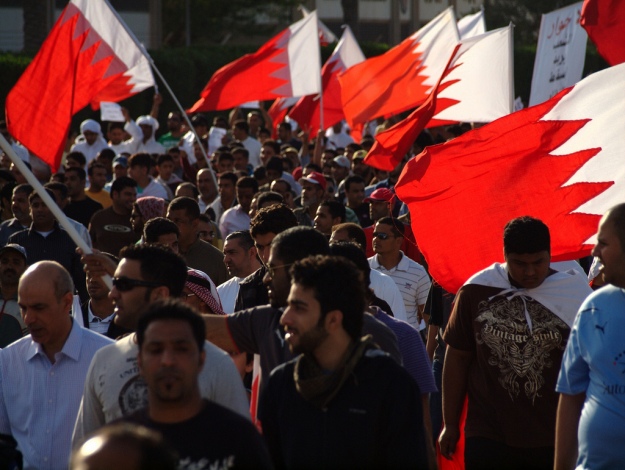
Protesters march through Manama, Bahrain in March 2011 (Photo from Al-Jazeera)

The U.S. State Department today imposed sanctions on two men, Ahmad Hasan Yusuf (Abu Maryam, Sajjad Hassan Nasir al-Zubaydi) and Alsayed Murtadha Majeed Ramadhan Alawi (Murtadha Majeed Ramadan al-Sindi), labelling them Specially Designated Global Terrorists (SDGT). Both men are members of a group, Saraya al-Ashtar or al-Ashtar Brigades (AAB) that has conducted terrorism in Bahrain and is part of the Iranian revolution’s long reach in the region. Continue reading

Why The Islamic State Endures

By Kyle Orton (@KyleWOrton) on March 15, 2017

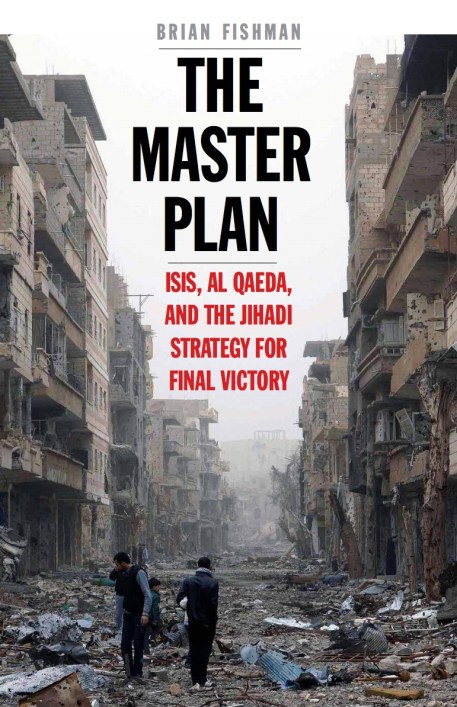
Brian Fishman’s The Master Plan provides a comprehensive history of the Islamic State’s (IS) strategic evolution, covering the personalities and events that shaped one of the most feared terrorist-insurgent groups that has ever existed. Eminently readable, in places even amusing—no small feat in a book about IS—Fishman flips with ease between the overview and the granular to demonstrate his points, using new sources that will allow as much supplementary research as a reader could wish for, and ties it together in a narrative that will be of use to both specialists and generalists. Continue reading

Outcome Uncertain as American Involvement in Syria Deepens

By Kyle Orton (@KyleWOrton) on March 10, 2017

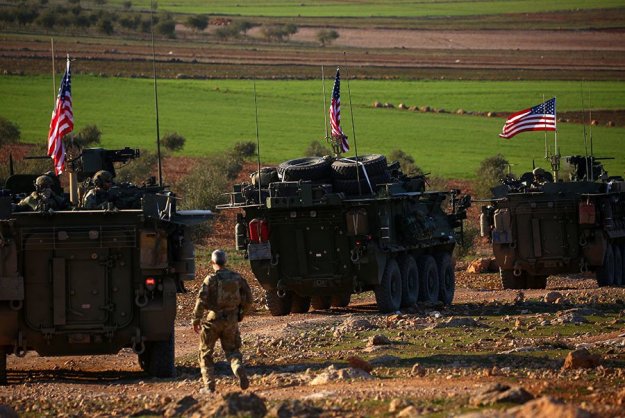
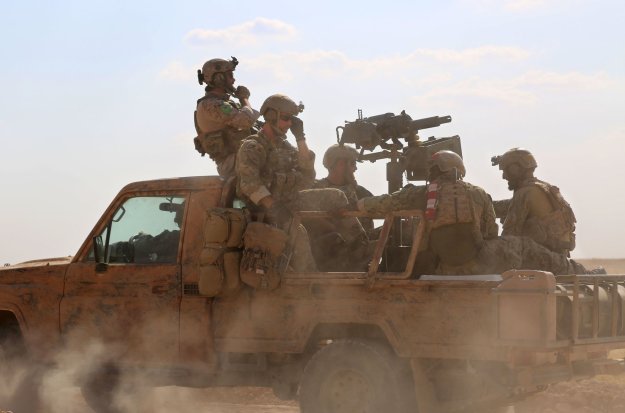
American ground forces are getting more deeply entangled in Syria as the offensive to push the Islamic State (IS) out of its de facto capital city, Raqqa, approaches. It remains unclear exactly which actors in Syria these troops will be assisting, though there are more and more indications that their mission will redound to the benefit of the regime of Bashar al-Assad and his allies, Iran and Russia. Continue reading

The West Helped the Assad Regime and Its Allies Take Palmyra

By Kyle Orton (@KyleWOrton) on March 4, 2017

For the second March in a row, the Islamic State (IS) was driven from control of Palmyra this week in an operation led by Iranian ground forces and supported by Russian airstrikes—the actual instruments of power that remain to the government of Bashar al-Assad in Syria. The primary interest this time is that the United States-led international anti-IS coalition and its Operation INHERENT RESOLVE (OIR) provided crucial assistance to the regime. Continue reading

Islamic State Has Been Defeated in Al-Bab, But America Needs a New Direction in Syria

Published at The International Business Times and subsequently discussed on the IBTimes podcast

By Kyle Orton (@KyleWOrton) on February 27, 2017

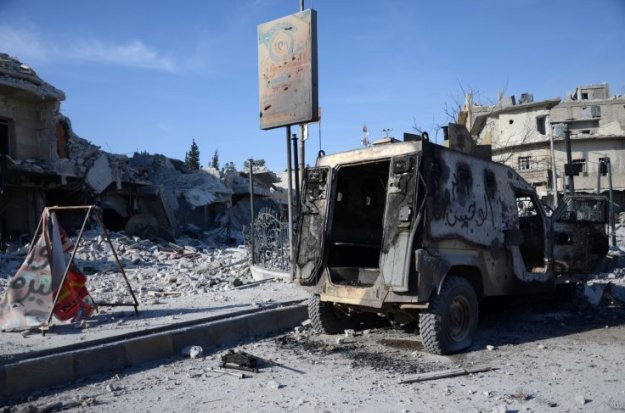
A burnt-out vehicle on a destroyed street in al-Bab on 23 February 2017 (Nazeer al-Khatib/AFP/Getty Images)

Turkey intervened in Syria in August 2016 with Operation Euphrates Shield (OES), which involved special forces, some regular troops, and the mobilisation of Syrian rebels to clear its border of terrorist threats by pushing ISIS (the Islamic State) away from the frontier and preventing the Syrian branch of the Kurdistan Workers’ Party (PKK) creating a state-let on its border that could be used as a harbour and launch-pad for attacks inside Turkey.

To secure this mission, on 13 November 2016 OES began an assault on al-Bab in the eastern countryside of Aleppo Province, just 15 miles from Turkey’s border and ISIS’ last major urban centre in Syria outside its capital, Raqqa. Some 102 days of combat later, on 23 February, al-Bab fell. What happens next could determine the course of the war as Turkey competes with the PKK to be the U.S.-led Coalition’s partner in clearing ISIS from Raqqa. Continue reading

Liberating Raqqa from the Islamic State

By Kyle Orton (@KyleWOrton) on February 17, 2017

As the new administration of Donald Trump works through the United States’ options in dealing with Syria, and the Islamic State (IS) specifically, one option apparently under consideration is the use of greater numbers of combat troops to accelerate the expulsion of IS from its Syrian capital, Raqqa. While more U.S. troops would undoubtedly hasten the collapse of IS’s grip on its urban strongholds in Syria, such a policy risks continuing the failed U.S. policies of the past six years in Syria that have tackled symptoms of the conflict, rather than its causes, have tried to tackle elements in isolation from the wider conflict, and have placed too great an emphasis on military progress over politics. Continue reading

Assad’s Crimes Against Humanity and Trump’s Options in Syria

By Kyle Orton (@KyleWOrton) on February 7, 2017

Satellite picture of Sednaya prison, Syria (source)

Amnesty International released a report today, “Human Slaughterhouse,” documenting the conditions in Sednaya prison, run by the regime of Bashar al-Assad in Syria, which amount to extermination as a crime against humanity. In addition to the deliberately insanitary conditions, routinized torture and maltreatment, there has been—and continues to be—a systematic campaign of extra-judicial massacre in which perhaps 13,000 people have perished. These findings buttress previous findings, and come with some political implications as the new American administration seeks to chart its way forward in Syria. Continue reading

Kuwaiti Islamic State Military Official Killed in Syria

By Kyle Orton (@KyleWOrton) on February 1, 2017

abdul-al-taresh-abu-jandal-al-kuwaiti-2

In September 2014, Kuwait undertook a series of raids against terrorists loyal to the Islamic State (IS). It was found by authorities that one of the “great influence[s]” over the jihadi-Salafists in Kuwait was Abdulmuhsin al-Taresh (Abu Jandal al-Kuwaiti). Al-Taresh was an important propagandist-recruiter for IS at this time, and would later become a senior military official. He was killed near IS’s Syrian capital, Raqqa, by the U.S.-led Coalition at the end of December. Continue reading

The Leader of the Islamic State in the 2004 Fallujah Battles: Umar Hadid

By Kyle Orton (@KyleWOrton) on January 30, 2017

Umar Hadid [right] (source)

Umar Hadid [right] (source)

Umar Hadid was a native of Fallujah, hence his kunya, Abu Khattab al-Falluji,[1] and a part of the extremist thread of the Salafist underground in Saddam Husayn’s Iraq. Working as an electrician for a time, Hadid had gone into internal exile years before the invasion after attacking Saddam’s security forces. In the aftermath of Saddam’s toppling, Hadid quickly joined with Ahmad al-Khalayleh (Abu Musab al-Zarqawi), the Jordanian founder of the Islamic State (IS) who had been in Baghdad from May 2002. Hadid rose swiftly in the ranks of the IS movement, and led the insurgency during the two battles with American forces in Fallujah in 2004, being killed during the second of them. Continue reading