Tag Archives: crimes against humanity

Islamic State Attacks Have Sown Division in France, Marine Le Pen Would Sow More

Published at The Telegraph

By Kyle Orton (@KyleWOrton) on 21 April 2017

Security forces stand guard after attack in Paris, 20 April 2017 (CREDIT: ETIENNE LAURENT/EPA)

In Paris last night a gunman parked his car, stepped out, and opened fire on a police van outside a Marks & Spencer’s on the Champs Élysées. One policeman was murdered; two were wounded. A female tourist was also injured. The attacker was killed by police as he tried to flee and continue his rampage. Within two hours, the Islamic State (ISIL) had claimed the attack via its Amaq News Agency, and, rather unusually, had named the killer: “Abu Yusuf al-Baljiki”.

It has been widely reported that “Abu Yusuf the Belgian” is really Karim Cheurfi the Frenchman, a 39-year-old imprisoned for fifteen years after being convicted for three counts of attempted murder in 2001. Notably, two of his intended victims were police officers. French media has reported that Cheurfi was briefly arrested on 23 February after expressing an intent to kill law-enforcement officials, but released due to lack of evidence; the Interior Ministry refused to comment. Continue reading
Outcome Uncertain as American Involvement in Syria Deepens

By Kyle Orton (@KyleWOrton) on March 10, 2017

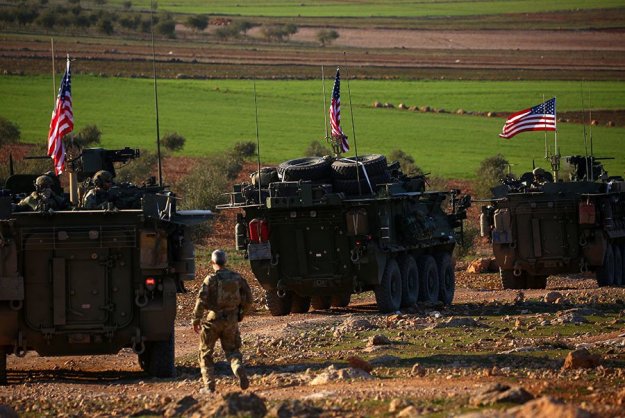
American ground forces are getting more deeply entangled in Syria as the offensive to push the Islamic State (IS) out of its de facto capital city, Raqqa, approaches. It remains unclear exactly which actors in Syria these troops will be assisting, though there are more and more indications that their mission will redound to the benefit of the regime of Bashar al-Assad and his allies, Iran and Russia. Continue reading

Assad’s Crimes Against Humanity and Trump’s Options in Syria

By Kyle Orton (@KyleWOrton) on February 7, 2017

Satellite picture of Sednaya prison, Syria (source)

Amnesty International released a report today, “Human Slaughterhouse,” documenting the conditions in Sednaya prison, run by the regime of Bashar al-Assad in Syria, which amount to extermination as a crime against humanity. In addition to the deliberately insanitary conditions, routinized torture and maltreatment, there has been—and continues to be—a systematic campaign of extra-judicial massacre in which perhaps 13,000 people have perished. These findings buttress previous findings, and come with some political implications as the new American administration seeks to chart its way forward in Syria. Continue reading

International Taboo on Chemical Weapons Frays As U.S. Steps Back

By Kyle Orton (@KyleWOrton) on January 13, 2017

Yesterday, the United States Treasury Department imposed sanctions on eighteen senior officials in the regime of Bashar al-Assad. The sanctions come in response to reports in August and October 2016 by the Organization for the Prohibition of Chemical Weapons (OPCW), the United Nations investigative body, which found that found “the Syrian government, specifically the Syrian Arab Air Force, was responsible for three chlorine gas attacks in Talmenes on April 21, 2014, and in Qmenas and Sarmin on March 16, 2015.” This is three years after the Assad regime was spared punitive military strikes for its use of chemical weapons under a Russian-orchestrated “deal” that ostensibly disarmed Assad of such weapons. Continue reading

Syria Is Only Going to Get Worse After the Fall of Aleppo

Published at The New Arab

By Kyle Orton (@KyleWOrton) on December 14, 2016

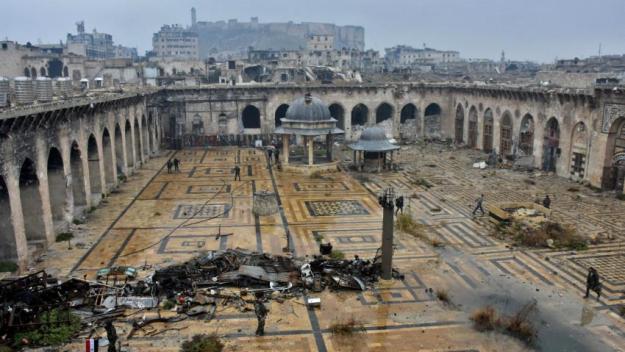
Syrian pro-government forces recapture the old city of Aleppo, December 13, 2016 [Getty]

In May 2016, the Roman Theatre in Palmyra was the site of a Russian orchestra performance, led by Valery Gergiev, a supporter of Russian ruler Vladimir Putin. The event was broadcast widely on RT (formerly Russia Today), the state-run English-language propaganda channel, and images and clips of the event were disseminated worldwide. The concert crowned Putin’s eight-month intervention in Syria, reinforcing the Kremlin’s messaging: Moscow and its blood-drenched client, Bashar al-Assad, were staffing the front line for civilisation against the barbarous hordes of the Islamic State group—and they were winning. What a difference seven months has made. Continue reading

The “Syrian Kurds” Helped Assad Take Aleppo City

By Kyle Orton (@KyleWOrton) on November 30, 2016

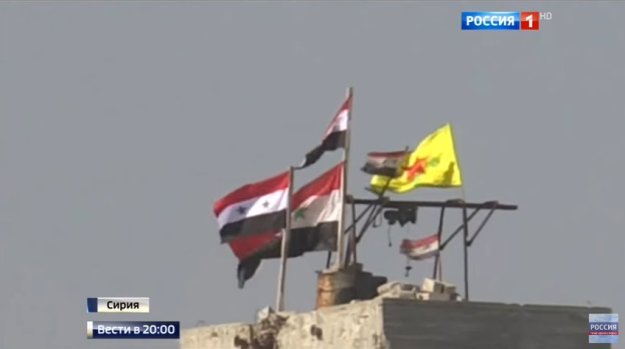
YPG flags flying with the Assad regime’s over Bustan al-Basha, Aleppo city, 28 November 2016

The Syrian Observatory for Human Rights (SOHR) reported on 28 November 2016 about the assistance provided by the Kurdistan Workers’ Party (PKK)—which operates in Syria under the banners of the People’s Protection Units (YPG) and Syrian Democratic Forces (SDF)—to the forces fighting in the name of Bashar al-Assad’s regime, led by Iran on the ground and supported by Russian airstrikes, to crush the Syrian rebellion in Aleppo city: Continue reading

What To Expect After the Fall of Aleppo

Published at TRT World

By Kyle Orton (@KyleWOrton) on November 29, 2016

The pro-Assad coalition in Syria has conquered more than a third of the rebel-held enclave in eastern Aleppo City, the last urban stronghold of the mainstream armed opposition. Without significant external assistance, it is difficult to imagine the rebels can hold off, and in the coming days or weeks will likely be forced out entirely. This will not end the war, nor will it suppress the opposition, but it will end the rebellion as a strategic threat to the regime of Bashar al-Assad and push the insurgency into a greater reliance on extremists, creating more space for international terrorists and protracting the war. Continue reading

Moscow Rules in Syria, Again

By Kyle Orton (@KyleWOrton) on September 11, 2016

1

In Geneva on 9 September 2016, the United States and Russia announced an agreement to implement a ceasefire—formally a “cessation of hostilities” (CoH)—in Syria, which is intended to allow humanitarian access and restart the political process to end of the war, and then to begin jointly targeting the Islamic State (IS) and al-Qaeda’s Syrian branch, formerly Jabhat al-Nusra, recently rebranded Jabhat Fatah al-Sham (JFS).

There is reason to wonder if the deal will ever take effect and the lack of an enforcement mechanism against Bashar al-Assad’s regime leaves open the possibility that the pro-regime coalition will, as it did after the February ceasefire, abuse this process to their advantage.

Most dauntingly, if this process worked to the letter it will legitimate the gains of the regime’s aggression, carried out under the cover of the last ceasefire, and has the potential to weaken the insurgency and embolden the regime, strengthening radicalism on all sides, pushing a political settlement further away, and thus protracting the war. Continue reading

Dehumanization and Murder in Assad’s Prisons

By Kyle Orton (@KyleWOrton) on August 19, 2016

1

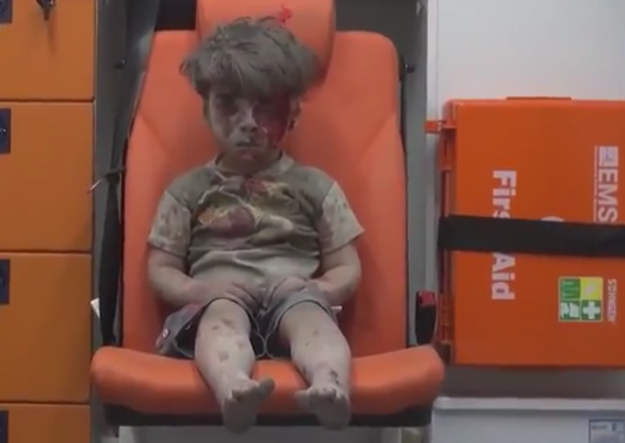
The picture above “went viral” on Thursday. The boy, five-year-old Omran Daqnees, was pulled from a building in rebel-held eastern Aleppo City after an airstrike either by the regime of Bashar al-Assad or Russia.

Like Alan Kurdi last September, Omran’s is hardly a unique case—twelve children were treated at just that one medical centre in Aleppo on Wednesday. But it seemed to capture something of the indiscriminate brutality that has been visited on the Syrian population, which rose against Assad five-and-a-half long years ago.

On the same day this shocking image came to global attention, Amnesty International released a report documenting in greater detail the monstrous scale of the cruelty and murder inflicted on Syrians who fall into the regime’s grasp. Continue reading

Assad Taking Palmyra Does Not Bring Syria Closer To Peace

By Kyle Orton (@KyleWOrton) on March 29, 2016

Originally published at Left Foot Forward. See also pieces in The International Business Times and The New Arab today on the same subject.

1

The ancient city of Palmyra and the inhabited adjoining town of Tadmor was conquered by the armed forces of Bashar al-Assad’s regime and a consortium of foreign Shi’a jihadists, some of them designated terrorist organizations, and all of them led by the Quds Force, the external operations wing of Iran’s Islamic Revolutionary Guard Corps (IRGC), itself a listed terrorist entity.

While the takeover of Palmyra by the Islamic State (IS) in May 2015 was considered by almost everybody a negative development, the pro-Assad coalition’s capture of the city under the cover of 900 indiscriminate Russian airstrikes has been called “a good thing” by no less an authority than the United States Department of Defence. It was little surprise among that Robert Fisk echoed this sentiment; it was more surprising that Boris Johnson did.

The basic case for regarding Palmyra’s fall to the pro-Assad coalition as a positive development is that, to quote Johnson, “no matter how repulsive the Assad regime may be … their opponents in [IS] are far, far worse,” and this defeat for IS moves Syria closer to peace.

There is nothing in this formulation that stands up to scrutiny. Continue reading