Tag Archives: espionage

The Role of the “Fraternal Parties” in the Soviet Union’s Global Mission

By Kyle Orton (@KyleWOrton) on 9 August 2021
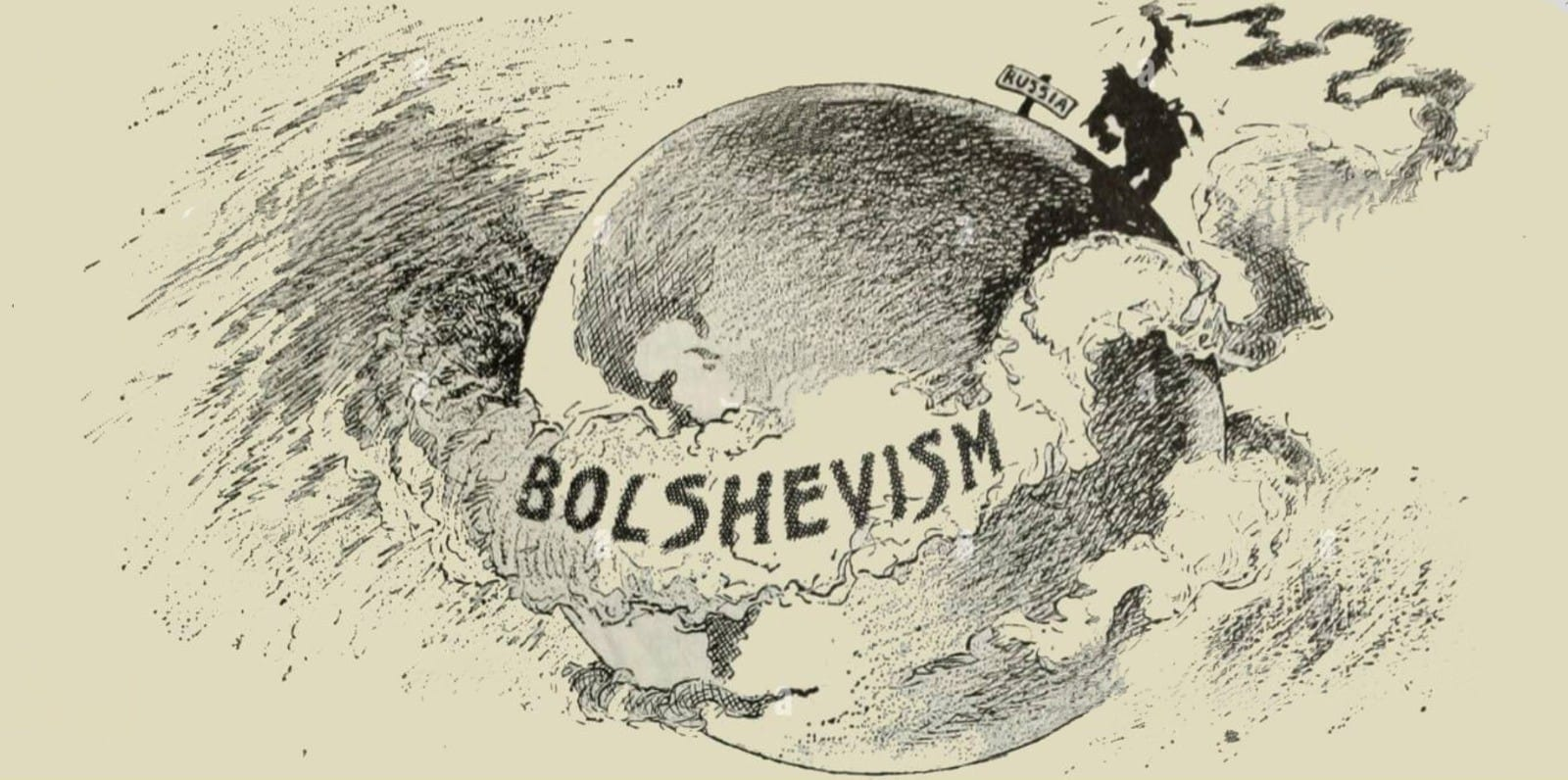
Bolshevism, 1919

After the post looking at the relationship of Reuben Falber and the Communist Party of Great Britain (CPGB) to the Soviet Union—namely the total subservience of the former to the latter—a follow-up was intended on the broader issue of the how the KGB and its predecessors interacted with the “fraternal” Parties around the world. Eighteen months later, this is that post. Let’s blame COVID.

The accusation that the Communist Parties around the world were fronts for the KGB was often derided as “McCarthyism” while the Cold War was going on. Arguments about that term in general to one side,[1] it certainly did not apply in this case. The accusations as stated were entirely factual. Continue reading

Spywar and Strategy: The Israel-Iran Contest in the Middle East

By Kyle Orton (@KyleWOrton) on 29 June 2021
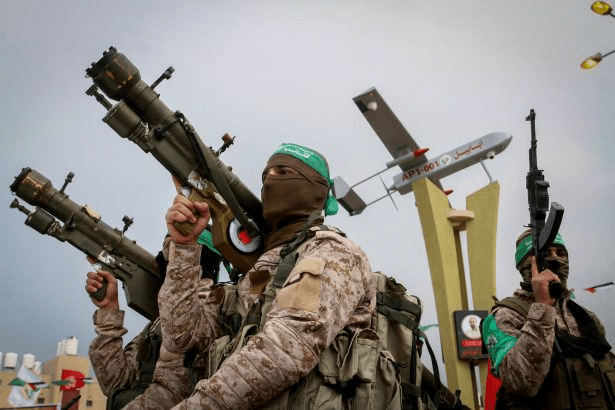
Members of the Ezzedine al-Qassam Brigades, the military wing of Hamas, at a memorial in Gaza, 31 January 2017. Photo by Abed Rahim Khatib, Flash90.

The May 2021 round of fighting in Gaza brought with it the upending of the unspoken understanding between Israel and Hamas and a level of intercommunal violence within Israel that has not been seen in quite some time. The scale of the rocket attacks on the Jewish state must also be counted among the unusual elements of this latest flare-up, with Iran clearly identifiable as the enabling state behind Hamas and Palestinian Islamic Jihad (PIJ), the two primary factions behind these attacks. Continue reading

General Franco’s Intentions in the Second World War

By Kyle Orton (@KyleWOrton) on 25 June 2021

Writing recently about the first meeting between Adolf Hitler and Francisco Franco at Hendaye on 23 October 1940, where the Führer tried to enlist Spain into the Axis, I concluded, drawing on Franco: The Man and His Nation by George Hills, a former BBC journalist and Fellow of the Royal Historical Society:

Continue reading

Just What Is Iran Capable Of?

By Kyle Orton (@KyleWOrton) on 8 June 2021

Massive explosion at Khojir in eastern Tehran lights up the night sky, 25 June 2021 [image source]

The clerical regime in Iran, born in terrorism and dedicated to its export, has carried out atrocities across the world since 1979. The Islamic Republic has made Israel and Jews a special target of its murderous Revolution, and this has naturally incurred what one might call “resistance” from the Israeli government. What is notable in recent times is how the global ledger is shaping up, albeit while the strategic regional situation is quite different. The Israelis have delivered blow after blow to Iran, many of them within Iran, including removing senior officials, and the Iranian theocracy has proven unable to reply because its terrorist infrastructure is so badly infiltrated and just sheerly incompetent. Continue reading

Islamism in Syria

By Kyle Orton (@KyleWOrton) on October 23, 2020

A chapter about Islamism in Syria I wrote for the American Foreign Policy Council’s (AFPC) ‘World Almanac of Islamism’ was published today. Do check it out, and the broader site, which is a great, accessible resource. The format of the website necessitated that the chapter as I submitted it was edited, condensed, and split up to fill out the various categories. In case it is of any interest, the original version of the chapter is reproduced below.

Continue reading

Islamic State Celebrates the Murderer of Sikhs in Afghanistan

By Kyle Orton (@KyleWOrton) on 20 June 2020

Al-Naba 239, page 9

The Islamic State (IS) released the 239th edition of its newsletter, Al-Naba, on 18 June. Pages 9 and 10 of this twelve-page document were given over to a profile of Abu Khaled al-Hindi, the jihadist elsewhere named as Mohammad Sajid Kuthirummal who massacred twenty-five worshippers at a Sikh gurdwara or temple in Kabul three months ago, on 25 March 2020, during an hours-long siege. The details of Abu Khaled’s life—finding IS after being repelled by “nationalist” jihadist groups, fighting while injured, his obedience to IS’s leaders, and thirst for “martyrdom”—are relatively standard hagiography from IS. What is really worth noting is that such an extensive focus on him, and through him on Afghanistan, underlines the importance IS has placed on its Afghan branch, Wilayat Khorasan. Continue reading

The Soviets’ Bagman in Britain

By Kyle Orton (@KyleWOrton) on 22 February 2020

Communist Party of Great Britain (Marxist–Leninist) (CPGB-ML) carrying banners and Stalin postsers at a May Day parade // May 2016

Jeremy Corbyn has been dogged throughout his time as leader of the British Labour Party by his associates. Having Seumas Milne, a believing Stalinist and general conspiracy theorist, as his spin-doctor and primary strategist is actually among the least disgraceful things about Corbyn. Corbyn was, despite later attempts at obfuscation, a vocal supporter of the Provisional Irish Republican Army (PIRA). Corbyn was paid £20,000 for pro-Iranian propaganda by the clerical regime. He laid a wreath honouring Black September, the deniable unit of the Palestine Liberation Organisation (PLO) responsible inter alia for the mutilation and murder of Israeli athletes at Munich in 1972. Then there was Fidel Castro, HAMAS, Hizballah, and on and on.

Thus, when it was revealed, two years ago this month, that Corbyn supplied political and other intelligence to the secret police of Communist Czechoslovakia, it was unsurprising. Corbyn was known to have supported the Soviet side in the Cold War, from Castro’s Cuba to the Sandinistas in Nicaragua; had he known of Soviet support to PIRA, it would not have turned him against them. So, it was all taken very much in stride. Putting aside the lament that it should have been a bigger scandal that the Leader of the Opposition was once an “operational contact” for the Soviet Bloc, it was an interesting look at how the Soviet Union, through its satellite states, sought to cultivate sympathisers and exert influence in Britain—and how little is known, even now, about the scale and success of such things.

Somebody who could have shed more light on this was Reuben Falber, a senior official of the Communist Party of Great Britain (CPGB) and its key liaison with the KGB. When he died on 29 April 2006, he took most of his secrets with him. Still, what is known of Falber’s career gives some insight and such insights are by no means all retrospective. Continue reading

The CIA and Iraq: Intelligence Failures, Media Successes

By Kyle Orton (@KyleWOrton) on 28 December 2019

In a long article last week, I looked at why the U.S. ran a formal occupation of Iraq for fourteen months after the fall of Saddam Husayn in April 2003, given that there had been an explicit pre-invasion decision not to have an occupation government. The short answer is that the occupation was installed through deception by the State Department, supported by the Central Intelligence Agency (CIA). State and CIA had argued for a protracted occupation in the Situation Room debates in 2002, but President George W. Bush had sided with the Pentagon, which advocated a rapid transfer of power to Iraqis. Having lost in the formal inter-agency process, the State Department succeeded by subversion in getting its way on the ground in Iraq. The disaster this caused in the mismanagement of post-Saddam Iraq was, as the article explained in detail, only the most serious impact of the toxic schism between State/CIA and the Pentagon, a factor whose import is difficult to overstate when examining how the Bush administration functioned. (This feud also at times drew in the Vice President’s Office, which tended to support the Pentagon.)

Continue reading

The Intelligence Value of the Iraqi National Congress

By Kyle Orton (@KyleWOrton) on 27 December 2019

The Iraqi National Congress (INC), the umbrella group for the Iraqi opposition to Saddam Husayn from the 1990s up to 2003, has been immensely controversial, mostly because of its leader, Ahmad Chalabi, against whom the Central Intelligence Agency (CIA) and State Department waged a bitter bureaucratic war, a lot of it in the press, getting into circulation stories of INC trickery—possibly on behalf of Iran—being behind the Bush administration’s decision to invade Iraq.

Continue reading

The Memoir of a British Spy in Al-Qaeda

By Kyle Orton (@KyleWOrton) on 8 July 2019

This article was originally published at the European Eye on Radicalization

The main issue that Nine Lives has to overcome is the one that has attended Aimen Dean (a pseudonym) since he went public in March 2015 with an interview he gave to the BBC, claiming he had been a British spy within Al-Qaeda between 1998 and 2006. That issue is overcoming the doubts about his story. Nine Lives goes a long way to solving this by bringing in Paul Cruickshank, the editor-in-chief of CTC Sentinel, one of the premier academic resources in the terrorism field, and Tim Lister, a terrorism-focused journalist with CNN, as co-authors. As well as helping structure the book from Dean’s memories, the two co-authors note they had been able to “corroborate key details” that convinced them: “In the years immediately leading up to and following 9/11, Aimen Dean was by far the most important spy the West had inside al-Qaeda”.

Continue reading