Tag Archives: Ibrahim Awwad al-Badri al-Samarrai

Testimony of Abu Ahmad: An Islamic State Defector

By Kyle Orton (@KyleWOrton) on October 2, 2014

A purported defector from the Islamic State, known only as “Abu Ahmad,” released testimony online on 5 April 2014 via the Syrian opposition news site al-Durar al-Shamiya under the heading, “The Concealed Truths About al-Baghdadi’s State”. Abu Ahmad describes himself as “one of the mujahideen in Khorasan [Afghanistan-Pakistan] and Iraq, and now in al-Sham [Syria],” and it is quite clear that Abu Ahmad has defected to al-Qaeda. On 25 September 2014, an English version of this testimony was posted on the Fund for Fallen Allies website. It has been reposted below—with some editions to transliteration and syntax—to avoid it being lost. Continue reading
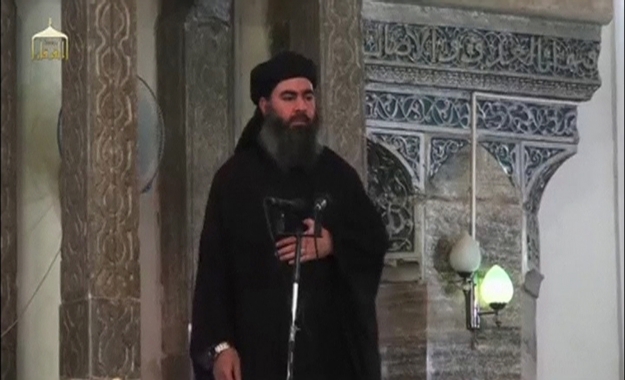

The First Appearance of the Caliph

By Kyle Orton (@KyleWOrton) on July 12, 2014

Abu Bakr al-Baghdadi

The leader of the Islamic State (ISIS), Abu Bakr al-Baghdadi, made his first public appearance on July 4, 2014, delivering the khutbat al-jum’a (Friday prayer) at the Great Mosque, also known as the Nuri Mosque or Zangi Mosque, in Mosul. A translation of al-Baghdadi’s speech was made by INSITE Blog on Terrorism and Extremism and is reproduced below. Continue reading

ISIS Announces the Restoration of the Caliphate

By Kyle Orton (@KyleWOrton) on June 29, 2014

The Islamic State of Iraq and Syria (ISIS) announced that it had restored the caliphate on 29 June 2014. ISIS’s name was changed to simply the Islamic State (I.S.), and its leader, Abu Bakr al-Baghdadi, abandoned his kunya and proclaimed himself Caliph Ibrahim, his real name being Ibrahim al-Badri. The statement announcing that the areas I.S. rules in Syria and Iraq are now a caliphate, entitled “This Is The Promise of Allah [God],” was given by the group’s official spokesman, Abu Muhammad al-Adnani, and was distributed by al-Hayat Media in Arabic, English, Russian, French, and German. The English version is reproduced below with some editions for transliteration and some interesting or important sections highlighted in bold. The speech lays out how the state should and will be governed—in other words, what I.S. envisions for its utopia. Continue reading