Tag Archives: Intelligence

The Taliban Supreme Leader Emerges—Maybe

By Kyle Orton (@KyleWOrton) on 1 November 2021

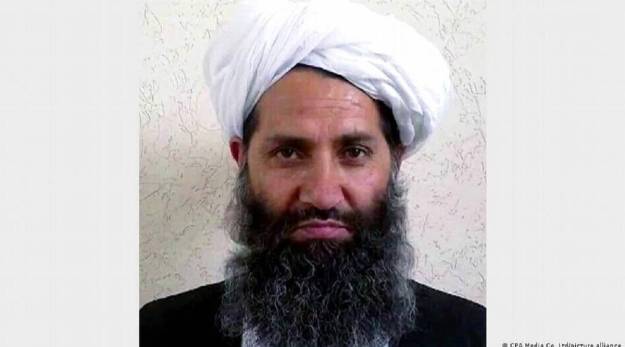
Hibatullah Akhundzada

A ten-minute audio tape attributed to the Taliban’s Supreme Leader Hibatullah Akhundzada appeared on 30 October, the first such communication since the jihadist takeover of Afghanistan in August. Hailed as Akhundzada’s “first public appearance” or his decision to step into “the limelight”, the reality is more complicated. Continue reading

The Capture of the Islamic State “Finance Minister” and the Impact of Leadership Losses

By Kyle Orton (@KyleWOrton) on 22 October 2021

This article was originally published at European Eye on Radicalization

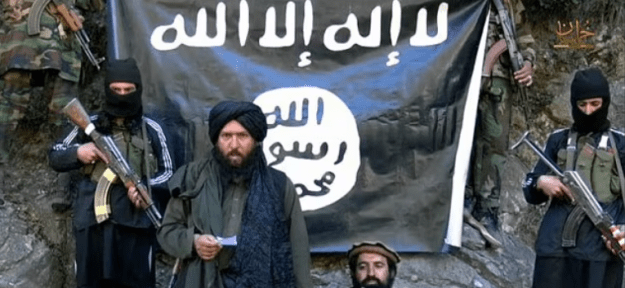
Sami Jassim al-Jaburi (Haji Hamid) | IMAGE SOURCE

Mustafa al-Khadhemi, the Iraqi Prime Minister, announced on the morning of 11 October that the Iraqi National Intelligence Service (INIS) had arrested Sami Jassim al-Jaburi (Haji Hamid), the effective finance emir of the Islamic State (ISIS), in “a complex external operation”. Continue reading

The Haqqani Network, Al-Qaeda, and Pakistan’s Jihad in Afghanistan

By Kyle Orton (@KyleWOrton) on 7 September 2021

Anti-Taliban fighters watch U.S. airstrikes at Tora Bora, 16 December 2001 || REUTERS/Erik de Castro

The State Department spokesman Ned Price said, on 27 August, “The Taliban and the Haqqani Network are separate entities”. The next day, the Pentagon Press Secretary John Kirby slightly modulated this, having first tried to dismiss the question, by conceding there was “a certain amount of … commingling … there’s a marbling … of Taliban and Haqqani”, before saying he was “pushing back … [on] the relevance of that discussion”.

What these officials were trying to do was two-fold: (1) to refute press reports that U.S. officials in Kabul had shared “a list of names of American citizens, green card holders, and Afghan allies” with the Taliban, amounting to having “put all those Afghans on a kill list”, as one “defense official” put it; and (2) to deny that the U.S. coordination with the Taliban to evacuate people the jihadists wanted to kill—a surreal enough situation—had involved the additional political and legal problems of coordinating with a formally registered Foreign Terrorist Organization (FTO), as the Haqqani Network is. Continue reading

The Islamic State Benefits From the Taliban Takeover of Afghanistan

By Kyle Orton (@KyleWOrton) on 1 September 2021

In his speech last night announcing the end of the American presence in Afghanistan and what happens next, Secretary of State Blinken said: “The Taliban seeks international legitimacy and support”, and “the Taliban can do that by meeting commitments and obligations”, which include “counter-terrorism”.

To most people it will seem strange that the Taliban could be regarded as a counter-terrorism partner, and it is. Despite the U.S. never formally listing the Taliban as a Foreign Terrorist Organization (FTO), the Taliban is fully integrated in a jihadist network under the control of Pakistan’s Inter-Services Intelligence (ISI) that includes Al-Qaeda. Continue reading

Signs of Improvement in the Media Coverage of Pakistan’s Role in Afghanistan

By Kyle Orton (@KyleWOrton) on 26 August 2021

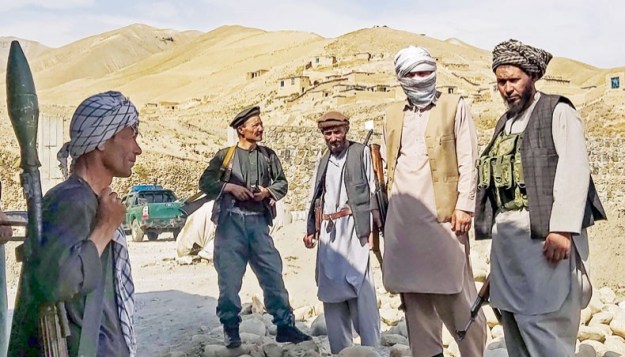
Taliban patrol in Wazir Akbar Khan, Kabul, 18 August 2021 [image source]

Having recently complained about the lack of emphasis in the media coverage of Afghanistan on the fact that Pakistan controls the Taliban, it is only right to note that there have been some recent signs of improvement. Continue reading

Pakistan and the Taliban

By Kyle Orton (@KyleWOrton) on 17 August 2021

Afghan government forces guarding Taloqan, Takhar province, Afghanistan // July 2021 // AFP photo

Kabul fell to the Taliban on 15 August. There is so much more to be said about the disastrous decisions the United States that precipitated this calamity, not least the so-called peace process whose only concrete effects were to weaken and demoralise the Afghan government, while bolstering the ranks of the Taliban by forcing the release of thousands of jihadists. The chaotic Saigon scenes have testified to the incompetence of Joe Biden’s administration, even at administrative tasks, and the horrors are only just beginning.

This post has a slightly different focus, namely the role of Pakistan, specifically its military and Inter-Services Intelligence (ISI), as the author and operator of the Taliban and allied jihadists. This factor—absolutely fundamental to the conflict—has been, for twenty years, bizarrely absent in much of the coverage, and suggestions recur to this day that the Taliban is actually a problem for Pakistan. When the Pakistan dimension does come up, it will either be to note that Pakistan has some kind of role in funding or otherwise “supporting” the Taliban, and at its strongest the Taliban will be called a “proxy” of the ISI.

Even the word “proxy”, however, underplays the extent to which the Taliban is Pakistan, a wing of its (deep) state power. Continue reading

What Can We Learn From Iran’s Foreign Minister?

By Kyle Orton (@KyleWOrton) on 3 May 2021

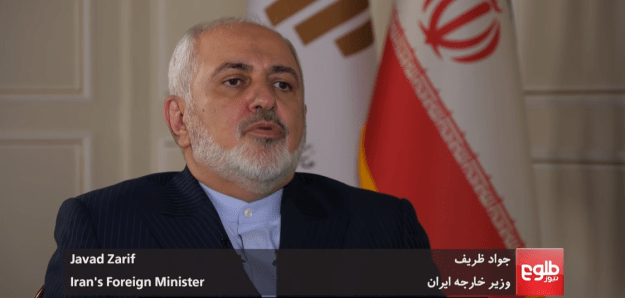
Iranian Foreign Minister Muhammad Javad Zarif, December 2020, during an interview with Lotfullah Najafizada of TOLO News

Iran’s Foreign Minister, Muhammad Javad Zarif, took part in an oral history project intended for internal use by the clerical dictatorship in February and on 25 April the audio was leaked—so goes the story. There is every reason to think this is a controlled leak, which is to say an information operation or a piece of strategic messaging—more pejoratively, propaganda or disinformation: choose the terminology as you will—intended to assist the Iranian theocracy as it works through its negotiations on the nuclear file with the new American administration of President Joe Biden. Still, there are some insights from this episode, as with an interview Zarif gave—focused on Afghanistan—in December. Continue reading

The First Speech of Abu Hamza al-Muhajir

By Kyle Orton (@KyleWOrton) on 15 March 2021

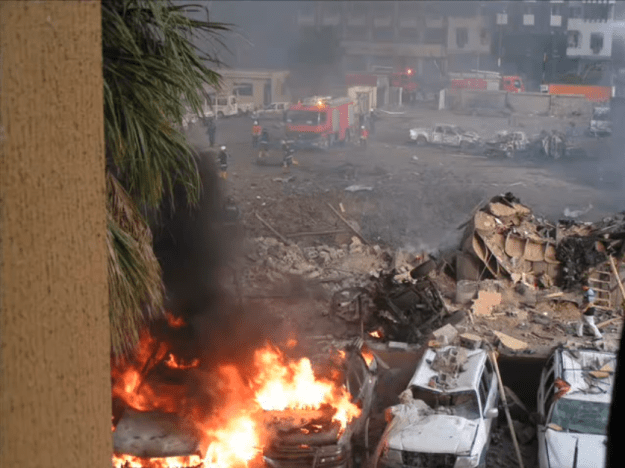
Destruction at the Sadeer Hotel in Baghdad, 9 March 2005

The Islamic State movement, then-known as Al-Qaeda in Mesopotamia (AQM), used a suicide truck bomb to blow up the Sadeer Hotel, where many foreign contractors were staying, and the next-door Agriculture Ministry, on 9 March 2005, murdering three people and wounding forty, thirty of them Americans. Reporting at the time noted that “insurgents wearing police uniforms first shot to death a guard at the Agriculture Ministry’s gate, allowing the truck to enter a compound the ministry shares with the adjacent Sadeer hotel”, and these details were confirmed in a two-minute audio message released later in the day by Abu Hamza al-Muhajir, the veteran Egyptian jihadist who would take over AQM when its founder was killed in 2006.[1] A transcript of the brief speech is reproduced below. Continue reading

Russia’s View of the Endgame in Afghanistan

By Kyle Orton (@KyleWOrton) on 23 February 2021

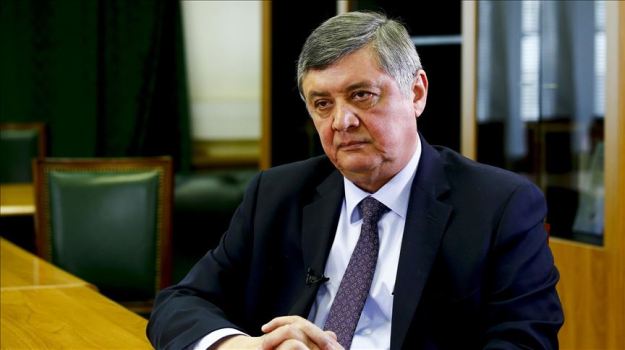
Russia’s presidential envoy for Afghanistan Zamir Kabulov

Russian ruler Vladimir Putin’s current special envoy for Afghanistan, Zamir Kabulov, spoke to Sputnik’s Tajik service on 17 February, and a translation of the interview is published below with some interesting sections highlighted in bold. Kabulov was the KGB resident in Kabul in the 1980s and early 1990s, and later in the 1990s, during the Taliban’s reign over Kabul and much of the rest of the country, he was an adviser to the United Nations peace envoy. Continue reading

Bosnian General Convicted for Jihadist Crimes

By Kyle Orton (@KyleWOrton) on 24 January 2021

Sakib Mahmuljin [image source]

This week, Bosnia’s war crimes court convicted Sakib Mahmuljin, the General in charge of the state military unit that organised and controlled the foreign jihadi-Salafists, many connected to Al-Qaeda, who came to fight for the Bosnian government during the war in the early 1990s. Mahmuljin’s conviction for overseeing torture and murder by the jihadists highlights an aspect of the Bosnian war that is often left out of accounts. Continue reading