Tag Archives: Iran

Stick or Twist: Israel’s Referendum on Netanyahu

Published at The Arab Weekly

By Kyle Orton (@KyleWOrton) on 31 March 2019

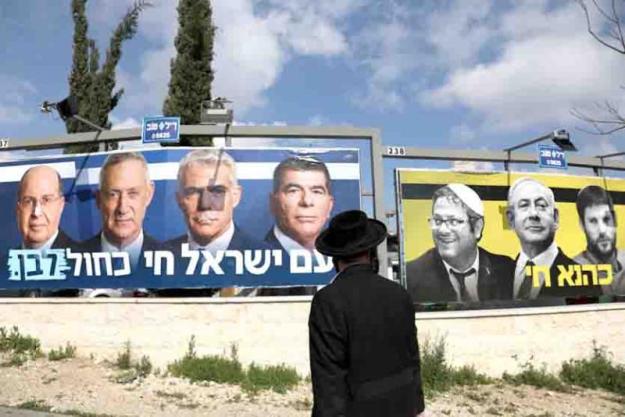
An Orthodox Jewish man looking at Israeli election campaign posters in Jerusalem, 27 March 2019 // Reuters

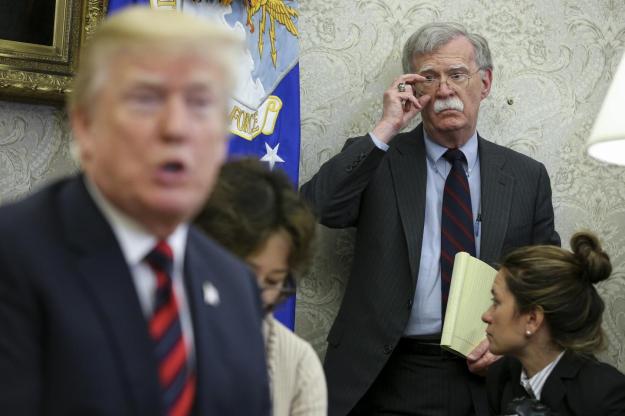
Israeli Prime Minister Benjamin Netanyahu was in attendance on 25 March when President Donald Trump signed the order recognising Israeli sovereignty over the Golan Heights, but had to leave soon after a rocket from Gaza hit a house north of Tel Aviv. These events—and other regional developments—are taking place less than two weeks from Israeli elections, where Netanyahu is neck-and-neck with his challenger. Continue reading

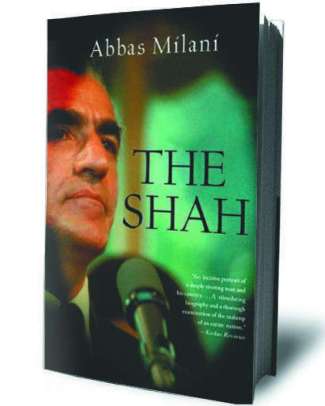
The Shah, the Cold War, and the Islamists

By Kyle Orton (@KyleWOrton) on 20 March 2019

Abbas Milani’s The Shah gives a portrait of Iran’s last monarch, Muhammad Reza Pahlavi, and the impact that his downfall forty years ago continues to have in the Middle East, notably the emboldening of the Islamist movement. Continue reading

The Democrats and Corbynism

By Kyle Orton (@KyleWOrton) on 19 March 2019

When the Democratic Party faced a revolt from its ranks for daring to propose condemning anti-Semitism, the scene gave those of us in Britain deja vu. The American Left is following the same script that led to the rapid radicalization of the Labour Party, led by Jeremy Corbyn. It’s no longer a mere talking point, a form of shorthand for journalists: The Democratic Party’s Corbynization is here, and it tacks so closely to what happened in Britain that it’s important for Americans to understand where we’ve been — and where they’re headed. Continue reading

If America is to Stay in Syria, What For?

This article was published at Ahval

By Kyle Orton (@KyleWOrton) on 12 March 2019

The wheel turns again. After U.S. President Donald Trump announced the withdrawal of U.S. forces from Syria in December, it seemed rapprochement with Turkey was on the cards. Now that looks less likely. Continue reading

What is Turkey Doing in Syria?

By Kyle Orton (@KyleWOrton) on 10 March 2019

Turkish soldiers in Efrin, Syria, March 2018. (AFP)

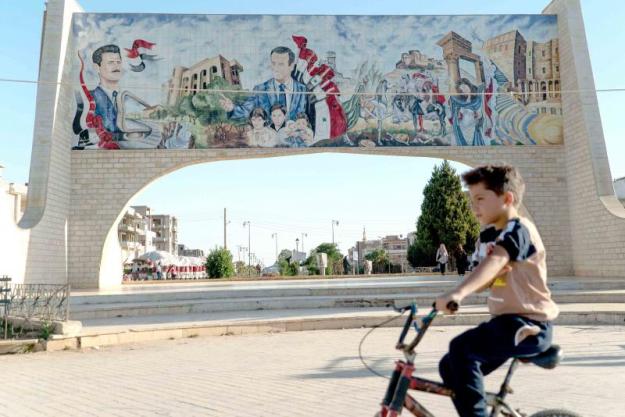
Eight years ago, peaceful protests began against Syrian President Bashar Assad. Since then, outside powers — the Iran-Russia axis, the United States and Turkey — have become dominant in Syria.

The Iranians and Russians keeping Assad’s regime alive are clearly going nowhere. The Americans’ indecision on the point is apparently final. So, what of Turkey, which is the custodian of the remnants of the armed opposition? Continue reading

Islamic State Urges Defiance as the Caliphate Collapses, Attacks Other Islamists

By Kyle Orton (@KyleWOrton) on 9 March 2019

Al-Naba 172 front page

The Islamic State (IS) released the 172nd edition of Al-Naba, its newsletter, on 7 March 2019. Continue reading

The Establishment of the Qajar Dynasty in Iran

By Kyle Orton (@KyleWOrton) on 28 February 2019

Agha Mohammad Khan Qajar, founder of the Qajar dynasty (1794-1925) in Iran [source]

Gavin R.G. Hambly, a Middle East scholar and historian, wrote a paper in 1963 about the establishment of the Qajar dynasty, the second-to-last ruling House in Iran, and particularly about its first monarch, Agha Mohammad Khan. The paper is slightly revisionist about Agha Mohammad, countering the long-standing reputation of him as solely a ruthless despot. The Qajars, for all their faults, prevented the outright colonisation of Iran in the nineteenth century, and imposed an order that held the country together, albeit while losing tracts of territory on the periphery—the Caucasus and Turkmenistan to the Russians in the north, and areas in the east to the British, notably Herat, which was annexed to Afghanistan, and parts of Baluchistan and Sistan to what would later become Pakistan. This resilience of the Iranian state is largely ascribable to Agha Mohammad, argues Hambly, who showed a sense of public spirit he is rarely credited with in consciously making the lives of ordinary Iranians better. Continue reading

The Folly of Trying to Buy Assad’s Loyalty From Iran

By Kyle Orton (@KyleWOrton) on 5 February 2019

Bashar al-Assad meeting Iranian Foreign Minister Mohammad Javad Zarif, Damascus, Syria, 3 September 2018 // SANA handout to REUTERS

The Syrian regime of Bashar al Assad has nearly collapsed twice under pressure from the armed insurrection, in late 2012 and early 2015. On both occasions, Assad was rescued by outside powers, first Iran and then a joint Iranian-Russian operation. It has been a recurring illusion that there is or will be, a strategic split between Russia and Iran. This prospect has continued to tantalise the US and others, and occasional Moscow-Tehran disagreements are presented as evidence that dynamics are shifting this way. Another round of such speculation is currently underway. Continue reading

What Would a Benny Gantz Administration Be Like for Israel?

Published at The Arab Weekly

By Kyle Orton (@KyleWOrton) on 3 February 2019

Benny Gantz, Binyamin Netanyahu [image source]

Benny Gantz, a former head of the Israel Defence Forces, opened his campaign for prime minister on January 29 with a speech setting out his programme. Gantz was swiftly denounced by Israeli Prime Minister Binyamin Netanyahu as a “leftist” but there is no sign of that in what is known of Gantz and for good reason. Continue reading

Can Russia Reconcile Turkey and Syria?

This article was published at Ahval under the headline, “Back to the Future for Turkey and Syria?”

By Kyle Orton (@KyleWOrton) on 1 February 2019

American base on the outskirts of Minbij, 26 December 2018. (Photo by Delil souleiman / AFP)

U.S. President Donald Trump’s surprise announcement that U.S. troops would be withdrawn from Syria came with many visible costs. The benefits the anti-Islamic State (ISIS) campaign has delivered to Syrian President Bashar Assad, Iran, and Russia were made permanent. There is also more space for ISIS and greater instability in northeast Syria as Turkey confronts Syrian Kurdish forces. And there is the political cost to the United States of leaving its Kurdish anti-ISIS partner to face Turkey and the pro-Assad coalition alone. Continue reading