Tag Archives: Islamic State

The Islamic State’s Media Apparatus and its New Spokesman

Originally published at The Henry Jackson Society.

By Kyle Orton (@KyleWOrton) on December 16, 2016
1

The Islamic State (IS) has named a new official spokesman, Abu Hassan al-Muhajir. Abu Hassan is the fourth man to hold the position of spokesman within the IS movement, and the third since it declared statehood in 2006. Very little is known about Abu Hassan but assessing the history of IS’s media enterprise offers some hints about his profile. In this regard, a new paper by Dr. Craig Whiteside of the International Centre for Counter Terrorism Terrorism is instructive. Looking forward, examining Abu Hassan’s inaugural speech offers some clues about the direction IS’s messaging and behaviour will take now as its statelet shrinks under pressure from the U.S.-led Coalition. Continue reading
Syria Is Only Going to Get Worse After the Fall of Aleppo

Published at The New Arab

By Kyle Orton (@KyleWOrton) on December 14, 2016

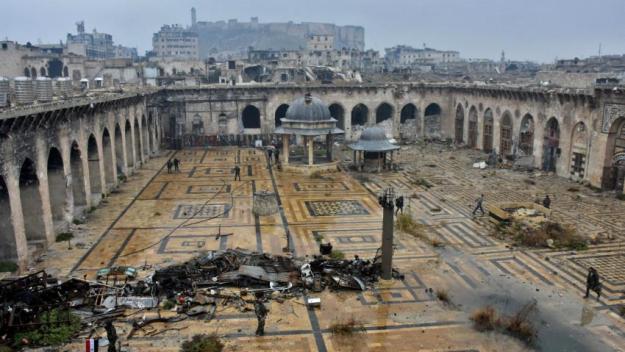
Syrian pro-government forces recapture the old city of Aleppo, December 13, 2016 [Getty]

In May 2016, the Roman Theatre in Palmyra was the site of a Russian orchestra performance, led by Valery Gergiev, a supporter of Russian ruler Vladimir Putin. The event was broadcast widely on RT (formerly Russia Today), the state-run English-language propaganda channel, and images and clips of the event were disseminated worldwide. The concert crowned Putin’s eight-month intervention in Syria, reinforcing the Kremlin’s messaging: Moscow and its blood-drenched client, Bashar al-Assad, were staffing the front line for civilisation against the barbarous hordes of the Islamic State group—and they were winning. What a difference seven months has made. Continue reading

Assad and Russia Losing Palmyra is No Surprise: They Cannot Defeat Jihadism in Syria

Published at The International Business Times

By Kyle Orton (@KyleWOrton) on December 12, 2016

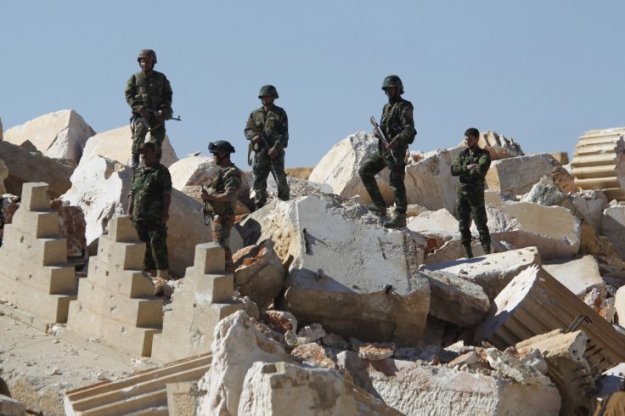
Syrian regime army soldiers stands on the ruins of the Temple of Bel in Palmyra, 1 April 2016 (REUTERS/Omar Sanadiki)

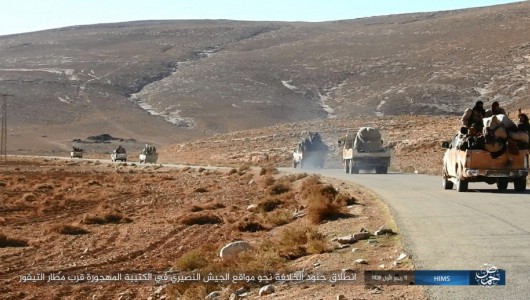
The Islamic State (IS) is supposed to be on its way to defeat. IS is under assault in Mosul and the operation to evict it from Raqqa began a month ago. Just this morning, Turkish-backed rebel forces in Syria have reportedly pierced IS’s defences in al-Bab, IS’s most important city outside of its twin capitals. But on Sunday, after a four-day offensive, IS seized Palmyra. How to explain this? Continue reading

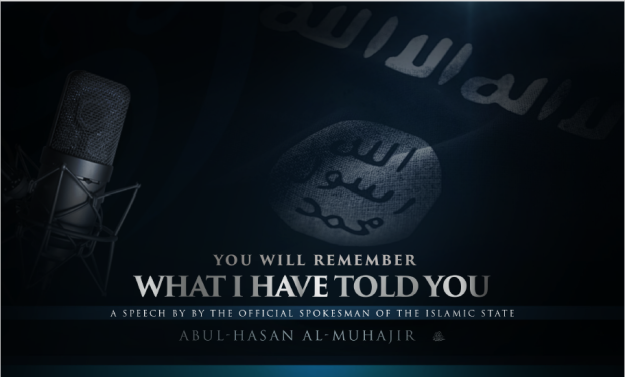
The Inaugural Address of the Islamic State’s New Spokesman

By Kyle Orton (@KyleWOrton) on December 9, 2016

1

Taha Subhi Falaha (Abu Muhammad al-Adnani) was killed near al-Bab in northern Syria on 30 August in an airstrike by the U.S.-led Coalition. One of Falaha’s roles was the Islamic State’s official spokesman. On 5 December, IS announced that it has a new spokesman, Abu Hassan al-Muhajir, and he gave an inaugural speech. That speech, entitled, “You Will Remember What I Have Told You,” was printed in the fourth issue of Rumiyah on 7 December. Rumiyah seems to have replaced the English-language Dabiq magazine—probably because the village of Dabiq has been lost. The speech is reproduced below with some editions for spelling, some additions for explanation, and some especially notable sections highlighted in bold.
Continue reading

The End of the Beginning for the Islamic State in Libya

By Kyle Orton (@KyleWOrton) on December 7, 2016

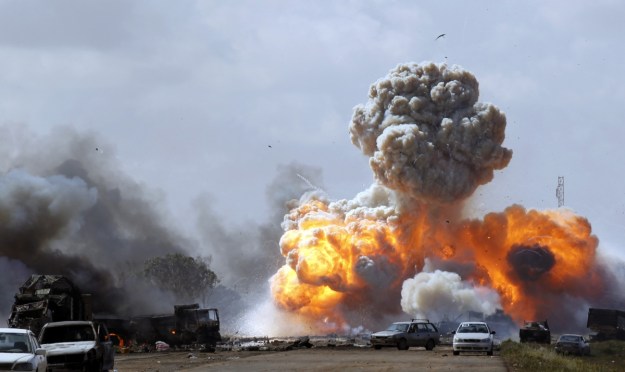
The “capital” of the Islamic State (IS) in Libya, Sirte, has fallen to pro-government militias. “Our forces have total control of Sirte,” claimed one spokesman on Monday. “Islamic State’s rule over Sirte is now over,” said another. That was slightly premature, though it does appear that the city fell entirely around mid-afternoon yesterday. Regardless, it is clear that IS’s hold on Sirte is soon to be at an end. Positive as this development is, it is what happens after IS’s grip on urban areas is broken that will determine the durability of this victory. IS will remain a disruptive force for some time no matter what happens next, and for that reason it is important to continue military operations in pursuit of IS in its rural sanctuaries. But IS is a symptom of Libya’s political problems, not their cause. Without a government that solves some of those original problems, and has the legitimacy and capacity to keep IS out, the group will rise again. Continue reading

Al-Qaeda Explains its Split with the Islamic State

By Kyle Orton (@KyleWOrton) on December 6, 2016

1

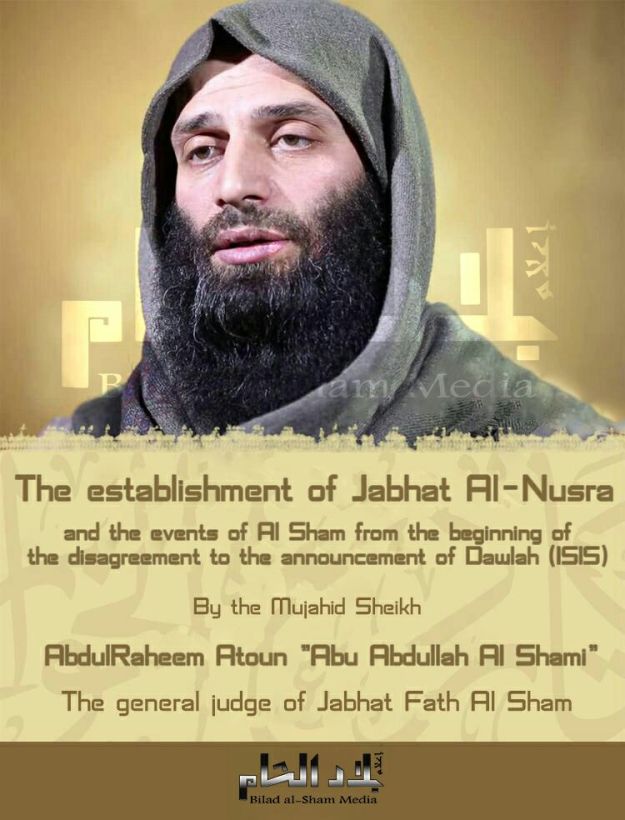
On 20 November 2016, Jabhat Fatah al-Sham (JFS), al-Qaeda’s rebranded presence in Syria, published its first official account of how JFS, previously known as Jabhat al-Nusra, split from its parent organization, the group we now know as the Islamic State (IS). The statement was composed by Abd al-Rahim Atun (Abu Abdullah al-Shami), identified as the General Judge of JFS. It is apparently drawn from the book, “Under the Shade of the Tree of Jihad” (p. 177-194), and the post was entitled, “The Establishment of Jabhat al-Nusra and the Events of al-Sham [Syria] from the Beginning of the Disagreement to the Announcement of al-Dawla [the State]”. On 27 November, Bilad al-Sham Media released an English language version of this statement, which is reproduced below with some editions for spelling, grammar, and so on, and some especially notable sections bolded. Continue reading

Defeating the Islamic State for Good

Originally published at The Henry Jackson Society

By Kyle Orton (@KyleWOrton) on December 2, 2016

Islamic State fortifications in Deir Ezzor (from an IS video, 11 July 2016)

The Islamic State (IS) is nominally under attack now in its twin capitals, Mosul in Iraq and Raqqa in Syria. This is necessary task, of course, but, as I’ve written repeatedly over the last few months, clearing IS from its urban centres is not sufficient. IS lost its overt urban holdings once before and nonetheless rebuilt in the deserts between 2008 and 2013, rising again to seize increasingly-large tracts of territory that were eventually declared a caliphate. IS was able to do this because of the success of its long-term method of war-making, and political changes in Baghdad—toward greater sectarianism and authoritarianism—that gave it more space to manoeuvre. The flaws in the strategy and partners the U.S.-led international Coalition have chosen to eliminate IS are creating a situation in which what will be called “victory” is really the resetting of the cycle. More evidence of this has recently come to the fore. Continue reading

What To Expect After the Fall of Aleppo

Published at TRT World

By Kyle Orton (@KyleWOrton) on November 29, 2016

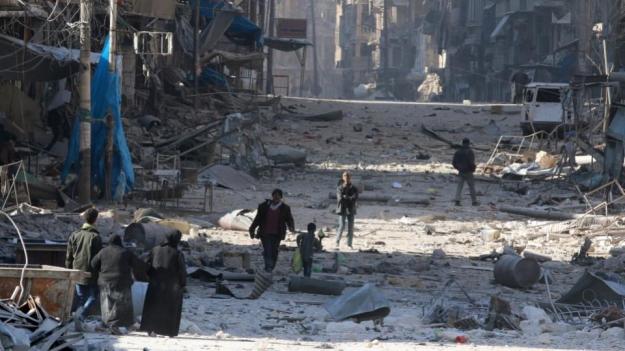
The pro-Assad coalition in Syria has conquered more than a third of the rebel-held enclave in eastern Aleppo City, the last urban stronghold of the mainstream armed opposition. Without significant external assistance, it is difficult to imagine the rebels can hold off, and in the coming days or weeks will likely be forced out entirely. This will not end the war, nor will it suppress the opposition, but it will end the rebellion as a strategic threat to the regime of Bashar al-Assad and push the insurgency into a greater reliance on extremists, creating more space for international terrorists and protracting the war. Continue reading

The Islamic State’s Terrorism Guides

By Kyle Orton (@KyleWOrton) on November 27, 2016

Junaid Hussain

Junaid Hussain

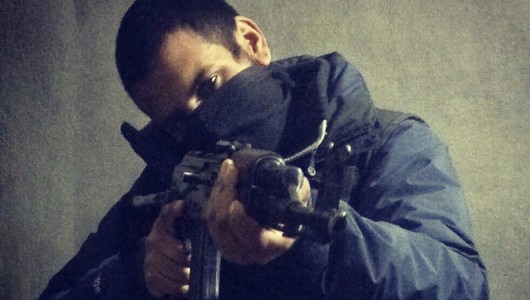
The Islamic State (IS) has been putting a lot of effort recently, especially over the summer, into directing attacks outside its caliphate, particularly in Europe. While many of these attacks are initially reported as “lone wolf” incidents, it has become increasingly clear by IS’s method of claiming these attacks that IS’s Amn al-Kharji, or foreign intelligence service, is guiding these attacks—walking the would-be murderers through the attacks emotionally, ideologically, and logistically. Continue reading

Trump Might Continue Obama’s Dangerous Syria Policy

Originally published at The Henry Jackson Society

By Kyle Orton (@KyleWOrton) on November 24, 2016

There is not yet any clarity with regard what Donald Trump would do about Syria once he becomes President. Virtually everything about the incoming administration is in the “wait and see” phase. Still, on the current evidence, Trump’s Syria policy would appear to be a continuation of President Barack Obama’s policy of prioritizing the threat of the Islamic State (IS) and other non-state Sunni jihadist groups, while effectively aligning with the pro-regime coalition, made up of Russian air power and a ground force led by the Islamic Republic of Iran, stitched together out of the battered remnants of Bashar al-Assad’s army and his sectarian militias, Iranian paramilitary and regular forces, and foreign Shi’a jihadist groups under Iran’s control. The only potential difference is that Trump may formally repudiate the anti-Assad forces. The effect of this would be to destroy the mainstream Syrian opposition and empower al-Qaeda, but it would not bring stability to Syria. There are hints, however, that Trump is recruiting senior officials who will alter this policy. Continue reading