Tag Archives: Islamic State

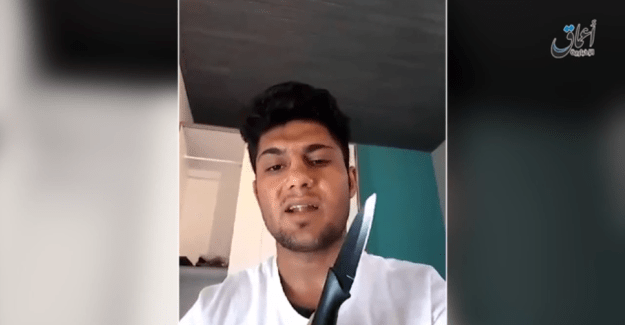
Islamic State Intelligence Guided The Würzburg Train Attacker

By Kyle Orton (@KyleWOrton) on July 21, 2016

muhammad-riyad-2

On 18 July 2016, in the Heidingsfeld district of Würzburg of Bavaria in southern Germany, a seventeen-year-old Afghan refugee named Riaz Khan Ahmadzai (Muhammad Riyad), armed with a hatchet and a knife, wounded five civilians, two of them seriously, on a train between Treuchtlingen to Würzburg. The four people injured on the train were from the same family from Hong Kong; Ahmadzai/Riyad then wounded another civilian seriously as he jumped from the train. Ahmadzai, who had entered Germany as an unaccompanied minor and had been living in Ochsenfurt, Bavaria, was shot dead after a chase with police.  Continue reading

The Caliphate at Two

By Kyle Orton (@KyleWOrton) on July 16, 2016

A version of this article was published at Radio Free Europe/Radio Liberty, “Under the Black Flag

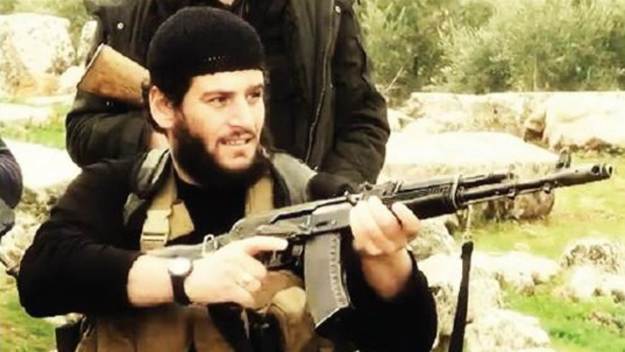
Islamic State's spokesman and Syrian governor, Taha Subhi Falaha (Abu Muhammad al-Adnani)

Islamic State’s spokesman and Syrian governor, Taha Subhi Falaha (Abu Muhammad al-Adnani)

The extremist group now known as Islamic State (IS) first claimed statehood, with clear pretentions to a new caliphate, in 2006—and eight years later made it explicit.

“Now the dream has become a reality,” Taha Falaha (Abu Muhammad al-Adnani) said in his speech on June 29, 2014, declaring that the territory IS held in Syria and Iraq constituted the rebirth of the caliphate. “The State will remain.”

Two years later, this looks like an unsafe proposition. Continue reading

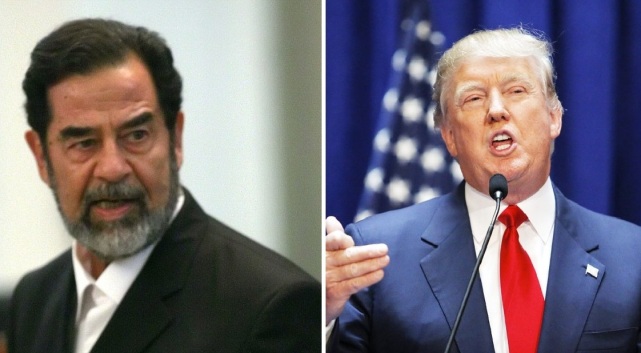
Donald Trump is Wrong (Again): Saddam Hussein Supported Terrorism

By Kyle Orton (@KyleWOrton) on July 6, 2016

Last night Donald Trump unburdened himself of the view that Saddam Hussein was an efficient anti-terrorist operator. It is a statement Trump has made before, and it is one of such staggering ignorance—yet one which has such wide sympathy—that it seemed worth examining the multiple ways in which it was wrong. Continue reading

The Islamic State is Losing Militarily, Gaining Politically

By Kyle Orton (@KyleWOrton) on June 29, 2016

The New York Post had a symposium on the progress of the U.S.-led campaign against the Islamic State. This is my contribution:

The American-led effort to defeat the Islamic State is yielding significant tactical and military results. But the campaign is deeply flawed: It’s being waged as if the politics can be worked out after the fall of ISIS’s statelet, and in the process providing ISIS the conditions that will ensure its revival. Continue reading

Russia Needs the Islamic State to Save Assad

By Kyle Orton (@KyleWOrton) on June 20, 2016

Cross-posted at The Interpreter.

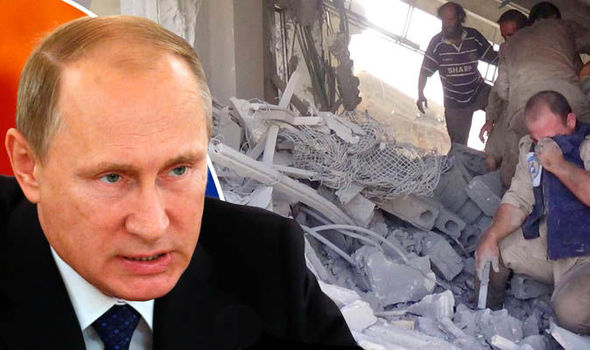
After a coalition supporting the regime of Syrian ruler Bashar al-Assad conquered the city of Palmyra from the Islamic State (IS) in late March, suggestions were made that this demonstrated the efficacy of the pro-Assad coalition in fighting IS, and doubtless the same will be said if and when the pro-regime forces conquer Tabqa. It isn’t true. From the time of Russia’s direct intervention in Syria on 30 September 2015 to Moscow’s announcement on 14 March 2016 that it was withdrawing “the main part” of its “military” from Syria, IS was almost untouched and al-Qaeda was barely damaged, while the Assad regime was bolstered and the moderate opposition, particularly those components supported by the West, were gravely weakened.

Despite Moscow’s claims that its mission was fighting IS or “terrorism,” Russia’s real goals can be summarized as three:

  1. Rescue the Assad regime, which was assessed to be in mortal peril
  2. Damage the mainstream armed opposition, especially those elements supported by the West, in order that Russia can …
  3. Rehabilitate the Assad regime internationally by inter alia leaving only extremists as its opponents, depriving the international community of credible interlocutors, and therefore strengthening the Russian hand to make peace talks an instrument for re-legitimizing Assad, rather than removing him

In recent days, this basic war strategy has been seen again in southern Syria. Continue reading

Don’t Count the Islamic State in Libya Down Yet

By Kyle Orton (@KyleWOrton) on June 13, 2016
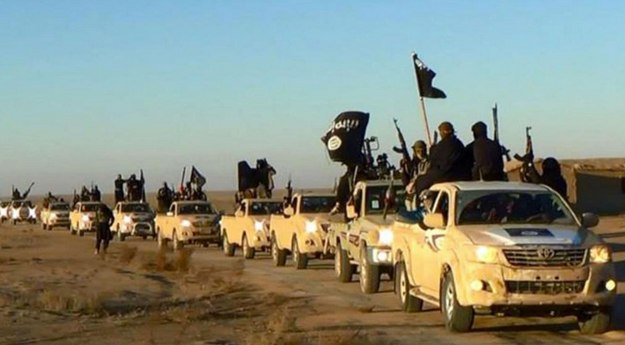
Islamic State convoy, Anbar Province, January 2014

Islamic State convoy, Anbar Province, January 2014

In Libya, the government of national accord (GNA)—in this case militias largely from western Libya, specifically Misrata, and the guards from the oil installations—claimed to have driven the Islamic State (IS) from Sirte on 11 June. Backed by artillery and airstrikes, with tanks moving in on the ground and some street clashes, the GNA-flagged troops had reached the city centre on 9 June. Expelled from Derna in the east in June 2015 and cleared from Sabratha in western Libya after a brief occupation earlier this year, this left Sirte as IS’s only major urban stronghold.

At the end of 2015, IS had controlled about 200 miles of coastline, from Abuqrayn (100 miles west of Sirte) to Nawafaliya (80 miles east of Sirte). On 12 May, an offensive began to take Sirte, coordinated through al-Bunyan al-Marsoos (The Solid Structure) Operations Room. The attack began from the Misratan militias in the west and by late May the eastern front had been opened up. At the end of May, IS lost Nawafaliya, and the collapse of territorial control has been steady since then, with IS now controlling about forty miles of coastline. A Libyan government official was quoted saying, “The battle wasn’t as difficult as we thought it would be.” While this is true—100 pro-GNA troops were killed and 500 wounded—there are reasons to be sceptical of the idea that this is the end for IS in Libya, and not just because IS still holds even areas of the Sirte.

IS had been in occupation of Sirte for almost exactly a year, meaning it has been able to accrue considerable resources, and had between 4,000 and 6,000 fighters in the city—composed of defectors from Ansar al-Shari’a (al-Qaeda), local tribes, elements of the fallen regime of Muammar al-Qaddafi, and operatives from IS core. IS has made a show of resistance, but the number of reported IS casualties is low, and the speed with which IS has fallen back makes such early reports plausible. In combination with the continued politico-military dysfunction of the ostensible governing authorities, this is very worrying.

Continue reading

The Islamic State’s Newsletter Prepares for the End of the Caliphate

By Kyle Orton (@KyleWOrton) on June 9, 2016

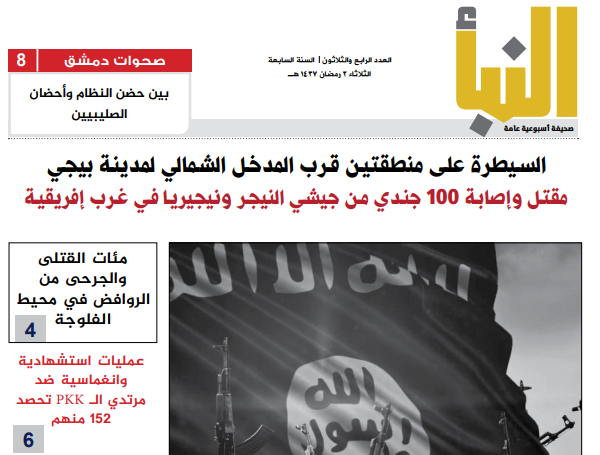
First page of the 34th edition of the Islamic State newsletter, al-Naba

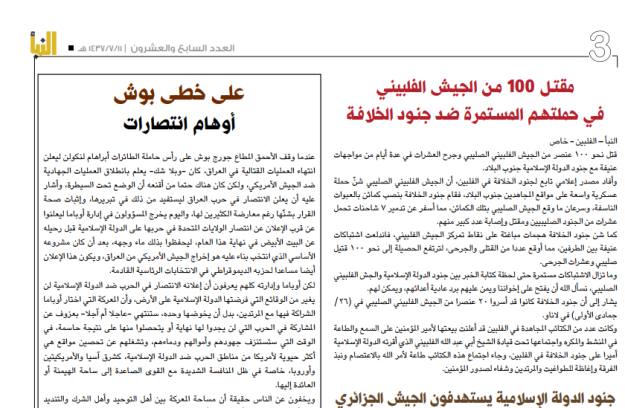
The Islamic State’s (IS) spokesman, Taha Falaha (Abu Muhammad al-Adnani), gave a speech on 21 May that prepared the ground ideologically for the end of IS’s statelet and a return to the deserts where the organization survived after the surge-and-sahwa drove it from the urban zones of Iraq in 2007-08. Al-Naba, IS’s newsletter, is printed within the caliphate on Saturdays and distributed online on Tuesdays. Al-Naba’s 34th edition, published within the territories on 4 June and put on the internet on 7 June, echoed Falaha’s theme that the caliphate was a cause that would outlast the loss of territory since it was now embedded in the hearts of a generation of Muslims, and al-Naba also took a swipe at al-Qaeda and jihadi groups like Ahrar al-Sham that believe the path to an Islamist polity is bottom-up, through the building of popular consent. The Naba editorial is reproduced below with some important sections highlighted in bold.
Continue reading

The Islamic State, Territory, and a Change of Tone

By Kyle Orton (@KyleWOrton) on May 26, 2016

The Islamic State’s spokesman, Taha Falaha (Abu Muhammad al-Adnani), released a speech on 21 May that prepared the ideological ground for the loss of territory by underlining something the Islamic State has long maintained: the caliphate is more a cause than a location. This was a departure, however, from the confident messaging that the Islamic State had emphasized since it announced the caliphate in June 2014. Just a month before Falaha’s speech, on 16 April, the twenty-seventh edition of al-Naba, the Islamic State’s weekly newsletter, carried an editorial that was triumphalist about the march of the jihadists—despite the losses in the prior eight weeks, of Ramadi in early February, al-Shadadi later in February, Palmyra on 27 March, and al-Qaryatayn on 3 April. That editorial from al-Naba 27 is reproduced below. Continue reading

Islamic State Prepares for Retreat, Calls for Foreign Terrorism

By Kyle Orton (@KyleWOrton) on May 23, 2016

1

Taha Falaha (Abu Muhammad al-Adnani) is the governor Islamic State-held territory in Syria and oversees the foreign attacks, a roster of duties which indicates that Falaha so powerful that he is effectively the caliph’s deputy after the demise of Abd al-Rahman al-Qaduli (Abu Ali al-Anbari) in March. Falaha is also IS’s official spokesman, and on 21 May 2016 he gave a very significant speech entitled, “That They Live By Proof”. The speech, released by Al-Hayat Media Centre, is reproduced below with some minor alterations in transliteration, some important sections highlighted in bold, and some notes added for explanation.

Falaha made three major points. First, Falaha was especially adamant that territorial control by IS should not be considered a measure of IS’s success: it lost all urban holdings and went into the deserts last time, after the strategic defeat in 2008, but it held to its cause and America withdrew, and this ideological cohesiveness and determination led it to be more powerful than ever within five years. Second, Falaha made use of the savage conduct of the coalition made up of the Assad regime, Iran, and Russia—and the Western indifference to same—to argue for Sunnis to see IS as a protective barrier against such sectarian foes. And, third, Falaha called for foreign attacks by Western Muslims, saying that if IS’s loyalists were unable to journey to IS-held areas this should not be considered a problem since attacks in the West are “more beloved to [IS] than the biggest act done [within the caliphate]”. Continue reading

The Passing of Hizballah’s Old Guard

By Kyle Orton (@KyleWOrton) on May 15, 2016

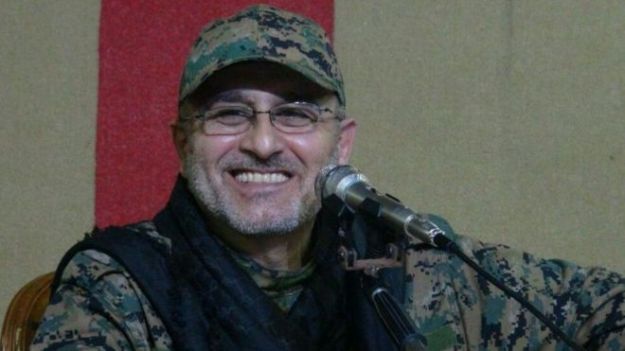
Hizballah's military commander (2008-2015) Mustafa Amine Badreddine

Hizballah’s military commander (2008-2015) Mustafa Amine Badreddine

Mustafa Badreddine, the military commander of Hizballah, was announced killed in Syria on 13 May. This is the third major casualty of the founding generation: Imad Mughniyeh, Badreddine’s predecessor and also his cousin and brother-in-law (Mughniyeh married Saada, Badreddine’s sister), was killed in February 2008 in Damascus in an operation led by MOSSAD and supported by the CIA, and Hassan al-Laqqis, who had become one of the Party of God’s military officials in Syria, was gunned down outside his home in Beirut in December 2013. For all the speculation about “Ahrar al-Sunna Baalbek Brigade” and its links to Kataib Abdullah Azzam and al-Qaeda—or Saudi intelligence, as Hassan Nasrallah had it—the likeliest suspect was never in doubt. Hizballah has also lost other senior and propagandistically important men like Samir Kuntar, who was killed in an explosion in Damascus in December 2015. Again, however, there seemed little doubt—even from Hizballah—that Israel had done this. Continue reading