By Kyle Orton (@KyleWOrton) on February 12, 2017

Abu Musab al-Zarqawi [left] and Abu Muhammad al-Maqdisi [right]
By Kyle Orton (@KyleWOrton) on February 12, 2017
Abu Musab al-Zarqawi [left] and Abu Muhammad al-Maqdisi [right]
By Kyle Orton (@KyleWOrton) on January 28, 2017
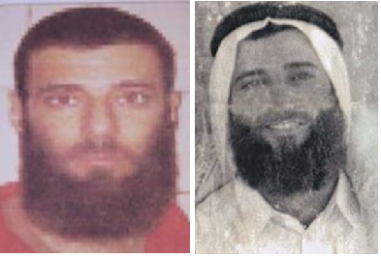
When Ibrahim al-Badri (Abu Bakr al-Baghdadi) became the leader of the then-Islamic State of Iraq (ISI) in May 2010, his deputy was man named Numan al-Zaydi, who went under various pseudonyms: Abu Ibrahim al-Ansari, Abu Sulayman al-Nasser, and Al-Nasser Lideen Allah Abu Sulayman. Al-Zaydi was killed in February 2011. Continue reading
UPDATE: It has subsequently become clear that the “Abu Abdullah al-Muhajir” who was killed in Syria on 18 November 2016 was not Muhammad al-Saghir, who is profiled below. The slain man, like al-Saghir a veteran of the war get the Soviets out of Afghanistan and an Egyptian jihadist with close links to al-Qaeda, also used the kunya “Abu Afghan al-Muhajir”.
By Kyle Orton (@KyleWOrton) on November 20, 2016

Abu Abdallah al-Muhajir (source)
A week ago, it became clear that the air war being waged by the U.S.-led Coalition, which primarily targets the Islamic State (IS), was going to expand its campaign against the leadership of Jabhat Fatah al-Sham (JFS), al-Qaeda’s rebranded branch in Syria. In the evening of 18 November 2016, the Coalition killed Abu Abdullah al-Muhajir, whose real name is Muhammad Ibrahim al-Saghir. Al-Saghir also uses the name Abd al-Rahman al-Ali. This killing would appear to be part of the Coalition’s new effort.
Al-Saghir has a long record as an important jihadi religious ideologue, though his exact relationship with al-Qaeda’s network remains unclear. Al-Saghir’s most lasting contribution to jihadi-salafism is as a key guide to the founder of IS, Ahmad al-Khalayleh. Continue reading
By Kyle Orton (@KyleWOrton) on August 12, 2016

The Islamic State’s (IS) weekly newsletter, al-Naba, interviewed a high-ranking al-Qaeda defector, Abu Ubayda al-Lubnani, across two issues in February and March 2016. Abu Ubayda announced his defection from al-Qaeda to IS in April 2014 via al-Battar and Abu Ubayda’s name appeared on a list of prominent clerics supporting IS’s caliphate declaration that was circulated not long after the declaration. Abu Ubayda is described by al-Naba—as best as can be told accurately—as having been a member of al-Qaeda’s Shura or Consultation Council, a training officer in its Military Committee, and a counter-intelligence officer. Abu Ubayda is advertised as speaking about many secret aspects of al-Qaeda.
Among the topics Abu Ubayda covers is the alleged infiltration and manipulation of al-Qaeda by foreign intelligence services, specifically Pakistan’s Inter-Services Intelligence (ISI), which is not only a violation of jihadist doctrine by collaborating with an “infidel” and illegitimate state but led to the deaths of a number of senior al-Qaeda leaders.
Perhaps the most intriguing aspect of what Abu Ubayda has to say relates to al-Qaeda’s attempt to take advantage of the Syrian revolution. This persistent campaign has followed a pattern of disguising al-Qaeda’s presence and attempting to influence and eventually co-opt the rebellion against Bashar al-Assad’s regime. One lever al-Qaeda relied upon, according to Abu Ubayda, was Ahrar al-Sham, an organization that disclaims all connections to al-Qaeda and dissimulates about its ideology. Whatever Ahrar’s dominant ideology, it is simply a fact that it has served as the bridge between the foreign-led jihadists and Syrian Islamists, and its connections to al-Qaeda are evident enough. Abu Ubayda suggests Ahrar’s connections to al-Qaeda are even deeper than they appear. Continue reading
By Kyle Orton (@KyleWOrton) on May 10, 2016
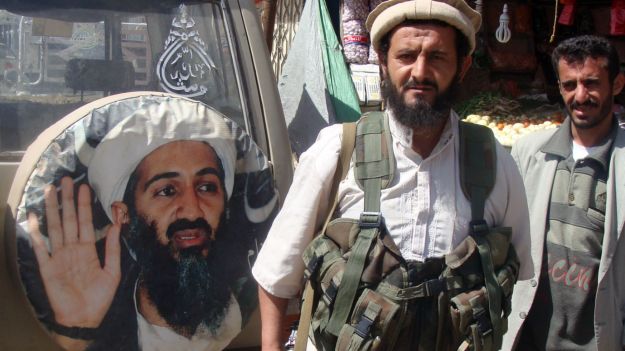
During al-Qaeda’s occupation of al-Mukalla, Yemen, April 2015 to April 2016 (source)
In Yemen, at the end of last month, al-Qaeda in the Arabian Peninsula (AQAP) was cleared from al-Mukalla, their major urban stronghold. This ends a year of occupation and brings to a close what is effectively the third emirate or statelet AQAP has either set up or attempted to set up in Yemen since 2011. These projects offer some insights into al-Qaeda’s methodology in getting to an Islamic state, including its rebranding in opposition to the Islamic State (IS). Continue reading
By Kyle Orton (@KyleWOrton) on November 10, 2015
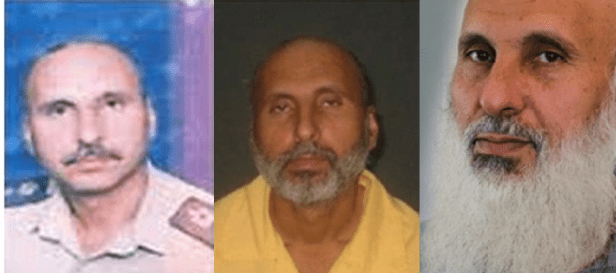
Samir al-Khlifawi (Haji Bakr): in Saddam’s intelligence service, in American prison, as a commander of the Islamic State
In the last few months I’ve increasingly focussed on the former (Saddam) regime elements (FREs) within the Islamic State (IS). There’s now an entire section on this blog about it, and Aaron Zelin over at Jihadology recently gave me time to elaborate in a podcast.
In studying this topic there is one inescapable name: Samir Abd Muhammad al-Khlifawi, better-known by his pseudonym Haji Bakr, and sometimes by his kunya, Abu Bakr al-Iraqi. Al-Khlifawi is a former colonel in an elite intelligence unit of the Saddam Hussein regime—focussed on air defence at Habbaniya airbase, though what exactly that entails is murky. Al-Khlifawi was also apparently involved in weapons development.
Al-Khlifawi came to international attention in April when Christoph Reuter published an article in Der Spiegel naming al-Khlifawi as the “architect” of IS’s expansion into Syria, and the man who had been “pulling the strings at IS for years.” Continue reading
By Kyle Orton (@KyleWOrton) on November 5, 2015
Published at NOW Lebanon.
William McCants’ The ISIS Apocalypse: The History, Strategy, and Doomsday Vision of the Islamic State is an immensely readable addition to the literature on the most powerful terrorist-insurgent group in the world. McCants covers the Islamic State, often referred to as ISIS, from its inception in Taliban Afghanistan in 1999 to its migration to Iraq in 2002, and through its various stages before its blitzkrieg from Syria across central Iraq in June 2014, which brought ISIS to global attention. McCants shows that ISIS’s evolution is not just a religio-socio-political and military phenomenon, but an intellectual one. ISIS has built the foundations of its statelet on the lessons learned by Salafi-jihadists from their previous battlefronts, such as Afghanistan, Chechnya, and Algeria, and their various mistakes, many of them ISIS’s own. Continue reading
By Kyle Orton (@KyleWOrton) on December 29, 2014
The current leader of the Islamic State (IS), Ibrahim al-Badri (Abu Bakr al-Baghdadi), released his first “proper” speech on July 21, 2012. But this was, in fact, his second public statement: Al-Badri had mourned Usama bin Laden in an audio message released on 9 May 2011 and vowed “blood for blood and destruction for destruction”. The 2012 speech, entitled, “Allah Will Not Allow Except That His Light Should Be Perfected”, was released by Al-Furqan Media and an English transcript—reproduced below—was issued by Fursan al-Balagh Media. Some key parts are highlighted in bold.
Continue reading
By Kyle Orton (@KyleWOrton) on May 3, 2014
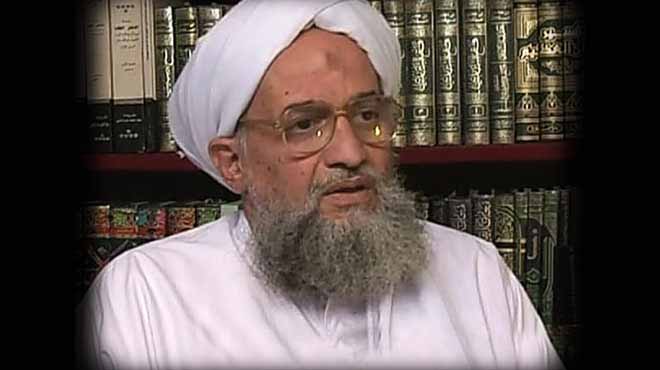
As-Sabah Media released a video on 2 May 2014 that contained a speech from Ayman al-Zawahiri, the leader of al-Qaeda, responding to the ferocious statement by Abu Muhammad al-Adnani, the spokesman of the Islamic State of Iraq and Syria (ISIS), which denied that ISIS was ever under al-Qaeda’s command and thus al-Zawahiri’s expulsion of ISIS from al-Qaeda in February was a meaningless gesture. Al-Zawahiri presents a compelling case to the contrary, drawing on documents sent by ISIS’s leaders, past and present, to al-Qaeda, some of which are public—taken in the raid that killed Usama bin Laden. Al-Zawahiri concludes with a call for ISIS to return to the fold, to accept al-Zawahiri’s order that ISIS leave Syria and return to Iraq—even if they think it is unjust—for the sake of jihadi unity and avoiding the shedding of Muslim blood. The speech is entitled, “Testimony to Preserve the Blood of the Mujahideen in Syria” (Shahada li-Haqn Dima al-Mujahideen bil-Sham). A rough translation is given below with some important sections highlighted in bold. Continue reading
 Kyle Orton's Blog