By Kyle Orton (@KyleWOrton) on 20 June 2023

By Kyle Orton (@KyleWOrton) on 28 February 2018
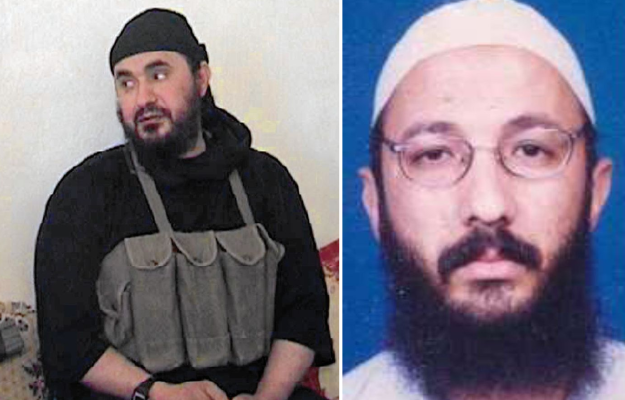
Ahmad al-Khalayleh (Abu Musab al-Zarqawi) [picture via Getty], Muhammad Zaydan (Sayf al-Adel) [picture via Kronos Advisory LLC]
By Kyle Orton (@KyleWOrton) on 28 November 2017

Hay’at Tahrir al-Sham (HTS), the jihadist group in Syria that has broken away from al-Qaeda’s formal command, appears to have arrested the leaders of its splinter group that retained allegiance to al-Qaeda on 27 November. The arrests were first reported by pro-Qaeda media and later by HTS itself. HTS released a statement on the matter yesterday evening, “For the judicial authorities will be the decisive word,” which was translated by Al-Maqalaat and is reproduced below with some syntactical edits. Continue reading
By Kyle Orton (@KyleWOrton) on 12 September 2017

Abdallah al-Muhaysini and Muslah al-Alyani, two senior clerics in Hay’at Tahrir al-Sham (HTS), the former al-Qaeda branch in Syria, resigned on 11 September 2017 after leaked recordings showed HTS commanders musing about assassinating al-Muhaysini. There is clearly a well-orchestrated campaign underway to weaken HTS by discrediting and dividing it, and the sophistication of the campaign gives every indication of being the work of a state intelligence service, almost certainly Turkey’s. Continue reading
By Kyle Orton (@KyleWOrton) on February 17, 2017

(source)
As the new administration of Donald Trump works through the United States’ options in dealing with Syria, and the Islamic State (IS) specifically, one option apparently under consideration is the use of greater numbers of combat troops to accelerate the expulsion of IS from its Syrian capital, Raqqa. While more U.S. troops would undoubtedly hasten the collapse of IS’s grip on its urban strongholds in Syria, such a policy risks continuing the failed U.S. policies of the past six years in Syria that have tackled symptoms of the conflict, rather than its causes, have tried to tackle elements in isolation from the wider conflict, and have placed too great an emphasis on military progress over politics. Continue reading
By Kyle Orton (@KyleWOrton) on January 20, 2017

Muhsin al-Fadhli [top-left]; Abdul al-Sharikh (Sanafi an-Nasr) [bottom-left]; Radwan Nammous (Abu Firas al-Suri) [centre]; David Drugeon [top-right]; Rifai Taha (Abu Yasser al-Masri) [bottom-right]
By Kyle Orton (@KyleWOrton) on August 2, 2016
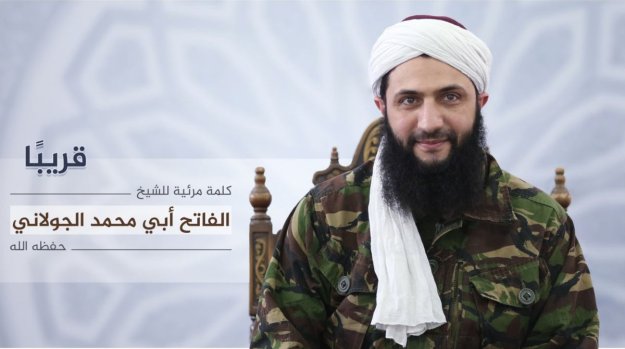
First ever picture of the leader of Jabhat al-Nusra (al-Qaeda in Syria), Ahmad al-Shara (Abu Muhammad al-Jolani), 28 July 2016
The leader of Jabhat al-Nusra (al-Qaeda in Syria), Abu Muhammad al-Jolani, whose real name is Ahmad al-Shara, ostensibly broke the link between his organization and al-Qaeda last week. This is another stage in al-Qaeda’s long-term strategy of embedding itself into local societies so that it can more effectively reshape the faith and shield itself from the international community. Continue reading
By Kyle Orton (@KyleWOrton) on September 19, 2015

Imad Mughniyeh and Osama bin Laden
The Islamic Republic of Iran released five senior al-Qaeda terrorists in March, ostensibly as part of a prisoner exchange for an Iranian diplomat kidnapped in Yemen by al-Qaeda in the Arabian Peninsula (AQAP). But the murky circumstances in which al-Qaeda’s leaders were “held” in Iran and other inconsistencies cast some doubt on this version of events, and draw attention to some old questions about Iran’s support for al-Qaeda and its affiliates and offshoots. Continue reading
 Kyle Orton's Blog