Tag Archives: Operation EUPHRATES SHIELD

American Intelligence Acknowledges Anti-ISIS Coalition’s Kurdish Partner is a Terrorist Group

By Kyle Orton (@KyleWOrton) on 27 January 2018

YPG/YPJ fighters raise the banner of the PKK leader Abdullah Ocalan in Raqqa city on 19 October 2017 (YPG Press Office)

The Central Intelligence Agency has publicly recognized that the Kurdish partner force the United States-led Coalition against the Islamic State (IS) has been working with in Syria is a subsidiary of the terrorist-designated Kurdistan Workers’ Party (PKK). Continue reading

Turkey’s Afrin Offensive and Russia’s Policy in Syria

Originally published at Ahval

By Kyle Orton (@KyleWOrton) on 21 January 2018

Turkey’s president, Recep Tayyip Erdoğan, threatened on Jan. 13 to begin a military operation “in about a week” to evict Kurdish militants from Afrin in northwestern Syria. Erdoğan has repeatedly threatened to “cleanse” Afrin of the fighters over the last two years. It turned out he really meant it this time: on Jan. 20 Turkey commenced Operation Olive Branch against Afrin.

Kurdish forces, affiliated with the Kurdistan Workers’ Party (PKK), have constituted an important element of the Coalition’s ground force in Syria against the Islamic State (ISIS) since late 2014, expanding their “Rojava” statelet by capturing vast swathes of territory from ISIS in northern and eastern Syria that is connected to Afrin under a deal with the pro-regime coalition—Bashar al-Assad, Iran, and Russia.

Any Turkish government would see this situation as a threat, and be angry at the United States for supporting the Kurds. The PKK regards Rojava and the ruling Democratic Union Party (PYD) as strategic elements in its long war against the Turkish state. Indeed, Kurds in Rojava have already provided at least logistical support for PKK attacks inside Turkey.

Continue reading

Russia’s Plans in Syria Falter, Opening Chance for the West

By Kyle Orton (@KyleWOrton) on 29 December 2017

The Astana track of Syrian “peace” negotiations began on 23 January 2017, under Russian guidance in the Kazakh capital, with Iran and Turkey also invited as “guarantor countries” of the various sides in Syria. The process, initiated in the shadow of the savage conquest of Aleppo city in December 2016 that signalled the total strategic defeat of the insurrection against the Bashar al-Asad regime, was an attempt by Moscow to convert the military gains it had enabled by Asad and Iran on the ground into political facts that could then be imported into the internationally-recognized Geneva process. This “Astana-isation of Geneva” was Russia’s bid to take control of the political process and redefine it: rather than having Asad’s removal as its end-goal, it would set the terms of reintegration into the Asad state. Abetted by a purblind Western campaign against the Islamic State (IS) and a strategic reorientation in Turkey, the pro-Asad coalition has more or less had its way for the last year. But there are now signs that this approach is beginning to unravel. Continue reading

A Defection and the Dictatorship in Syrian Kurdistan

By Kyle Orton (@KyleWOrton) on 17 November 2017

Talal Silo

It was announced on 15 November that Talal Ali Silo, the official spokesman of the Syrian Democratic Forces (SDF), had fled to the EUPHRATES SHIELD zone in northern Aleppo, run by rebels operating under the Free Syrian Army (FSA) brand that are dependent on Turkey. The SDF is the partner force in Syria for the U.S.-led Coalition against the Islamic State (IS). Though the SDF presents itself as a multi-ethnic coalition of Kurds and Arabs, it was initiated as a front for the Kurdistan Workers’ Party (PKK). By attaching non-Kurdish units to a PKK core and using the SDF banner, it circumvented various legal and political obstacles for Coalition states. But all real power has remained in the hands of the PKK, which has systematically purged all genuinely independent power centres within the SDF. Silo, a Turkoman, helped further the narrative of the SDF’s ethnic inclusivity, and his defection underlines the reality of the organization’s political exclusivity. Continue reading

The Role of Turkey in Syria

By Kyle Orton (@KyleWOrton) on 16 August 2017

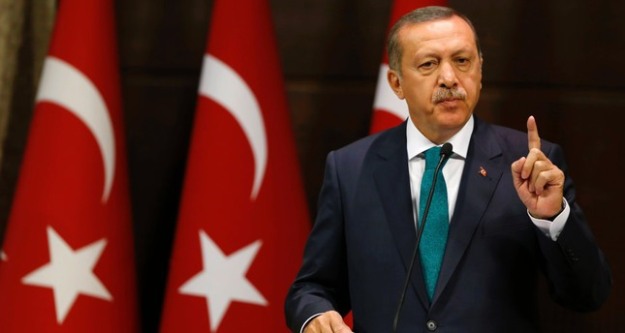
Recep Tayyip Erdogan (image source)

The Turkish government has gotten more and more deeply involved in Syria since the uprising began in 2011. But Turkey now finds its original aim, namely the overthrow of Bashar al-Assad’s regime, unattainable, creating tensions with the Syrian armed opposition, its primary lever inside Syria, and there are considerable problems stabilizing the zone of Syria that came under Turkish occupation after Ankara’s direct intervention in 2016. The defeat of Turkey’s primary objective has been accompanied by the rise of further problems, notably the exacerbation of its longest-standing internal security threat, that posed by the Kurdistan Workers’ Party (Partiya Karkerên Kurdistan – PKK), and the generation of new internal threats, from the Islamic State (IS) and potentially from al-Qaeda-linked groups. The options for solving these problems are constrained and unpalatable. Continue reading

Whither Al-Qaeda in Syria?

By Kyle Orton (@KyleWOrton) on 15 August 2017

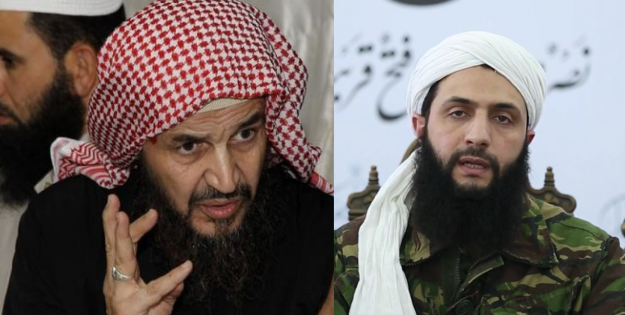
A statement from Issam al-Barqawi, far better known as Abu Muhammad al-Maqdisi, the Jordan-based Palestinian jihadi-salafist cleric, was released in English on Telegram on 15 August 2017. The statement dealt with his view of Hay’at Tahrir al-Sham (HTS), highlighting again the questions around this Syrian-based jihadi group and its relations with al-Qaeda. Continue reading

The Coalition’s Partner in Syria: The Syrian Democratic Forces

Originally published at The Henry Jackson Society

By Kyle Orton (@KyleWOrton) on 9 July 2017

Syrian Democratic Forces (SDF) logo

The offensive to expel the Islamic State (IS) from its primary urban stronghold in Syria, Raqqa city, began on 6 November 2016 with shaping operations and commenced in earnest on 6 June 2017. Backed by the U.S.-led Coalition, the operation, known as EUPHRATES WRATH, is being carried out on the ground by the Syrian Democratic Forces (SDF) or Quwwat Suriya al-Dimoqratiyya (QSD). The SDF is formally a coalition of Kurds and Arabs—its announcement of the Raqqa operation named eighteen distinct sub-units. But the predominant force within the SDF is the Kurdistan Workers Party (PKK), and the Arab SDF play a “secondary role of maintaining local security,” which is to say providing an acceptable face for the PKK’s administration in the Arab-majority areas it has captured. Examining the SDF’s composition, and the recent marginalization of Arab SDF groups, underscores the point. Continue reading

Raqqa Doesn’t Want to Be Liberated By the West’s Partners

By Kyle Orton (@KyleWOrton) on 30 May 2017

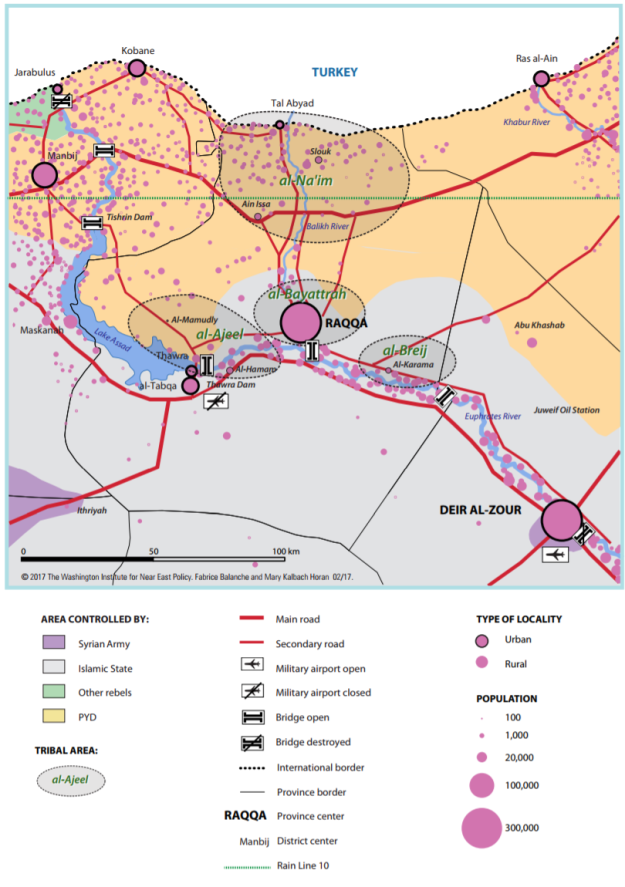
Map of the tribes around Raqqa city (source: WINEP report)

We are now on the eve of the operation to evict the Islamic State (IS) from its Syrian capital, Raqqa, and, as expected, the United States will partner with the Syrian Democratic Forces (SDF), the front-group for the Democratic Union Party (PYD) and its armed wing, the People’s Protection Units (YPG), which President Donald Trump’s administration has committed to directly arming.

Many of the doubts voiced about this course relate to Turkey, since the PYD/YPG is—despite continued efforts to obfuscate the fact—the Syrian department of the Kurdistan Workers’ Party (PKK), the premier internal security threat to Turkey for many decades. The discussion then tends to fall into one of two grooves. Continue reading

Outcome Uncertain as American Involvement in Syria Deepens

By Kyle Orton (@KyleWOrton) on March 10, 2017

American ground forces are getting more deeply entangled in Syria as the offensive to push the Islamic State (IS) out of its de facto capital city, Raqqa, approaches. It remains unclear exactly which actors in Syria these troops will be assisting, though there are more and more indications that their mission will redound to the benefit of the regime of Bashar al-Assad and his allies, Iran and Russia. Continue reading

Islamic State Has Been Defeated in Al-Bab, But America Needs a New Direction in Syria

Published at The International Business Times and subsequently discussed on the IBTimes podcast

By Kyle Orton (@KyleWOrton) on February 27, 2017
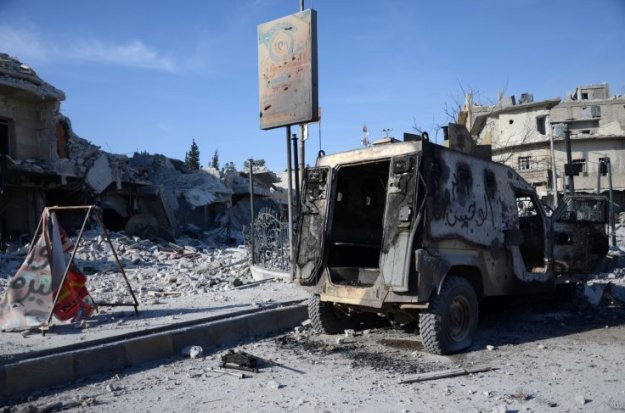
A burnt-out vehicle on a destroyed street in al-Bab on 23 February 2017 (Nazeer al-Khatib/AFP/Getty Images)

Turkey intervened in Syria in August 2016 with Operation Euphrates Shield (OES), which involved special forces, some regular troops, and the mobilisation of Syrian rebels to clear its border of terrorist threats by pushing ISIS (the Islamic State) away from the frontier and preventing the Syrian branch of the Kurdistan Workers’ Party (PKK) creating a state-let on its border that could be used as a harbour and launch-pad for attacks inside Turkey.

To secure this mission, on 13 November 2016 OES began an assault on al-Bab in the eastern countryside of Aleppo Province, just 15 miles from Turkey’s border and ISIS’ last major urban centre in Syria outside its capital, Raqqa. Some 102 days of combat later, on 23 February, al-Bab fell. What happens next could determine the course of the war as Turkey competes with the PKK to be the U.S.-led Coalition’s partner in clearing ISIS from Raqqa. Continue reading