Tag Archives: provocation

The Campaign to Weaken An Al-Qaeda-Affiliated Group in Syria

By Kyle Orton (@KyleWOrton) on 12 September 2017

Abdallah al-Muhaysini and Muslah al-Alyani, two senior clerics in Hay’at Tahrir al-Sham (HTS), the former al-Qaeda branch in Syria, resigned on 11 September 2017 after leaked recordings showed HTS commanders musing about assassinating al-Muhaysini. There is clearly a well-orchestrated campaign underway to weaken HTS by discrediting and dividing it, and the sophistication of the campaign gives every indication of being the work of a state intelligence service, almost certainly Turkey’s. Continue reading

The Syrian Regime Helped the Islamic State Murder Americans

By Kyle Orton (@KyleWOrton) on 26 August 2017

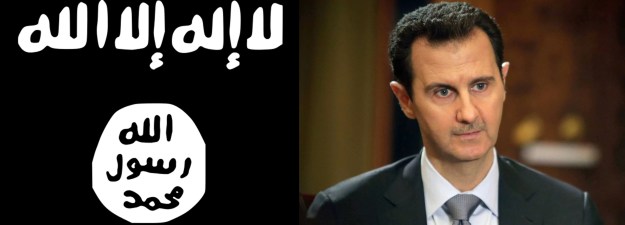
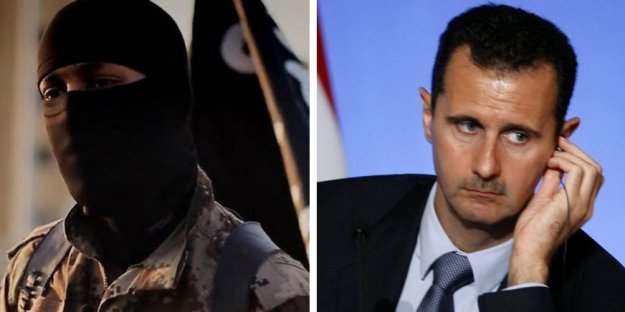
The Asad family regime in Syria has long been known to have had a key role in the formation and sustenance of the Islamic State (IS) and its predecessors. Without the Asad regime’s assistance, the IS movement could not have hoped to pose such a challenge to the Iraqi government, regional states, and Western interests and citizens. This has been underlined in a series of Federal Court rulings in the United States that have brought together evidence on this matter. In April, another such ruling found the Asad regime liable in the murder of three more Americans. Continue reading

Russia and Iran Use Terrorism Against Western Interests

By Kyle Orton (@KyleWOrton) on 25 April 2017

The evidence is mounting that Vladimir Putin’s government supports the Taliban as a means of thwarting NATO interests in Afghanistan. Russia has long manipulated terrorists, internally and abroad, to suit its policy aims, but as Moscow solidifies its relationship with the Iranian revolution the Russian policy, particularly in Syria, has become something more like a conventional alliance—not least because those who run Tehran’s foreign policy and the clerical regime’s most powerful assets are themselves terrorists. Continue reading

Why The Islamic State Endures

By Kyle Orton (@KyleWOrton) on March 15, 2017

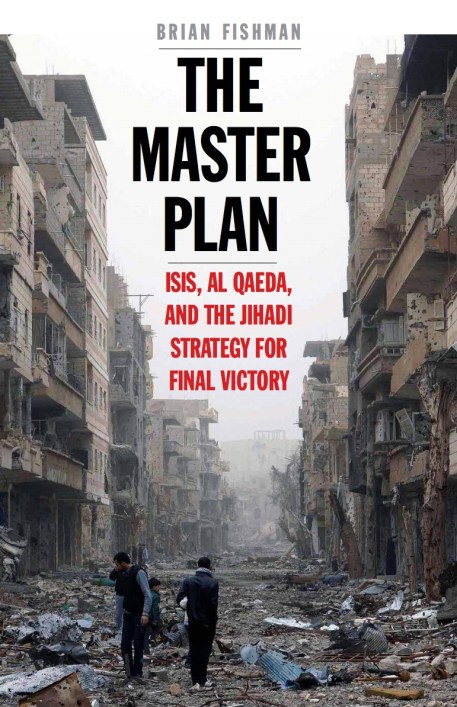
Brian Fishman’s The Master Plan provides a comprehensive history of the Islamic State’s (IS) strategic evolution, covering the personalities and events that shaped one of the most feared terrorist-insurgent groups that has ever existed. Eminently readable, in places even amusing—no small feat in a book about IS—Fishman flips with ease between the overview and the granular to demonstrate his points, using new sources that will allow as much supplementary research as a reader could wish for, and ties it together in a narrative that will be of use to both specialists and generalists. Continue reading

Outcome Uncertain as American Involvement in Syria Deepens

By Kyle Orton (@KyleWOrton) on March 10, 2017

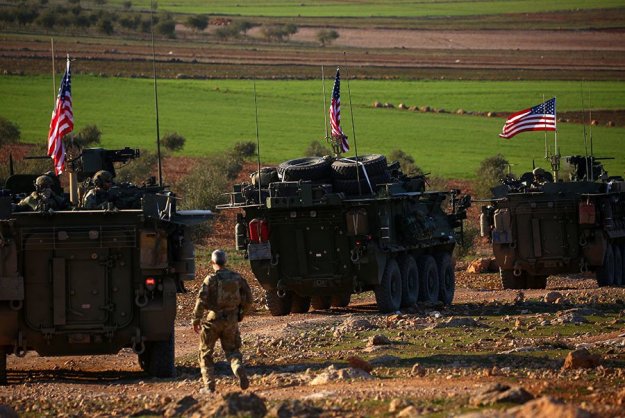
American ground forces are getting more deeply entangled in Syria as the offensive to push the Islamic State (IS) out of its de facto capital city, Raqqa, approaches. It remains unclear exactly which actors in Syria these troops will be assisting, though there are more and more indications that their mission will redound to the benefit of the regime of Bashar al-Assad and his allies, Iran and Russia. Continue reading

Islamic State Has Been Defeated in Al-Bab, But America Needs a New Direction in Syria

Published at The International Business Times and subsequently discussed on the IBTimes podcast

By Kyle Orton (@KyleWOrton) on February 27, 2017
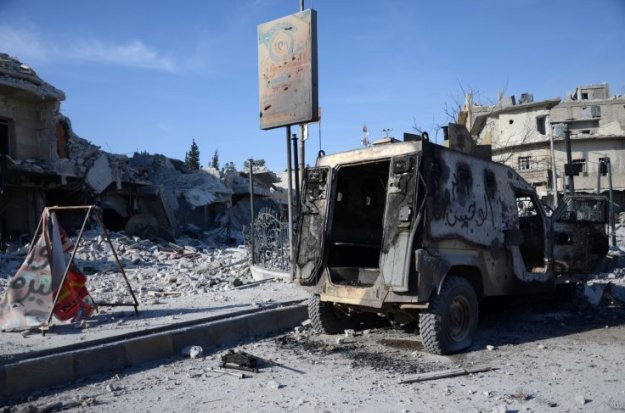
A burnt-out vehicle on a destroyed street in al-Bab on 23 February 2017 (Nazeer al-Khatib/AFP/Getty Images)

Turkey intervened in Syria in August 2016 with Operation Euphrates Shield (OES), which involved special forces, some regular troops, and the mobilisation of Syrian rebels to clear its border of terrorist threats by pushing ISIS (the Islamic State) away from the frontier and preventing the Syrian branch of the Kurdistan Workers’ Party (PKK) creating a state-let on its border that could be used as a harbour and launch-pad for attacks inside Turkey.

To secure this mission, on 13 November 2016 OES began an assault on al-Bab in the eastern countryside of Aleppo Province, just 15 miles from Turkey’s border and ISIS’ last major urban centre in Syria outside its capital, Raqqa. Some 102 days of combat later, on 23 February, al-Bab fell. What happens next could determine the course of the war as Turkey competes with the PKK to be the U.S.-led Coalition’s partner in clearing ISIS from Raqqa. Continue reading

The Assad Regime Admits to Manipulating the Islamic State

By Kyle Orton (@KyleWOrton) on January 6, 2017

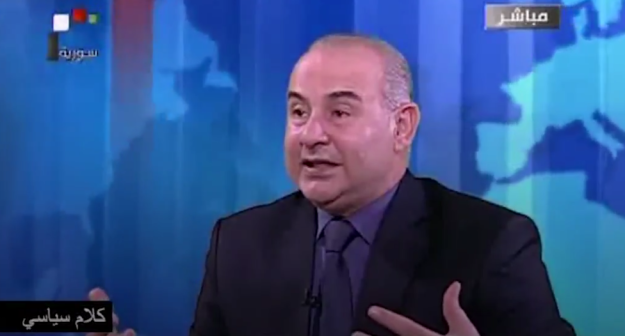
Khaled Abboud

From the beginning of the uprising in Syria in 2011, there have been accusations that Bashar al-Assad’s regime was in a de facto partnership with the Islamic State (IS) against the mainstream opposition. These accusations have a considerable basis in fact: during the entirety of the Anglo-American occupation of Iraq, Assad collaborated with IS jihadists in the destabilization of Iraq, killing thousands of Iraqi civilians and hundreds of American and British troops. Once the Syrian uprising was underway, the regime undertook various measures to bolster extremists in the insurgency. Assad and IS worked in tandem to leave Syria as a binary choice between themselves: Assad was sure this would rehabilitate him in the eyes of the world and transform his criminal regime into a partner of the international community in suppressing a terrorist insurgency, and IS wanted to rally Sunnis to its banner. The Secretary of the Syrian Parliament has now come forward to underline this. Continue reading

Syria Is Only Going to Get Worse After the Fall of Aleppo

Published at The New Arab

By Kyle Orton (@KyleWOrton) on December 14, 2016

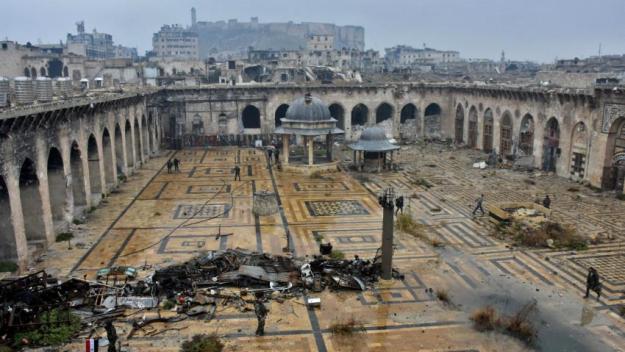
Syrian pro-government forces recapture the old city of Aleppo, December 13, 2016 [Getty]

In May 2016, the Roman Theatre in Palmyra was the site of a Russian orchestra performance, led by Valery Gergiev, a supporter of Russian ruler Vladimir Putin. The event was broadcast widely on RT (formerly Russia Today), the state-run English-language propaganda channel, and images and clips of the event were disseminated worldwide. The concert crowned Putin’s eight-month intervention in Syria, reinforcing the Kremlin’s messaging: Moscow and its blood-drenched client, Bashar al-Assad, were staffing the front line for civilisation against the barbarous hordes of the Islamic State group—and they were winning. What a difference seven months has made. Continue reading

Assad and Russia Losing Palmyra is No Surprise: They Cannot Defeat Jihadism in Syria

Published at The International Business Times

By Kyle Orton (@KyleWOrton) on December 12, 2016

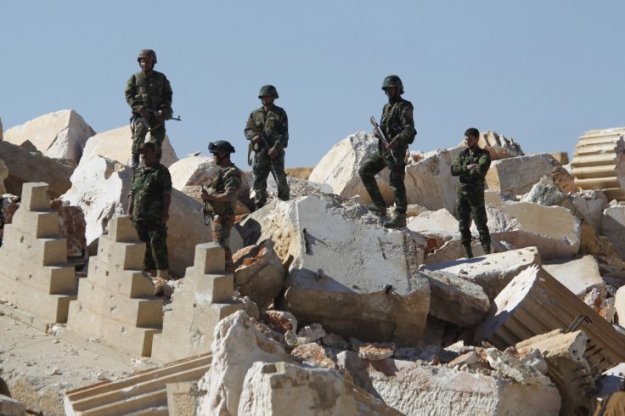
Syrian regime army soldiers stands on the ruins of the Temple of Bel in Palmyra, 1 April 2016 (REUTERS/Omar Sanadiki)

The Islamic State (IS) is supposed to be on its way to defeat. IS is under assault in Mosul and the operation to evict it from Raqqa began a month ago. Just this morning, Turkish-backed rebel forces in Syria have reportedly pierced IS’s defences in al-Bab, IS’s most important city outside of its twin capitals. But on Sunday, after a four-day offensive, IS seized Palmyra. How to explain this? Continue reading

Partners in Terror: The Assad Regime and the Islamic State

By Kyle Orton (@KyleWOrton) on March 9, 2016

Article published at NOW Lebanon

1

Last week, a judgment in United States District Court in Washington, D.C., awarded nearly $350 million to the families of two Americans killed in Jordan in 2005 by the predecessor organization to the Islamic State (ISIS). The important point of the case was who the court found liable: the regime of Bashar al-Assad, currently presenting itself to the world as the last line of defense to a terrorist takeover of Syria. This case highlights a neglected history, which began in 2002, where the Assad regime underwrote ISIS and fostered its growth, first to destabilize post-Saddam Iraq and later Lebanon, and since 2011 to discredit and destroy the uprising against Assad in Syria. Continue reading