Tag Archives: PYD

Coalition Allies Play Into Islamic State’s Hands

By Kyle Orton (@KyleWOrton) on November 14, 2016

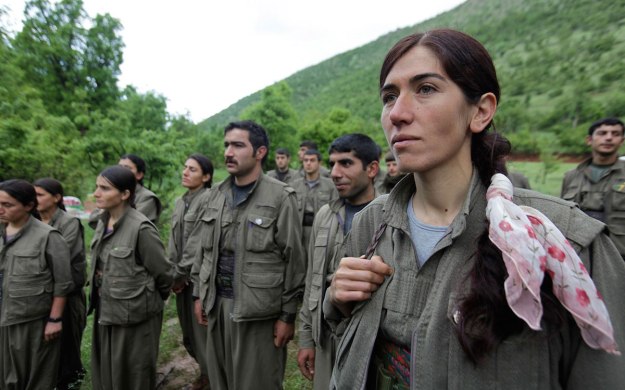
Kurdistan Workers’ Party (PKK) fighters in Dohuk in northern Iraq, 14 May 2013, Azad Lashkari/Reuters

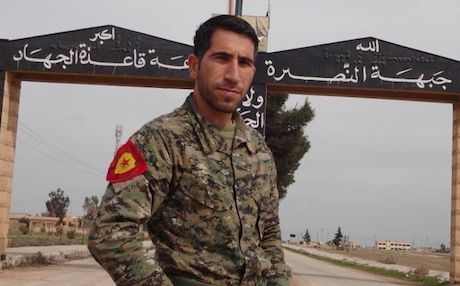
Last week, a member of the Kurdish militia that is the primary instrument the U.S.-led Coalition is using in Syria to defeat the Islamic State (IS) was killed. Examining his biography underlined that this militia is the Syrian wing of the Kurdistan Workers’ Party (PKK), a Marxist-separatist group that is registered as a terrorist organization by the United States, the European Union, and Turkey. The Western powers continue to obfuscate, if not outright deny, this fact, but Coalition support for the PKK—questionable morally and legally in and of itself—is producing negative results on the ground that help IS over the long-term. Continue reading

The Coalition’s Flawed Endgame Strategy for the Islamic State

By Kyle Orton (@KyleWOrton) on November 6, 2016

After some (perhaps wilful) confusion over the timing, the operation to expel the Islamic State (IS) from Raqqa City, its Syrian capital, got underway this morning, running concurrent with the effort to evict IS from its Iraqi capital, Mosul. There are deep concerns about the methods adopted in both cases. The ground forces the U.S.-led Coalition has chosen to support in Raqqa cannot lead to sustainable stability in Syria, something that is essential to defeat IS. While the Mosul operation has proceeded generally to plan, there are increasing signs of trouble within the operation itself and the most troubling aspect—the aftermath—still appears to be unplanned. Beyond this is the continued assault on Aleppo City by Bashar al-Assad’s regime and its Russian and Iranian patrons that is systematically destroying the forces needed if there is to be any settlement to Syria’s war that ends the space given to international terrorists. Continue reading

Russia Moves in For the Kill in Syria

Originally published at The Henry Jackson Society

By Kyle Orton (@KyleWOrton) on October 21, 2016

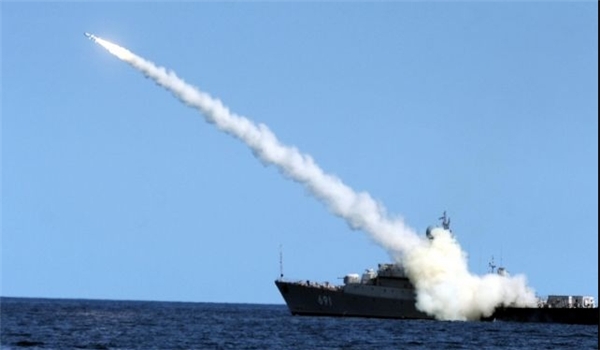
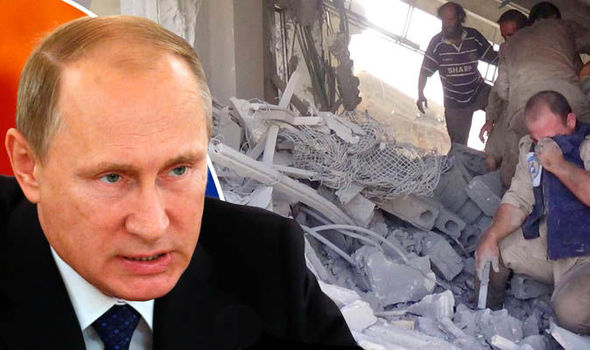
Vladimir Putin’s Russia is “deploying all of the Northern fleet and much of the Baltic fleet in the largest surface deployment since the end of the Cold War,” a NATO diplomat told Reuters on Wednesday night. These Naval assets are designed to buttress a final offensive by the remnants of Bashar al-Assad’s regime in Syria, which is effectively controlled on the ground by the Islamic Republic of Iran and an assortment of foreign Shi’a jihadists, against the insurgent-held east of Aleppo city, crushing once and for all the strategic threat posed by the rebellion to the regime, a threat that had already been all-but ended in the first months of Russia’s intervention. Nearly a year ago the U.S. began a political process with the Russians intended to end the war and begin a political transition. Moscow has subverted this process, using force to buttress its political efforts to secure Assad in power. The timing of this attack is seemingly intended as one final humiliation for President Barack Obama. Continue reading

Of Kurds and Compromises in Syria

By Kyle Orton (@KyleWOrton) on September 2, 2016

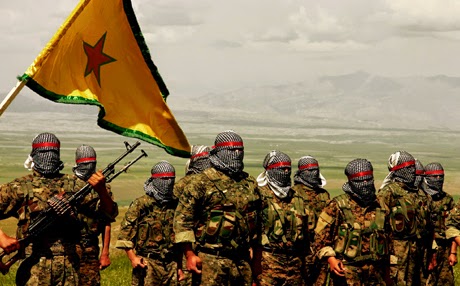
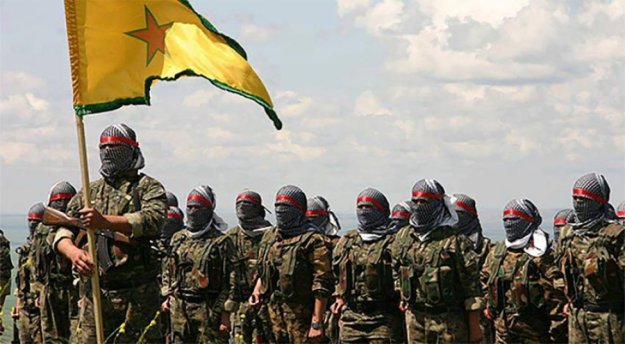
PYD/YPG soldiers

PYD/YPG soldiers

Having written extensively about the authoritarian structure in the areas run by the Democratic Union Party (PYD), the Syrian branch of the Kurdistan Workers’ Party (PKK), in northern Syria, and the problems of media, local and Western, in covering this, it was very interesting to see a report in The Wall Street Journal underlining some of these points.

The Journal notes that the PYD and its armed wing, the People’s Protection Units (YPG), have engaged in a ruthless consolidation of power within a single party, despite claims to be governing in a democratic way. This has included: heavy pressure on all non-pro-PYD media via various Soviet-style accusations of subversion; demographic engineering by a refusal to allow Arab inhabitants to return to homes or actively expelling them; forced conscription, including of children; the imposition of an ideological curriculum in schools; and the suppression and/or expulsion of all opposition. Continue reading

One Man’s Terrorist …

By Kyle Orton (@KyleWOrton) on August 30, 2016

Polat Can, 2014, head of the YPG's information centre (source)

Polat Can, 2014, head of the YPG’s information centre (source)

Over the last twenty-four hours, as fighting has escalated between Turkey and the Kurdish People’s Protection Units (YPG), the armed wing of the Democratic Union Party (PYD), in northern Syria, an YPG/PYD operative has taken to Twitter to protest. Polat Can is the YPG’s representative to the American-led international coalition ranged against the Islamic State (IS), and his missives have sought to inform the coalition who and what terrorism is, which can be broadly summarized as: the Turkish government. Can himself, however, might easily be considered a terrorist since he is an allegedly-former member of the Kurdistan Workers’ Party (PKK), a registered terrorist organization by the United States, European Union, and Turkey. Continue reading

Turkey’s Intervention in Syria Improves the Prospects for Peace

By Kyle Orton (@KyleWOrton) on August 25, 2016

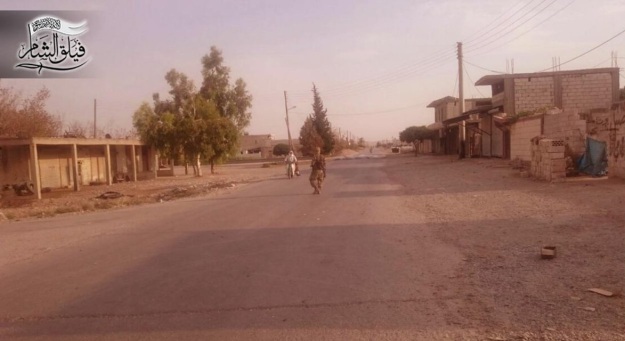
Picture put out by Faylaq al-Sham of Jarabulus soon after the Islamic State was expelled (Telegram, 24 August 2016)

Picture put out by Faylaq al-Sham of Jarabulus soon after the Islamic State was expelled (Telegram, 24 August 2016)

After a horrific suicide bombing by the Islamic State (IS) at a Kurdish wedding in eastern Turkey had slaughtered more than fifty people on Saturday, Turkey moved to expel IS from Jarabulus in eastern Aleppo Province at about 4 AM on Wednesday morning. IS was swept from this last major border town in Syria, a key gateway for resources to the outside world, around ten hours later.

Operation EUPHRATES SHIELD saw Turkey put troops and tanks over the border publicly for the first time, and allow the Free Syrian Army (FSA)-branded and other mainstream Syrian rebels who have been battling IS for years to use Turkish territory to launch the assault. It was supported by airstrikes from the international anti-IS coalition.

For Turkey, this is a strong indication of a change in her threat-perception vis-à-vis IS, but it is also about a (correctly) perceived threat of what was to follow IS. Continue reading

The West’s Kurdish Allies in Syria Can’t Escape Their Authoritarian Legacy

By Kyle Orton (@KyleWOrton) on August 13, 2016

PYD/YPG fighters

PYD/YPG fighters

The Islamic State (IS) was driven from the city of Manbij yesterday, a key supply route to the Turkish border in northern Syria, the conclusion of an operation launched on 31 May by the Syrian Democratic Forces (SDF), a front-group for the Kurdistan Workers’ Party (PKK), represented in Syria by the Democratic Union Party (PYD) and its armed wing, the People’s Protection Units (YPG). The SDF was backed by U.S. airstrikes. It is difficult not to see the defeat of IS as a positive development. It is, however, worth more closely examining the forces that are being enabled by Western power to fasten their rule across northern Syria, whose vision is deeply problematic—even in narrow terms of the fight against IS. Continue reading

Russia Needs the Islamic State to Save Assad

By Kyle Orton (@KyleWOrton) on June 20, 2016

Cross-posted at The Interpreter.

After a coalition supporting the regime of Syrian ruler Bashar al-Assad conquered the city of Palmyra from the Islamic State (IS) in late March, suggestions were made that this demonstrated the efficacy of the pro-Assad coalition in fighting IS, and doubtless the same will be said if and when the pro-regime forces conquer Tabqa. It isn’t true. From the time of Russia’s direct intervention in Syria on 30 September 2015 to Moscow’s announcement on 14 March 2016 that it was withdrawing “the main part” of its “military” from Syria, IS was almost untouched and al-Qaeda was barely damaged, while the Assad regime was bolstered and the moderate opposition, particularly those components supported by the West, were gravely weakened.

Despite Moscow’s claims that its mission was fighting IS or “terrorism,” Russia’s real goals can be summarized as three:

  1. Rescue the Assad regime, which was assessed to be in mortal peril
  2. Damage the mainstream armed opposition, especially those elements supported by the West, in order that Russia can …
  3. Rehabilitate the Assad regime internationally by inter alia leaving only extremists as its opponents, depriving the international community of credible interlocutors, and therefore strengthening the Russian hand to make peace talks an instrument for re-legitimizing Assad, rather than removing him

In recent days, this basic war strategy has been seen again in southern Syria. Continue reading

What Kurdish Federalism Means for Syria

By Kyle Orton (@KyleWOrton) on March 15, 2016

Article published at The New Arab

1

Thursday morning saw two separate but related incidents.

First, in Turkey, the Kurdistan Freedom Hawks (TAK) claimed responsibility for the March 13 suicide bombing in Ankara that massacred 37 people.

The second was a declaration in Syria by the Democratic Union Party (PYD) and its armed wing, the People’s Protection Units (YPG), that they were forming a federal zone in the north of the country.

The link is simple: the Kurdistan Workers’ Party (PKK). Continue reading

Assad and Academics: Disinformation in the Modern Era

By Kyle Orton (@KyleWOrton) on February 22, 2016
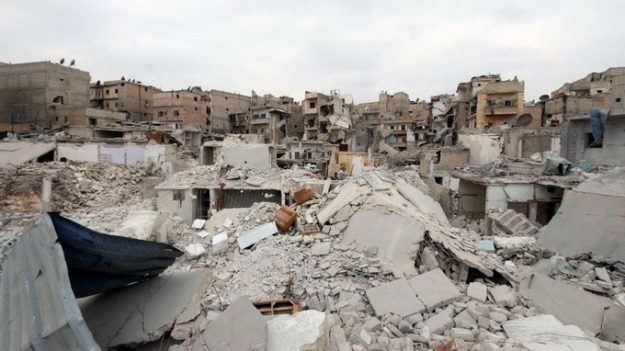
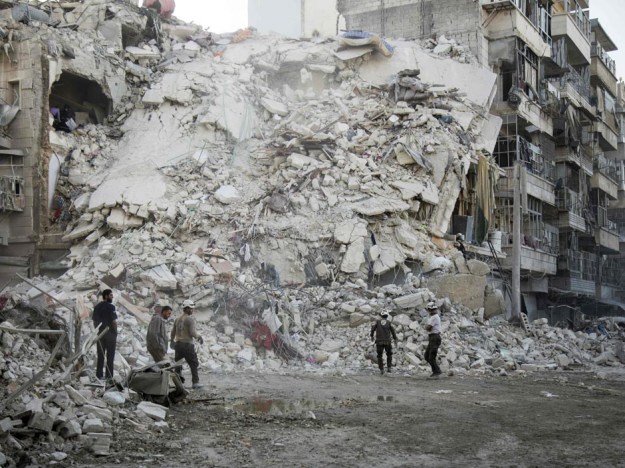
Aleppo City

Aleppo City after the destruction of the Asad regime, Iran, and Russia

Introduction

From the beginning of Syria’s war, the regime of Bashar al-Assad, enabled by Iran and Russia, has run a very elaborate media war to portray itself as the victim of an international conspiracy, wherein its only opponents are terrorists from al-Qaeda and its offshoots who are being used by foreigners—namely the Gulf States, Turkey, Israel, and the United States—to overthrow a defiant “resistance” State.

The other part of this strategic messaging is aimed at the West, which Assad otherwise accuses of supporting jihadi-Salafist terrorism against him: Assad is the only alternative to the terrorists, it says, so the West should support him. War criminal he might be, he will protect the minorities—his role in endangering them by starting a sectarian war against the Sunni majority and bolstering the takfiris within the insurgency to cannibalize all legitimate or engageable armed opposition, notwithstanding—and has no immediate plans to fly planes into Western skyscrapers. (That the leading edge of Assad’s ground forces are made up of radically sectarian, foreign Shi’a jihadists under Iran’s control, some of them Iraqis responsible for killing a quarter of the 4,000 U.S. soldiers who fell in Mesopotamia, and are integrated into a State-run terrorist network that has struck Western and Jewish targets the world over, gets left out.)

For Assad and his allies, it helps if this propaganda is not only delivered by regime spokesman but independent analysts, journalists, academics, and politicians. In the last ten days two salient examples have emerged: Stephen Kinzer, a veteran journalist, including for The New York Times, who wrote in The Boston Globe, and Jeffrey Sachs, an academic economist working at Columbia University, who wrote in The Huffington Post. Mixing together conspiracy theories, half-truths, and outright lies—disinformation, to give it an old name—both Kinzer and Sachs told a version of the regime’s narrative. Why they did this is best-known to them. Continue reading