Tag Archives: Russia

By Strengthening Iran, the Coalition Has Ensured the Islamic State’s Survival

Published at The Telegraph

By Kyle Orton (@KyleWOrton) on 6 October 2017

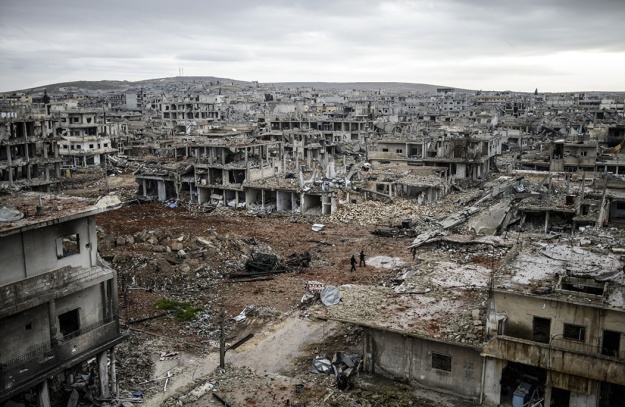
The “defeat” of the Islamic State (ISIL), signified by its eviction from Mosul in July, its impending loss of Raqqa, and an apparent resurgence of Bashar al-Assad’s regime in Syria, seemed to augur a new era of stability for the Middle East. The jihadists would be gone and Iranian-backed governments in Syria and Iraq consolidated.

True, Assad murdering those who resisted him with poison gas and concentration camps, and hiding the evidence by installing crematoria, would nag at our conscience. But foreign policy is a cold-blooded business and it has been decreed that ISIL is the greatest—really the only—threat emanating from the region.

It would not be justice, but it would be peace. Or something like that. Continue reading

Russia’s Unreliable Claims About the Islamic State

By Kyle Orton (@KyleWOrton) on 1 October 2017

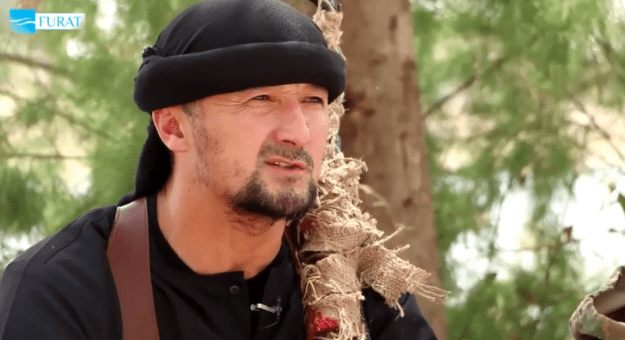
Gulmurod Khalimov

The Islamic State’s (IS) caliph, Ibrahim al-Badri (Abu Bakr al-Baghdadi), appeared on Thursday to deliver his first speech in nearly a year. Other than the contents of the speech, al-Badri’s re-appearance was confirmation that the claim by the Russian government, on 16 June, to have killed al-Badri and 330 other IS jihadists in a 28 May airstrike in Syria, was false.[1] This is far from the first mendacious claim Moscow has made on this topic.

On 8 September, the Russian Ministry of Defence claimed it had killed “four influential field commanders”, one of whom was Tarad al-Jarba (Abu Muhammad al-Shimali), and forty other IS jihadists, in an airstrike near Deir Ezzor city. Later in the day, the Russians claimed day that another of the four commanders was Gulmurod Khalimov (Abu Umar al-Tajiki), named by the U.S.-led coalition as IS’s War Minister. In fact, it is likely that Khalimov was already dead and that al-Jarba is still alive. Continue reading

Islamic State Leader Says the Show Goes On

By Kyle Orton (@KyleWOrton) on 28 September 2017

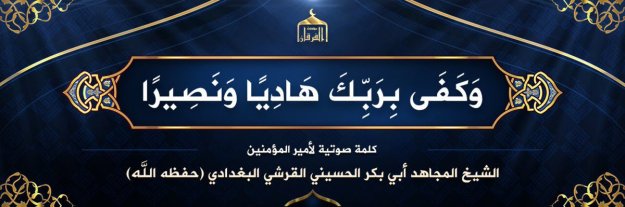
The leader of the Islamic State (IS), Ibrahim al-Badri (Abu Bakr al-Baghdadi), released a 46-minute audio statement today, his first statement for about eleven months. Entitled, “Sufficient Is Your Lord As A Guide And A Helper” or “Your Lord Suffices as Guide and Helper”, it is al-Badri’s twelfth speech since he became leader of the IS movement in 2010 and the seventh since IS declared the restoration of the caliphate. Continue reading

Islamic State Claims it Caused the Evacuation at Charles de Gaulle Airport, Reiterates Claim of Parsons Green Attack

By Kyle Orton (@KyleWOrton) on 23 September 2017

Al-Naba 98, 22 September 2017

The ninety-eighth edition of the Islamic State’s (IS) newsletter, Al-Naba, was released on 22 September 2017. This Charles de Gaulle Airport in Paris, France, was evacuated on 17 September due to a bomb scare, and later declared to be a “false alarm”. This edition of Naba claims that an IS operative in fact planted a bomb, causing the chaos at Charles de Gaulle. Al-Naba 98 also contained a further acknowledgement of the “bucket bombing” at Parsons Green tube station in London, Britain, which took place on the morning 15 September 2017. Continue reading

Coalition Risks Replacing the Islamic State With the Islamic Republic

By Kyle Orton (@KyleWOrton) on 14 September 2017

By recent reports, one could easily come away with the impression that war and instability across the Fertile Crescent are winding down. Predictions about what comes next, always a risky enterprise in the Middle East, are at a point of unique vulnerability. Chaos and violence for some considerable time to come look like a safe bet, though the timing and scale look more uncertain. Nonetheless, certain trendlines are visible, most clearly the emergence of a regional order, abetted by the international coalition’s campaign against the self-proclaimed Islamic State (ISIS), dominated by the Islamic Republic of Iran. Continue reading

Russia Tries To Succeed Where the West Fails in Libya

By Kyle Orton (@KyleWOrton) and Lincoln Pigman on 14 September 2017

Libya, which has been wracked by instability and violence since 2011, is re-emerging as a geopolitical hotspot. With opposing forces fighting for control of the war-torn country—the main two being the U.N.-backed Government of National Accord (GNA) and the Libyan National Army (LNA)—foreign powers have begun taking sides, internationalizing the conflict. For Western observers, the growing involvement of Russia, a major ally of LNA commander Khalifa Haftar, represents a particular concern.

Coming on the heels of the Russian military intervention in Syria, Moscow’s role in Libya’s civil war may seem, at first glance, like déjà vu. Once again, it appears that the Kremlin is working to consolidate the power of a pro-Russian regional strongman and establish a “crescent of Russian influence” across the Middle East. And given the similarities between Haftar and Syrian President Bashar al-Assad, some degree of anxiety is understandable. Like Assad, who has long appealed to foreign governments by referring to Syrian rebels as terrorists, Haftar often frames himself as a bulwark against violent extremism in Libya, where the Islamic State remains active and Islamists have formed powerful militias and entered mainstream politics. Continue reading

Syria’s Regime Conducted the Khan Shaykhun Chemical Attack, United Nations Concludes

By Kyle Orton (@KyleWOrton) on 9 September 2017

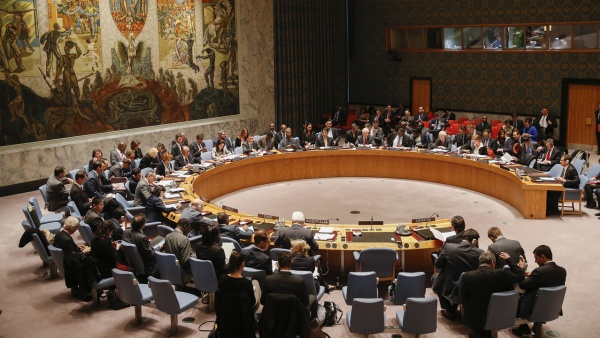
United Nations Security Council (Shannon Stapleton/Reuters)

After the use of chemical weapons of mass destruction (CWMD) in the Syrian town of Khan Shaykhun in April, American and French intelligence publicly assessed that the perpetrator was the regime of Bashar al-Asad, and President Donald Trump acted swiftly to punish the atrocity. The United Nations Independent International Commission of Inquiry on the Syrian Arab Republic released a report on 6 September that ratifies these findings, concluding that Asad attacked the population of Khan Shaykhun with chemical weapons. Continue reading

The Role of Turkey in Syria

By Kyle Orton (@KyleWOrton) on 16 August 2017

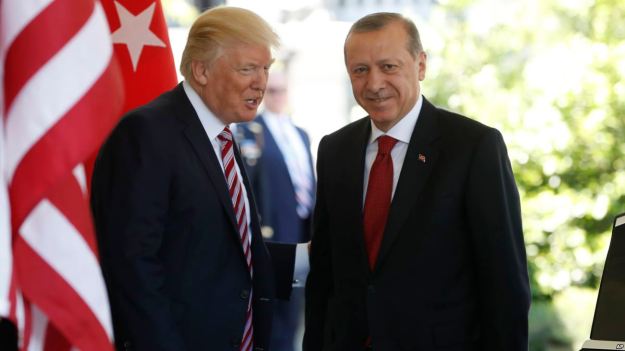
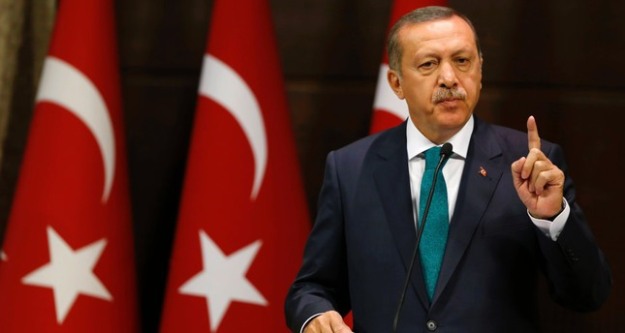
Recep Tayyip Erdogan (image source)

The Turkish government has gotten more and more deeply involved in Syria since the uprising began in 2011. But Turkey now finds its original aim, namely the overthrow of Bashar al-Assad’s regime, unattainable, creating tensions with the Syrian armed opposition, its primary lever inside Syria, and there are considerable problems stabilizing the zone of Syria that came under Turkish occupation after Ankara’s direct intervention in 2016. The defeat of Turkey’s primary objective has been accompanied by the rise of further problems, notably the exacerbation of its longest-standing internal security threat, that posed by the Kurdistan Workers’ Party (Partiya Karkerên Kurdistan – PKK), and the generation of new internal threats, from the Islamic State (IS) and potentially from al-Qaeda-linked groups. The options for solving these problems are constrained and unpalatable. Continue reading

Whither Al-Qaeda in Syria?

By Kyle Orton (@KyleWOrton) on 15 August 2017

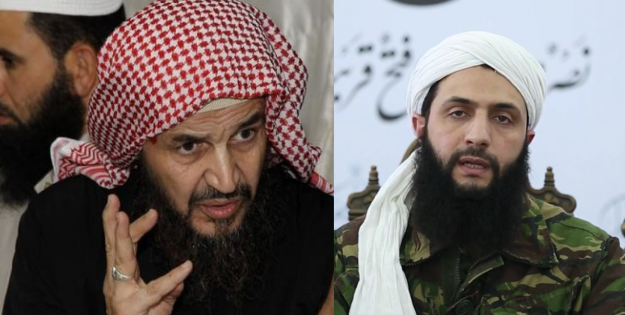
A statement from Issam al-Barqawi, far better known as Abu Muhammad al-Maqdisi, the Jordan-based Palestinian jihadi-salafist cleric, was released in English on Telegram on 15 August 2017. The statement dealt with his view of Hay’at Tahrir al-Sham (HTS), highlighting again the questions around this Syrian-based jihadi group and its relations with al-Qaeda. Continue reading

Iran and Russia Are Using the Taliban Against the West

By Kyle Orton (@KyleWOrton) on 5 August 2017

Taliban jihadists (image source)

The New York Times reported on the growing closeness of relations between the governments in Iran and Russia, and the Taliban movement in Afghanistan, something that became especially salient earlier this year and which has been visible for at least two years. Continue reading