By Kyle Orton (@KyleWOrton) on 19 November 2019

President Barack Obama meeting President-elect Donald Trump, 10 November 2016 [image source]
By Kyle Orton (@KyleWOrton) on 19 November 2019
President Barack Obama meeting President-elect Donald Trump, 10 November 2016 [image source]
By Kyle Orton (@KyleWOrton) on 18 November 2019
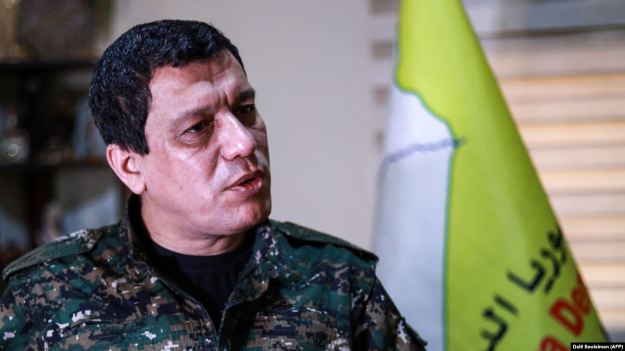
“SDF commander “General Mazlum Kobani” (the PKK executive official Ferhat Abdi Shahin) being interviewed by AFP in Hasaka city, 24 January 2019 [image source]
By Kyle Orton (@KyleWOrton) on 15 June 2019
The Arab inhabitants of eastern Syria have once again turned out in protest against the Syrian Democratic Forces (SDF), the Western partner force in the campaign against the Islamic State (IS). The rejection of the SDF’s rule in the area has its roots in political dynamics that were entirely foreseeable. Continue readingBy Kyle Orton (@KyleWOrton) on 3 December 2017
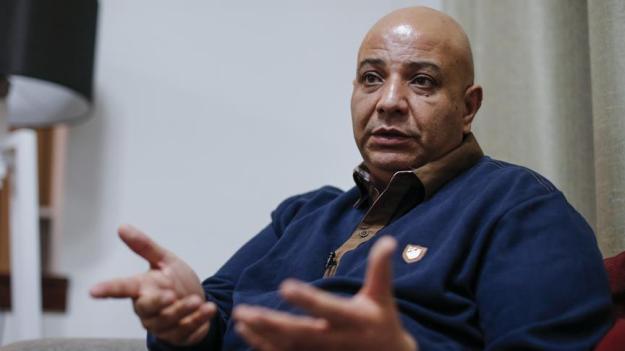
Talal Silo
Talal Silo was the leader of an ethnic Turkoman unit within the Syrian Democratic Forces (SDF), the ground partner in Syria of the American-led international coalition against the Islamic State (IS). Having defected recently, Tilo has now given an interview about his experiences, the nature of the SDF, and the SDF’s links to the Bashar al-Asad regime and its supporters, Russia and Iran. Continue reading
By Kyle Orton (@KyleWOrton) on 17 August 2017
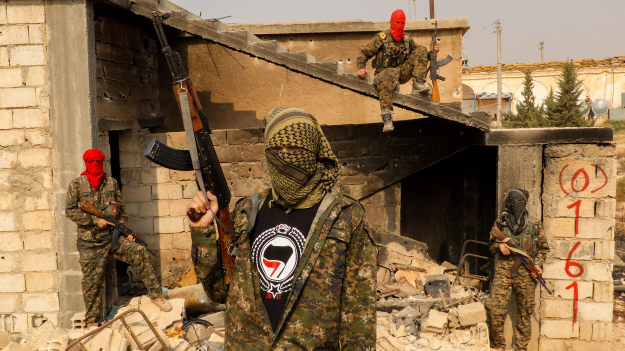
I released a report today, published by the Henry Jackson Society, The Forgotten Foreign Fighters: The PKK in Syria. Continue reading
By Kyle Orton (@KyleWOrton) on 10 May 2017
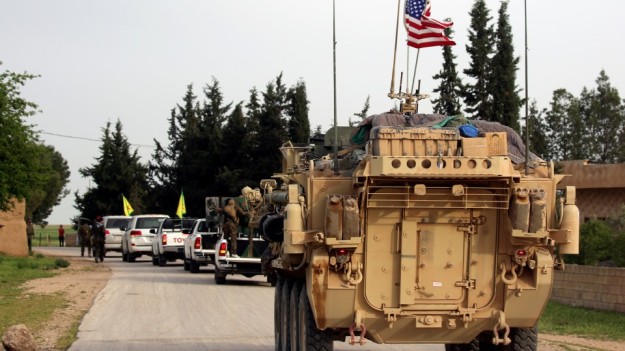
U.S. troops patrolling with the YPG/PKK in the village of Darbasiyah, northern Syria, on the border with Turkey, 28 April 2017
The United States has tried to engage in Syria almost solely in a counter-terrorism capacity, against Daesh (IS) and—in a recently-escalating campaign—against al Qaeda. The narrowness of the focus on jihadist terrorists led to the US disregarding wider political dynamics in the war in Syria—and to a degree in Iraq, too—and partnering with forces that over the long term will undo even this narrow mission.
The announcement yesterday that President Donald Trump will now arm the Kurdish People’s Protection Units (YPG) to expel Daesh from its Syrian capital, Raqqa, is the end-point of this policy, setting up a very dangerous medium- and long-term situation that will redound to the benefit of terrorists. Continue reading
By Kyle Orton (@KyleWOrton) on 29 April 2017

Ilham Ahmed
The West’s Syria policy is beginning to unravel of its own contradictions.
The Turkish government launched airstrikes against the positions of the Kurdistan Workers’ Party (PKK) in north-eastern Syria and the Sinjar area of north-western Iraq in the early hours of 25 April. There were international ramifications to this because the PKK in Syria, which operates politically under the name of the Democratic Union Party (PYD) and militarily as the People’s Defence Units (YPG), is the main partner of the U.S.-led Coalition against the Islamic State (IS). Turkey has protested the U.S. engaging the YPG/PKK so deeply and exclusively as its anti-IS partner, being displeased at the U.S.’s uncritical (public) stance toward the YPG, even after the YPG violated U.S.-brokered agreements on its operational theatres and used Russian airstrikes to attack Turkey- and CIA-backed rebels.
In response to Turkey’s anti-PKK operations this week, The Washington Post has hosted an op-ed by Ilham Ahmed, identified as “a co-president of the Democratic Council of Syria”. Continue reading
By Kyle Orton (@KyleWOrton) on August 30, 2016
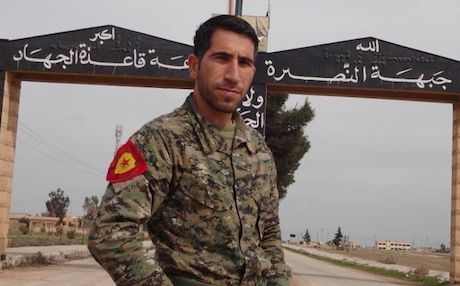
Polat Can, 2014, head of the YPG’s information centre (source)
Over the last twenty-four hours, as fighting has escalated between Turkey and the Kurdish People’s Protection Units (YPG), the armed wing of the Democratic Union Party (PYD), in northern Syria, an YPG/PYD operative has taken to Twitter to protest. Polat Can is the YPG’s representative to the American-led international coalition ranged against the Islamic State (IS), and his missives have sought to inform the coalition who and what terrorism is, which can be broadly summarized as: the Turkish government. Can himself, however, might easily be considered a terrorist since he is an allegedly-former member of the Kurdistan Workers’ Party (PKK), a registered terrorist organization by the United States, European Union, and Turkey. Continue reading
By Kyle Orton (@KyleWOrton) on August 13, 2016
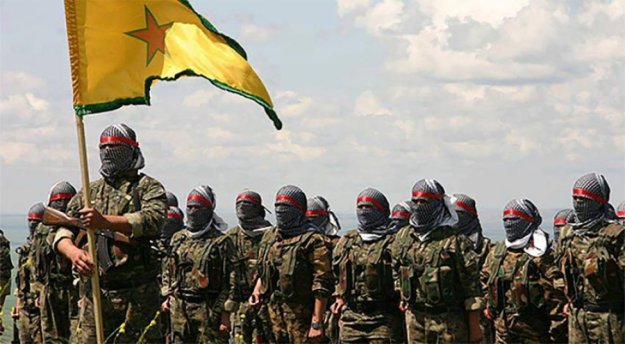
PYD/YPG fighters
The Islamic State (IS) was driven from the city of Manbij yesterday, a key supply route to the Turkish border in northern Syria, the conclusion of an operation launched on 31 May by the Syrian Democratic Forces (SDF), a front-group for the Kurdistan Workers’ Party (PKK), represented in Syria by the Democratic Union Party (PYD) and its armed wing, the People’s Protection Units (YPG). The SDF was backed by U.S. airstrikes. It is difficult not to see the defeat of IS as a positive development. It is, however, worth more closely examining the forces that are being enabled by Western power to fasten their rule across northern Syria, whose vision is deeply problematic—even in narrow terms of the fight against IS. Continue reading
 Kyle Orton's Blog