Tag Archives: SDF

Raqqa Doesn’t Want to Be Liberated By the West’s Partners

By Kyle Orton (@KyleWOrton) on 30 May 2017

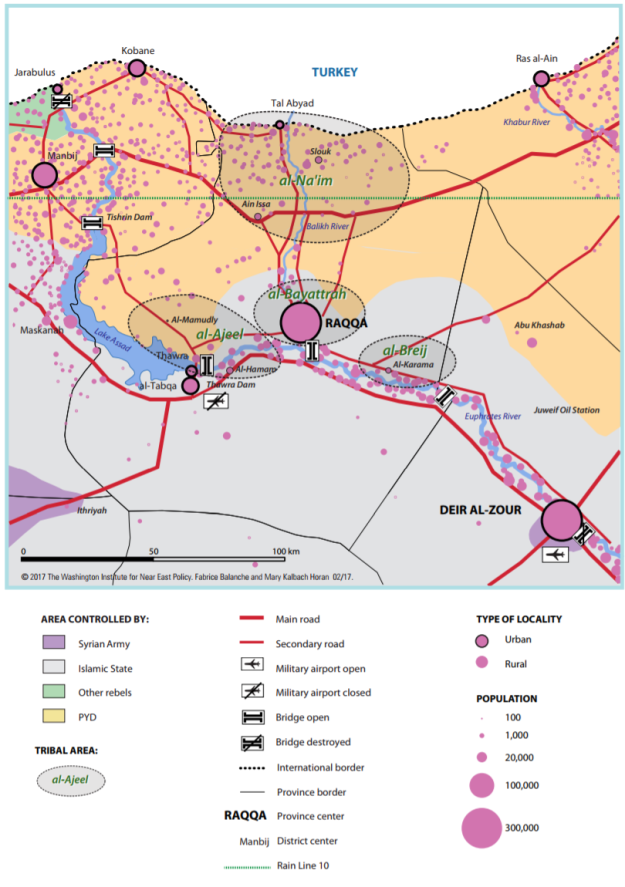
Map of the tribes around Raqqa city (source: WINEP report)

We are now on the eve of the operation to evict the Islamic State (IS) from its Syrian capital, Raqqa, and, as expected, the United States will partner with the Syrian Democratic Forces (SDF), the front-group for the Democratic Union Party (PYD) and its armed wing, the People’s Protection Units (YPG), which President Donald Trump’s administration has committed to directly arming.

Many of the doubts voiced about this course relate to Turkey, since the PYD/YPG is—despite continued efforts to obfuscate the fact—the Syrian department of the Kurdistan Workers’ Party (PKK), the premier internal security threat to Turkey for many decades. The discussion then tends to fall into one of two grooves. Continue reading

American YPG Fighter Complains About Group’s Lack of Medical Care

By Kyle Orton (@KyleWOrton) on 26 May 2017

Patrick Ryan Kasprik

Patrick Ryan Kasprik was arrested in Lee County, Florida, in September 2015 for battery of a police officer and resisting arrest. By the time of Kasprik’s scheduled court appearance in February 2016, he was in Syria, having joined the People’s Protection Units (YPG)—without any training—as a combat medic. The YPG is the military wing of the Democratic Union Party (PYD), the name under which the terrorist-designated Kurdistan Workers’ Party (PKK) operates while on Syrian soil. There has been a flow of Westerners joining the YPG/PKK for several years. Kasprik left Rojava in November 2016. On 24 May 2017, Kasprik wrote a public Facebook status that spoke of YPG/PKK commanders having an alarming racial disdain for Arabs and buttressed prior reports by American YPG volunteers that the YPG was providing insufficient care to its wounded. Indeed, Kasprik suggested that the YPG was content for fatalities because it made for good propaganda. Kasprik’s full post is reproduced below with some explanatory notes added in square brackets.
Continue reading

Coalition on the Verge of Repeating the Mistakes of the Past Against the Islamic State

This article was published at BICOM

By Kyle Orton (@KyleWOrton) on 16 May 2017

Within the next month, the Islamic State (IS) will likely lose its grip on its Iraqi capital, Mosul, and the operation to drive it from its Syrian capital, Raqqa, will begin. The destruction of IS’s caliphate, however, is not even close to the end of the road for the movement, not least because of the manner in which it is being accomplished.

At its core the IS movement is waging a revolutionary war, and as Craig Whiteside, a fellow with The International Centre for Counter-Terrorism has explained, this means that the focus is on legitimacy. Military victories come and go but if IS is, over the long-term, gaining acceptance—whether from support, resignation, or fear—among the population it hopes to govern (the Sunni Arabs), then it is winning. It is for this reason that IS tries to embed political victories within its military defeats. Continue reading

Crackdown Continues in Syrian Kurdish Areas

By Kyle Orton (@KyleWOrton) on 12 May 2017

Fasla Yusef, Syrian Kurdish opposition leader

The Kurdistan Workers’ Party (PKK) controls areas of northern Syria, operating under the name of the Democratic Union Party or PYD (its political wing) and the People’s Protection Units or YPG (its military wing). On Tuesday, President Donald Trump approved plans to arm the YPG directly, abandoning a fiction that the U.S. was only arming the Arab parts of an ostensible coalition, the Syrian Democratic Forces (SDF), which is in fact controlled by the YPG/PKK. This is in preparation for the U.S. backing the “SDF” to liberate Raqqa City, the Syrian capital of the Islamic State’s (IS) caliphate. Leaving aside the geopolitical implications of the U.S. decision for NATO and regional order, and putting aside, too, the likelihood that this decision will defeat its own purposes and give IS a new lease on life, there is a purely humanitarian dimension that deserves more attention. In March the PYD effectively legalized its one-party state in northern Syria and escalated its already-severe persecution of the Kurdish opposition. That crackdown has continued. Continue reading

The Problems With the West’s Partners Against the Islamic State

By Kyle Orton (@KyleWOrton) on 10 May 2017

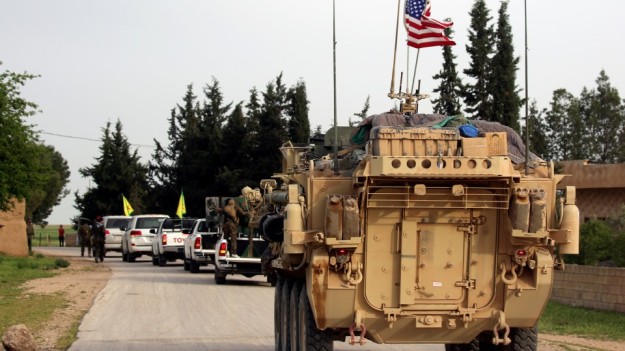
U.S. troops patrolling with the YPG/PKK in the village of Darbasiyah, northern Syria, on the border with Turkey, 28 April 2017

The United States has tried to engage in Syria almost solely in a counter-terrorism capacity, against Daesh (IS) and—in a recently-escalating campaign—against al Qaeda. The narrowness of the focus on jihadist terrorists led to the US disregarding wider political dynamics in the war in Syria—and to a degree in Iraq, too—and partnering with forces that over the long term will undo even this narrow mission.

The announcement yesterday that President Donald Trump will now arm the Kurdish People’s Protection Units (YPG) to expel Daesh from its Syrian capital, Raqqa, is the end-point of this policy, setting up a very dangerous medium- and long-term situation that will redound to the benefit of terrorists. Continue reading

PKK and Propaganda

By Kyle Orton (@KyleWOrton) on 29 April 2017

Ilham Ahmed

The West’s Syria policy is beginning to unravel of its own contradictions.

The Turkish government launched airstrikes against the positions of the Kurdistan Workers’ Party (PKK) in north-eastern Syria and the Sinjar area of north-western Iraq in the early hours of 25 April. There were international ramifications to this because the PKK in Syria, which operates politically under the name of the Democratic Union Party (PYD) and militarily as the People’s Defence Units (YPG), is the main partner of the U.S.-led Coalition against the Islamic State (IS). Turkey has protested the U.S. engaging the YPG/PKK so deeply and exclusively as its anti-IS partner, being displeased at the U.S.’s uncritical (public) stance toward the YPG, even after the YPG violated U.S.-brokered agreements on its operational theatres and used Russian airstrikes to attack Turkey- and CIA-backed rebels.

In response to Turkey’s anti-PKK operations this week, The Washington Post has hosted an op-ed by Ilham Ahmed, identified as “a co-president of the Democratic Council of Syria”. Continue reading

Repression Increases in the Syrian Kurdish Areas

By Kyle Orton (@KyleWOrton) on March 16, 2017

Kurds protesting against the PYD in Hasaka, 16 August 2016

The Democratic Union Party (PYD), the Syrian front of the Turkey-based Kurdistan Workers’ Party (PKK), is the leading group in the administration of the Kurdish areas in north-eastern Syria. The PYD and its armed wing, the People’s Protection Units (YPG), have become the preferred instrument of the U.S.-led Coalition against the Islamic State (IS) and as a by-product have been assisted in conquering some Arab-majority zones of northern Syria—and perhaps soon of eastern Syria. The PYD/PKK has always treated all dissent harshly and the Kurdish opposition in recent days has reported an escalation in repression by the PYD, which the West—as has become a habit in cases of PYD misbehaviour—has made no public protest about. Continue reading

Liberating Raqqa from the Islamic State

By Kyle Orton (@KyleWOrton) on February 17, 2017

As the new administration of Donald Trump works through the United States’ options in dealing with Syria, and the Islamic State (IS) specifically, one option apparently under consideration is the use of greater numbers of combat troops to accelerate the expulsion of IS from its Syrian capital, Raqqa. While more U.S. troops would undoubtedly hasten the collapse of IS’s grip on its urban strongholds in Syria, such a policy risks continuing the failed U.S. policies of the past six years in Syria that have tackled symptoms of the conflict, rather than its causes, have tried to tackle elements in isolation from the wider conflict, and have placed too great an emphasis on military progress over politics. Continue reading

Turkey Continues to Protest the Coalition’s Syrian Kurdish Allies

By Kyle Orton (@KyleWOrton) on November 22, 2016

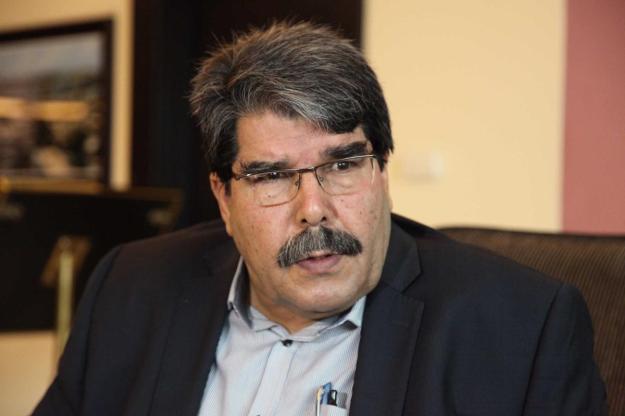
Saleh Muslim Muhammad

This morning, Turkey issued arrest warrants for forty-eight members of the Kurdistan Workers’ Party (PKK), which has fought a forty-year war against the Turkish state. The PKK is listed as terrorist by Ankara, Britain, the European Union, NATO, and the United States. Among those being sought is Saleh Muslim Muhammad, the leader of the Syrian branch of the PKK, known as the Democratic Union Party (PYD), whose armed wing—the People’s Protection Units (YPG)—happens to be the favoured Western instrument in combatting the Islamic State (IS) in Syria. The West has long denied or obfuscated the fact it is working with an organization that a NATO partner considers its nemesis and a long-standing threat to its national security. The Turks, it seems, are not content to let this ambiguity stand, and there are good reasons of Western self-interest why the alliance with the PKK deserves another look. Continue reading

The Coalition’s Flawed Endgame Strategy for the Islamic State

By Kyle Orton (@KyleWOrton) on November 6, 2016

After some (perhaps wilful) confusion over the timing, the operation to expel the Islamic State (IS) from Raqqa City, its Syrian capital, got underway this morning, running concurrent with the effort to evict IS from its Iraqi capital, Mosul. There are deep concerns about the methods adopted in both cases. The ground forces the U.S.-led Coalition has chosen to support in Raqqa cannot lead to sustainable stability in Syria, something that is essential to defeat IS. While the Mosul operation has proceeded generally to plan, there are increasing signs of trouble within the operation itself and the most troubling aspect—the aftermath—still appears to be unplanned. Beyond this is the continued assault on Aleppo City by Bashar al-Assad’s regime and its Russian and Iranian patrons that is systematically destroying the forces needed if there is to be any settlement to Syria’s war that ends the space given to international terrorists. Continue reading