Tag Archives: sectarianism

State Department Designates Two Canadian Jihadists in Syria

By Kyle Orton (@KyleWOrton) on 14 April 2017

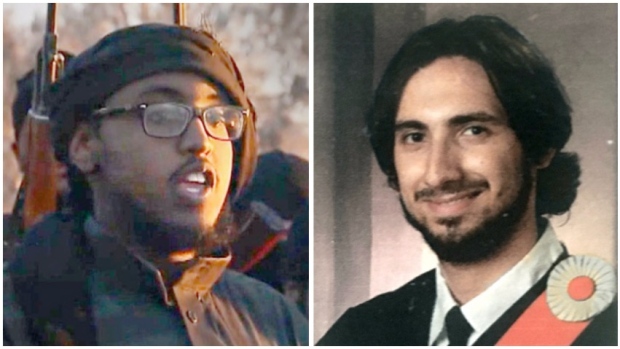
Farah Mohamed Shirdon, Tarek Sakr (image source)

The U.S. State Department added two Canadians to the list of Specially Designated Global Terrorists (SDGT) on 13 April. One of them, Tarek Sakr, of Syrian descent, is associated with Jabhat al-Nusra, al-Qaeda’s Syrian branch, which has since been through two rebrands to Jabhat Fatah al-Sham (JFS) and currently Hay’at Tahrir al-Sham (HTS). The other, Farah Mohamed Shirdon, of Somali background, is a member of the Islamic State (IS). Continue reading

Islamic State Spokesman Attacks Trump, Says Enemies Will Be Defeated

By Kyle Orton (@KyleWOrton) on 7 April 2017

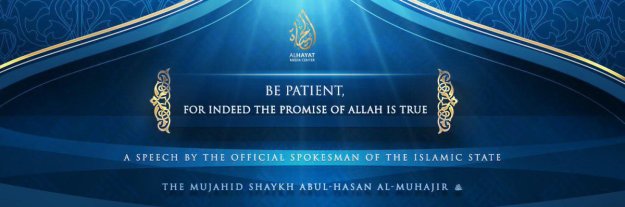
The Islamic State’s (IS) official spokesman, Abu Hassan al-Muhajir, released a speech on 4 April 2017, his second. An English transcript of the speech, entitled, “So Be Patient. Indeed, the Promise of Allah is Truth” or “Patience, the Promise of God is True”, was released by al-Hayat Media Center and is reproduced below. Continue reading

America Pushes Back Against Iranian Subversion on the Gulf

Originally posted at The Henry Jackson Society

By Kyle Orton (@KyleWOrton) on 17 March 2017

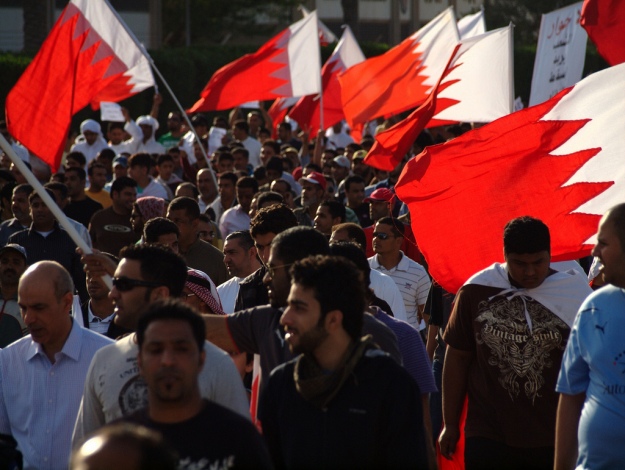
Protesters march through Manama, Bahrain in March 2011 (Photo from Al-Jazeera)

The U.S. State Department today imposed sanctions on two men, Ahmad Hasan Yusuf (Abu Maryam, Sajjad Hassan Nasir al-Zubaydi) and Alsayed Murtadha Majeed Ramadhan Alawi (Murtadha Majeed Ramadan al-Sindi), labelling them Specially Designated Global Terrorists (SDGT). Both men are members of a group, Saraya al-Ashtar or al-Ashtar Brigades (AAB) that has conducted terrorism in Bahrain and is part of the Iranian revolution’s long reach in the region. Continue reading

Liberating Raqqa from the Islamic State

By Kyle Orton (@KyleWOrton) on February 17, 2017

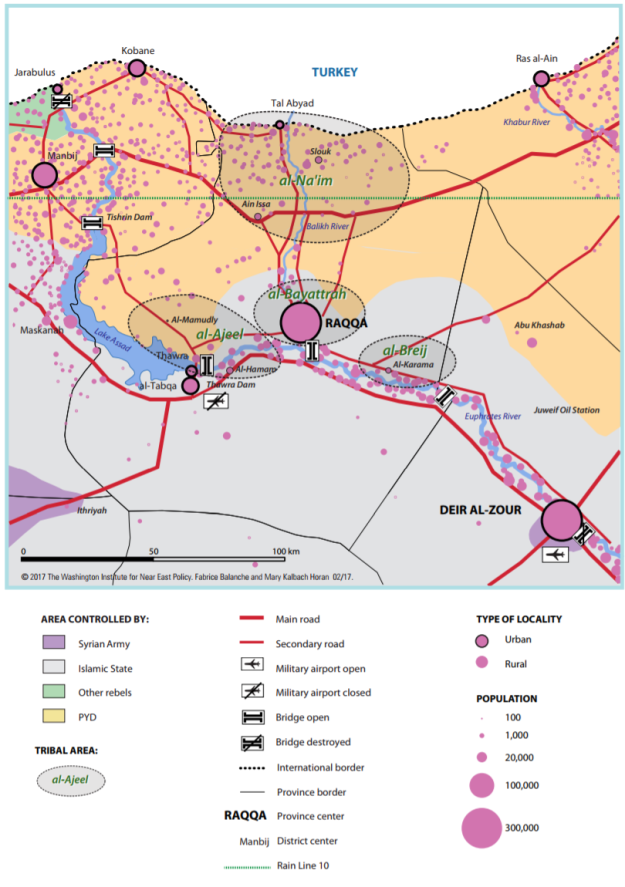
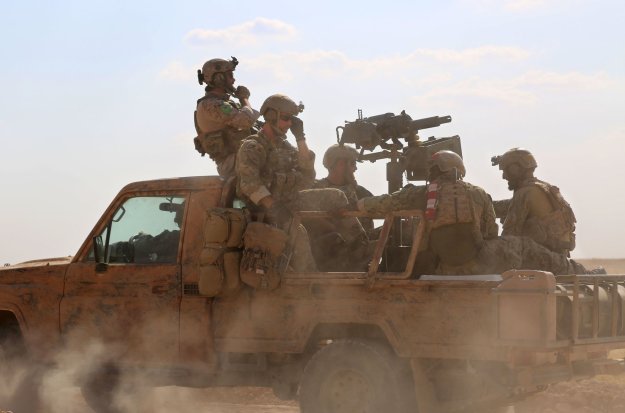
As the new administration of Donald Trump works through the United States’ options in dealing with Syria, and the Islamic State (IS) specifically, one option apparently under consideration is the use of greater numbers of combat troops to accelerate the expulsion of IS from its Syrian capital, Raqqa. While more U.S. troops would undoubtedly hasten the collapse of IS’s grip on its urban strongholds in Syria, such a policy risks continuing the failed U.S. policies of the past six years in Syria that have tackled symptoms of the conflict, rather than its causes, have tried to tackle elements in isolation from the wider conflict, and have placed too great an emphasis on military progress over politics. Continue reading

When the Islamic State’s Founder Clashed with an Al-Qaeda Cleric

By Kyle Orton (@KyleWOrton) on February 12, 2017

Abu Musab al-Zarqawi [left] and Abu Muhammad al-Maqdisi [right]

Al-Qaeda’s expulsion of the Islamic State (IS) from its ranks three years ago did not come from nowhere. IS had always been problematic and the dispute in the months leading up to the decisive break was far from the first time that Al-Qaeda “central” had clashed with the Iraq-based group. Continue reading

Leader of New Al-Qaeda Group in Syria Speaks

By Kyle Orton (@KyleWOrton) on February 9, 2017

hashem-al-shaykh-2

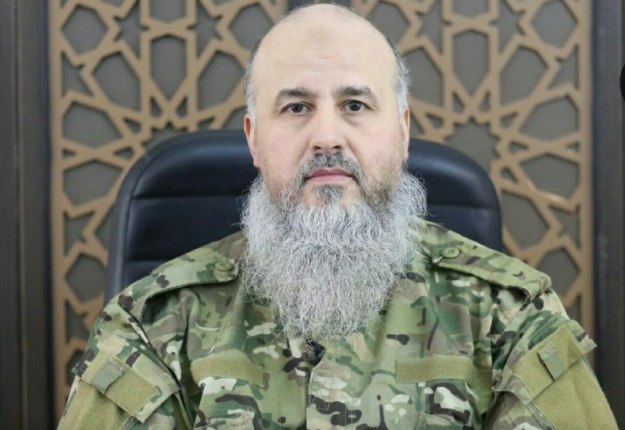
After a series of intra-insurgent clashes beginning on 19 January 2017 in northern Syria, al-Qaeda’s rebranded presence, Jabhat Fatah al-Sham (JFS), annexed several groups and clerics—and a number more since—on 28 January in a merger that took on the name Hay’at Tahrir al-Sham (HTS). JFS followed the pattern of its parent branch, the Islamic State, and did not monopolize the leadership posts in HTS, leaving the emir post to Hashem al-Shaykh (Abu Jabbar). Al-Shaykh is a former senior official of Ahrar al-Sham, an insurgent group that also has links to al-Qaeda and has been the primary bridge between the mainstream rebellion in Syria and al-Qaeda. Al-Shaykh gave his first speech as General Leader of Hay’at Tahrir al-Sham on 9 February, and Bilad al-Sham Media put out a transcript (reproduced below) and picture (above). Continue reading

International Taboo on Chemical Weapons Frays As U.S. Steps Back

By Kyle Orton (@KyleWOrton) on January 13, 2017

Yesterday, the United States Treasury Department imposed sanctions on eighteen senior officials in the regime of Bashar al-Assad. The sanctions come in response to reports in August and October 2016 by the Organization for the Prohibition of Chemical Weapons (OPCW), the United Nations investigative body, which found that found “the Syrian government, specifically the Syrian Arab Air Force, was responsible for three chlorine gas attacks in Talmenes on April 21, 2014, and in Qmenas and Sarmin on March 16, 2015.” This is three years after the Assad regime was spared punitive military strikes for its use of chemical weapons under a Russian-orchestrated “deal” that ostensibly disarmed Assad of such weapons. Continue reading

The Founder Lays Out The Islamic State’s Vision

By Kyle Orton (@KyleWOrton) on January 12, 2017

Two of the very few pictures of Hamid al-Zawi (Abu Umar al-Baghdadi) in existence. The picture on the right, taken after al-Zawi was killed in April 2010, is most often used in Islamic State media.

Two of the very few pictures of Hamid al-Zawi (Abu Umar al-Baghdadi) in existence. The picture on the right, taken after al-Zawi was killed in April 2010, is most often used in Islamic State media.

Hamid al-Zawi (Abu Umar al-Baghdadi), the first emir of the Islamic State when it was founded in 2006, gave his third speech—“Say, I Am Upon Clear Evidence From My Lord” or “Say, I Am Made Certain By My God”—on 13 March 2007. An English transcript of the speech was released online by the Jihad Media Battalion and a video of part of the speech was released, entitled, “This Is Our Doctrine”, a neat encapsulation of the speech’s content. The speech is an interesting first-hand statement of what the Islamic State actually believes, and is reproduced below.
Continue reading

The Assad Regime Admits to Manipulating the Islamic State

By Kyle Orton (@KyleWOrton) on January 6, 2017

Khaled Abboud

From the beginning of the uprising in Syria in 2011, there have been accusations that Bashar al-Assad’s regime was in a de facto partnership with the Islamic State (IS) against the mainstream opposition. These accusations have a considerable basis in fact: during the entirety of the Anglo-American occupation of Iraq, Assad collaborated with IS jihadists in the destabilization of Iraq, killing thousands of Iraqi civilians and hundreds of American and British troops. Once the Syrian uprising was underway, the regime undertook various measures to bolster extremists in the insurgency. Assad and IS worked in tandem to leave Syria as a binary choice between themselves: Assad was sure this would rehabilitate him in the eyes of the world and transform his criminal regime into a partner of the international community in suppressing a terrorist insurgency, and IS wanted to rally Sunnis to its banner. The Secretary of the Syrian Parliament has now come forward to underline this. Continue reading

The Inaugural Address of the Islamic State’s New Spokesman

By Kyle Orton (@KyleWOrton) on December 9, 2016

1

Taha Subhi Falaha (Abu Muhammad al-Adnani) was killed near al-Bab in northern Syria on 30 August in an airstrike by the U.S.-led Coalition. One of Falaha’s roles was the Islamic State’s official spokesman. On 5 December, IS announced that it has a new spokesman, Abu Hassan al-Muhajir, and he gave an inaugural speech. That speech, entitled, “You Will Remember What I Have Told You,” was printed in the fourth issue of Rumiyah on 7 December. Rumiyah seems to have replaced the English-language Dabiq magazine—probably because the village of Dabiq has been lost. The speech is reproduced below with some editions for spelling, some additions for explanation, and some especially notable sections highlighted in bold.
Continue reading