Tag Archives: Taha Falaha

The Leadership Structure of the Islamic State

By Kyle Orton (@KyleWOrton) on 6 August 2017

A year ago, I wrote a report documenting the biographies of Islamic State (IS) leaders and something of the structure of the organisation. Since then, the intricacies of the structure have been further revealed, even as it has somewhat crumbled in practice. The caliphate—the statelet built by IS—has been significantly degraded: the Iraqi “capital”, Mosul, has fallen, and operation to clear the Syrian “capital”, Raqqa, is underway. More significantly, upwards of 40% of those profiled have been killed, so it seemed an opportune moment for an update on who currently leads the world’s most infamous terrorist movement.
Continue reading
The Coalition Targets Islamic State Propagandists and External Terrorists

By Kyle Orton (@KyleWOrton) on 29 July 2017

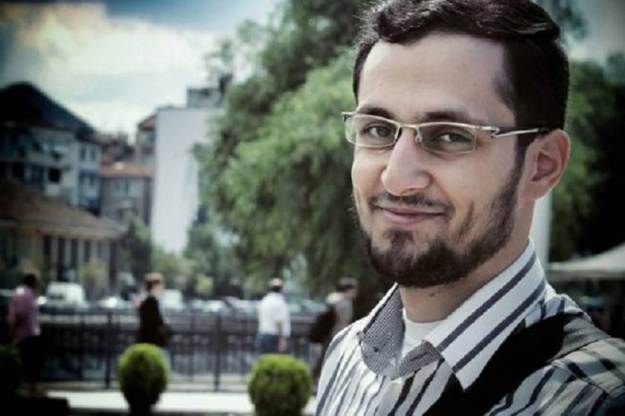
Baraa Kadek (Riyan Meshal) [image source]

The United States announced on 27 July that it had killed seven “senior ISIS propagandists and facilitators in Iraq and Syria” since late March. The removal of these terrorists takes from the Islamic State “extensive experience and training, and degrades ISIS’s ability to plan and conduct attacks on civilian targets in Iraq and Syria, as well throughout the region and in the West,” U.S. Central Command (CENTCOM) said. The geographical pattern of the strikes that killed these men allow some conclusions about IS’s current situation on the ground, and the information provided by CENTCOM underlines IS’s will and capacity, even as it loses its caliphate, to conduct external operations. Continue reading

America Sanctions Operatives of the Islamic State’s Chemical Weapons Department

By Kyle Orton (@KyleWOrton) on 13 June 2017

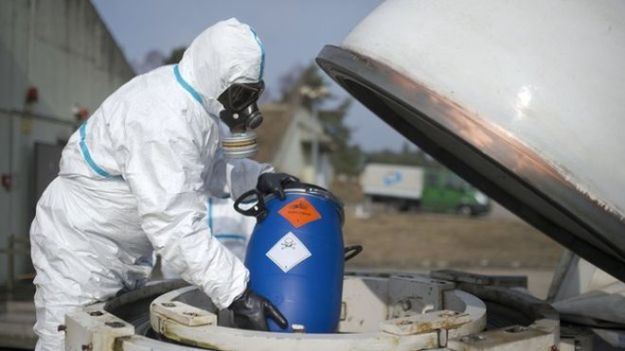
The U.S. Treasury Department’s Office of Foreign Assets Control (OFAC) announced financial sanctions against an individual involved in the “development” of chemical weapons of mass destruction (CWMD) for the Islamic State (IS) on 12 June. Simultaneously, the State Department labelled another individual involved in the development of CWMD for IS as a Specially Designated Global Terrorist (SDGT). These are the first sanctions of their kind. Continue reading

Senior Islamic State Cleric Turki al-Binali Killed in an Airstrike

By Kyle Orton (@KyleWOrton) on 11 June 2017

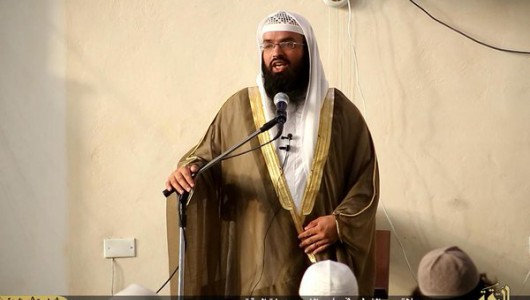
Turki al-Binali at prayers in Raqqa, July 2015

It was reported on jihadist websites and by local activists that Turki al-Binali (Abu Hammam al-Athari), a senior cleric of the Islamic State (IS) and perhaps the most important public proponent of the caliphate’s formation, had been killed in Syria by an airstrike from the U.S.-led Coalition on 29 May. IS has been silent on this despite releasing their newsletter al-Naba and the tenth edition of their English-language propaganda magazine Rumiyah since then. On Tuesday, the intelligence services of the Kurdistan Regional Government (KRG) in northern Iraq confirmed that al-Binali had been killed. Continue reading

The Islamic State Expands Its Definition of Heresy

By Kyle Orton (@KyleWOrton) on 20 May 2017

A ruling in the name of the Islamic State’s Delegated Committee, prepared it seems by one of its senior members, Abu Zayd al-Iraqi, was issued on 17 May, expanding the scope of who, within the Muslim community, IS considers a heretic. The memo was addressed to “All Wilayat, Dawawin, and Committees,” and entitled, “That Those Who Perish Would Perish Upon Proof and Those Who Live Would Live Upon Proof”. The wide use of takfir (excommunication) has been one of IS’s most defining and controversial features—even within the jihadist world. This judgment, which comes in the context of a broader centralization of authority—on 14 May a decree banned individual IS fighters from using social media—takes IS into territory akin to the Armed Islamic Group (GIA), which hereticized whole sections of Algeria’s population and began slaughtering them. The text of the ruling was released in English and is reproduced below. Continue reading

Coalition on the Verge of Repeating the Mistakes of the Past Against the Islamic State

This article was published at BICOM

By Kyle Orton (@KyleWOrton) on 16 May 2017

Within the next month, the Islamic State (IS) will likely lose its grip on its Iraqi capital, Mosul, and the operation to drive it from its Syrian capital, Raqqa, will begin. The destruction of IS’s caliphate, however, is not even close to the end of the road for the movement, not least because of the manner in which it is being accomplished.

At its core the IS movement is waging a revolutionary war, and as Craig Whiteside, a fellow with The International Centre for Counter-Terrorism has explained, this means that the focus is on legitimacy. Military victories come and go but if IS is, over the long-term, gaining acceptance—whether from support, resignation, or fear—among the population it hopes to govern (the Sunni Arabs), then it is winning. It is for this reason that IS tries to embed political victories within its military defeats. Continue reading

Islamic State Operative Connected to Charlie Hebdo Attack Might Still Be Alive

By Kyle Orton (@KyleWOrton) on 15 April 2017

Boubaker al-Hakim (Abu Muqatil al-Tunisi) in Dabiq

Earlier today, an Iraqi military statement made public that the Iraqi government had provided coordinates to Bashar al-Assad’s air force, via the intelligence-sharing cell set up in Baghdad with Russia and Iran, for targets in Raqqa and al-Bukamal. One of the targets was Boubaker al-Hakim (Abu Muqatil al-Tunisi), a French-Tunisian Islamic State (IS) operative. Whether the Syrian regime’s strikes against al-Hakim were successful was not made clear. The interest here is that the U.S. announced on 10 December 2016 that it had killed al-Hakim in an airstrike near Raqqa on 26 November 2016, meaning that either the U.S. was mistaken or the Iraqis are. Al-Hakim is a very interesting figure in his own right with an extensive history in the jihadist movement and also highlights some broader trends, notably the assistance the Assad regime has provided to the IS movement. Continue reading

An American Jihadist At the Top of the Islamic State

Originally published at The Henry Jackson Society

By Kyle Orton (@KyleWOrton) on 9 April 2017

The eighth edition of the Islamic State’s magazine, Rumiyah (Rome), was released on 5 April 2017, and contained an obituary for one of the architects of the magazine itself. Named by his kunyas, Abu Sulayman al-Shami, Abu Sulayman al-Halabi, Abu Maysara al-Shami, and Ahmad Abdul-Badi Abu Samrah, the jihadist referred to is Ahmad Abousamra, a U.S.-Syrian dual citizen. Abousamra is quite possibly the most senior American ever to have been in IS’s ranks, and the Rumiyah article gives a very interesting glimpse more generally of IS’s hierarchy. Continue reading

Islamic State Expands its Foreign Attacks Capacity As the Caliphate Collapses

Published at The International Business Times

By Kyle Orton (@KyleWOrton) on 23 March 2017

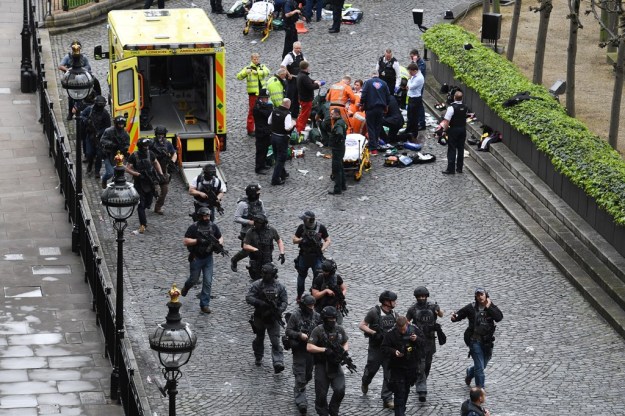
Aftermath of the Islamic State terrorist attack in Westminster, March 2017 (image source)

Just after 2:30pm yesterday afternoon, a terrorist mowed down pedestrians with a car on Westminster Bridge before jumping out near Parliament and stabbing a police officer to death. Three people were murdered, forty were injured, and the attacker was shot dead. The Islamic State (ISIS) has now claimed the attack.

The most important question is whether the terrorist had co-conspirators. Prime Minister Theresa May told Parliament this morning that it is “believed that this attacker acted alone”. It is crucial that this is not misread as saying that the attacker was a ‘lone wolf’. The arrests in Birmingham overnight suggest that this killer could have been part of a broader network, which would be consistent with the pattern of ISIS behaviour.

In a new report for the Henry Jackson Society, documents 152 foreign ISIS attacks in 34 countries since 2002, the vast majority in the past two years. In nearly three-quarters of the cases the attacks have a direct link to the organisation, and those without often have accomplices who assist in the atrocities in some way. Just 15% of the attacks have been by inspired individuals, who had no demonstrated connection to ISIS or anyone else in planning or executing their attack. Continue reading

Islamic State Has Been Defeated in Al-Bab, But America Needs a New Direction in Syria

Published at The International Business Times and subsequently discussed on the IBTimes podcast

By Kyle Orton (@KyleWOrton) on February 27, 2017

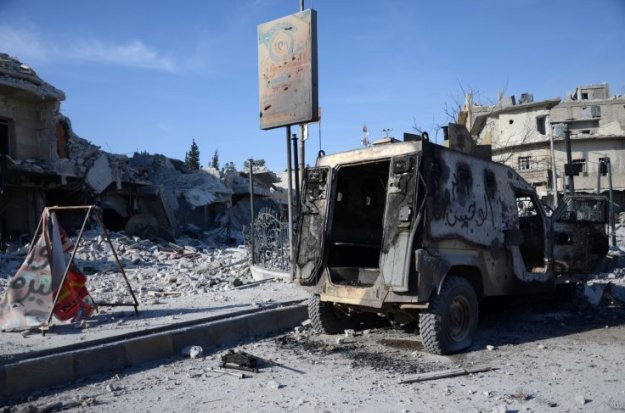
A burnt-out vehicle on a destroyed street in al-Bab on 23 February 2017 (Nazeer al-Khatib/AFP/Getty Images)

Turkey intervened in Syria in August 2016 with Operation Euphrates Shield (OES), which involved special forces, some regular troops, and the mobilisation of Syrian rebels to clear its border of terrorist threats by pushing ISIS (the Islamic State) away from the frontier and preventing the Syrian branch of the Kurdistan Workers’ Party (PKK) creating a state-let on its border that could be used as a harbour and launch-pad for attacks inside Turkey.

To secure this mission, on 13 November 2016 OES began an assault on al-Bab in the eastern countryside of Aleppo Province, just 15 miles from Turkey’s border and ISIS’ last major urban centre in Syria outside its capital, Raqqa. Some 102 days of combat later, on 23 February, al-Bab fell. What happens next could determine the course of the war as Turkey competes with the PKK to be the U.S.-led Coalition’s partner in clearing ISIS from Raqqa. Continue reading