Tag Archives: terrorism

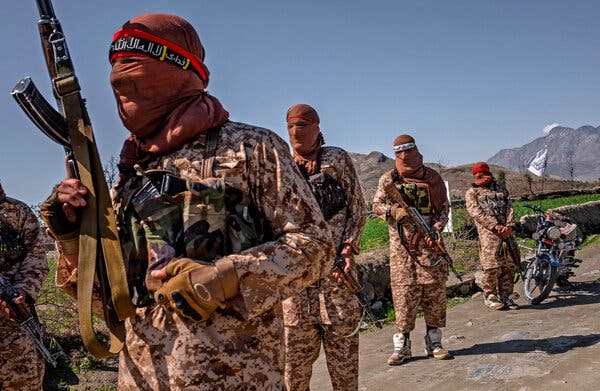
The Islamic State Benefits From the Taliban Takeover of Afghanistan

By Kyle Orton (@KyleWOrton) on 1 September 2021

In his speech last night announcing the end of the American presence in Afghanistan and what happens next, Secretary of State Blinken said: “The Taliban seeks international legitimacy and support”, and “the Taliban can do that by meeting commitments and obligations”, which include “counter-terrorism”.

To most people it will seem strange that the Taliban could be regarded as a counter-terrorism partner, and it is. Despite the U.S. never formally listing the Taliban as a Foreign Terrorist Organization (FTO), the Taliban is fully integrated in a jihadist network under the control of Pakistan’s Inter-Services Intelligence (ISI) that includes Al-Qaeda. Continue reading

Islamic State in Afghanistan and Putting Pakistan Back into the Discussion

By Kyle Orton (@KyleWOrton) on 26 August 2021

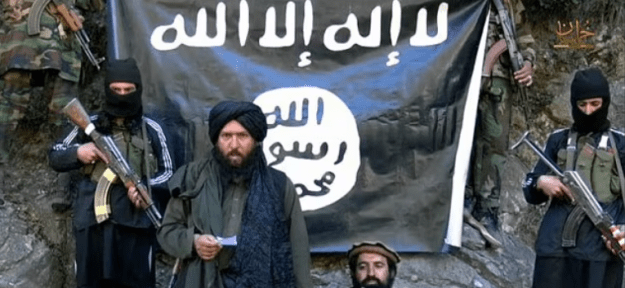
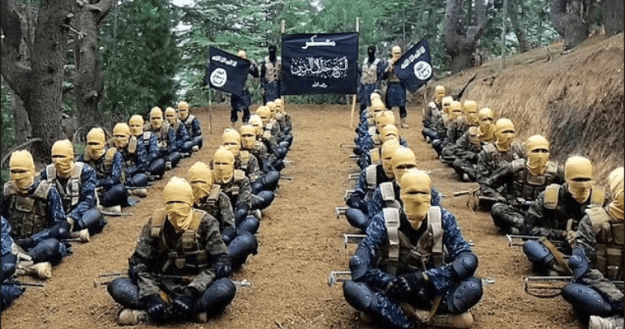
Islamic State Khorasan Province

The suicide bombings at the Kabul airport are almost certainly the work of the Islamic State’s “Khorasan Province” (ISKP), the branch of the organisation in Afghanistan and Pakistan that was officially recognised by Islamic State (ISIS) “Centre” in 2015. The group had been oddly quiet since the fall of Kabul, and we can now see why. Continue reading

Getting Real About Pakistan After the Jihadist Takeover of Afghanistan

By Kyle Orton (@KyleWOrton) on 20 August 2021

Khalil Haqqani, a senior Taliban leader and simultaneously a leader of Al-Qaeda’s Haqqani Network, leads Friday prayers at the Pul-i-Khishti, the largest mosque in Kabul, 20 August 2021

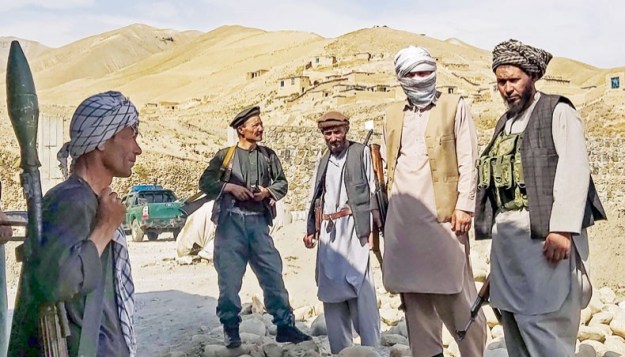
When the Taliban swept into the capital of Afghanistan on Sunday, little of the coverage focused on Pakistan and yet that was where this victory was made. This is a pattern that has persisted throughout the war. Continue reading

Pakistan and the Taliban

By Kyle Orton (@KyleWOrton) on 17 August 2021

Afghan government forces guarding Taloqan, Takhar province, Afghanistan // July 2021 // AFP photo

Kabul fell to the Taliban on 15 August. There is so much more to be said about the disastrous decisions the United States that precipitated this calamity, not least the so-called peace process whose only concrete effects were to weaken and demoralise the Afghan government, while bolstering the ranks of the Taliban by forcing the release of thousands of jihadists. The chaotic Saigon scenes have testified to the incompetence of Joe Biden’s administration, even at administrative tasks, and the horrors are only just beginning.

This post has a slightly different focus, namely the role of Pakistan, specifically its military and Inter-Services Intelligence (ISI), as the author and operator of the Taliban and allied jihadists. This factor—absolutely fundamental to the conflict—has been, for twenty years, bizarrely absent in much of the coverage, and suggestions recur to this day that the Taliban is actually a problem for Pakistan. When the Pakistan dimension does come up, it will either be to note that Pakistan has some kind of role in funding or otherwise “supporting” the Taliban, and at its strongest the Taliban will be called a “proxy” of the ISI.

Even the word “proxy”, however, underplays the extent to which the Taliban is Pakistan, a wing of its (deep) state power. Continue reading

The Trouble With “Ending Forever Wars”

By Kyle Orton (@KyleWOrton) on 12 August 2021

In early July, President Joe Biden confirmed his intention to withdraw all American troops from Afghanistan by September 2021. Biden cited a February 2020 U.S. “agreement” with the Taliban that he had “inherited” from the Trump administration. In truth, President Donald Trump had made no agreement. He had already begun pulling troops out by October 2019 and signed a fig leaf to cover his unconditional withdrawal.

Biden reassessed other Trump policies and could have reassessed this one, not least since the Taliban were in violation even of their vague paper promises — most notably on their commitment to deny space to al Qaeda and negotiate peace in good faith. The truth is that Biden is ideologically committed, as Barack Obama and Trump were, to ending American involvement in “forever wars.” Regardless, this does not mean those wars end or the threats that drew the United States in actually go away. Continue reading

The Role of the “Fraternal Parties” in the Soviet Union’s Global Mission

By Kyle Orton (@KyleWOrton) on 9 August 2021

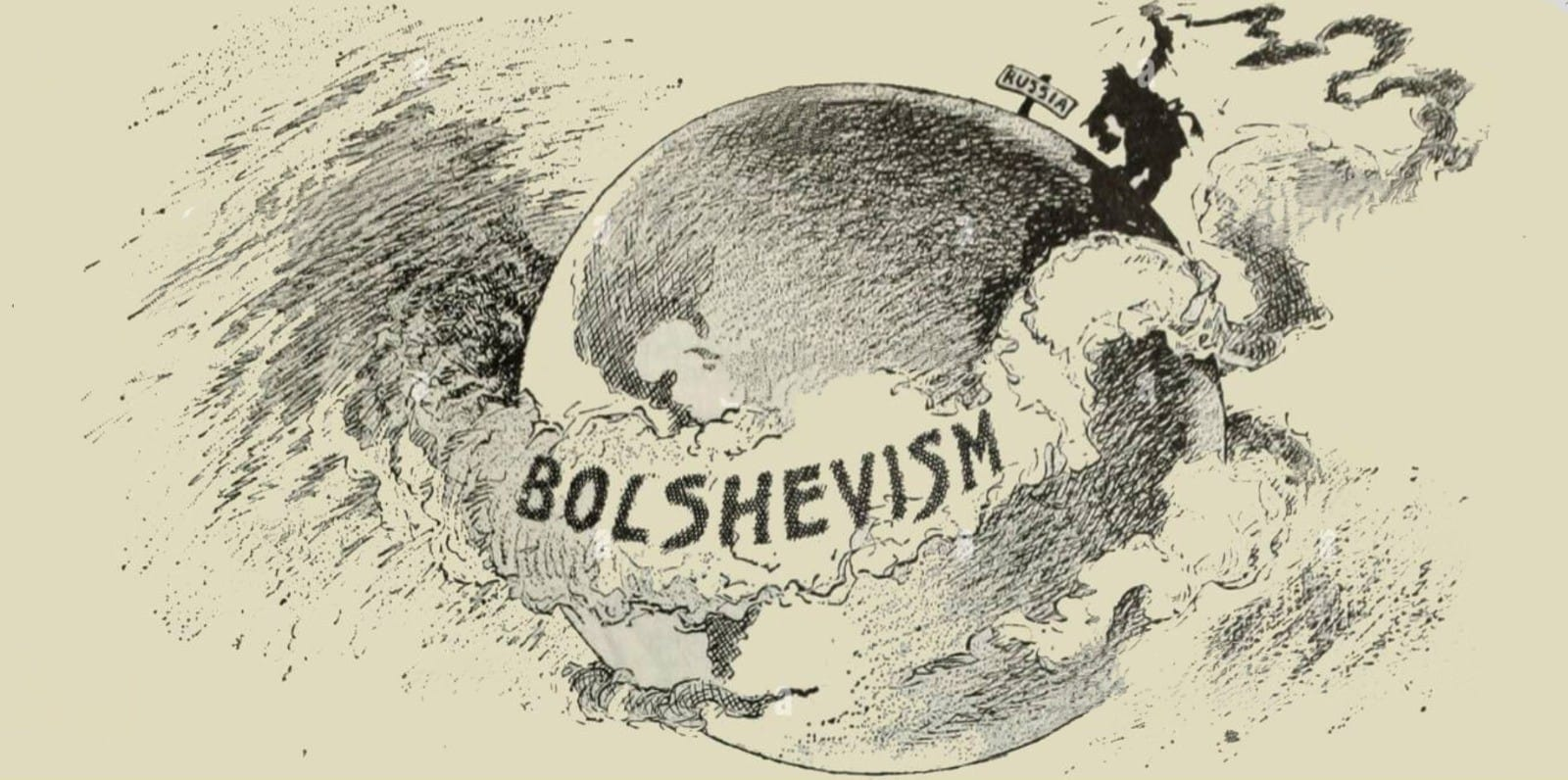
Bolshevism, 1919

After the post looking at the relationship of Reuben Falber and the Communist Party of Great Britain (CPGB) to the Soviet Union—namely the total subservience of the former to the latter—a follow-up was intended on the broader issue of the how the KGB and its predecessors interacted with the “fraternal” Parties around the world. Eighteen months later, this is that post. Let’s blame COVID.

The accusation that the Communist Parties around the world were fronts for the KGB was often derided as “McCarthyism” while the Cold War was going on. Arguments about that term in general to one side,[1] it certainly did not apply in this case. The accusations as stated were entirely factual. Continue reading

Spywar and Strategy: The Israel-Iran Contest in the Middle East

By Kyle Orton (@KyleWOrton) on 29 June 2021

Members of the Ezzedine al-Qassam Brigades, the military wing of Hamas, at a memorial in Gaza, 31 January 2017. Photo by Abed Rahim Khatib, Flash90.

The May 2021 round of fighting in Gaza brought with it the upending of the unspoken understanding between Israel and Hamas and a level of intercommunal violence within Israel that has not been seen in quite some time. The scale of the rocket attacks on the Jewish state must also be counted among the unusual elements of this latest flare-up, with Iran clearly identifiable as the enabling state behind Hamas and Palestinian Islamic Jihad (PIJ), the two primary factions behind these attacks. Continue reading

Fifth Speech of the Islamic State Spokesman: Provinces, Prison Breaks, and Palestine

By Kyle Orton (@KyleWOrton) on 22 June 2021

The fifth speech of the Islamic State’s spokesman, Abu Hamza al-Qurayshi, was released earlier today by Al-Furqan Media under the title, “You Are Most Exalted If You Are [True] Believers” (وأنتم متفوقون إذا كنتم مؤمنين), drawn from Qur’an 3:139. Continue reading

Just What Is Iran Capable Of?

By Kyle Orton (@KyleWOrton) on 8 June 2021

Massive explosion at Khojir in eastern Tehran lights up the night sky, 25 June 2021 [image source]

The clerical regime in Iran, born in terrorism and dedicated to its export, has carried out atrocities across the world since 1979. The Islamic Republic has made Israel and Jews a special target of its murderous Revolution, and this has naturally incurred what one might call “resistance” from the Israeli government. What is notable in recent times is how the global ledger is shaping up, albeit while the strategic regional situation is quite different. The Israelis have delivered blow after blow to Iran, many of them within Iran, including removing senior officials, and the Iranian theocracy has proven unable to reply because its terrorist infrastructure is so badly infiltrated and just sheerly incompetent. Continue reading

Gaza is Just One Front in Iran’s Regional War

By Kyle Orton (@KyleWOrton) on 27 May 2021

Israel’s Iron Dome missile defence system [left] activates over southern Israel against incoming HAMAS rockets [right], 14 May 2021

Naim Qassem, the deputy secretary-general of Hizballah, the Lebanese division of Iran’s Islamic Revolutionary Guards Corps (IRGC), gave an interesting interview to Hizballah’s Al-Nour radio station on 22 May, explaining IRGC/Hizballah’s vision for what it had achieved with the recent war in Gaza. Qassem added to a large body of evidence about Iran’s extensive role in the war, a lot of it supplied directly by the combatant parties themselves. Not only did the clerical regime in Iran supply the material basis for the Islamists’ war against Israel this month; they provided much of the ideological framework, too. Continue reading