Tag Archives: terrorism

Fresh Wave of Repression in the Syrian Kurdish Areas

By Kyle Orton (@KyleWOrton) on 15 September 2017

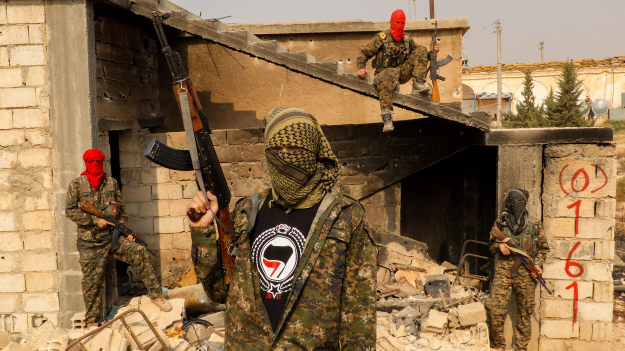
Kurdish opposition figures arrested by the PYD/PKK on 14 September 2017, NORTHERN SYRIA OBSERVER

The Kurdistan Workers’ Party (PKK), an internationally-designated terrorist entity, currently controls about a fifth of Syria’s territory in the northeast, an area it calls “Rojava”. The PKK works, as I explained in a recent report for The Henry Jackson Society, under the banner of the People’s Protection Units (YPG) and the Democratic Union Party (PYD) while on Syrian territory, and has sought—with Western complicity—to obscure its activities even further by attaching some subordinate Arab units to its forces and calling this supposed-umbrella organization the Syrian Democratic Forces (SDF). The SDF is the principle partner of the seventy-three-member coalition, led by the United States, that seeks to destroy the Islamic State (IS). On 14 September, the PYD/PKK launched a fresh crackdown on the Kurdish opposition, which has been viciously persecuted by the PKK back to 2011 and assaulted with an especial vigour since the spring of this year. The Kurds arrested by the PKK yesterday, and whose demonstration was attacked and dispersed by the PKK this afternoon, were voicing their support for the independence referendum to be held on 25 September by the Kurdistan Regional Government (KRG) in northern Iraq. Continue reading
Coalition Risks Replacing the Islamic State With the Islamic Republic

By Kyle Orton (@KyleWOrton) on 14 September 2017

By recent reports, one could easily come away with the impression that war and instability across the Fertile Crescent are winding down. Predictions about what comes next, always a risky enterprise in the Middle East, are at a point of unique vulnerability. Chaos and violence for some considerable time to come look like a safe bet, though the timing and scale look more uncertain. Nonetheless, certain trendlines are visible, most clearly the emergence of a regional order, abetted by the international coalition’s campaign against the self-proclaimed Islamic State (ISIS), dominated by the Islamic Republic of Iran. Continue reading

Russia Tries To Succeed Where the West Fails in Libya

By Kyle Orton (@KyleWOrton) and Lincoln Pigman on 14 September 2017

Libya, which has been wracked by instability and violence since 2011, is re-emerging as a geopolitical hotspot. With opposing forces fighting for control of the war-torn country—the main two being the U.N.-backed Government of National Accord (GNA) and the Libyan National Army (LNA)—foreign powers have begun taking sides, internationalizing the conflict. For Western observers, the growing involvement of Russia, a major ally of LNA commander Khalifa Haftar, represents a particular concern.

Coming on the heels of the Russian military intervention in Syria, Moscow’s role in Libya’s civil war may seem, at first glance, like déjà vu. Once again, it appears that the Kremlin is working to consolidate the power of a pro-Russian regional strongman and establish a “crescent of Russian influence” across the Middle East. And given the similarities between Haftar and Syrian President Bashar al-Assad, some degree of anxiety is understandable. Like Assad, who has long appealed to foreign governments by referring to Syrian rebels as terrorists, Haftar often frames himself as a bulwark against violent extremism in Libya, where the Islamic State remains active and Islamists have formed powerful militias and entered mainstream politics. Continue reading

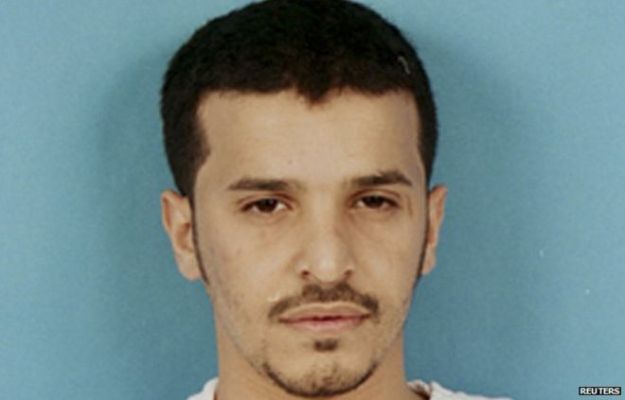
Statement by Al-Qaeda Bomb-Maker Ibrahim al-Asiri on 9/11

By Kyle Orton (@KyleWOrton) on 13 September 2017

Ibrahim al-Asiri

Al-Malahim Media Institute, the affiliated media outlet for al-Qaeda in the Arabian Peninsula (AQAP), released a statement on 13 September 2017, “The March of Victory and the Defeat of America”, as part of al-Qaeda’s “In Remembrance of the Blessed September 11 Raids” series. The statement, attributed to Ibrahim Hassan bin Tali al-Asiri, the infamous AQAP bomb-maker, is reproduced below with some editions for syntax and spelling. Continue reading

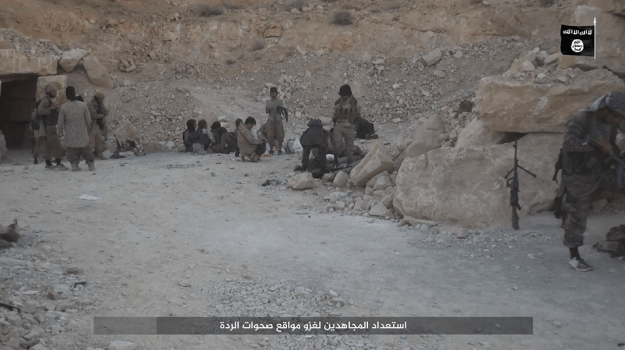
Coalition Kills Two Islamic State Weapons Engineers in Syria

By Kyle Orton (@KyleWOrton) on 8 September 2017

The U.S.-led international coalition launched airstrikes into eastern Syria on 4 September 2017 that killed “two senior ISIS leaders” involved in “weapons engineering activities” and the external operations wing of the Islamic State (IS or ISIS), according to a statement from U.S. Central Command (CENTCOM) yesterday.
Continue reading

One More Time on Saddam and the Islamic State

Originally published at The Henry Jackson Society

By Kyle Orton (@KyleWOrton) on 2 September 2017

The most recent issue of Perspectives on Terrorism had a paper by Ronen Zeidel entitled, ‘The Dawa’ish: A Collective Profile of IS Commanders’, which was “the first attempt to provide a comprehensive collective profile of commanders and leaders of the Islamic State (IS)”. Based on “an inventory of over 600 names”, the paper assessed the nationality, ethnicity, and tribal origins not just of the very senior IS commanders, but those lower down, a novel and much-needed line of investigation. Zeidel found that these commanders of the IS movement are or were overwhelmingly Iraqi and Sunni Arab, with an important Turkoman contingent.

Zeidel’s findings are important for drawing attention again to the local-revolutionary character of an organisation that gets a great deal of attention for its foreign fighters and external attacks, especially in the West, but which only a recently acquired global reach—and, indeed, only recently needed to: until 2011, the West was easily reachable since it had troops on the ground in Iraq, so the incentive to invest resources in creating a foreign terrorist apparatus was minimal.

One small part of Zeidel’s work has created something of a storm, however. Zeidel gives the occupation held by these commanders and, for those where this was known, 72% of them were former regime elements (FREs) from the dictatorship of Saddam Husayn. This reignited the argument over how important the FREs have been to IS. Continue reading

American Court Rulings Related to the Assad Regime’s Assistance to the Islamic State

By Kyle Orton (@KyleWOrton) on 23 August 2017

United States Federal Courts have issued a series of rulings related to the support the Syrian regime of Bashar al-Assad has given to the Islamic State (IS) movement. The rulings relate to the murder of Americans by IS, which could only be accomplished because of the Assad regime’s assistance. Continue reading

The Forgotten Foreign Fighters: The PKK in Syria

By Kyle Orton (@KyleWOrton) on 17 August 2017

I released a report today, published by the Henry Jackson Society, The Forgotten Foreign Fighters: The PKK in Syria. Continue reading

The Leadership Structure of the Islamic State

By Kyle Orton (@KyleWOrton) on 6 August 2017

A year ago, I wrote a report documenting the biographies of Islamic State (IS) leaders and something of the structure of the organisation. Since then, the intricacies of the structure have been further revealed, even as it has somewhat crumbled in practice. The caliphate—the statelet built by IS—has been significantly degraded: the Iraqi “capital”, Mosul, has fallen, and operation to clear the Syrian “capital”, Raqqa, is underway. More significantly, upwards of 40% of those profiled have been killed, so it seemed an opportune moment for an update on who currently leads the world’s most infamous terrorist movement.
Continue reading

Iran and Russia Are Using the Taliban Against the West

By Kyle Orton (@KyleWOrton) on 5 August 2017

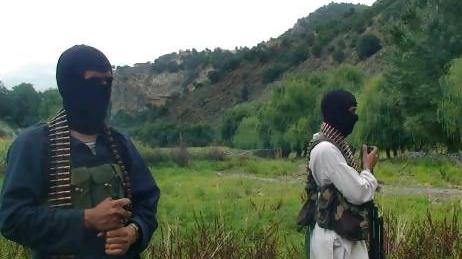
Taliban jihadists (image source)

The New York Times reported on the growing closeness of relations between the governments in Iran and Russia, and the Taliban movement in Afghanistan, something that became especially salient earlier this year and which has been visible for at least two years. Continue reading