By Kyle Orton (@KyleWOrton) on 29 July 2017
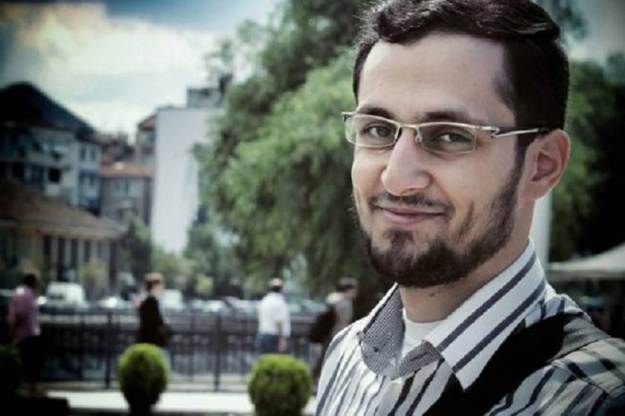
Baraa Kadek (Riyan Meshal) [image source]
By Kyle Orton (@KyleWOrton) on 29 July 2017
Baraa Kadek (Riyan Meshal) [image source]
By Kyle Orton (@KyleWOrton) on 13 June 2017
(source)
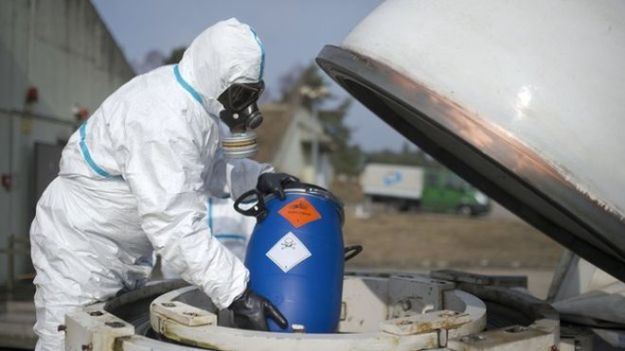
The U.S. Treasury Department’s Office of Foreign Assets Control (OFAC) announced financial sanctions against an individual involved in the “development” of chemical weapons of mass destruction (CWMD) for the Islamic State (IS) on 12 June. Simultaneously, the State Department labelled another individual involved in the development of CWMD for IS as a Specially Designated Global Terrorist (SDGT). These are the first sanctions of their kind. Continue reading
By Kyle Orton (@KyleWOrton) on 20 May 2017
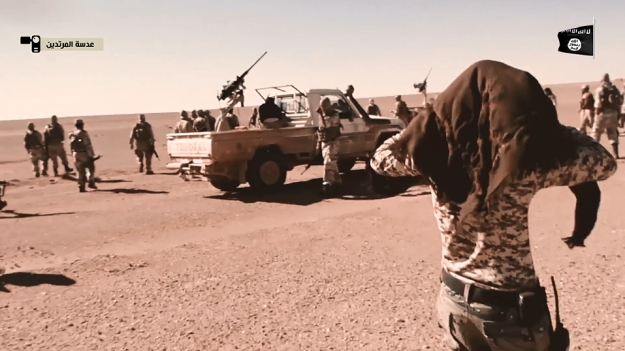
A ruling in the name of the Islamic State’s Delegated Committee, prepared it seems by one of its senior members, Abu Zayd al-Iraqi, was issued on 17 May, expanding the scope of who, within the Muslim community, IS considers a heretic. The memo was addressed to “All Wilayat, Dawawin, and Committees,” and entitled, “That Those Who Perish Would Perish Upon Proof and Those Who Live Would Live Upon Proof”. The wide use of takfir (excommunication) has been one of IS’s most defining and controversial features—even within the jihadist world. This judgment, which comes in the context of a broader centralization of authority—on 14 May a decree banned individual IS fighters from using social media—takes IS into territory akin to the Armed Islamic Group (GIA), which hereticized whole sections of Algeria’s population and began slaughtering them. The text of the ruling was released in English and is reproduced below. Continue reading
Originally published at The Henry Jackson Society
By Kyle Orton (@KyleWOrton) on 9 April 2017

The eighth edition of the Islamic State’s magazine, Rumiyah (Rome), was released on 5 April 2017, and contained an obituary for one of the architects of the magazine itself. Named by his kunyas, Abu Sulayman al-Shami, Abu Sulayman al-Halabi, Abu Maysara al-Shami, and Ahmad Abdul-Badi Abu Samrah, the jihadist referred to is Ahmad Abousamra, a U.S.-Syrian dual citizen. Abousamra is quite possibly the most senior American ever to have been in IS’s ranks, and the Rumiyah article gives a very interesting glimpse more generally of IS’s hierarchy. Continue reading
By Kyle Orton (@KyleWOrton) on 8 April 2017
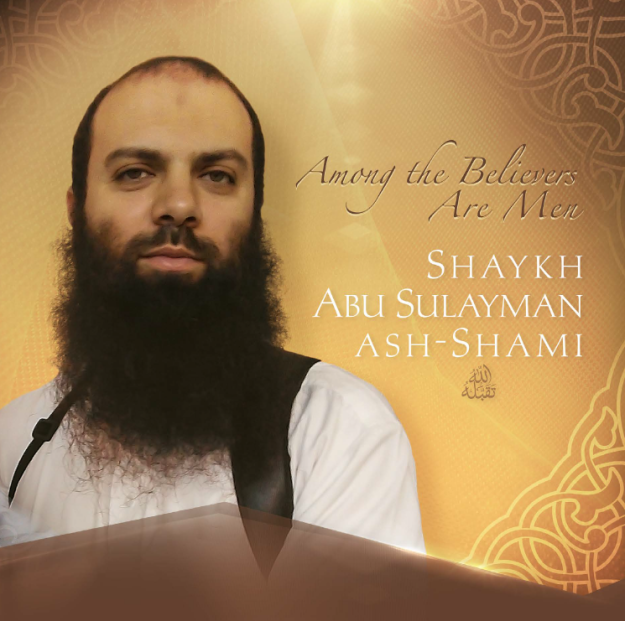
The eighth edition of the Islamic State’s magazine, Rumiyah (Rome), was released on 5 April 2017, and contained an obituary for one of the architects of the magazine itself. Named by his kunyas, Abu Sulayman al-Shami, Abu Sulayman al-Halabi, and Ahmad Abdul-Badi Abu Samrah, the jihadist referred to is Ahmad Abousamra, a U.S.-Syrian dual citizen. Abousamra is quite possibly the most senior American ever to have been in IS’s ranks, and the Rumiyah article gives a very interesting glimpse more generally of IS’s hierarchy, particularly the importance of its media and the late emir of that department, Abu Muhammad al-Furqan. The Rumiyah article is reproduced below with some editions in transliteration, occasional explanatory notes, and interesting or important aspects highlighted. Continue reading
By Kyle Orton (@KyleWOrton) on February 4, 2017
With the attempted terrorist attack using machetes at the Louvre museum in Paris yesterday by Abdullah Reda al-Hamamy, whose social media history shows statements at least sympathetic to the Islamic State (IS), it raises once again the question, making no assumptions about al-Hamamy’s motives, of how connected the organization headquartered in Raqqa is to the attacks taking place around the world under IS’s banner—and how we would know.
As IS’s attacks outside of the statelet it has built in Iraq and Syria increased in frequency over the last year, a rather routinized mechanism has developed for attributing blame: IS claims the atrocities—or attempted atrocities—through Amaq News Agency. Continue reading
By Kyle Orton (@KyleWOrton) on January 28, 2017
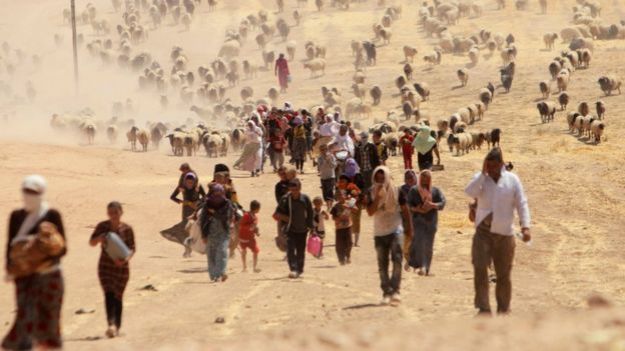
Abdallah Najem al-Jawari (Abu Azzam al-Iraqi) was something like the Islamic State (IS) movement’s first Finance Minister and a senior regional official, first in his native Anbar—he was from Fallujah—and later in Baghdad. Joining the group quickly after the collapse of the Saddam Husayn regime, al-Jawari was killed in 2005. Al-Jawari remains among those commemorated by IS as founders who set the stage for the current rise of “the State”.
Continue reading
Originally published at The Henry Jackson Society.
By Kyle Orton (@KyleWOrton) on December 16, 2016
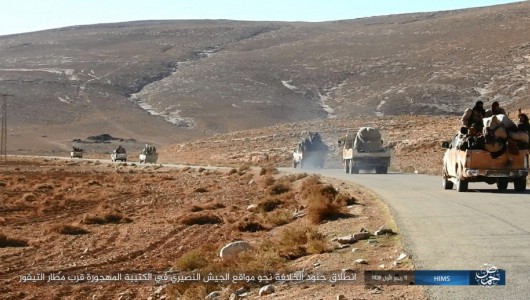
The Islamic State (IS) has named a new official spokesman, Abu Hassan al-Muhajir. Abu Hassan is the fourth man to hold the position of spokesman within the IS movement, and the third since it declared statehood in 2006. Very little is known about Abu Hassan but assessing the history of IS’s media enterprise offers some hints about his profile. In this regard, a new paper by Dr. Craig Whiteside of the International Centre for Counter Terrorism Terrorism is instructive. Looking forward, examining Abu Hassan’s inaugural speech offers some clues about the direction IS’s messaging and behaviour will take now as its statelet shrinks under pressure from the U.S.-led Coalition. Continue reading
By Kyle Orton (@KyleWOrton) on November 6, 2016
(source)
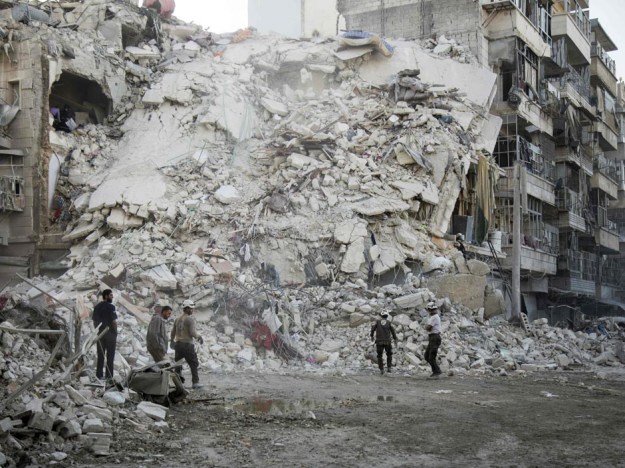
After some (perhaps wilful) confusion over the timing, the operation to expel the Islamic State (IS) from Raqqa City, its Syrian capital, got underway this morning, running concurrent with the effort to evict IS from its Iraqi capital, Mosul. There are deep concerns about the methods adopted in both cases. The ground forces the U.S.-led Coalition has chosen to support in Raqqa cannot lead to sustainable stability in Syria, something that is essential to defeat IS. While the Mosul operation has proceeded generally to plan, there are increasing signs of trouble within the operation itself and the most troubling aspect—the aftermath—still appears to be unplanned. Beyond this is the continued assault on Aleppo City by Bashar al-Assad’s regime and its Russian and Iranian patrons that is systematically destroying the forces needed if there is to be any settlement to Syria’s war that ends the space given to international terrorists. Continue reading
Originally published at The Henry Jackson Society
By Kyle Orton (@KyleWOrton) on October 22, 2016

Coalition airstrikes in Mosul (source)
The activist group, Raqqa is Being Slaughtered Silently (RBSS), which works against the Islamic State (IS) in its Syrian capital, published a list on Thursday on Twitter of the eleven “most important” IS leaders who have been killed in Raqqa Province. Continue reading
 Kyle Orton's Blog