By Kyle Orton (@KyleWOrton) on October 23, 2020
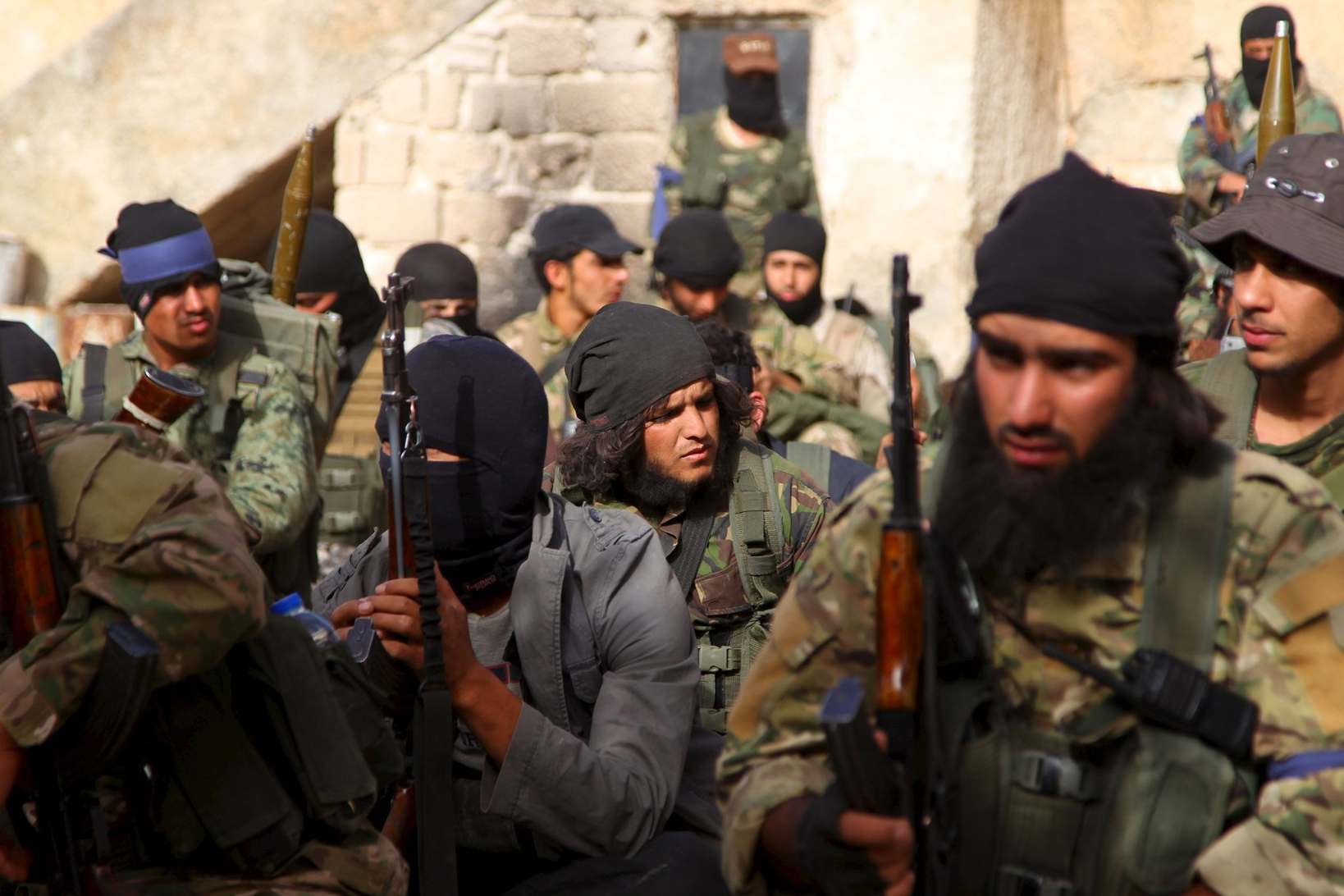
A chapter about Islamism in Syria I wrote for the American Foreign Policy Council’s (AFPC) ‘World Almanac of Islamism’ was published today. Do check it out, and the broader site, which is a great, accessible resource. The format of the website necessitated that the chapter as I submitted it was edited, condensed, and split up to fill out the various categories. In case it is of any interest, the original version of the chapter is reproduced below.
INTRODUCTION
Islamism has featured prominently in the politics of modern Syria. With the passing of the nascent parliamentary system after independence and the move towards secular authoritarianism, the Islamist current became a powerful element in the opposition—as it has and does in many other Arab countries. In Syria, however, history and demography, and the structure of the hereditary dictatorship ruled by Bashar al-Asad, dominated by clans from among the Alawis, a sect regarded by most Muslims as beyond the bounds of the faith, has made Syria uniquely fertile ground for Islamist and jihadist conceptions of opposition.[1]
The Asad regime has crushed all dissent savagely. Justifying this scorched earth approach has meant ensuring the opposition looks convincingly frightening to warrant such an approach. To this end, the Islamist opposition has always been infiltrated and manipulated by the regime’s secret police, and pushed in the most violent and destructive directions.
The Islamic State (ISIS) movement, in its various incarnations from before it was even known as Al-Qaeda in Mesopotamia (AQM), received direct support from the Asad regime to wage war on the Iraqi government and Coalition forces after the overthrow of Saddam Husayn.[2] The Asad regime has also provided undisguised shelter and support, financial and military, to various Islamist movements, including the Lebanese branch of Iran’s Islamic Revolutionary Guards Corps (IRGC), Hizballah, and the Palestinian Islamic Resistance Movement (Harakat al-Muqawama al-Islamiyya), better known as HAMAS.
After the outbreak of the popular uprising in March 2011, and the move towards an increasingly militarized confrontation as the protesters sought to defend themselves from the Asad regime’s brutal, Iranian-assisted crackdown, these two trends became manifest. The Asad regime called on its Islamist assets—witting in the case of Hizballah, tacit in the case of ISIS—to help destroy the rebellion.
Within the political opposition, groups like the Muslim Brotherhood were able to come to prominence during the revolution, partly as a result of their superior organization in exile and partly because of the assistance of foreign states, while inside the country the insurgency, though able to fight off ISIS, was nonetheless penetrated by jihadi-Salafist forces, including Al-Qaeda, and over time driven into a dead-end by this development.
ISLAMIST ACTIVITY
The Dawn of Independence
The Syrian Muslim Brotherhood (SMB) is the most long-standing and prominent of the oppositional Islamist movements. The Syrian chapter of the Brethren was established in 1946 under the leadership of Mustafa al-Siba’i. This was just after the French departed, and, indeed, it was the removal of the French that emboldened Al-Siba’i to openly name his network as the Syrian chapter of the Brethren.[3] Like the Brotherhood’s mother branch in Egypt, “anti-imperialism” was an ideological theme the SMB played on. Al-Siba’i, born in Homs in 1915, had begun studying at Al-Azhar university in Cairo in 1933 and come into contact with the original Brethren and its founder, Hassan al-Banna. Al-Siba’i was twice arrested, once in 1934 for anti-British activities (this is after Egypt’s independence) and again in 1940 when he was found to have created a secret society to support the pro-Nazi Iraqi politician Rashid Ali al-Gaylani, who would take power in Baghdad a year later via a coup d’état.[4]
Al-Siba’i’s arrest coincided with the major entry of Nazi ideology into the Arab world. After the fall of France to the Germans in June 1940, the governors of Syria-Lebanon sided with the collaborationist Vichy regime in Paris rather than the government-in-exile of General Charles de Gaulle in London. This Levantine base allowed the Nazis to disseminate their ideology and otherwise spread their influence in the Middle East. One of the most important outcomes was inspiring two Sorbonne-educated schoolteachers in Damascus, Michel Aflaq and Saladin al-Bitar, to form the Society to Help Iraq (SHI), designed to support the pro-Nazi regime of Rashid Ali in Baghdad, and this nucleus of activists later became the Ba’th Party that dominated Syria and Iraq after the Second World War. The Ba’thist switch from Nazi to Soviet sponsorship required only minor changes in structure and terminology.[5]
The antisemitism disseminated by the Nazis was not unknown in the Arab East, but it was a recent phenomenon in the 1940s, imported as part of the spread of European influence, coming in with the missionaries and transmitted by the vector of Arab Christians.[6] The Nazis built on these foundations. Al-Husayni had a close direct relationship with the Hitler regime, and Al-Husayni was the hero and mentor to Al-Banna; it was to Al-Banna that Al-Husayni looked when he needed shelter after the war.[7] Al-Banna was assassinated in 1949, but Al-Husayni retained his connections to the Brethren and even provided financial assistance to Al-Banna’s son-in-law, Said Ramadan,[8] one of the major Brotherhood figures of the twentieth century and an important influence on the Islamist movement generally, from Saudi Arabia to Pakistan. Said’s son, Tariq Ramadan, would become a highly visible, and controversial, Islamist intellectual in the West in the 2000s.[9]
It can, therefore, be said that a lot of Syria’s modern history—with the Ba’thists on one side and the Muslim Brotherhood on the other—has been dominated by forces that drew from the worst of European totalitarianism.
Still, the SMB was different to the Brethren in Egypt and this is not surprising since, while Al-Siba’i was clearly a disciple of Al-Banna’s and steeped in his ideology, the SMB came together from a merger of Islamic societies that were thoroughly indigenous in a context where there were large religious minority populations and a powerful Sufi tradition.[10] Where Al-Banna’s organisation was at once a conspiratorial cult and a mass movement, operating extra-constitutionally with occasional terrorism and assassinations, the Syrian branch of the Brotherhood was a small, elitist, and parliamentary institution. The SMB was always careful to stress its spiritual subordination to the Brotherhood’s Supreme Guide in Cairo, but the operational significance of this allegiance appears to have been minimal. Where the Jordanian and Palestinian branches of the Muslim Brotherhood had significant dependence on the Cairene leadership, the SMB has always been almost entirely autonomous.[11]
The SMB’s record of forwarding its vision by getting elected to the Syrian parliament and trying to get legislation passed was mixed. Briefly outlawed after the March 1949 coup by the secularist military officer Husni al-Zaym, who had been serving as chief of staff, the SMB was able to resume work when Al-Zaym was swept aside in a constitutional counter-coup in August 1949. In the new elections, Al-Siba’i won a seat on the constituent assembly and, though Al-Siba’i was unable to overcome the opposition of secular nationalists and the minorities to make Islam the official religion of the state, he was able to have the pre-amble of the 1950 Constitution declare the Syrian state’s “attachment” to Islam and Article 3 recognised the shari’a as “the main source of legislation”. This was the first time this formulation had been adopted; it was soon taken up in one form or another by all of the Arab states and remains to this day.[12]
The 1950s were not a prosperous time for Islamists in Syria. Within Syria, the third coup of 1949, in the December, placed power de facto with Adib al-Shishakli, though he would keep the trappings of democracy in place and hold no formal office until he took the presidency in the summer of 1953. Al-Shishakli banned all political parties, the Muslim Brotherhood very much included,[13] and tilted Syria towards the West and Saudi Arabia.[14] From without, there was the rise in Egypt of Jamal Abd al-Nasr, a young officer who emerged from a faction of the Egyptian military shaped by an espionage ring that had worked for the Nazis during the war.[15] Having come to power in a coup d’état with the assistance of the Brethren in 1952, by 1954 Al-Nasr had broken the organisation domestically and put much of its leadership to flight. The combination of internal repression in Syria and the events in Egypt caused the SMB to formally retreat from the political realm to social and educational activities.[16] Once he had secured dominion over Egypt, Al-Nasr set about exporting his pan-Arabist doctrine, a secular ethno-nationalist creed that pulled the region in a direction Islamists felt was inhospitable to them; they viewed Al-Nasr as an impious tyrant on the model of Al-Shishakli.[17] But Al-Nasr’s cause was as much of a threat to Al-Shishakli and the pro-Western camp as it was to the Islamists.
Al-Nasr’s rise was actively assisted by the Soviet Union and inadvertently assisted by the United States.[18] The administration of U.S. President Dwight Eisenhower thought it could bring Al-Nasr into its regional security architecture, and have him bring along the emerging Arab nationalist trend to at least meet core U.S. interests. The U.S. provided the Egyptian regime with radio broadcasting equipment and stopped the 1956 Anglo-French and Israeli operation at Suez to recover the Canal Zone, granting Al-Nasr a status that allowed him to dominate the regional politics of the time.[19] The success of Al-Nasr at Suez even swung Syrian Islamist opinion behind him.[20] And yet this decisive American support bought only a mirage: Al-Nasr’s reconciliation with the West was always just around the corner. In reality, Al-Nasr had never wanted an alliance with the West, and consolidated his alliance with the Soviets.
Al-Shishakli’s fall in 1954 led to a constitutional interregnum, with statesman like Hashim al-Atassi trying to fashion a sustainable civilian and democratic system, but the country drifted into the Soviet-backed radical camp. The conspiracy by the U.S., Britain, and Turkey to reverse this drift by instigating a pretext to eliminate Shukri al-Quwatli’s government in Damascus ended in fiasco in August 1957 thanks to the gifted Syrian counterintelligence chief Abd al-Hamid Sarraj, strengthening anti-Western forces loyal to Al-Nasr.[21] Within a year, Al-Nasr had destroyed the pillars of the Eisenhower Doctrine in the Middle East, notably the Iraqi monarchy, which fell to a violent revolution in July 1958, months after Al-Nasr had taken de facto control of Syria under the banner of unifying the country with Egypt to create the United Arab Republic (UAR).[22]
The UAR itself would fail, though it had the support of the ulema (clergy) and the SMB at the outset. The UAR attempts to encroach on the clergy’s turf would sour relations, and the ulema were fully behind the coup that dissolved UAR in September 1961. In the aftermath, the Islamists had a relatively successful time in politics, as the anti-UAR counter-revolutionary forces dominated politics and looked for allies to keep the Left at bay. The arrangement was short-lived, however, and this brief period of constitutionalism would likewise come to naught.[23] In March 1963, the Ba’th Party seized power; a second coup in February 1966 saw the capture of power by the Alawi faction within the Ba’thists; and, finally, the “corrective” coup from within the Alawi Ba’th camp of November 1970 transferred power into the hands of the Asad family.[24]
Islamism and the 2011 Revolution
The first Syrian Islamist experiment with revolutionary violence in the late 1970s and early 1980s, a process of radicalization that came from the society as much as the SMB and its splinters, had ended in catastrophe and wrought changes that set the scene for the “Arab spring” rebellion. The first revolt will be discussed in more detail below.
In March 2011, the Arab revolutionary wave arrived in Syria in the form of mass-protests against the regime. This took the Brotherhood and its splinters and affiliates by surprise, as it did many of the protesters themselves. The Brotherhood was hesitant; its standard operating procedure is to work within systems to change them in directions it finds congenial, rather than revolution. For two months, the Brethren held back and kept a public distance from the uprising, calculating whether it might not be better to extract concessions from a weakened Asad, rather than advocating his overthrow.[25] Many Syrians who had lived through Hama did not believe Asad could be felled. Where Syria’s young people, emboldened by the “Arab spring”, would say things like, “It’s going to be just like the other countries—twenty, thirty days maximum, and he’ll pack up his bags and leave,” their parents had a darker view: “He’ll kill all of you and he won’t leave”.[26] If this was the view of average people with a memory of Hama, for the heirs of the participants at Hama this notion was doubly strong. But, as the protest movement dragged on, and the regime seemed unable to quell it, the Brotherhood felt—as it had done thirty years earlier—that it had little political choice but to throw its full weight behind armed insurrection.
The problem was that the Brotherhood did not have that much weight inside Syria. The secretive, cultish habits of the group, which had only gotten worse in exile, were not nimble enough to even follow a popular uprising properly, and it had no levers to guide such a thing. What was left of the Brotherhood’s base was in the cities, and in those early months the cities—Aleppo, in particular—stayed out of events as far as they could.
It was in the peripheral towns and the countryside that the revolutionary spark caught, beginning in Deraa to the south of Damascus and the broader Hawran plain, spreading through the suburbs and slums of Damascus, particularly in the east (e.g. Duma), up to the Sunni coastal cities like Baniyas surrounded by Asad’s Alawi community, in the adjacent Idlib and Jisr al-Shughur, in Rastan, Marat al-Numan, to the provincial capitals of Homs and Hama, and out east to Deir Ezzor. This was a rising from the periphery. Those areas the Ba’th Party had ridden to power with its promise to level the playing field between the oppressed and the privileged were the ones where the fury boiled over; the instinct of the middle-classes in the cities, albeit new ones created by the regime and its bloated bureaucracy after sweeping aside much of the Sunni aristocracy and co-opting the remnants, was to resist the effort for change. This class division—with the city-dwellers “bristl[ing] at the idea that they would be led by provincials”—was one of many cleavages Asad would seek to inflame to prevent a united front overwhelming his government.[27]
Qatar had bet on the Brotherhood region-wide as an instrument through which it could expand its influence, and for a time events seemed to be breaking the Brotherhood’s way—in Tunisia, Egypt, even Libya and Jordan and elsewhere. The Turkish government was seen as a model by many of these Brotherhood-derived groups, and some in Ankara began to have notions of returning to influence in the East after a century of begging at the gates of the West and being rejected. Both Qatar and Turkey had been fostering good relations with Asad right into early 2011. When relations with Asad decisively broke down in the summer of 2011,[28] Turkey instigated the formation of a Syrian political opposition umbrella, the Syrian National Council (later “Coalition”), the SNC, which it was able to stack with Brotherhood members and other sympathetic Islamists.[29] The Turks also began to host the first elements of the armed opposition—at that stage almost entirely secular defectors from the Syrian Arab Army (SAA), who called themselves the Free Syrian Army (FSA), a brand that would be taken on by most of the armed groups that emerged, even if it never did represent a centralized insurgent army.[30]
Faction-fighting would plague the Syrian opposition in general over the next few years, exacerbated by the machinations of external sponsors, and nowhere was this worse than in the political opposition, where, ironically, it meant least. The Islamist Question was the key battleground. There were more moderate Islamist currents to challenge the Brethren, who would not insist on making shari’a a principal source of legislation.[31] The political opposition had enough sense to steer clear of the contentious issues that could do them serious damage, inside Syria and with the West, such as the veil for females and alcohol. Some of them, indeed, rejected the label “Islamist” altogether—as the Turkish ruling party, the Justice and Development Party (AKP) of now-president (then-prime minister) Recep Tayyip Erdogan does—and instead presented themselves as simply nationalist conservatives for whom Islam was a point of reference.[32] The Sufis had their advocates, most notably the traditionalist group based around Muhammad Kurayyim Rajih, the League of the Ulema of Sham (LUS), led by clerics from Damascus and Homs, whose current leader is Shaykh Usama al-Rifai, the spiritual guide of the moderate Sufi movement Jamaat Zayd (Zayd’s Group), which had a measure of official toleration in the 1990s.[33] Al-Rifai would later lead the Syrian Islamic Council (SIC), founded in April 2014 as an official religious authority for rebel forces. SIC opposes Al-Qaeda and the Islamic State, but it was problematic in at least two important ways: in organisationally trying to harbour Sufis, the Brethren, and the Sururis—three irreconcilable trends—and in the fact that Sururism is itself a version of extremism.[34]
In the latter months of 2011, after six months of near-totally peaceful protest, protesters began to pick up weapons to defend themselves from the regime’s onslaught and Syria spiralled into an armed rebellion. The Brotherhood had no infrastructure of its own to contend with these events, so it adopted a strategy of basically trying to purchase whole rebel brigades (if they were small and struggling) or buying “shares” (individual commanders and units) in larger formations or coalitions—with the intent of reverse-engineering the ideological work after getting these groups to swear loyalty. For the purposes of distributing resources, a Civilian Protection Commission (CPC) was created by the Brotherhood in late 2011 and a public decision was taken in March 2012 to support violent resistance. A defensible case could be made that the only true “defence” for Syrians was the forcible removal of the Asad regime, and such was the case of the Brotherhood. By May 2012, there was a Brotherhood rebel faction, the Commission of the Revolution’s Shields (CSR)—the word “Shield” in a group’s name would generally denote Brotherhood-affiliation hereafter.[35]
The strategy of the Brotherhood ultimately failed, however, in much the same way as efforts by Gulf states like Saudi Arabia to purchase the loyalty of proxy forces in Syria came to naught. The Brotherhood’s influence over events inside Syria was waning long before the rebellion was decisively broken in November and December 2016.[36] The most notable extant force related to the Brotherhood is Faylaq al-Sham, one of the larger individual parts of the remnants of the rebellion that have been swept up by Turkey to police the zones of Syria it has captured since 2016.[37]
Syrian Jihadism in the Insurgency
From the outset of the Syrian uprising, the Asad regime argued that it was a rebellion by sectarian jihadist extremists. The Asad regime then did everything it could to make this a reality, carrying out atrocities in a way maximally intended to create a sectarian reaction,[38] and mobilizing the old networks that had been used to feed suicide bombers to the Islamic State movement in Iraq.
A case in point: Ahmad al-Shara (Abu Muhammad al-Jolani). Al-Shara was dispatched into Syria in the summer of 2011 as part of ISIS’s advanced team to expand the group’s reach from Iraq, setting up a front-group called Jabhat al-Nusra. When ISIS’s leader, Ibrahim al-Badri (Abu Bakr al-Baghdadi), tried to publicly take ownership of Al-Nusra in 2013, Al-Shara refused and instead swore allegiance to Al-Qaeda, which soon expelled ISIS. Vicious clashes would ensue between Al-Nusra, now Al-Qaeda’s official Syrian branch, and ISIS. Al-Shara, a Syrian, had gotten his first jihadist experience by being shipped by the Asad regime into Iraq as the invasion began; he had been talent-spotted by Mahmud al-Aghasi (Abu al-Qaqa), a jihadi cleric in Aleppo who was an agent of Asad’s secret police.[39] Asad’s role in supporting ISIS is something the group itself has since documented in its newsletter.[40]
Another example. One of the key ISIS leaders that enabled the group to expand in Syria—and to nearly destroy Al-Nusra by secretly recruiting many of its emirs and foreign fighters—was Amr al-Absi (Abu al-Atheer), who had been rounded up in 2007 in one of the Asad regime’s periodic crackdowns on the jihadists it was manipulating to tie down the Americans in Iraq. Al-Absi was released, along with hundreds of other hardened Islamists, in May or June 2011.[41] The jail cells at the infamous Sednaya prison had been emptied of their murderous jihadist residents within a few months of the uprising beginning, and those cells were filled with peaceful, secular protesters, who began an ordeal where death was the least of it.[42]
“The regime did not just open the door to the prisons and let these extremists out”, explained a military defector, “it facilitated them in their work, in their creation of armed brigades”. In addition to Al-Nusra and ISIS members released in spring 2011, Asad freed those who would become the leaders of Jaysh al-Islam (Zahran Allush), Liwa al-Haq (Abd al-Rahman Suways), Ahrar al-Sham (Hassan Aboud), and Suqur al-Sham (Ahmad Issa al-Shaykh)—some of the most formidable Islamist units in the insurgency, who would come to overshadow the FSA-branded forces.[43]
Of these, Ahrar al-Sham is the crucial actor. Ahrar proved capable at swallowing rebel groups, gradually Islamizing the insurgency as these groups came under its tent—usually directly, sometimes through merger initiatives like the Islamic Front,[44] albeit these shell structures tended to prove unworkable.[45] A distinction to bear in mind is that, grisly as Jaysh al-Islam (JAI) could be,[46] it was not an ideologically militant organization. Rather, JAI is a Salafist group based on the social environment of eastern Damascus that took up jihad as a defensive measure in conditions of warfare. Ahrar, by contrast, has its origins in the jihadi-Salafist milieu, conceiving of itself as part of a Sunni world beyond Syria and regards jihad as an eternal obligation.[47] Ahrar’s start-up funders were linked to Al-Qaeda networks on the Gulf and among its founders was Muhammad al-Bahaya (Abu Khaled al-Suri), a veteran jihadist, another of those released by Asad from Sednaya, and the personal emissary of Al-Qaeda leader Ayman al-Zawahiri to Syria.[48]
In many ways, Ahrar was the continuation of the 1980s revolt—and with the defections later to Al-Nusra, it can be said Al-Nusra now carries within it that legacy, too. Those Islamists who fled Syria and went to Afghanistan, Saddam’s Iraq, or Europe, and either joined or worked alongside Al-Qaeda through the 1990s and 2000s closed the circle after 2011, returning home to the war they had never given up on against the Asad dynasty. Some of Ahrar’s members reported a shift in identity after they arrived back in Syria, with their national attachment overpowering or balancing their Islamist one. But institutionally, the jihadi legacy continued to shape Ahrar ideologically,[49] and even more significant to the course of the war, whatever Ahrar’s actual relationship with Al-Qaeda, Ahrar’s decision to work in lockstep with Al-Nusra was the single most important factor in Al-Nusra’s empowerment over the years.[50] Ahrar served as the portal for Al-Qaeda to infiltrate and ultimately to dominate the rebellion.
Jihadists from Without
Al-Nusra, which has a disproportionate number of foreigners in its leadership but is majority-Syrian overall, sought to integrate with and co-opt the rebellion, to become the only option for those who wished to continue resistance against the Asad regime.[51] To this end, Al-Nusra sought to politically endear itself to Syrians: it delivered services in areas it occupied, it fought effectively against the regime, and it rebranded itself away from Al-Qaeda as a local force (in its current incarnation it is called Hay’at Tahrir al-Sham or HTS). It also strategically eliminated rebel groups by force, whether because they found them threatening—as happened with some groups that became too popular or got too close to the West—or because the groups stood in the way of Al-Nusra’s project to monopolize the insurgency. Ahrar stuck by Al-Nusra as this process played out—and then, when Ahrar was the only significant other insurgent force left and refused to dissolve themselves into Al-Nusra’s ranks, Al-Nusra dismantled them, too, in the summer of 2017.[52]
What remains of the anti-Asad rebellion is now crammed into Idlib province, a pocket that shrinks every day under assault from Iranian-led ground forces and Russian airstrikes. By the numbers, Al-Nusra/HTS and the mainstream rebels—which are now Turkish proxies—are roughly evenly balanced in Idlib with about 30,000 fighters each.[53] The reality is quite different: Al-Nusra is the dominant power. In this horrific situation, with a province dominated by a jihadist group that the U.S. and others suspect has not really split with Al-Qaeda and harbours plans for external terrorism, and the pro-Asad coalition proposing to use this terrorism pretext to slaughter tens of thousands of civilians and drive a million more into Turkey, with consequences that will further destabilize Europe and NATO, there are no good options.[54]
ISIS, a group originating in Iraq and led by Iraqis, though with deep roots in Syria because of its collaboration with the Asad regime, took the opposite tactic to Al-Nusra: once it revealed itself, it went to war with the rebellion—in an all-out fashion as of January 2014—and tried to destroy and replace the revolution. ISIS had no patience with Al-Nusra’s “hearts and minds” approach, its attempt to build a “popular incubator” (al-hadina al-shabiyya). ISIS objected to this ideologically, since it would mean an interim period of compromise when the Holy Law was not applied in “pure” format, and they objected practically: ISIS just did not and does not believe that is how people work. “If you think people will accept the Islamic project [voluntarily], you’re wrong”, explained one ISIS jihadist. “They have to be forced at first.” Rather than waiting for enough support from the bottom-up, said this ISIS operative, “You have [to have] a ready project, you should place it on society like a tooth crown and make sure to maintain it”.[55]
This has been ISIS’s view from the beginning, as expressed by its first leader, Ahmad al-Khalayleh (Abu Musab al-Zarqawi)—and it has to be said that on the demonstrated record of insurgency, ISIS has a case. Holding a certain area by force “generates a threshold of collaboration over time” that normalizes and legitimizes the authorities.[56] ISIS made the mistake of provoking outside intervention by beheading hostages and moving on core U.S. interests (Erbil, in this case), so its statelet was demolished. That said, ISIS lasted longer than the Taliban regime, and at the core of the Arab-Muslim world rather than in faraway Afghanistan. ISIS also held as an organization; its security institutions and doctrinal cohesiveness are intact. For ideologues, the main message of the 2014-19 experience is that the caliphate is possible. For those simply caught in ISIS’s path, the abusive, alien nature of the forces that have displaced ISIS are going to create a lot of room for nostalgia to cloud memories in the years ahead.[57]
ISLAMISM AND SOCIETY
The SMB had been of the system, in effect, in the early years of the republic, despite the intermittent efforts to ban it; it sat in parliament and its membership consisted of established members of the ulema—again, unlike in Egypt, where the mother branch of the Brotherhood practiced a revolutionary doctrine. For pragmatic reasons as much as anything else, the SMB had always been careful to present a non-sectarian image, even as it worked for a Sunni empowerment that would in practice have meant a reduction in the status of Syria’s minorities.[58] With the advent of Ba’thist rule, the societal dynamics in Syria shifted against this accommodating stance. The SMB went into systemic opposition, and became a powerful element of the Islamist current that would dominate the anti-Ba’thist movement between 1963 and 1982.[59]
As the Ba’thists consolidated power and eliminated competing centres of power, one particular focus was the clergy. Other radical policies, such as land reform, threatened the interests of the Sunni urban middle class that was a key support sector for the SMB.[60] Paradoxically, the SMB gained in stature in some ways from the Ba’thist repression. The mosque became one of the few spaces left where dissent could be aired.[61]
By April 1964, many in Syria, a thoroughly conservative country, were bristling at the Ba’thists’ heavy-handedness and aggressive secularism, but it was only in the city of Hama, led by an SMB operative, Marwan Hadid, that there was a violent revolt against the “impious Ba’th”, albeit this insurrection took place in defiance of the official policy of the SMB to foreswear arms in the struggle with the Ba’thist regime.[62] Hadid, radicalised in Egypt by contact with the original Brethren organisation, had taken over a mosque in Hama city with his followers and the Ba’thists had shelled it, triggering: a mass rising in Hama, a smaller-scale uprising in Homs that ended with Ba’thist troops storming the historic Khalid Ibn al-Waleed Mosque, and a general strike by merchants in Damascus. In its first year in power, the Ba’th had been responsible for “purges, [the] shooting of protesters, summary executions, and [a] mosque shelling”, which even some of its own senior cadres thought was “highly provocative and dangerous”.[63]
The Ba’th regime—or “neo-Ba’th” as some called it—that ruled Syria after the internal party coup of 1966 until the final party coup by Hafez in 1970 was the most radical, socially and economically and politically, of the three stages of Ba’thist rule, and it intensified the hostility with the SMB and other Islamists. Salah Jadid, the de facto ruler from 1966 and 1970, exemplified the new breed of Ba’thist that dominated in this phase: drawn from the military, rather than the traditional civilian leadership of the Ba’th; rural in background and outlook; and hard to the Left in economic and social matters, particularly when it came to the role of Islam (and the ulema) in the state and society.[64]
The June 1967 defeat of the Arab armies—Egypt, Syria, and Jordan—in their attempt to destroy Israel delivered a mortal blow to the pan-Arabist dominance of regional politics. Al-Nasr himself would be dead within three years, and as such was spared seeing his project come to ruin. The Islamists did not mourn the defeat of their countries’ secular regimes in this enterprise; rather they took heart that God had rendered a judgment. In Syria, this was a particularly profound sentiment given that the Ba’thist authorities, already disliked by vast swathes of the population, had provided a crystallising incident just before the Six-Day War.
In late April 1967, the official magazine of the Syrian Army published an article by a young Ba’thi officer, Ibrahim Khalas. Entitled The Means of Creating a New Arab Man, the article declared that for the “new Arab socialist man,” things like “God, religion, feudalism, capitalism, and all the values which prevailed in the pre-existing society were [now] no more than mummies in the museums of history”. In this new world of the Ba’th, a man would rely “only on himself … because he knows that his inescapable end is death and nothing beyond death … no heaven and no hell”. The escalating authoritarianism of the Syrian Ba’th regime—the suppression of the media and free expression, the expropriations, the purges—had occasioned resistance, but this was a provocation too far.[65] The reaction was immediate and explosive. Essentially every city rose in protest; the souks were closed and clerics who had fallen afoul of the regime appeared to inflame the crowds. The Ba’th swiftly sacked Khalas and put him on trial, declaring that the article was part of a “reactionary Israeli-American plot”.[66] This calmed the immediate storm, but the gap it highlighted between the leadership and the masses would soon be Jadid’s undoing.
Hafez al-Asad’s “corrective” coup in November 1970 was specifically premised on moderating the socio-economic policies of Jadid’s faction of the Ba’th Party, to bring the state closer to a society trending in a more religious direction. In the course of events, this ingratiation would fail. By the late 1970s, an Islamist rebellion had erupted: in its actions, and those of the Asad regime in response—in the way violence was employed—a sectarian coloring was given to the confrontation that would carry over to frame events in 2011.[67]
ISLAMISM AND THE STATE
Where Jadid had set out to expunge clerical influence over the state, Hafez tacked back in the direction of the early days of the republic, though nothing like as permissive for Islamists. Hafez undertook to court the ulema and the Islamists, recruiting thousands of new functionaries for the state, appointing a cleric to the Waqf Ministry, reviving the Islamic presidential oath, and cultivating a personal image of religiosity, regularly being photographed and filmed praying at public events. Senior and respected clerics like Ahmad Kuftaro and Said Ramadan al-Buti were co-opted by the regime.
It was, then, a blow to this compact when Hafez put forward a revised constitution in January 1973 that, while retaining the shari’a as the primary source of legislation, did not specify that the president had to be a Muslim. This was an incident that gave the SMB a chance to position itself as the main challenger to an unpopular, impious, and increasingly-visibly sectarian despotism. As in 1964, the unrest began in Hama, and this time, too, it was an SMB operative, Sa’id Hawa, in the lead.[68] Hafez swiftly backed down and had the parliament add the Islamic stipulation for the presidency, but the damage had been done. Hafez had highlighted the fact that his regime was dominated by Alawis and unintentionally raised again the whole question of whether Alawis were Muslims and thus whether he was eligible for the presidency. Not even suborning a fatwa from Imam Musa al-Sadr in the summer of 1973 to declare Alawism a form of Shi’ism could pacify the Islamist opponents of this “godless” order.[69] The lines were drawn.
The clash between the SMB and the Ba’th had material foundations. The SMB’s constituency included the landowners who had property confiscated by the Ba’thists and the urban middle class that was squeezed by the pro-rural bias that, as a practical matter, encouraged a rural-to-urban migration, destabilising the position of the middle-class residents and giving the Ba’th a constituency in the towns and cities. It was this “clash of constituencies” that meant by 1980, the Brotherhood could rely on Sunni notables in cities like Hama and Aleppo for support in their efforts to topple the Ba’thist regime.[70] But this was far from the whole story. By the late 1970s, “large sections of Syrian society had become alienated by the regime’s policies in virtually every aspect of life”—from its socialist micromanaging, to its disproportionate allocation of resources to rural areas, the sectarian nature of the Ba’th regime and its consequent bias in favour of certain regions, and perhaps above all the ideological affront Ba’thism posed to the majority of Syrians, reflected in the fact that a system designed as a one-party mass-mobilisation state had no such mobilisation.[71] A party system had devolved into a one-man autocracy.
Hafez’s decision, in June 1976, to intervene in Lebanon against the Palestine Liberation Organisation (PLO) and its Leftist allies, primarily the Druze leader Kamal Jumblatt, on the side of Maronite Christians who had deep ties to the West, was highly controversial even within the Ba’th Party and was, says SMB scholar Raphael Lefevre, “interpreted by the majority of Syrians as a deliberate act of anti-Sunnism”.[72] It damaged the pan-Arabist credentials of the Syrian Ba’thist regime domestically and reinforced the image of a sectarian Alawi regime. A popular Islamist slogan of the time was, “A minority cannot forever rule a majority” and, at the more radical end of the spectrum, Sa’id Hawa began referring to Ibn Taymiyya’s fatwa declaring Alawis to be more heretical than the Jews. These radical elements commenced a violent campaign alongside their rhetorical attacks.[73] This gave the rival Ba’th regime in Baghdad, formally led at this time by Ahmad Hassan al-Bakr (though Saddam was rapidly accruing power), a chance to strike at its Syrian nemesis, which it did. The theoretically secular Iraqi Ba’th regime provided the training camps and other support to the Islamist insurgency from its very beginning, and continued to do so after Saddam officially took power and the insurrection began properly in 1979.[74]
Urban unrest, especially in Aleppo and Hama, had continued to build through the late 1970s, with a protest movement morphing into sporadic guerrilla violence by Islamist militants and then full-scale rebellion that centred on the city of Hama. The June 1979 massacre of eighty-three regime cadets in Aleppo by Islamist militants marked the beginning of the Islamist revolt in a true sense—and ensured it would have a sectarian valence. The Islamists had separated out Alawis among the cadets and slaughtered them, while sparing the cadets from other sects. The Hafez regime responded by purging hundreds of Sunnis from the army and the bureaucracy, and the calls for Alawi mobilisation found a receptive audience in a community terrified by what awaited them if the regime went under.[75] On June 26, 1980, the Brotherhood nearly assassinated Hafez, and the next day he retaliated by ordering the murder of hundreds of inmates—many of them Muslim Brothers—at Tadmor (Palmyra) prison. The regime had besieged and effectively secured Aleppo by the end of the year, but the SMB and its radical Fighting Vanguard splinter continued a wave of bombings and assassinations, targeting security forces and Alawi civilian neighbourhoods, particularly in Aleppo, Homs, and Damascus.
After three years of attack and counterattack, atrocity and revenge murders, the SMB and the Fighting Vanguard made their final stand at Hama in February 1982. There were three days of street-to-street fighting, led by the regime’s Third Armoured Division (which suppressed Aleppo in 1980) and the Defence Brigades (responsible for the Tadmor massacre). Local inhabitants reporting mass-killings by regime troops at football stadiums, and even the use of poison gas against civilians herded into various buildings. Then the Asad regime surrounded the city and shelled it for three weeks.[76] A third of Hama’s Old City was demolished; the death toll is usually given as no lower than 10,000. What is notable is that Hafez handled the situation in such a way—having prepared the ground by weakening the old elite which supported the SMB, and providing targeted inducements to oppositional sections of the urban zones—that the crushing of Hama was “met with calm and seeming indifference” by many of those involved in the protests in other cities.[77]
The State’s Approach to Islamism After Hama
It was in the aftermath of Hama that the Asad regime came closest to totalitarianism: “the project of creating a ‘new man’ disappeared for good under the rubble of Hama”, says Professor Thomas Pierret. “Society was no longer expected to transform itself in a ‘progressive’ fashion, but to obey.” The repression went well beyond the Islamists to ordinary believers. “During the dark 1980s”, writes Pierret, “the most benign religious activities were subject to drastic limitations”.[78]
The SMB was virtually uprooted from Syria; those who were not killed fled. The state made membership of the SMB a capital crime and everyone understood that they were now playing by “Hama rules”, where the choice was simple: “rule or die”.[79] There was, in addition, resentment against the SMB for starting something it could not finish.
There were three broad categories into which the Brethren divided once abroad. First, there were those who ceased opposition activity altogether, traumatized by Hama and convince further resistance was futile. Those who continued oppositional activity took one of two paths, what one might call institutional (sticking with the SMB and trying to fight their corner for the direction they wanted it to go in) and independent (leaving the SMB and charting a separate path). In this latter category can be considered the numerous splinter factions of the SMB that formed when the disputes that had racked the Brethren during the terrible contest with the House of Asad multiplied in exile,[80] but for our purposes these formations are irrelevant. The independent path that matters is jihadism.
After a period of dormancy, Ali Sadredeen al-Bayanuni took over the SMB, which was headquartered in Jordan, in 1996. Al-Bayanuni sought to distance the SMB from the association it had with violence and sectarianism, reinventing the group as a moderate conservative force that was committed to parliamentary democracy and rights for religious minorities—even going to far as to say a Christian or an Alawi would be acceptable as president,[81] a suggestion that had brought the SMB to the brink of rebellion two decades earlier.
The Bashar Years
After Hafez died in June 2000, there was a smooth transfer of power to his son, Bashar, and for a time there was talk of a “Damascus spring”, an alleviation of repression against dissent and a general liberalization. During this period, in 2001, the Brotherhood formally renounced the use of violence.[82] Bashar tried to keep the temperature down with the religious opposition. Though the ulema had been generally supportive of the 1980s uprising, there were notable exceptions, Al-Buti the most prominent of them, and Hafez’s practice was to reward and cultivate such voices.[83] Hafez also went through the rituals of dissimulation, attending Sunni prayers. Bashar did the same, although it became something of a running joke for Syrians since Bashar was clearly unfamiliar with proceedings. Still, Bashar had Islam as a topic in his speeches,[84] and state universities held Qur’an reading competitions.[85] There were even prisoner-releases for Islamists. The ban on women wearing the headscarf in public schools was lifted,[86] and mosques were permitted to remain open between prayer times.[87] But it was not to last. Within a year, Bashar had moved to restrict the space for opposition elements and the mosques and religious institutions remained under firm state control.[88]
Al-Bayanuni worked assiduously in the early 2000s to strengthen the Brethren’s ties with the secular opposition, and signed onto the October 2005 Damascus Declaration with a broad spectrum of Syrian oppositionists, which called on the Asad regime to permit a “peaceful, gradual” democratic reform process.[89] The moment seemed opportune. The Asad regime was reeling after its brazen assassination of Lebanese prime minister Rafiq al-Hariri had triggered an uprising in Lebanon, and caused international outrage so severe it brought together American and French governments that were otherwise at loggerheads over Iraq. Isolated and under pressure from every side, Bashar had to give up Syria’s overt occupation of Lebanon. But the Declaration did little to mobilize internal resistance to Asad.
In 2006, the SMB formed an alliance with Abd al-Halim Khaddam, a defector from the regime, a Sunni ex-Ba’athist who had been vice-president and had close ties to the Saudi royal family. This went nowhere. In 2009, after the Israeli Operation CAST LEAD against HAMAS in Gaza, the SMB under Al-Bayanuni changed direction again: publicly embracing a militant posture, while using the episode to try to defuse tensions with the Asad regime, using the regime’s support for HAMAS to suspend opposition activities, and trying to have Qatar and Turkey mediate with Damascus. Asad did not bite and, in 2010, Al-Bayanuni and his Aleppine supporters lost the internal elections, being replaced by a Hamawi faction led by Muhammad Riad al-Shaqfa and his deputy, Mohammed Faruq Tayfur.[90]
Islam(ism) and the State at the Present Time
A key plank of the Asad regime’s public messaging during the war since 2011 was that it was protecting the religious minorities, with Christians emphasised when addressing Western audiences. The continuing legal penalties for membership in the Muslim Brotherhood or “Salafist” organisations—the definition of which is entirely at the regime’s discretion—can be justified in these terms, but the truth is that Syria’s is an arbitrary government that under the cover of repressing Islamist extremism is seeking to control the religious thought of the population.[91] The Bashar regime has now succeeded in creating a unified Sunni clerical establishment—in contrast to Hafez’s system of keeping it divided and co-opting elements to play against others—that is under firm state control. This set-up appears brittle, with the clerics serving the system discredited by the association, and the extreme pressure of the regime has created a unified opposition clerical establishment, the above-mentioned SIC. Yet the SIC is limited by its exile, and if the clergy in Asad’s new establishment act as mediators—to keep Sunni communities from renewed rebellion, and to soften some of the harshest state restrictions—the structure might prove more durable than it looks.[92]
Sunni Islamism is an opposition movement in Syria, but the picture is rather complicated by the approach the regime has taken to instrumentalise it. The Asad dynasty has used terrorism of every ideological shade as an instrument of its foreign policy essentially since its foundation, as Western statesmen who have engaged the regime continually find.[93]
In terms of Islamists supported by the Syrian state, it has been mentioned already that ISIS cannot be considered apart from the Asad regime. Asad began supporting ISIS before the Iraq invasion began and continued after the invasion providing the group with logistical support like passports and safe haven, plus more direct support like military training and weapons.[94] Without considering “the agendas of [the] regimes in Iran and Syria … we cannot truly understand ISIS today”.[95]
Asad’s Syria has been a relentless sponsor of terrorism and murder against Israel, and one favoured instrument used to be HAMAS, originally the Palestinian branch of the Muslim Brotherhood and now an Iranian proxy. HAMAS was long headquartered in Damascus, though it has oscillated somewhat in its allegiances throughout the Syrian war. In 2012, HAMAS threw in its lot with the rebellion—and had to move out of Syria to Qatar and Turkey.[96] In 2017, HAMAS reconciled with Iran, Asad’s major sponsor,[97] but Asad himself remains reluctant to re-admit HAMAS,[98] despite the group’s open public (re-)embrace of his regime.[99]
Asad’s regime has long had a relationship with the IRGC’s Lebanese division, Hizballah. In the 1970s, when the supporters of Ayatollah Ruhollah Khomeini were creating the core of what would become Hizballah/IRGC, in collaboration with the PLO, it was under the watchful eye of Hafez’s regime. Iran’s command centre with Hizballah was in their Damascus Embassy, including for the infamous atrocities against the U.S. Embassy (twice) and the Marine barracks.[100] Hafez kept a check on Hizballah/Iran, however; his was a partnership with the clerical regime. Bashar has slipped into subservience to Tehran, a trendline that began before the war and has been completed by the war. Iran’s Shi’a jihadists—the Hizballah clones from Iraq, Afghanistan, Pakistan, even as far away as the Ivory Coast—came to Asad’s rescue,[101] and they now control the ground in Syria.[102] Asad’s battered armed forces can barely defend the areas of Syria his regime nominally holds and they have no offensive capacity at all.[103] Later, direct Russian air support would be needed to rescue Asad a second time. Asad surrendered his sovereignty to save his throne.[104] The embedding of Iranian revolutionary doctrine and structures into the fabric of the Syrian state, such as it is, and society, will have enduring consequences long into the future.
_________________________
REFERENCES
[1] Nibras Kazimi, Syria Through Jihadist Eyes: A Perfect Enemy, 2010.
[2] Kyle Orton, “The Assad Regime’s Collusion With ISIS and al-Qaeda: Assessing The Evidence”, Blog, 24 March 2014, https://kyleorton1991.wordpress.com/2014/03/24/assessing-evidence-collusion-assad-isis-qaeda/
[3] Raphael Lefevre, Ashes of Hama: The Muslim Brotherhood in Syria, 2013, pp. 23-4.
[4] Joshua Teitelbaum, “The Muslim Brotherhood in Syria, 1945-1958: Founding, Social Origins, Ideology”, Middle East Journal, 2011.
[5] Bernard Lewis, “Freedom and Justice in the Modern Middle East”, Foreign Affairs, May/June 2005. https://www.foreignaffairs.com/articles/middle-east/2005-05-01/freedom-and-justice-modern-middle-east; Bernard Lewis, Semites and Antisemites, 1986, p. 150.
[6] Lewis, Semites and Antisemites, pp. 117-139.
[7] Paul Berman, The Flight of the Intellectuals, 2010
[8] “Activities of the Ikhwan al-Muslimin leader, Said Muhammad Ramadan and the ex-Mufti”, Central Intelligence Agency, 30 January 1952, https://www.cia.gov/library/readingroom/docs/HUSSEINI%2C%20AMIN%20EL%20%20%20VOL.5_0025.pdf
[9] Caroline Fourest, Brother Tariq: The Doublespeak of Tariq Ramadan, 2008.
[10] Lefevre, Ashes of Hama, p. 9.
[11] Teitelbaum, “The Muslim Brotherhood in Syria, 1945-1958: Founding, Social Origins, Ideology”.
[12] Elizabeth Thompson, “The Arab World’s Liberal–Islamist Schism Turns 100”, The Century Foundation, April 23, 2019, https://tcf.org/content/report/arab-worlds-liberal-islamist-schism-turns-100/
[13] Christopher Solomon, “Remember Syria’s Adib Shishakli”, Syria Comment, 27 September 2016, https://www.joshualandis.com/blog/24236-2/
[14] Sam Dagher, Assad or We Burn the Country: How One Family’s Lust for Power Destroyed Syria, 2019, p. 22.
[15] Bernard Lewis, Semites and Antisemites, 1986, p. 149.
[16] Lefevre, Ashes of Hama, pp. 38-9.
[17] Thomas Pierret, Religion and State in Syria: The Sunni Ulama from Coup to Revolution, 2013.
[18] Michael Doran, Ike’s Gamble: America’s Rise to Dominance in the Middle East, 2016.
[19] Doran, Ike’s Gamble.
[20] Pierret, Religion and State in Syria.
[21] Ben Fenton, “Macmillan backed Syria assassination plot”, The Guardian, 27 September 2003, https://www.theguardian.com/politics/2003/sep/27/uk.syria1
[22] Doran, Ike’s Gamble.
[23] Pierret, Religion and State in Syria: The Sunni Ulama from Coup to Revolution.
[24] Daniel Pipes, “The Alawi Capture of Power in Syria”, Middle Eastern Studies, 1989, www.danielpipes.org/191/the-alawi-capture-of-power-in-syria
[25] Hassan Hassan, “In Syria, the Brotherhood’s Influence Is on the Decline,” The National, 1 April 2014, https://www.thenational.ae/in-syria-the-brotherhood-s-influence-is-on-the-decline-1.274365
[26] Dagher, Assad or We Burn the Country, pp. 18-9.
[27] Fouad Ajami, The Syrian Rebellion, 2012, pp. 88-91.
[28] Kyle Orton, “Turkey’s Role in Syria”, Moshe Dayan Centre, 16 August 2017, https://dayan.org/content/turkeys-role-syria
[29] Michael Weiss, “Turkey’s Hand in the Syrian Opposition”, The Atlantic, 26 October 2011, https://www.theatlantic.com/international/archive/2011/10/turkeys-hand-in-the-syrian-opposition/247330/
[30] Charles Lister, “The Free Syrian Army: A decentralized insurgent brand”, Brookings Institute, November 2016, https://www.brookings.edu/research/the-free-syrian-army-a-decentralized-insurgent-brand/
[31] Thomas Pierret, “Syria: Old-Timers and Newcomers”, The Wilson Center, 27 August 2015, https://www.wilsoncenter.org/article/syria-old-timers-and-newcomers
[32] Pierret, “Syria: Old-Timers and Newcomers.”
[33] Thomas Pierret, “The Syrian Islamic Council,” Carnegie, 13 May 2014, http://carnegieendowment.org/syriaincrisis/?fa=55580
[34] See: Hassan Hassan, “New Syrian Islamic Council repeats the patterns of old”, The National, 22 April 2014 https://www.thenational.ae/new-syrian-islamic-council-repeats-the-patterns-of-old-1.579104, and, Hassan Hassan, “Muhammad Surur and the normalisation of extremism”, The National, 13 November 2016, https://www.thenational.ae/opinion/muhammad-surur-and-the-normalisation-of-extremism-1.214695
[35] Aron Lund, “Struggling to Adapt: The Muslim Brotherhood in a New Syria”, Carnegie, 7 May 2013, https://carnegieendowment.org/2013/05/07/struggling-to-adapt-muslim-brotherhood-in-new-syria-pub-51723
[36] “Breaking Aleppo”, The Atlantic Council, 13 February 2017, https://www.atlanticcouncil.org/in-depth-research-reports/report/breaking-aleppo/
[37] “Who is the FSA, Turkey’s allied force in Syria?”, AFP, 19 March 2018, https://www.france24.com/en/20180319-who-fsa-turkeys-allied-force-syria
[38] Thomas Pierret, “On Nir Rosen’s Definitions of ‘Sectarian’ and ‘Secular’,” Pulse Media, 23 December 2014, https://pulsemedia.org/2014/12/23/on-nir-rosens-definitions-of-sectarian-and-secular/
[39] Kyle Orton, “Did Assad Recruit the Leader of Al-Qaeda in Syria?”, Blog, 11 August 2016,https://kyleorton1991.wordpress.com/2016/08/11/did-assad-recruit-the-leader-of-al-qaeda-in-syria/
[40] Kyle Orton, “Islamic State Admits to Colluding with the Syrian Regime”, Blog, 20 April 2018 https://kyleorton1991.wordpress.com/2018/04/20/isis-assad-collusion-al-naba/
[41] Kyle Orton, “Death of a Caliphate Founder and the Role of Assad”, Blog, 10 March 2016, https://kyleorton1991.wordpress.com/2016/03/10/obituary-the-islamic-states-amr-al-absi-abu-al-atheer/
[42] “Syria: Human Slaughterhouse”, Amnesty International, 7 February 2017, https://www.amnesty.org/en/documents/mde24/5415/2017/en/
[43] Phil Sands, Justin Vela, and Suha Maayeh, “Asad Regime Abetted Extremists to Subvert Peaceful Uprising, Says Former Intelligence Official,” The National, 21 January 2014, https://www.thenational.ae/world/assad-regime-abetted-extremists-to-subvert-peaceful-uprising-says-former-intelligence-official-1.319620
[44] Aaron Zelin and Charles Lister, “The Crowning of the Syrian Islamic Front”, Foreign Policy, 24 June 2013, https://www.washingtoninstitute.org/policy-analysis/view/the-crowning-of-the-syrian-islamic-front
[45] Hassan Hassan, “Front to Back”, Foreign Policy, 4 March 2014, https://foreignpolicy.com/2014/03/04/front-to-back/
[46] Orwa Khalife, “Army of Scam”, Al-Jumhuriya, 9 December 2019, https://aljumhuriya.net/en/content/army-scam
[47] Hassan Hassan, “Jihadist Legacy Still Shapes Ahrar al-Sham”, The Tahrir Institute, 3 June 2016, https://timep.org/commentary/analysis/jihadist-legacy-still-shapes-ahrar-al-sham/
[48] Kyle Orton, “Ahrar al-Sham and Al-Qaeda”, Blog, 12 August 2016, https://kyleorton1991.wordpress.com/2016/08/12/ahrar-al-sham-and-al-qaeda/
[49] Hassan Hassan, “Jihadist Legacy Still Shapes Ahrar al-Sham”, The Tahrir Institute, 3 June 2016.
[50] Charles Lister, “Profiling Jabhat al-Nusra”, Brookings Institution, July 2016, pp. 26-9, https://www.brookings.edu/wp-content/uploads/2016/07/iwr_20160728_profiling_nusra.pdf
[51] Charles Lister, “The Dawn of Mass Jihad: Success in Syria Fuels al-Qa’ida’s Evolution”, CTC Sentinel, September 2016, https://ctc.usma.edu/the-dawn-of-mass-jihad-success-in-syria-fuels-al-qaidas-evolution/
[52] Haid Haid, “Why Ahrar al-Sham couldn’t stand up to HTS’s attack in Idlib”, Chatham House, August 2017, https://syria.chathamhouse.org/research/why-ahrar-al-sham-couldnt-stand-up-to-htss-attack-in-idlib
[53] Charles Lister, “Assad Hasn’t Won Anything”, Foreign Policy, 11 July 2019, https://foreignpolicy.com/2019/07/11/assad-hasnt-won-anything-syria/
[54] Kyle Orton, “The best bad outcome for Idlib,” Ahval, 8 December 2018, https://ahvalnews.com/syrian-war/best-bad-outcome-idlib
[55] Hassan Hassan, “The Sectarianism of the Islamic State: Ideological Roots and Political Context”, Carnegie, 13 June 2016, https://carnegieendowment.org/2016/06/13/sectarianism-of-islamic-state-ideological-roots-and-political-context-pub-63746
[56] Craig Whiteside, “ISIL’s Small Ball Warfare: An Effective Way to Get Back into a Ballgame”, War on the Rocks, 29 April 2015, https://warontherocks.com/2015/04/isils-small-ball-warfare-an-effective-way-to-get-back-into-a-ballgame/
[57] Colin P. Clarke and Haroro J. Ingram, “Defeating the ISIS Nostalgia Narrative”, RAND Corporation, 19 April 2018, https://www.rand.org/blog/2018/04/defeating-the-isis-nostalgia-narrative.html
[58] Teitelbaum, “The Muslim Brotherhood in Syria, 1945-1958: Founding, Social Origins, Ideology”.
[59] Lefevre, Ashes of Hama, p. 44.
[60] Rania Abouzeid, “Who Will the Tribes Back in Syria’s Civil War?” Time, October 10, 2012, http://world.time.com/2012/10/10/who-will-the-tribes-back-in-syrias-civil-war/.
[61] Roy Gutman and Paul Raymond, “Syria’s Pro-Asad Forces Accused of Targeting Mosques in Civil War,” McClatchy Newspapers, June 27, 2013, http://www.mcclatchydc.com/news/nation-world/world/article24750496.html.
[62] Raphael Lefevre, “The Syrian Brotherhood’s Armed Struggle”, Carnegie, 14 December 2012, https://carnegieendowment.org/2012/12/14/syrian-brotherhood-s-armed-struggle-pub-50380
[63] Dagher, Assad or We Burn the Country, pp. 29-30.
[64] Lefevre, Ashes of Hama, p. 46.
[65] Bernard Lewis, “The Return of Islam”, Commentary Magazine, January 1976, https://www.commentarymagazine.com/articles/the-return-of-islam/
[66] Lefevre, Ashes of Hama, p. 47.
[67] Lefevre, Ashes of Hama, pp. 73-5.
[68] Lefevre, Ashes of Hama, pp. 47-8.
[69] Martin Kramer, “Syria’s Alawis and Shi’ism,” in Shi’ism, Resistance, and Revolution, ed. Martin Kramer (Boulder, Colorado: Westview Press, 1987), pp. 237-54.
[70] Lefevre, Ashes of Hama, pp. 50-3.
[71] Lefevre, Ashes of Hama, p. 44.
[72] Lefevre, Ashes of Hama, p. 72.
[73] Lefevre, Ashes of Hama, p. 73.
[74] Amatzia Baram, Saddam Husayn and Islam, 1968–2003: Ba’thi Iraq from Secularism to Faith, 2015, p. 148.
[75] Lefevre, Ashes of Hama, pp. 73-5.
[76] Lefevre, Ashes of Hama, pp. 120-28
[77] Lefevre, Ashes of Hama, pp. 55-61.
[78] Pierret, Religion and State in Syria: The Sunni Ulama from Coup to Revolution, pp. 70-1.
[79] Fouad Ajami, The Arab Predicament: Arab Political Thought and Practice Since 1967, 1992, p. 27
[80] Thomas Mayer, “The Islamic Opposition in Syria, 1961–1982,” Orient 24, 1983.
[81] Aron Lund, “The Syrian Brotherhood: On the Sidelines”, Middle East Institute, 24 September 2013, https://www.mei.edu/publications/syrian-brotherhood-sidelines
[82] Yehuda Blanga, “The Role of the Muslim Brotherhood in the Syrian Civil War”, Middle East Policy Council¸ 2017, https://mepc.org/journal/role-muslim-brotherhood-syrian-civil-war
[83] Thomas Pierret, “Syrian regime loses last credible ally among the Sunni ulama”, Syria Comment, 22 March 2013, https://www.joshualandis.com/blog/syrian-regime-loses-last-credible-ally-among-the-sunni-ulama-by-thomas-pierret/
[84] Andrew Tabler, In the Lion’s Den, 2011, p. 118.
[85] Tabler, In the Lion’s Den, p. 134.
[86] Eyal Zisser, “Syria, the Ba’th Regime and the Islamic Movement,” p. 54.
[87] Sami Moubayed, “The Islamic Revival in Syria,” Mideast Monitor 1, no. 3, September-October 2006, http://www.nabilfayad.com/%D9%85%D9%82%D8%A7%D9%84%D8%A7%D8%AA/335-the-islamic-revival-in-syria.html
[88] Zisser, “Syria, the Ba’th Regime and the Islamic Movement,” p. 45.
[89] “Damascus Declaration in English,” Syria Comment, 1 November 2005,http://faculty-staff.ou.edu/L/Joshua.M.Landis-1/syriablog/2005/11/damascus-declaration-in-english.htm.
[90] Aron Lund, “The Syrian Brotherhood: On the Sidelines”, Middle East Institute, 24 September 2013, https://www.mei.edu/publications/syrian-brotherhood-sidelines
[91] “Syria: 2019 International Religious Freedom Report”, U.S. State Department, 2019, https://www.state.gov/wp-content/uploads/2020/05/SYRIA-2019-INTERNATIONAL-RELIGIOUS-FREEDOM-REPORT.pdf
[92] Laila Rifai, “The Sunni Religious Establishment of Damascus: When Unification Creates Division”, Carnegie, 19 June 2020, https://carnegie-mec.org/2020/06/19/sunni-religious-establishment-of-damascus-when-unification-creates-division-pub-82107
[93] Margaret Thatcher, The Downing Street Years, 1993, p. 823.
[94] Jean-Charles Brisband and Damien Martinez, Zarqawi: The New Face of Al-Qaeda, 2005, pp. 188-96.
[95] Michael Weiss and Hassan Hassan, ISIS: Inside the Army of Terror [Updated Edition], 2016.
[96] Omar Fahmy and Nidal al-Mughrabi, “Hamas ditches Assad, backs Syrian revolt”, Reuters, 24 February 2012, https://www.reuters.com/article/us-syria-palestinians/hamas-ditches-assad-backs-syrian-revolt-idUSTRE81N1CC20120224
[97] Nidal al-Mughrabi, “After Syria fall-out, Hamas ties with Iran restored – Hamas chief”, Reuters, 28 August 2017, https://www.reuters.com/article/us-palestinians-hamas-iran/after-syria-fall-out-hamas-ties-with-iran-restored-hamas-chief-idUSKCN1B81KC
[98] Sami Moubayed, “Syria says no to restoring ties with Hamas”, The Arab Weekly, 23 June 2019, https://thearabweekly.com/syria-says-no-restoring-ties-hamas
[99] “Hamas leader sparks outrage after praising Assad, calling for restoration of ties”, The New Arab, 13 July 2019, https://www.alaraby.co.uk/english/News/2019/7/13/Hamas-leader-sparks-outrage-after-praising-former-Assad-ally
[100] Kyle Orton, “The Middle East After Qassem Sulaymani”, European Eye on Radicalization, 6 January 2020, https://eeradicalization.com/the-middle-east-after-qassem-sulaymani/
[101] Phillip Smyth, “The Shiite Jihad in Syria and Its Regional Effects”, The Washington Institute, February 2015, https://www.washingtoninstitute.org/policy-analysis/view/the-shiite-jihad-in-syria-and-its-regional-effects
[102] Phillip Smyth, “The Shia Militia Mapping Project”, The Washington Institute, May 2019, https://www.washingtoninstitute.org/policy-analysis/view/the-shia-militia-mapping-project
[103] Oved Lobel, “Assad is in a weaker position than most think”, CapX, 20 April 2018, https://capx.co/assad-is-in-a-weaker-position-than-most-think/
[104] Jett Goldsmith, “How Relevant to Syria is Syria’s Regime?”, Bellingcat, 8 December 2016, https://www.bellingcat.com/news/mena/2016/12/08/relevant-syria-syrias-regime/
 Kyle Orton's Blog