By Kyle Orton (@KyleWOrton) on 5 April 2021
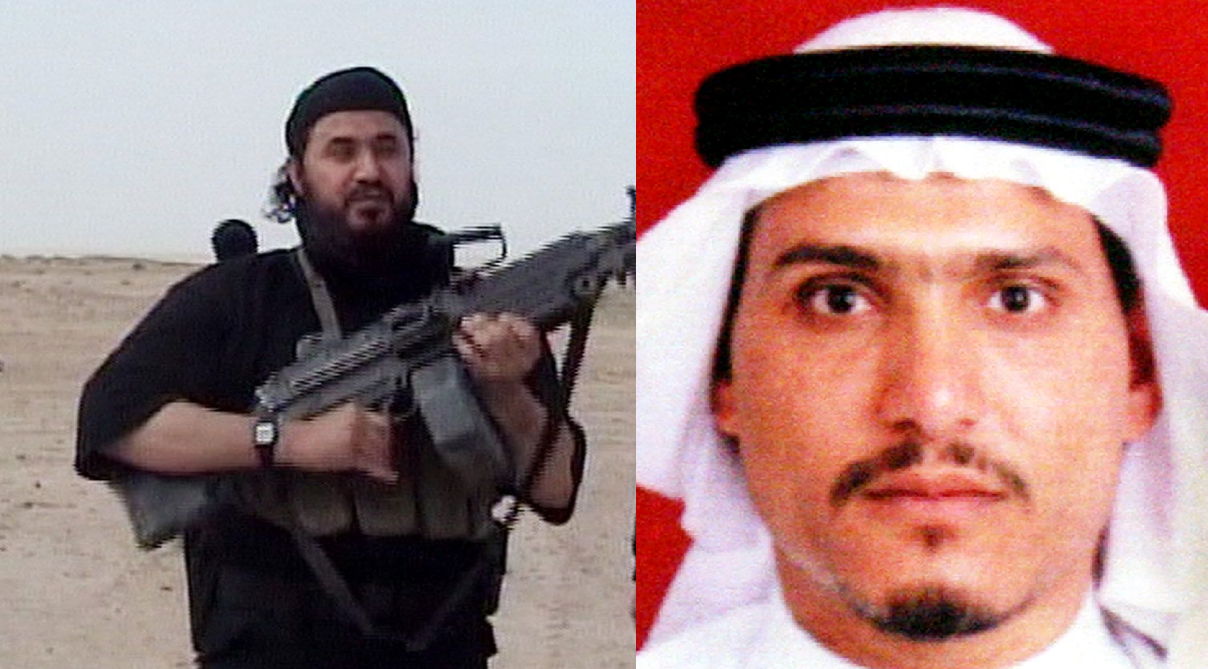
Ahmad al-Khalayleh (Abu Musab al-Zarqawi), the infamous founder of the Islamic State movement, known at the time as Al-Qaeda in Iraq (AQI) and formerly part of the Mujahideen Shura Council (MSC), was killed on 7 June 2006. Zarqawi’s successor was officially announced five days later, in a written statement released on 12 June, as Abu Hamza al-Muhajir, an Egyptian with a long history in and around Al-Qaeda. The next day, 13 June 2006, Abu Hamza gave his first speech as AQI emir, entitled, “The Gathering Will Be Defeated and They Will Turn Their Backs [in Retreat]”, drawn from an ayat of the Qur’an (54:45). The statement and the speech are translated below.
There is a story in pro-IS circles that Abu Hamza only accepted to become emir after he tried to decline it in favour of the IS wali (governor) of Anbar province, Jarrah al-Shami. The story is meant to showcase Abu Hamza’s humility, a key attribute the IS movement prizes in its leaders, which does not mean it is not true. Abu Hamza was well-aware of the expectations upon him and may have ensured he came into office being (one might say performatively) humble. What the story perhaps also reflects is that there was something of a process to select Zarqawi’s successor—albeit, it probably happened before he was killed—because Zarqawi’s designated successor, Abd al-Rahman al-Qaduli (Abu Ali al-Anbari), had been arrested by the British in April 2006.
There was some misreporting at the time that there had been dissention within AQI/MSC over the appointment of Abu Hamza. This now (justly) forgotten controversy centred on a statement posted on Al-Hesbah website on 9 June 2006, signed by “Abu Abdul Rahman al-Iraqi”, which acknowledged Zarqawi’s death. There was some initial confusion—and suspicion—since one of those killed alongside Zarqawi in Baquba was Shaykh Abd al-Rahman, his “spiritual adviser”. Some thought AQI was trying to claim a dead man as emir, either in desperation to conceal a leadership vacuum, or as a deception operation so the new emir would remain hidden. It soon became clear the shaykh and Abu Abdul Rahman were different men. A narrative then developed that Abu Abdul Rahman’s statement had claimed the leadership—thus setting him up as a rival to Abu Hamza. The story faded without much of a public resolution, but at this distance it is obvious (and it was at the time if one looked carefully) that if Abu Abdul Rahman was leader at any point it was as “emergency emir” to tide the the Zarqawists over the couple of days while it ensured that the breach in the media department that led to Zarqawi’s downfall had not gone any further.
The most intriguing aspect in this mini-saga is that Abu Abdul Rahman al-Iraqi might have been Jarrah al-Shami. Some reporting at the time, relying on an AQI commander, described Abu Abdul Rahman as “in charge of Anbar province and the emir in charge of Samarra”, and “lately” having functioned as “the ‘right hand’ of Zarqawi”. As mentioned above, Jarrah was the wali of Anbar at this time, which we know from no less a source than IS’s biography of Jarrah, wherein Jarrah is also described in so many words as Zarqawi’s right-hand man from late 2005 until Zarqawi’s death—travelling everywhere with Zarqawi, being entrusted with tasks Zarqawi would give to nobody else, and so on. The biography does not mention Jarrah having a role in Samarra, perhaps a challenge to the idea of Jarrah and Abu Abdul Rahman are one and the same. Another challenge might be the use of “al-Iraqi” in the kunya, while Jarrah was a Syrian. However, it is equally possible to see this as supporting evidence for Abu Abdul Rahman being Jarrah, since what the biography does mention is that Jarrah had convinced the Americans and the Iraqi government that he was an Iraqi when he was briefly imprisoned after the Second Battle of Fallujah. It suggests Jarrah had experience in successfully presenting himself as an Iraqi and an awareness of the security advantages of doing so.
The speech from Abu Hamza had several notable themes:
- Abu Hamza contends that the difficulties the jihadists encounter are a trial from God to purify the ranks, exposing those whose faith is insufficient and removing them, thereby solidifying IS around its doctrine, which is the path to ultimate victory. This message has been consistent, from the days of Hamid al-Zawi (Abu Umar al-Baghdadi)—the first proto-caliph when the Islamic State was proclaimed, the man to whom Abu Hamza would give an oath of allegiance (bay’a) in November 2006, formally dissolving Al-Qaeda on Iraqi territory—through to the official spokesman Taha Falaha (Abu Muhammad al-Adnani) in the caliphate era, the Caliph himself Ibrahim al-Badr (Abu Bakr al-Baghdadi), and beyond.
- Abu Hamza, who was among the first of the Zarqawists to arrive in Iraq in the spring of 2002, makes several references to the pleasant surprise finding the Sunnis in Iraq more thoroughly jihadized than expected.
- Anti-Shi’a sectarianism is core to Abu Hamza’s message, as it had been to Zarqawi’s and continues to be down to the present. An important part of this is Abu Hamza’s reference to Ibn al-Alqami, the final Shi’a vizier of the Abbasid Caliph who supposedly opened the gates of Baghdad to the Mongols in 1258. Al-Alqami was a figure from history dredged up by Zarqawi to justify an exterminationist program against the Shi’is. Two interesting things about this: Saddam Husayn was the first to utilise Al-Alqami to incite hatred and violence against the Shi’a, and the presence of Al-Alqami in IS propaganda has faded since “the two shaykhs”—Abu Umar and Abu Hamza—were killed in 2010.
- Related but distinct, there is a reference to the Shi’a of Iraq being even worse than “al-batiniyya” (the batinis or “esoterics”), the Shi’a offshoot sects that have developed creeds even more distant from Sunni Islam over the centuries. One specified group is the Fatimids, the Ismaili Caliphate centred on Egypt in the tenth and eleventh centuries, which posed the greatest military-political challenge to the Sunni Caliphate and after it was gone left behind the Nizari Ismailis, the legendary “Assassins”.
- There is, as ever, a heavy dose of antisemitism in Abu Hamza’s speech.
- Some of Abu Hamza’s most biting remarks are reserved for Iraqi Sunni Arab leaders, particularly the Muslim Brotherhood, who engage in the political process. This, too, is a consistent part of IS’s messaging, since its entire strategic premise is that only it can protect Sunni Arabs.
- The final interesting note is that from this early stage, Abu Hamza was signing off his speeches with his real name: Abd al-Munim al-Badawi.
* * * * *
The 12 June 2006 AQI Statement Announcing its New Leader
In the name of God, the Most Gracious, the Most Merciful,
“And consult them in the matter. And when you have resolved, then put your trust in God. Indeed, God loves those who put their trust [in Him]” [Qur’an 3:159].
All praise is due to God, Lord of the worlds, and prayers and peace be upon our Prophet Muhammad and upon all his family and companions.
As for what follows:
The word of the Shura Council of Tanzim al-Qaeda fi Bilad al-Rafidayn [the Base (of Jihad) Organisation in the Land of the Two Rivers] has united upon Shaykh Abu Hamza al-Muhajir to be the successor to Shaykh Abu Musab al-Zarqawi (may God have mercy on him) in the leadership of the organisation.
Shaykh Abu Hamza al-Muhajir (may God preserve him) is a virtuous brother, one with a prior record in jihad and a firm footing in knowledge [al-ilm]. We ask God the Most High to guide his vision and his command, and make him firm upon what Shaykh Abu Musab (may God have mercy on him) began.
Our Wise, Knowing Lord has spoken the truth: “They want to extinguish the light of God with their mouths, but God refuses everything except that which perfects His light, however much the disbelievers detest it. It is He who sent His Messenger with guidance and the true deen so that He may cause it to prevail over all deen, however much the mushrikeen [idolaters, polytheists] detest it” [9:32-33].
And God is the Greatest. “All honour belongs to God, and to His Messenger, and to the believers, but the munafiqeen [hypocrites] know not” [63:8].
The Media Commission of al-Majlis Shura al-Mujahideen fi al-Iraq [the Mujahideen Shura Council in Iraq].
[Source: Al-Fajr Media Centre]
* * * * *
The Gathering Will Be Defeated and They Will Turn Their Backs [in Retreat][1]
In the name of God, the Most Gracious, the Most Merciful.
All praise is due to God, Owner of the dominion, exalted above injustice, lofty above oppression, alone in everlastingness, the Hearer of every complaint, the Remover of every affliction; and prayers and peace upon the one sent with clear evidences and decisive proof [i.e., the Prophet Muhammad], as a bearer of glad tidings and a warner, and a caller to God by His permission and a shining lamp.
As for what follows:
O umma of Islam, our people in the Land of the Two Rivers [i.e., Iraq], rejoice, be hopeful, let your eyes be comforted, and let your hearts be at ease, and your souls be gladdened. For your sons—by the will of God—are flashing swords, towering spears, and fortified shields for you and for your deen [lifeway, Islam]. Know that we are your outstretched arm, so command us and we shall bring to you the distant before the near, and pour out our blood in defence of your deen and your honour.
We know that you have sacrificed much, and that you have been struck by the hardship of great tribulation, but know that God has tested you to try your hearts and to test your patience, and to distinguish the purity of your mettle. God the Exalted said: “That God may separate the wicked from the good, and place the wicked in a pile them all together, and consign them in Hell. Verily, they are the losers” [Qur’an 8:37].
By God, if we are martyred, we bear witness; and if we are questioned, we shall answer with truthfulness. Indeed, we have found you better than we hoped and greater than we imagined; you were and continue to be the house that shelters and the heart that embraces. You have shown the finest examples of generosity and hospitality, of courage and boldness. And surely you shall, by the will of God the Exalted, reap the fruits of your patience with your own hands in this world and the Hereafter. “Their Lord responded to them: ‘I will not allow the work of any of you, whether male or female, to go to waste; each of you is from the other” [3:195]. So beware, beware of the discouragement of Satan, for the prudent man, when he is about to reach his destination, does not become burdened by heavy loads.
By God, we are close to attaining the goal and realising the hope, and I see victory bubbling under the soil, about to be given permission [to emerge]. Know that there is no deed more beloved to God in our time—after belief in God—than jihad in the path of God. God the Exalted said: “O you who have believed, shall I guide you to a transaction that will save you from a painful punishment? [It is that] you should believe in God and His Messenger and strive in the path of God with your wealth and your lives. That is best for you, if you did but know” [61:10-11].
So unify your ranks, purify your hearts, and be a support [structure] for your mujahideen brothers. And beware of the defeatists and the spreaders of alarm: “Truly, God loves those who fight in His cause in a row as though they are joined [together] firmly in a solid structure” [61:4].
To our brothers on the fields of battle, the lands of ribat and jihad, I say: Know that our blood is [shed] in place of your blood, and our destruction [comes] before your destruction, and our men and our weapons are against our and your enemies. By God, we did not go forth out of arrogance nor boastfulness, nor for a fleeting position nor perishing wealth, but rather for jihad in the path of God, to support the deen of God, and seeking the pleasure of God. So come to your brothers, and place your hands in our hands, so that the word of God may be supreme and the word of those who disbelieve may be inferior. For God will ask us on the Day of Resurrection, and death is nearer to any of us than the strap of his sandal: Here is our enemy who has unified his ranks against us, is it not time for us, O slaves of God, to unite? God the Exalted said: “Hold fast, all together, to the rope of God, and do not become divided” [3:103].
O you, lying Crusader Bush, and you herds of slaves and servants of the Jews: Know that the blood boiling in our veins out of anger for God against you, and in pursuit of rightful retribution, is at its peak and summit—and it shall not, by the will of God, ever be extinguished. The swords that have been stained with your blood are thirsting for more of your rotten heads. What you have seen from us is in the past is but a droplet from a great flood, a mere glimpse of the terror we have prepared for you: uprooting storms, terrified thunders, and sweeping whirlwinds that will uproot both your sedentary and your mobile forces. So await black days whose calamities will make you forget the woes you currently endure. What do you imagine from free men whose lands have been defiled by the Jews and whose honour has been violated?
O dog of the Romans! O dog of the Romans: do not be deceived by numbers [of troops] and equipment, or by reinforcements and the protraction of time. For the war is still at its beginning, and this is but the first of the great battles. The victor is he who remains steadfast, not he who advances first; and matters are judged by their outcomes. And we see it, by the certainty of faith, as it truly is. The Lord of the Worlds said: “We have already written in the Psalms, after the [previous] exhortation, that the land will be inherited by My righteous slaves. Herein, surely, is a plain statement for those who [truly] worship God” [21:105].
As for you, O Magian agents: the day of your recompense has drawn near, and the hour of your reckoning has arrived. By God, you are too contemptible to have a banner raised for you or to achieve a goal. The Baghdad of [Harun] al-Rashid will not be ruled except by the descendants of Sa’d [ibn Abi Waqqas] and [Khalid] Ibn al-Walid. Behold! Your masters [i.e., the Americans] are on the point of flight, paying no heed to treacherous agents. Your fate will be the fate of your Magian Rafidite forefathers—like [Nasir al-Din] al-Tusi and Ibn al-Alqami and their likes—who sold Baghdad to the Tatars [i.e., the Mongols]. The end of their affair was utter loss: the first committed suicide, and the second was killed in the most hideous way, a filthy carcass dragged through the streets of Baghdad.[2]
So, O descendants of treachery, masters of betrayal, and scandal of yesterday and today: It is as if you are repeating the days of the Isma’ili batinis, the Qaramita [Qarmatians] and the Ubaydis [Fatimids],[3] but in a more base and despicable form. So await from our hands what your ancestors received at the hands of our ancestors. But know, O Magians, that your guidance to the truth, your return to right guidance, your repentance to God from the falsehood of Rafidism, and your abandoning of aiding the occupier—these are more beloved to us than the world and all that is in it. Yet if you insist upon the sword, then await from us what is coming, and what is coming is more grievous and more bitter.
And O aides of the occupier, from the Iraqi Party [the Muslim Brotherhood],[4] Jabhat al-Tanafur [the Front of Discord, i.e., Jabhat al-Tawafuq al-Iraqiya (the Iraqi Accord Front)], and those who orbit around them secretly among the hypocrites: You have lied to yourselves, and you have betrayed your umma. No wonder and no doubt [is possible about this], for you lied before against God: “Who is more unjust than one who lies against God or denies the truth when it has come to him” [39:32]. You claimed you would enter the political process to repel affliction from the people of the Sunna [i.e., Sunnis], but you were, in truth, the worst affliction upon them.
You brought the killer of Muslims in Fallujah, the destroyer of their homes, and made him [Abdul Qadir Obeidi] Minister of Defence! Then you made as head of the Parliament one who was even more Rafidite and more deceitful than the Safavids themselves [Mahmoud al-Mashadani]. He declared in Iran that “they have no relation to what is happening in Iraq, and that they are working to stabilise security.” And there is [Tariq] al-Hashimi saying: “We need one or two years to build the Iraqi forces,” a statement indicating his approval of the occupier’s continued presence. Then came the summit of misguidance: their master, [Deputy Prime Minister for National Security Affairs] Salam [al-Zawba’i] (may God not grant him safety), announcing in an interview with the BBC: “The withdrawal of the occupier would be a crime just like its coming.”
“Our Lord, do not let our hearts deviate after You have guided us and grant us from Yourself mercy. Surely, You, and only You, are the Bestower” [3:8].
As for you, O knights of tawhid, monks of the night, and lions of the battlefields:[5] May God reward you on our behalf and on behalf of the Muslims with all good. I have witnessed the wars and their men, and I bear witness by God that my umma has not withheld from us, in the Land of the Two Rivers, the best of its sons and the truest of its elite. My eyes have not seen their like, nor have I heard news like theirs, except for the news of the first generation [(of Muslims), al-ra’il al-awwal]. I testify that they are the truest of people in speech, the most faithful to covenants, the firmest in steadfastness, and the strongest in obedience to the command of God. I do not doubt—God knows—even for the blink of an eye, that we are the army that will deliver the banner to [the first Fatimid Imam-Caliph] Abdullah al-Mahdi. If the first of us is killed, the last of us will deliver it. But elaborating on this is not our issue now.
By God, those pure and noble bloods—the bloods of the martyrs and their emirs—are too honoured by God to be spilled in vain. I bear witness by God that they did not offer them except for His sake; we consider them thus, and God is their reckoner. And know, O my beloved ones, that God did not choose your emir except to honour him and to test you. He will not depart until the structure is completed and victory begins to appear among the branches [al-aghsan]. So be patient and steadfast, and show strength—strength.
O subjects of the Commander of the Faithful [Emir al-Mu’mineen], O sons of Usama [bin Laden], O students of [Ayman] al-Zawahiri, O men of Al-Zarqawi: I obligate you not to lay down your weapons, nor [allow] rest [for] yourselves or your enemy, until each one of you has killed at least one American, within a period not exceeding fifteen days—whether by a sniper’s bullet, the throw of a grenadier, an explosive device [or IED: ubuwa nasifa], or a martyrdom car, according to what the battle demands—starting from the moment you hear my call.
Likewise, I obligate every free Sunni, whose father or brother or one of his family was killed by the Magian Rafidites, or whose honour they violated, or whose house they destroyed and burned, or whose relative they hold captive and in humiliation, that he kills one Rafidite Magian, whether from Jaysh al-Dajjal [the Army of the Deceiver (or Antichrist), i.e., the Mahdi Army], or Faylaq Ghadr [the Corps of Treachery, i.e., the Badr Corps], or Hizb al-Da’wa [the Da’wa Party], or Hizb al-Lat [the Party of Lat (a pre-Islamic pagan god), i.e., Hizballah], or Harakat Tha’r Allah [the Movement of God’s Revenge, a Shi’a militia led by Yusuf al-Mosawi]—may God curse them.
My final message—to our leader, [the Taliban commander] Mullah Umar; our emir, Usama; and our shaykh, Al-Zawahiri—I say: We are steadfast upon the covenant, walking upon the path of jihad. So rejoice in that which pleases you, and proceed with the blessing of God. We are but one of your good deeds, an arrow in your quiver, so shoot us wherever you will, and you will find only an obedient soldier.
And finally, O God, I seek refuge with You from the trial of speech, just as I seek refuge with You from the trial of action, and we seek refuge with You from pretension about what we do not master, and we seek refuge with You from conceit regarding what we do master.
“And God is predominant over His affair, but most people know not” [12:21].
Servant of the Mujahideen,
Abu Hamza al-Muhajir
Abd al-Munim al-Badawi
__________________________________________________
NOTES
[1] The title of the speech is “سيهزم الجمع ويولون الدبر” (sayuhzamu al-jam’u wa yuwalluna al-dubur).
[2] Neither of these fates are actually true, at least according to the surviving sources. Al-Tusi died peacefully of natural causes in 1274, though his collaboration with the Mongols after the fall of Baghdad has had him viewed—despite his philosophical and theological scholarly achievements—with considerable ambivalence in Islamic historiography, and pointed hostility in the more Sunni-polemical historical accounts. Ibn al-Alqami died very shortly after the Mongol sack of Baghdad in 1258, having been stripped of all ranks once the Mongols had used him in the conquest. It is often said Ibn al-Alqami died of grief, though secular sceptics might suspect that in a devastated city of penury and disease, dying of illness was not that unusual. Muslim history has tended to emphasis Ibn al-Alqami’s humiliation as a factor in his death, in the sense of driving him to the misery that killed him, with a strong implication that this was God’s punishment, but there is no record of Ibn al-Alqami being murdered by the Mongols in the ravaging of Baghdad.
[3] “Ubaydis” is a hostile label applied by some Sunnis to the Fatimids. The Fatimids, the Ismaili dynasty, revealed their Imam, Ubayd Allah al-Mahdi, in AD 909, and proclaimed him Caliph. “Ubaydis” is a term of denigration, meant to imply that the Ismailis are idolaters who worship the man Ubayd—in the same way the Muslim term for Christians was “Nasara” for a long time, i.e., “(those who worship the) Nazarene”. (The term “Masihi” as a neutral word for Christians is comparatively recent.) The abusiveness of especially Salafi Sunnis about the Fatimids is in part an indirect compliment to the scale of the Fatimid achievement, which brought the Sunnism as close as it would ever get to defeat.
Ubayd—otherwise known by his regal name, (Abdallah) al-Mahdi Billah—had begun his preaching in Salamiya, the Syrian town where the Ismailis are predominant to this day, but had been expelled by the Abbasids and was in North Africa when he unveiled himself as Imam-Caliph. By that time, the schism had already occurred with the Qarmatians or Carmathians, whose relationship with the “mainstream” Ismailis/Fatimids we do not really understand. It was the Qarmatians who first made the presence of the ghulat (exaggerator or extremist) Shi’a sects felt in Islamdom, creating a millenarian republic in eastern Arabia, Qatar, and Bahrain in 899 that quickly spread, into Syria in 903—disclosing significant latent Ismaili support even at this early date—and then moving into Iraq, capturing Kufa by 927 and threatening Baghdad in 928. The Qarmatians had also spread westwards towards the Two Holy Cities, and in their most infamous act stormed Mecca in 930, carrying away the Black Stone from the Ka’ba, and only returning it for a ransom in 951. A nuisance the Qarmatian were, they never rose above a regional challenge, which was contained by the mid-970s and terminated in 1074.
It was to be the Fatimids who threw down the most serious challenge to the Sunni order in Islamdom, capturing Egypt in 969 to create not only a military rival to the Abbasids—a revolutionary polity that extended its subversion right into the heartlands of Islam—but an ideological challenge to the status of the Sunni Caliph of a kind that had never been seen before, nor would ever be seen again until the abolition of the institution a millennium later. The Fatimid challenge, too, would be beaten—first militarily, by the middle of the eleventh century; by the end of the eleventh century, the ideological challenge had passed as the Fatimids decayed from within due to schism and military subjugation; and Saladin was able to proclaim Egypt’s return to the Sunni fold in 1171 amid the complete indifference of the population. The only people who even noticed were those who helped load the Ismaili books onto bonfires.
The Fatimids tend to be remembered now, if they are remembered, for their Persian branch, the Nizaris, who broke with the dynasty in Cairo in the 1090s, and set up a satellite branch of their own in Syria soon thereafter, using their network of castles in the Iranian and Levantine mountains to wage a relentless terrorist campaign against the Sunni world until an end was made of the Nizaris soon after the Mongol conquest of Baghdad in the mid-thirteenth century. The Nizaris are better known in the West as “the Assassins”, and their long war with Sunnidom is overshadowed in the Western imagination by the couple of instances where the Nizaris’ terrorism was turned on the Crusaders.
[4] The Brotherhood’s Iraqi branch is properly called the Iraqi Islamic Party, but the IS movement obviously rejects its claim to be Islamic.
[5] The phrase translated as “monks of the night” is “ruhban al-layl”, which has the implication that while the jihadists pray fervently in the nighttime, they are fighting by day, playing on the Islamic State movement’s idealisation of the scholar-warrior as the model for its operatives, from Umar Yusef Jum’a (Abu Anas al-Shami) to Abd al-Rahman al-Qaduli (Abu Ali al-Anbari).
The word translated as “battlefields”, “al-shara”, is more exactly “open deserts” or perhaps “open wildernesses”.
 Kyle Orton's Blog