By Kyle Orton (@KyleWOrton) on 7 February 2025
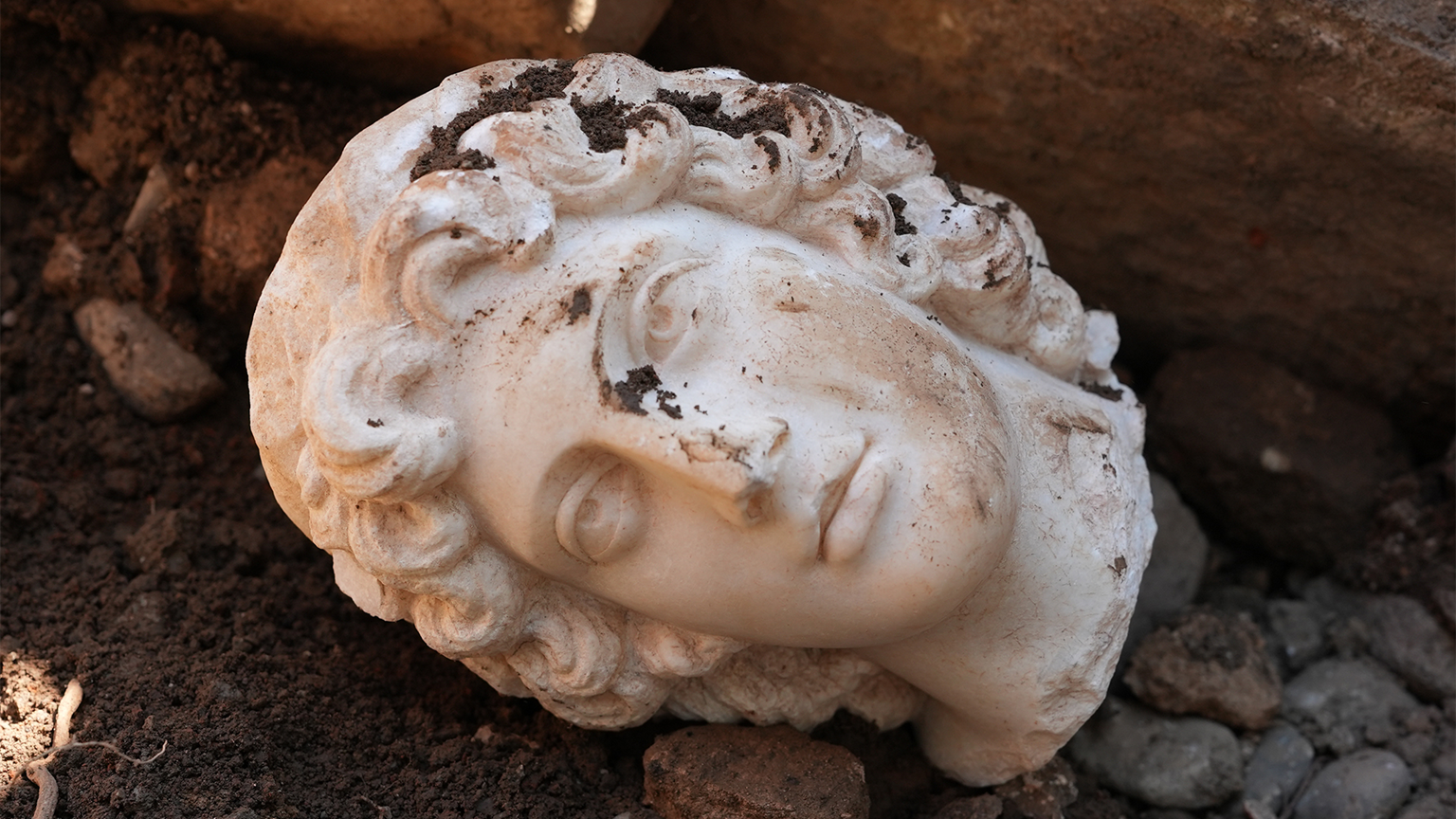
Alexander of Macedon being a model for Roman statesman went back to the era of the Republic, and this imitatio Alexandri was often expressed by trying to repeat his feat of conquering Persia.
Pompey Magnus, Julius Caesar’s eventual rival, modelled himself on Alexander to the extent of sporting the quiff hairstyle Alexander was believed to have worn. Pompey’s conquests of the East in the late 60s BC, putting an end to the Seleucid Empire, were in emulation of his hero, as was warring in Persian Mesopotamia, where Alexander’s journey had ended.[1]
As Glenn Barnett sets out in Emulating Alexander: How Alexander the Great’s Legacy Fuelled Rome’s Wars with Persia (2017), this was just the beginning:
Caesar himself had been planning an expedition against Parthian Persia when he was murdered in 44 BC, and Caesar’s deputy, Mark Antony, carried this mission into execution in 36 BC, with disastrous consequences. The shadow of Alexander had drawn Trajan into war with the Parthians (115-17 AD) as his last act, and he did not get much further than Antony. After initially conquering Iraq and reaching the Persian capital, Ctesiphon, Trajan’s holdings soon melted away. Hadrian had to do politico-military clean-up. The campaign of Septimius Severus (195-97) to baptise his new dynasty with the glow of Alexander was reasonably successful, sacking Ctesiphon and expanding Roman Mesopotamia in ways that were, while shaky, more durable than Trajan’s.
Caracalla, who was absolutely obsessed with Alexander, did not get far into Persia in the last war with the Parthians before he was assassinated in 217, setting something of a template for the Emperors after him who took the Alexandrian road to Persia. Gordian III died under most mysterious circumstances in the first war against the Sassanians in 244. Most disastrously, Valerian was captured in battle by the Persians in 260, the only Roman Emperor taken prisoner by a foreign enemy, and tortured to death. The invasion by Carus in 283—the execution of a plan conceived by Probus, who was killed in a mutiny—started well, with Ctesiphon sacked, but Carus died suddenly, it is said struck by lightning, and during the retreat that followed his son and successor, Numerian, was found dead in his litter.
The outstanding departure from the post-Caracalla pattern is Galerius, who in 297-98 conquered parts of Armenia and Mesopotamia from Persia, though it is notable that Galerius was a subordinate Caesar who was ordered to quit while he was ahead by the Augustus Diocletian. The pattern returned with Julian the Apostate, killed in 263 while retreating after a failed attempt to take Ctesiphon.
The fact that Alexander was a pervasive template for the Great Man in Rome can be seen by looking at it from the other direction: the Emperor Nero (r. 54-68), whose reign was significantly premised on trampling the sanctities of the Roman elite (to the delight of the masses), specifically eschewed imitatio Alexandri. Nero’s one trip outside Italy was pointedly to Periander in Old Greece, not to the Hellenic marvel of Alexandria.[2]
Julian’s war with Persia was, along with the rest of his reign, the last of the old ways. The completion of the Christian Revolution at the end of the fourth century made a pagan like Alexander less of a model for Roman Emperors. Nearly a century-and-a-half of Roman-Persian peace followed Julian, and when it was broken, in 502, it was by the Persians.
______________
NOTES:
[1] Tom Holland (2003), Rubicon: The Triumph and Tragedy of the Roman Republic, chapter four.
[2] Edward Champlin (2003), Nero, p. 139.
 Kyle Orton's Blog