By Kyle Orton (@KyleWOrton) on 7 February 2025
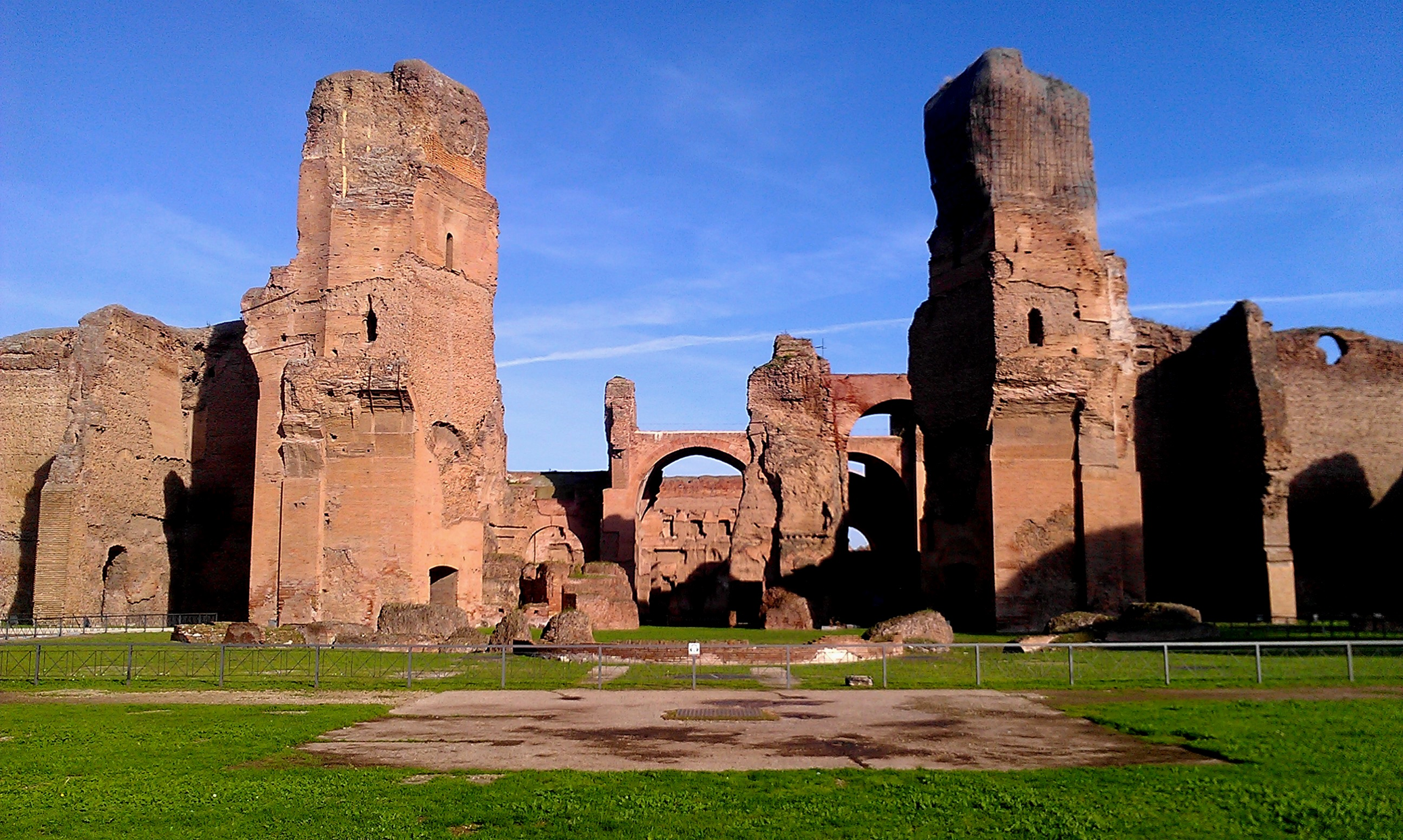
The first great public warm baths or thermae in Rome were completed in 25 BC, two years after the first Emperor, Octavian, officially became Augustus. For nearly forty years, payment was necessary to access these baths.
In 12 BC, Marcus Vipsanius Agrippa, Augustus’s military chief through the civil wars that brought Augustus to power, died, and left the baths to the Roman people. Access was free from that point, and the complex became known as the Baths of Agrippa, while the adjoining artificial lake was called the Lake of Agrippa. (This gift was announced and marketed to the masses by Augustus’s other main lieutenant, Gaius Maecenas, the political strategist who helped guide Augustus to power, and then served as a crucial administrator and what we would now call “spin doctor” of the Empire once it was established.)
Claudius would follow the template by opening up the Baths of Etruscus to free access.
The Emperor who really demonstrated the potential of a thermae, however, was Nero, who in 64 AD, after the “great fire” that he might or might not have started, built a baths complex—with all its gardens and entertainments—adjacent to the Lake of Agrippa (but on another side from Agrippa’s Baths), right in the heart of Rome on the Campus Martius, which was stupefying in its scale and earned him love and legitimacy from the masses. As with everything else Nero did, this construction, done in the Greek style, was simultaneously calculated to shock and appal the Senatorial elite, though it was of such grandeur that Martial, a poet of the Flavian dynasty—whose legitimacy rested on Nero’s damnation—grudgingly acknowledged the achievement: “What is worse than Nero? What is better than Nero’s Baths?”
The lessons learned from Nero’s reign made it politically impossible to demolish his baths after his downfall, so they were renamed, and an attempt was made to draw people away from them by Titus, in 81 AD, building a baths (and Colosseum) on the site of Nero’s pleasure palace, the Golden House (Domus Aurea) near the Palatine, which had been demolished. Nero’s Baths were touched up by Domitian, but Domitian was assassinated in 96 AD after a Neronian reign, leading subsequent Emperors to wilfully neglect the baths and they did fall into disuse, until they were renovated by Alexander Severus around 227.
In between times, Trajan had completed an impressive baths complex on part of the Golden House site in 109, and Hadrian had vastly expanded what was left of Agrippa’s Baths in the 120s.
This was the legacy Septimius Severus turned to in his last days before he died in 211, which was picked up by his son Caracalla and made into such a spectacle of his reign. When the Empire was recovering at the end of the third century, one of the symbols of this was the building of baths, first by the great military architect of Imperial restoration Aurelian and even more splendidly than all predecessors under the political maestro who restored the Empire to peace, Diocletian.
SOURCES:
Edward Champlin (2005), Nero, pp. 25, 72, 181; and
John Bell (1859), A Treatise on Baths: Including Cold, Sea, Warm, Hot, Vapour, Gas, and Mud Baths; Also, on Hydropathy, and Pulmonary Inhalation, with a Description of Bathing in Ancient and Modern Times, pp. 81-82.
 Kyle Orton's Blog