Category Archives: Book Review

Book Review: The Consequences of Syria (2014) by Lee Smith

By Kyle Orton (@KyleWOrton) on May 9, 2015

1

Lee Smith’s The Consequences of Syria is part of the Hoover Institution’s “The Great Unravelling” series, which also included The Struggle for Mastery in the Fertile Crescent by the late Fouad Ajami (which I reviewed here.) You can purchase a copy here.

Published in June 2014, Smith narrates Syria’s terrible war to the opening months of 2014, the innumerable excuses made by the Obama administration for letting it run, and the theoretical framework behind the administration’s decision. The book is relatively short and the prose is direct; it takes very complex discussions of ideas and puts them in easily-digestible terms—all while keeping the reader’s eye on the practical implications.

Smith starts with the 2003 invasion of Iraq, the central event in President Obama’s thinking about the Middle East. Continue reading
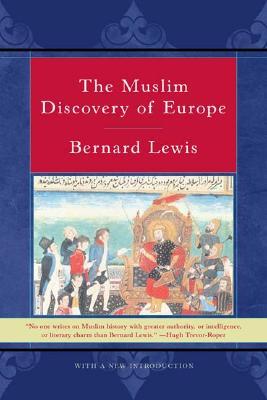
Book Review: The Muslim Discovery of Europe (1982) by Bernard Lewis

By Kyle Orton (@KyleWOrton) on May 7, 2015

1

With the triumph of relativism and the current economic woes of the West, the sense that Western civilization is unique and in some respects—to use an old-fashioned word—better than the alternatives, and worth defending and exporting, is waning. But Bernard Lewis’ The Muslim Discovery of Europe suggests a longer view in which Europe, while containing all the faults of previous civilizations, has been one of the few to begin the process of correcting those faults, and has corrected many more than any other civilization.

One feature of European civilization that stands out as unique is curiosity. Continue reading

ISIS: America’s Alliance with Iran is Hampering the Fight Against Terror

By Kyle Orton (@KyleWOrton) on February 7, 20151

Published at Left Foot Forward

Book Review: ISIS: Inside the Army of Terror (2015) Michael Weiss and Hassan Hassan

ISIS: Inside the Army of Terror, by Michael Weiss and Hassan Hassan, is brilliantly easy to read. Concise yet thorough the book charts the history of a group, “[a]t once sensationalized and underestimated,” that is simultaneously a terrorist organisation, mafia, conventional army, sophisticated intelligence-gathering apparatus, propaganda machine and the remnants of the Saddam Hussein regime which controls an area the size of Britain in the heart of the Middle East. Continue reading
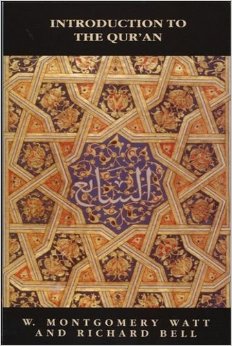
Book Review: Introduction to the Qur’an (1953) by Richard Bell

By Kyle Orton (@KyleWOrton) on January 13, 2015

4

Richard Bell’s Introduction to the Qur’an is, at less than 200 pages, a brief and easily-digestible explanation of the context in which Islam’s “holy” book arose, and the problems of reconciling theological orthodoxy with historical accuracy. More than six decades after publication, the book remains influential in scholarship of the Qur’an. Continue reading

The Other Side of the “Torture” Debate

By Kyle Orton (@KyleWOrton) on December 11, 2014

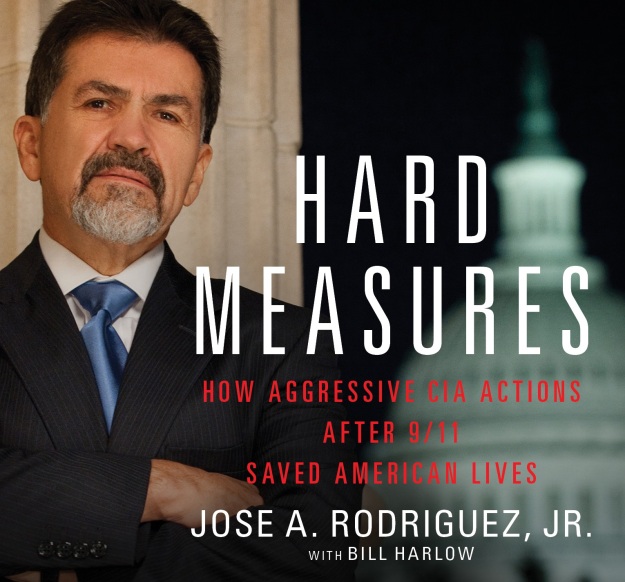
As a final act while the Democrats hold their majorities in Congress, the United States Senate Select Committee on Intelligence (SSCI) released a report on December 9, the “Committee Study of the Central Intelligence Agency’s Detention and Interrogation Program”, known to the Twitterverse as the “Torture Report”. This has reignited the debate about America’s use of harsh interrogation methods, the so-called “enhanced interrogation techniques” (EITs), against al-Qaeda operatives in the shadow of the 9/11 massacre. The politics surrounding this matter—even on basic questions, such as whether discomfort works to induce cooperation in detainees—are poisonous, and the publication of this partisan Committee Study has done nothing to assist this environment. One means of trying to get at the truth is to examine a counterpoint, the 2012 book, Hard Measures: How Aggressive CIA Actions After 9/11 Saved American Lives, a memoir by Jose Rodriguez, the man who oversaw the Central Intelligence Agency’s Counterterrorism Centre from 2001 to 2004. Continue reading

Book Review: The Struggle For Mastery In The Fertile Crescent (2014) by Fouad Ajami

By Kyle Orton (@KyleWOrton) on September 16, 2014

In June, those of us who try to keep up with events in the Greater Middle East suffered a devastating blow when the Lebanese-American scholar Fouad Ajami passed away. Having broken with the orthodoxy of his generation of Arabs and his scholarly field, both represented in the person of Edward Said, Ajami provided insight into the Arab/Muslim world that restored the agency of that world. Continue reading

Book Review: The Snowden Operation (2014) by Edward Lucas

By Kyle Orton (@KyleWOrton) on August 1, 2014

1

 “Snowden is a pawn in a hostile and continuing intelligence and information-warfare operation

So concludes Edward Lucas in a fascinating and easy-to-read brief look at the greatest intelligence disaster the West has ever experienced. Continue reading

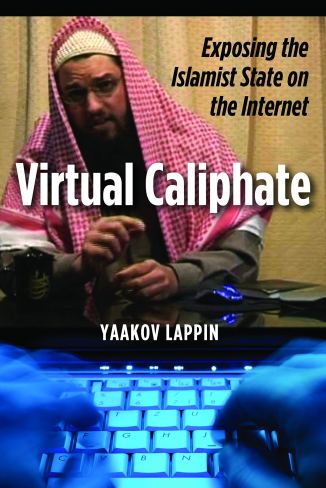
Book Review: Virtual Caliphate (2011) by Yaakov Lappin

By Kyle Orton (@KyleWOrton) on June 13, 2014

I have yet to read a book more prescient than Yaakov Lappin’s about events in Iraq in the last few days. Having sketched out the way Salafi-jihadists have created the ministries of a future Caliphate in cyber-format—the simple fact that “Al-Qaeda would not be in existence were it not for the pervasive presence of online jihadis”—Lappin finished by suggesting three options: (1) we manage to take down this virtual Empire; (2) we manage to weaken it in cyberspace; or (3) the jihadists “upload” this virtual State into the real world. Continue reading

Book Review: Cruelty and Silence (1993) by Kanan Makiya

By Kyle Orton (@KyleWOrton) on April 7, 2014


Kanan Makiya, an Arab author who writes of the decline of the Arab world as a story where Arabs have the primary agency, can be disorienting to read in the modern context. The first part of Cruelty and Silence deals with the cruelty of the Arab world in general and the Saddam Hussein regime in particular, Continue reading