By Kyle Orton (@KyleWOrton) and Oved Lobel on 14 July 2019

Abror Azimov in court in Moscow in April 2017 [photo source] and Mukhamadyusup Ermatov [photo source]
By Kyle Orton (@KyleWOrton) and Oved Lobel on 14 July 2019
Abror Azimov in court in Moscow in April 2017 [photo source] and Mukhamadyusup Ermatov [photo source]
By Kyle Orton (@KyleWOrton) on 10 May 2019
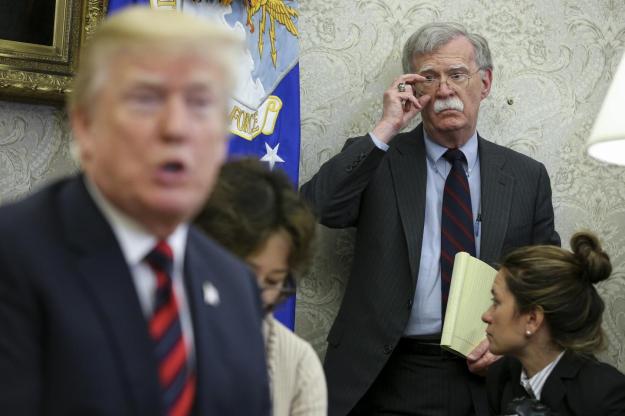
President Donald Trump speaks as John Bolton stands by in the Oval Office, 22 May 2018. OLIVER CONTRERAS-POOL/GETTY IMAGES
As tensions flared between the United States and Iran over the last ten days, a number of Washington’s Western allies have signalled their distance from the U.S. view, most dramatically in the case of Major-General Chris Ghika, Britain’s top commander in the coalition against the Islamic State (ISIS), who dismissed the U.S. intelligence assessment of an increased threat from Iran. This has since been walked back, but the fissures in the Western alliance over how to deal with Iran are real, and this has been compounded by differences within the U.S. government and the highly irregular nature of the Donald Trump administration, particularly its decision-making processes and public messaging. Continue reading
By Kyle Orton (@KyleWOrton) on 29 April 2019
This article was originally published at European Eye on Radicalization
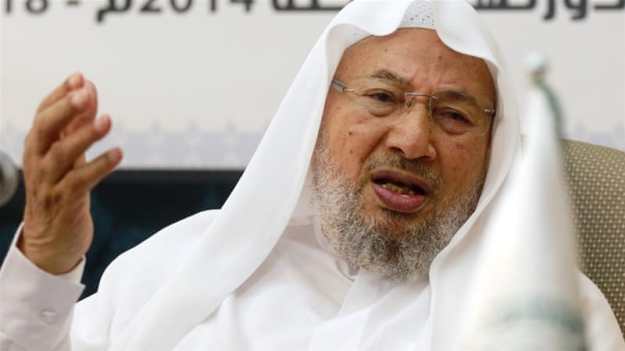
In the wake of the horrific bombings by the Islamic State (ISIS) in Sri Lanka on Eastern Sunday, which killed 250 people, an image has circulated purporting to show a terrorist connected to the attack in the company of the Qatar-based cleric of the Muslim Brotherhood, Yusuf al-Qaradawi. In fact, the image shows no such thing. But Al-Qaradawi’s influence in creating the ideology that motivates Islamist terrorists cannot be doubted. Continue reading
This article was originally published at European Eye on Radicalisation
By Kyle Orton (@KyleWOrton) on 16 April 2019

Ahmad al-Shara (Abu Muhammad al-Jolani) [image source]
Several years ago, Al-Qaeda made a strategic decision to refrain from foreign terrorist operations, refocusing away from these global spectaculars towards integrating more closely into local conflicts. The 2014 rampage across Iraq and Syria by Al-Qaeda’s rebellious former Iraqi branch, the Islamic State (ISIS), provided both the opportunity and additional incentive for a long-mediated rebranding effort. However, there have recently been signs of a shift back towards external terror operations, just as ISIS undergoes a setback and Al-Qaeda has a chance to reassert its dominance over the jihadi scene. Continue reading
By Kyle Orton (@KyleWOrton) on 9 April 2019

As the regime of Bashar Assad appears to be consolidating in Syria, many Israelis have concluded that their government’s handling of the crisis was generally laudable.
The most comprehensive statement of this view was given recently in Haaretz by Anshel Pfeffer (Netanyahu Outfoxed Russia, Iran and ISIS With His Cynical, Ruthless Syria Policy.) Every aspect of this is open to question. Continue reading
By Kyle Orton (@KyleWOrton) on 19 March 2019
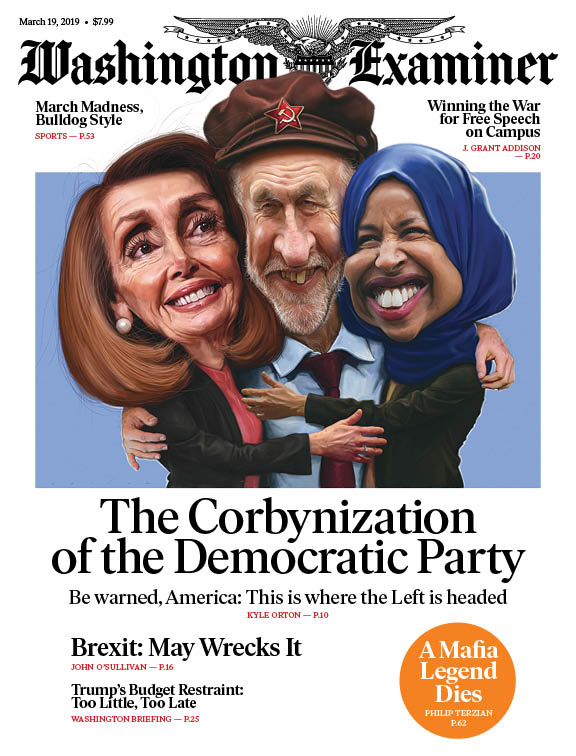
When the Democratic Party faced a revolt from its ranks for daring to propose condemning anti-Semitism, the scene gave those of us in Britain deja vu. The American Left is following the same script that led to the rapid radicalization of the Labour Party, led by Jeremy Corbyn. It’s no longer a mere talking point, a form of shorthand for journalists: The Democratic Party’s Corbynization is here, and it tacks so closely to what happened in Britain that it’s important for Americans to understand where we’ve been — and where they’re headed. Continue reading
This article was published at Ahval
By Kyle Orton (@KyleWOrton) on 12 March 2019
The wheel turns again. After U.S. President Donald Trump announced the withdrawal of U.S. forces from Syria in December, it seemed rapprochement with Turkey was on the cards. Now that looks less likely. Continue readingThis article was published at Ahval under the headline, “Back to the Future for Turkey and Syria?”
By Kyle Orton (@KyleWOrton) on 1 February 2019

American base on the outskirts of Minbij, 26 December 2018. (Photo by Delil souleiman / AFP)
U.S. President Donald Trump’s surprise announcement that U.S. troops would be withdrawn from Syria came with many visible costs. The benefits the anti-Islamic State (ISIS) campaign has delivered to Syrian President Bashar Assad, Iran, and Russia were made permanent. There is also more space for ISIS and greater instability in northeast Syria as Turkey confronts Syrian Kurdish forces. And there is the political cost to the United States of leaving its Kurdish anti-ISIS partner to face Turkey and the pro-Assad coalition alone. Continue reading
By Kyle Orton (@KyleWOrton) on 24 January 2019
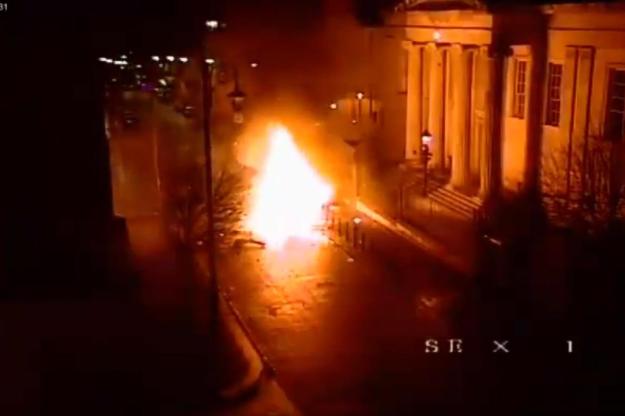
CCTV footage of the Londonderry bombing, 19 January 2019 [source]
A version of this article was published at CapX
By Kyle Orton (@KyleWOrton) on 21 December 2018

President Trump in a Twitter video saying fallen soldiers agree with his plan to withdraw from Syria, 19 December 2018 [image source]
 Kyle Orton's Blog