By Kyle Orton (@KyleWOrton) on 22 January 2023
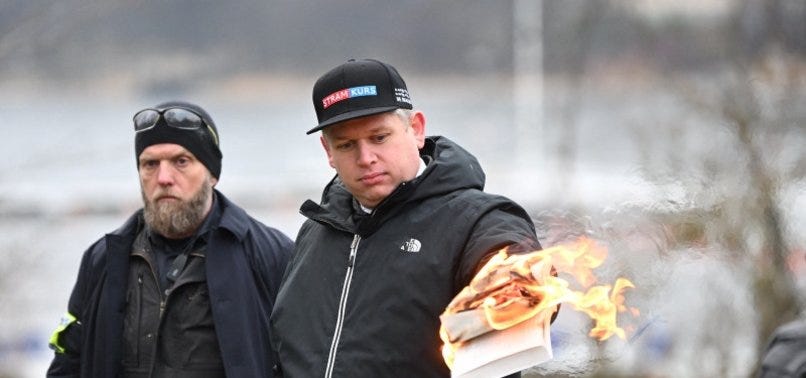
By Kyle Orton (@KyleWOrton) on 4 November 2022
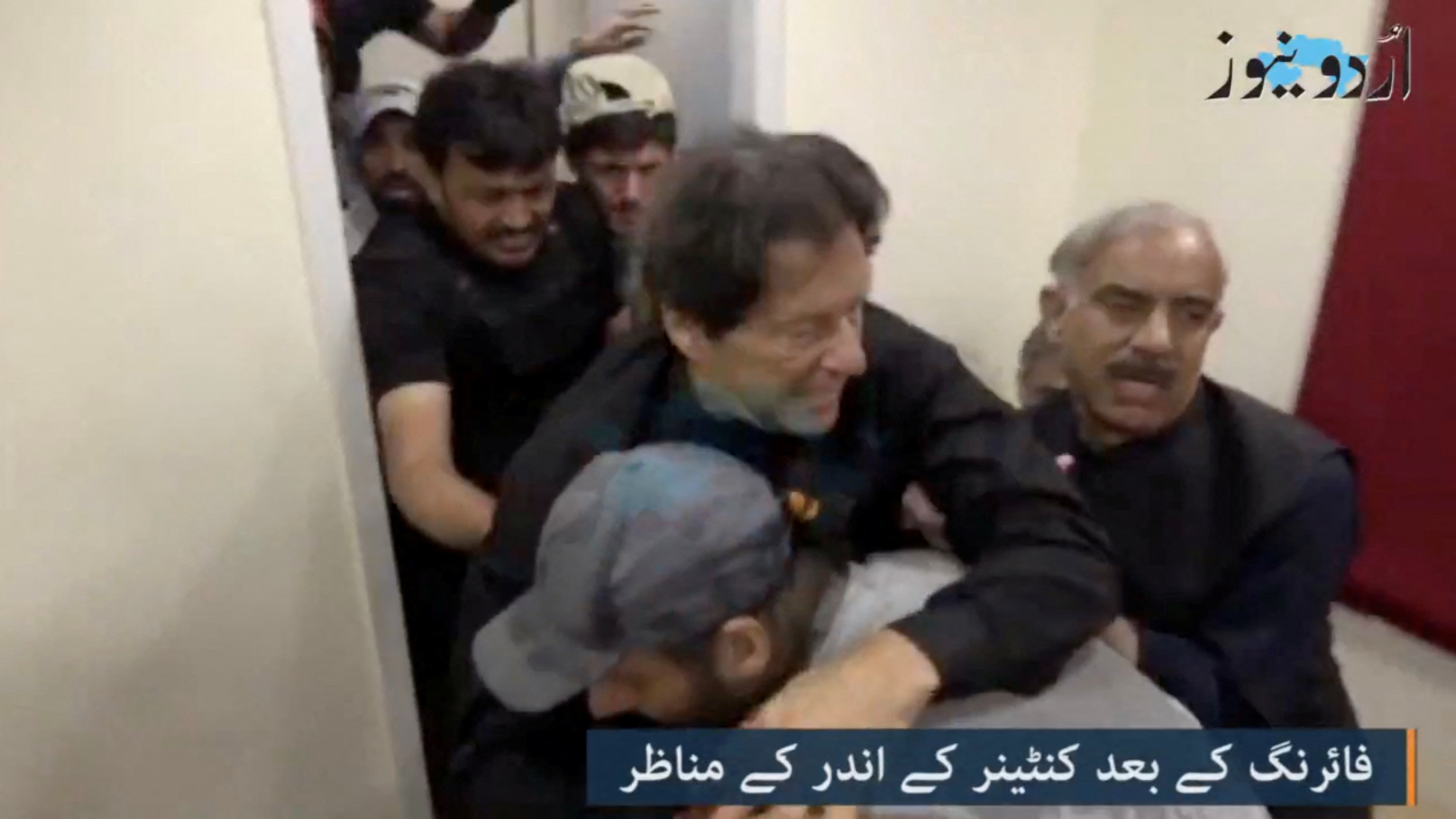
Former Pakistani Prime Minister Imran Khan was shot four times in both legs yesterday as he took part in a protest march supposed to end in the capital, Islamabad, calling for new elections. One of two alleged shooters, who between them killed one person and wounded at least ten, soon appeared in a confession video released by police. In it, he said he was motivated to stop Khan, whom he regarded as insufficiently pious, “misguiding the people”.
By Kyle Orton (@KyleWOrton) on 20 August 2021
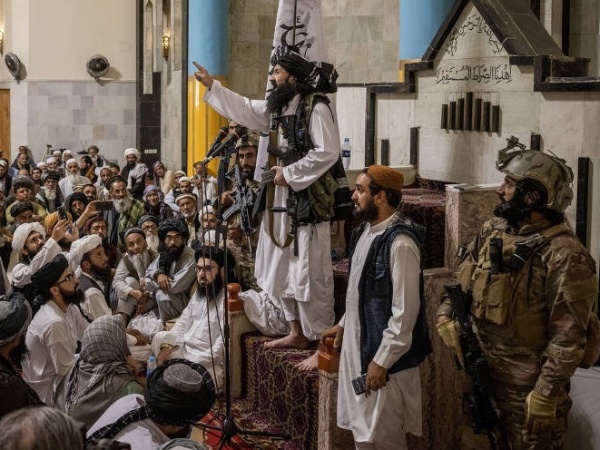
Khalil Haqqani, a senior Taliban leader and simultaneously a leader of Al-Qaeda’s Haqqani Network, leads Friday prayers at the Pul-i-Khishti, the largest mosque in Kabul, 20 August 2021
When the Taliban swept into the capital of Afghanistan on Sunday, little of the coverage focused on Pakistan and yet that was where this victory was made. This is a pattern that has persisted throughout the war. Continue reading
By Kyle Orton (@KyleWOrton) on 16 August 2021
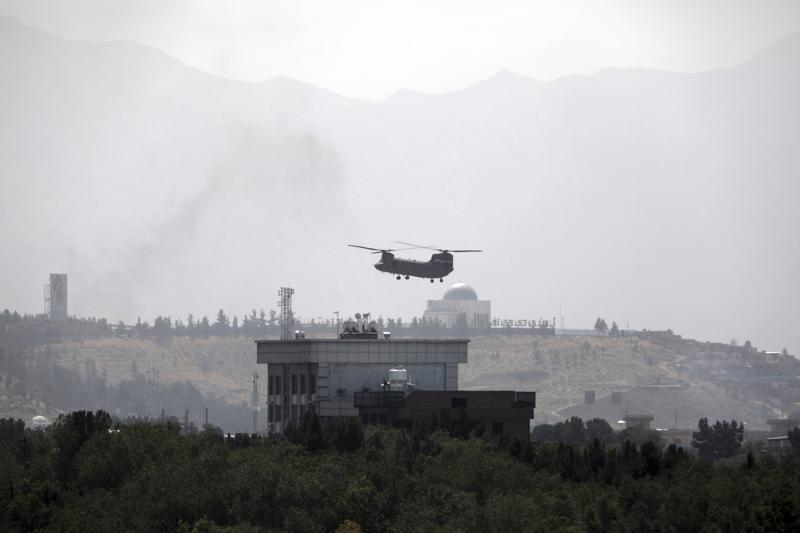
The Taliban took over Afghanistan’s capital on Sunday after a nine-day offensive captured one provincial capital after another. The United States had already decided to abandon the country, and without the US the other NATO states had no choice but to leave. It was quite clear that the Afghan state would crumble in the absence of a Western presence, though it seems President Joe Biden thought he would have a longer “decent interval” before the Saigon evacuation scenes and the massacres began. Continue reading
By Kyle Orton (@KyleWOrton) on 12 August 2021
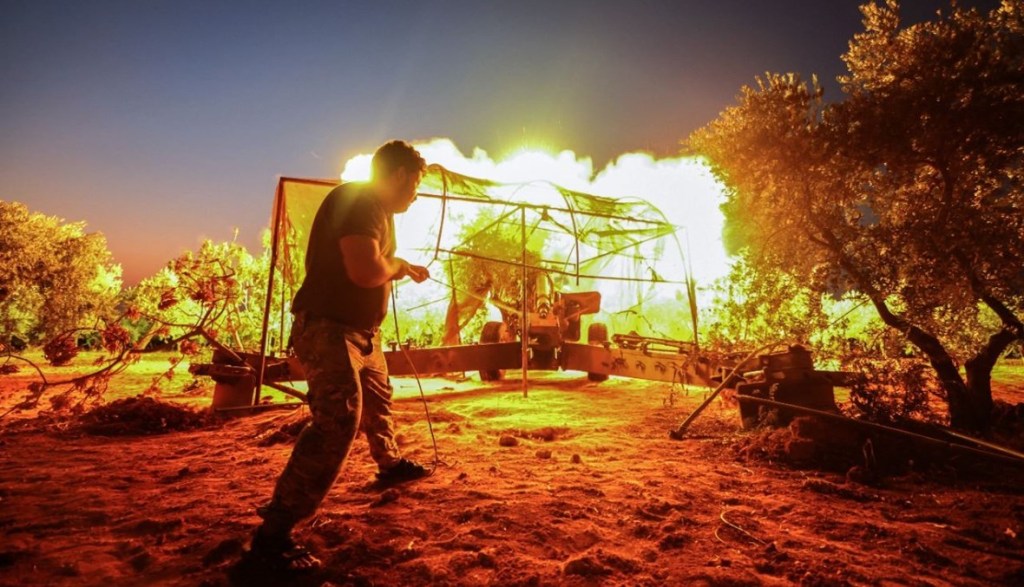
In early July, President Joe Biden confirmed his intention to withdraw all American troops from Afghanistan by September 2021. Biden cited a February 2020 U.S. “agreement” with the Taliban that he had “inherited” from the Trump administration. In truth, President Donald Trump had made no agreement. He had already begun pulling troops out by October 2019 and signed a fig leaf to cover his unconditional withdrawal.
Biden reassessed other Trump policies and could have reassessed this one, not least since the Taliban were in violation even of their vague paper promises — most notably on their commitment to deny space to al Qaeda and negotiate peace in good faith. The truth is that Biden is ideologically committed, as Barack Obama and Trump were, to ending American involvement in “forever wars.” Regardless, this does not mean those wars end or the threats that drew the United States in actually go away. Continue reading
By Kyle Orton (@KyleWOrton) on 7 June 2021

The Idea of Central Europe: Geopolitics, Culture and Regional Identity (2018), by Otilia Dhand, is an engaging and rather ambitious book, a work of intellectual history. Dhand’s core argument is that from the introduction of the term “Central Europe” in the nineteenth century, it did not describe a set geographical zone and the definition was always contested since the term was an attempt to construct local identities, a self separate from some other, as an instrument in the pursuit of geopolitical interests, always revisionist: these were attempts to will something into existence by influencing political behaviour. Continue reading
A version of this article was published in The Arab Weekly
By Kyle Orton (@KyleWOrton) on 24 November 2019
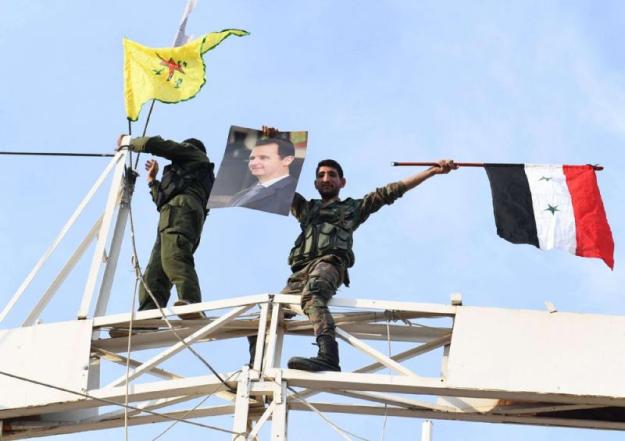
Solider from the Syrian regime holds up a portrait of Bashar al-Asad and a Syrian national flag, another stands by the Kurdish YPG/PKK flag, in Kobani, 18 October 2019. (AFP)
Mustafa Bali, head of the press office for the Syrian Democratic Forces (SDF), the coalition partner against the Islamic State (ISIS) in Syria, sent a tweet on November 14 showing Turkey’s Arab proxies engaged in “ISIS chants.” By this, he meant the takbir, “God is Great,” an expression used by Muslims every day. When criticised, Bali doubled down and blocked many critics. This was a microcosm of one of the darker threads in an SDF messaging strategy that is among the most effective propaganda campaigns on record. Continue reading
By Kyle Orton (@KyleWOrton) on 19 November 2019

President Barack Obama meeting President-elect Donald Trump, 10 November 2016 [image source]
This article was published at The New Turkey
By Kyle Orton (@KyleWOrton) on 1 October 2019
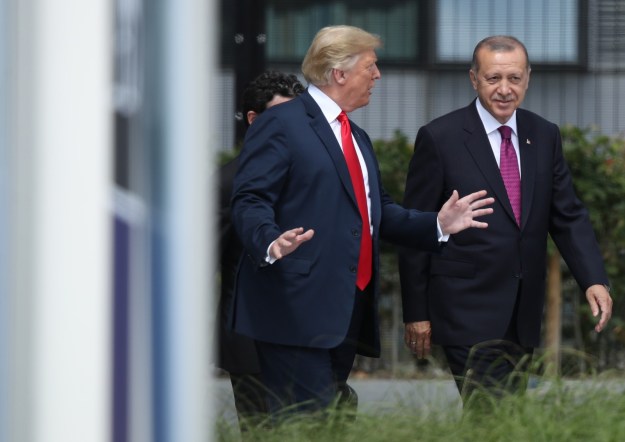
U.S. President Donald Trump and Turkish President Recep Tayyip Erdogan at the opening ceremony of the NATO Summit in Brussels, July 2018 // Getty Images
Turkey’s President Recep Tayyip Erdogan had said earlier in September that he would discuss the problems between Turkey and the United States when he met with the U.S. President Donald Trump on September 25, as part of his trip to New York for the opening of the United Nations General Assembly. But neither side has revealed what was discussed and if anything was resolved. Continue reading
By Kyle Orton (@KyleWOrton) and Rob Clark (@RobertClark87) on 26 July 2019
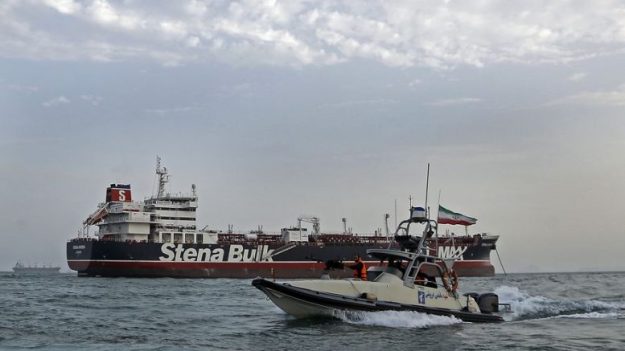
A speedboat and a helicopter of the Iran’s Islamic Revolutionary Guards Corps Navy move around a British-flagged oil tanker Stena Impero, 21 July 2019. (Hasan Shirvani/Mizan News Agency via AP)
The series of provocations in the Gulf by the Islamic Republic of Iran, beginning with the sabotage of four vessels in mid-May, culminated last Friday in the illegal seizure by the Iranian Revolutionary Guard Corps Navy (IRGCN) of the British-flagged and operated Stena Impero oil tanker, followed shortly thereafter by the seizure of the Liberian-flagged, British operated MV Mesdar in the Strait of Hormuz. Only the Mesdar has been released. This episode has served to demonstrate the serious defence issues confronting Boris Johnson, the incoming United Kingdom (UK) Prime Minister, which have to be dealt with immediately and cannot be pushed off into the future when the domestic turbulence over Brexit has abated. Continue reading

