By Kyle Orton (@KyleWOrton) on 5 October 2026
Gilles Veinstein was a leading historian of the Ottoman Empire, the director of studies at the École des Hautes Études en Sciences Sociales (EHESS) from 1986 and the Holder of the chair of Turkish and Ottoman History at the Collège de France from 1999. He held both posts until his death in 2013. In April 1995, amid the controversy in France over the attempt to prosecute Bernard Lewis for refusing to agree that the 1915-16 Armenian massacres were the same as the Nazi Holocaust of European Jewry, Veinstein wrote an article for L’Histoire, ‘Trois Questions sur un Massacre’, reviewing the evidence for the claim that what happened to the Armenians in the Ottoman Empire during the First World War resulted from a deliberate genocidal plan by the Ottoman government. A translation of the article is given below.
_________________________________________
Three Questions about a Massacre
By Gilles Veinstein
April 1995
L’Histoire
To begin with, nothing could be further from the truth than the persistent assumption that Turks and Armenians had been hereditary enemies for centuries. For a section of a people that had experienced many other forms of foreign rule, coming under Ottoman domination meant incorporation into an empire encompassing multiple faiths and ethnicities. Certainly, this empire was dominated by a Muslim ruling class, itself highly cosmopolitan, but its Christian and Jewish subjects enjoyed the status of dhimmi (“protected unbelievers”). The Armenians were no exception to this general situation. Any notion of racism was absent from the rulers’ dealings with their dhimmi: indeed, if one of them converted to Islam, nothing any longer distinguished him from other Muslims.
Irreconcilable antagonisms would nevertheless arise, but they would be national in character. This also meant that the hostility that subsequently developed would, by its nature, be mutual rather than one-sided. Moreover, this antagonism emerged only relatively late: while other Christian peoples of the empire began rebelling as early as the seventeenth century, the Armenians remained, in Ottoman eyes, the quintessential “loyal” community. They would be the last of the sultan’s Christian subjects to embark on a national struggle. But they did so in the late 1870s, when the loss of European possessions, following the Treaty of Berlin (1878) and its aftermath, was already far advanced, and the Asian territories were consequently coming to be seen increasingly as the last refuge of Ottoman power. Yet the claims of nascent Armenian nationalism encompassed a substantial part of this “sanctuary”. And although the desire for independence was not always explicitly acknowledged at first—there was talk of “reforms” and, above all, autonomy—that was clearly the ultimate objective.
These claims extended to the six vilayets in northeastern Asia Minor corresponding to historical “Greater Armenia”, as well as Cilicia, or “Lesser Armenia”. These regions undoubtedly still contained many Armenian peasants whose presence dated back to time immemorial, but nowhere in Anatolia at this time did Armenians retain a demographic majority. They lived alongside more numerous Muslims: Turks, Kurds, or refugees displaced by the Russian advance in the Caucasus or the Ottoman retreat in the Balkans. And when these national aspirations took the form of terrorism, they widened the gulf between the two communities.[1]
EVIDENCE AND TESTIMONY
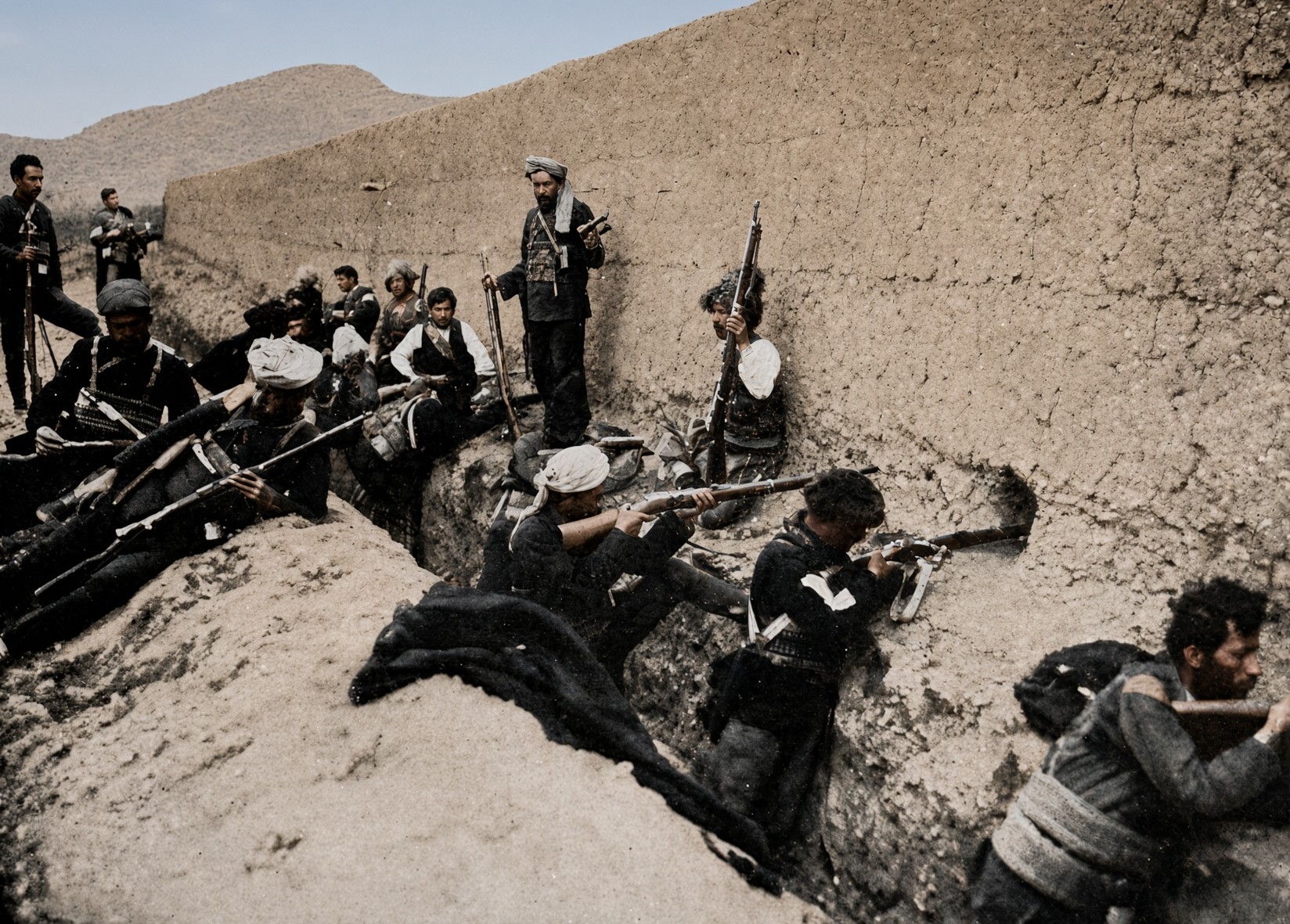
On 1 June 1915, the Ottoman government, then controlled by the Committee of Union and Progress (CUP), which had been brought to power by the “Young Turk” revolution of 1908, ordered the transfer of Armenians from central and eastern Anatolia to Syria, still an Ottoman possession at the time. The measure did not encompass all Ottoman Armenians: those in Istanbul and Izmir were excluded, as, of course, were those in Syria. The “Young Turk” government was then embroiled in the First World War and in a very precarious position. The Armenians had formed seven volunteer units fighting alongside the Russian army. Armenian populations had also risen in revolt in Anatolia, notably at Van in the northeast and at Zeitoun in Cilicia.[2]
An immense number of Armenians perished during these transfers. This tragedy resulted from a multitude of events that unfolded in different places in 1915 and 1916, in which the horror took widely varying forms. Hardship, malnutrition, poor hygiene and epidemics account for some of the deaths,[3] but due weight must also be given to the massacres, which constitute clear cases of crimes against humanity. These arose from the settling of scores between communities—in which the active participation of Kurds, as well as Turks, must be noted—from raids to plunder the convoys, and also from the actions of the soldiers responsible for supervising them. Moreover, it is indisputable that, in at least some cases, the crimes were perpetrated with the open or tacit cooperation of the local authorities.
Neither the reality of the massacres nor even their scale is questioned by anyone, including in Turkey. In fact, the controversy concerns three principal issues of very different kinds. First, the figure of one and a half million victims, inscribed on the memorial in Marseille and repeated as a matter of ritual, is now rejected by many historians, whether or not they share the official Turkish interpretation. The American demographer Justin McCarthy, for example, whose estimate is far from the lowest, puts the entire Armenian population of Anatolia on the eve of the world war at no more than one and a half million. Taking the number of survivors into account, he estimates that approximately 600,000 Armenians perished in Anatolia in 1915—nearly half the community.[4]
Second, very large numbers of Muslims also fell victim throughout the war, both to the fighting and to actions directed against them by Armenians amid ethnic and national rivalry.[5] If there are forgotten victims, these are surely they, and Turks today are entitled to criticise the partiality of Western opinion in this respect. Are these victims neglected because they were merely Muslims, or because it is implicitly assumed that the eventual success of their fellow Muslims deprives them of the status of martyrs? How would we view the same events if matters had turned out differently—if the Armenians had ultimately established an enduring state in Anatolia amid the Ottoman ruins?
But the final issue in the debate, crucial because of its legal and political implications, is whether the massacres of Armenians were carried out on the orders of the Young Turk government: whether the transfers were merely a pretext for a systematic campaign of extermination, carried out by various means but decided upon, planned and directed at government level; or whether the Young Turks were guilty only of recklessly initiating population movements that ended in mass death. Merely asking the question may seem absurd and scandalous. It is true that state involvement is a prerequisite for fully applying to the Armenian tragedy the term “genocide”, as coined in 1944 and defined by the Nuremberg trials and the United Nations Convention of 1948.
Yet it must be acknowledged that we have, to date, no evidence of this governmental involvement. The documents presented by the Armenians—orders from Interior Minister Talat Pasha and other senior Ottoman officials explicitly ordering the massacre of Armenian men, women and children—known as the “Andonian documents” after their publisher, were nothing but fakes [n’étaient que des faux], as historical scrutiny subsequently demonstrated.[6] Certainly, the indictment of the court martial convened in Istanbul in 1919 to try the Young Turk leaders after their fall contains damning accusations against their “special formations” [i.e., the Special Organisation], whose victims allegedly included not only Armenians but others, including Turks themselves. These specific accusations cannot be ignored, but neither can they be taken at face value, given the highly political nature of the trial: it was brought against a revolutionary government that had led the country to disaster by its opponents, who had succeeded it in power and were, moreover, under Allied control.[7] McCarthy puts the number of Muslim victims, predominantly Turks, at two and a half million over the entire period of warfare in Anatolia from 1914 to 1922, including one million in the area of the “Armenian vilayets” alone.
In the absence of decisive evidence, historians defending the Armenian interpretation point to various contemporary accounts from survivors, diplomats and foreign missionaries of different backgrounds. These are far from negligible and, at their best, are indeed irreplaceable. Nevertheless, every rigorous historian understands the limitations of testimony, which is all the more likely to express a partisan viewpoint in a context of widespread conflict.[8]
MORE THAN A THOUSAND COURT-MARTIAL CONVICTIONS
Moreover, whatever indications of Ottoman government involvement one believes can be drawn from these accounts, it remains necessary to explain how, at the same time, the authorities in Istanbul condemned abuses against Armenians, prohibited their recurrence and brought the perpetrators before courts martial. We know of 1,397 cases in which Ottoman officials were convicted of crimes against Armenians, including some death sentences.[9] In the Harput region in particular, where, according to the American consul Leslie A. Davis, terrible violence against Armenians was committed with the approval of the governor, who claimed to be acting on orders from the capital,[10] 233 court-martial proceedings were brought against Ottoman officials accused of crimes against Armenians, resulting in convictions.[11] The Dutch historian Erik Zürcher offers an explanation for these apparent contradictions: although personally convinced that an inner circle within the CUP, rather than the government, was involved in the extermination, he nevertheless observes that proving this “beyond all doubt” is difficult, if not impossible.[12]
A historian can only underline the persistent tendency of advocates of the Armenian cause to isolate the tragedy whose memory they defend from its wider historical context, stripping it of its concrete realities and turning it from what it was—a historical catastrophe involving multiple responsibilities—into a mythological scene: an assault by the forces of evil upon the forces of good, outside all time and space. This framework is accepted uncritically by most of our fellow citizens, including those in the media and political circles, who are often far removed from the admittedly complex and distant historical and geographical realities from which it has been severed. Building upon longstanding ignorance and prejudices, this framework generates a real anti-Turkish racism, as unacceptable—need it be said?—as any other form of racism.
Gilles Veinstein is a historian and director of studies at the EHESS, he has devoted numerous books and articles to the earlier history of the Ottoman Empire, from the fifteenth to the eighteenth centuries, notably State and Society in the Ottoman Empire (London: Variorum, 1994).
_________________________________________
NOTES
[1] Armenians themselves sometimes denounced the responsibility of their leaders, as Arshag Tchobanian did in “Badaskhanaduoutiunnere” (“Responsibilities”), Anahid, vol. 1, no. 3, January 1899.
[2] This is how Boghos Nubar, head of the Armenian National Delegation, presented Armenian participation in the war to the Versailles Peace Conference in 1919: “Since the beginning of the war,” he said, “the Armenians have fought alongside the Allies on every front. (…) The Armenians were de facto belligerents, since they indignantly refused to side with Turkey…” (The Times, London, 30 January 1919, p. 10).
[3] All population movements undertaken under wartime conditions in Anatolia resulted in very heavy losses, even in the absence of any hostile intent. During the retreat from Marash in the winter of 1920, for example, French troops were accompanied by 5,000 Armenians, of whom 2,000–3,000 died along the way. See Georges Boudière, “Notes sur la campagne de Syrie-Cilicie. L’affaire de Maras (janvier-février 1920)” [“Notes on the Syria–Cilicia Campaign: The Marash Affair (January–February 1920)”], Turcica, IX/2–X, 1978, p. 160.
[4] Justin McCarthy, Muslims and Minorities: The Population of Ottoman Anatolia and the End of the Empire, NYU Press, 1983. The same author also wrote an important article, “The Anatolian Armenians, 1912–1922”, in Armenians in the Ottoman Empire and Modern Turkey (1912–1926), Boğaziçi University, Istanbul, 1984.
[5] Kara Schemsi, Turcs et Arméniens devant l’histoire [Turks and Armenians in the Light of History], Geneva, 1919; Documents relatifs aux atrocités commises par les Arméniens sur les populations musulmanes [Documents Concerning Atrocities Committed by Armenians against Muslim Populations], Constantinople, 1919; General Mayéwski, Les Massacres d’Arménie [The Massacres in Armenia], Saint Petersburg, 1916; Christopher Walker, Armenia: The Survival of a Nation, London, 1981. Although firmly pro-Armenian, this last work is very revealing about the scale of Muslim losses.
[6] Sinasi Orel and Sureyya Yüca, The Talât Pasha Telegrams: Historical Facts or Armenian Fiction?, London, 1986; Türkkaya Ataöv, The Andonian “Documents” Attributed to Talat Pasha Are Forgeries, Ankara, 1984.
[7] Moreover, the Armenian translation of the Ottoman text of this indictment, published by Haigazn K. Kazarian, is highly tendentious in several places. Another trial was organised two years later in Malta by the British against some 150 Ottoman political and military prisoners, but the case was dismissed.
[8] It has thus been demonstrated how an account frequently cited and presented as “neutral” can yield a rather instructive exercise in source criticism: Heath W. Lowry, Les Dessous des Mémoires de l’ambassadeur Morgenthau [The Story behind Ambassador Morgenthau’s Memoirs], Isis, Istanbul, 1990.
[9] Kamuran Gürün, Le Dossier arménien [The Armenian File], Triangle, 1984. This aspect of the official Ottoman response, supported by numerous previously unpublished Ottoman documents of the most explicit kind, is a major contribution of this book. It cannot be disregarded solely on the grounds that the book is supposedly an “unofficial” Turkish publication with official backing.
[10] La Province de la mort [The Province of Death], Paris, 1994.
[11] The editors of this consul’s memoirs, recently translated into French, take care not to mention this aspect revealed by the Ottoman archives. Admittedly, systematic bias in the selection of sources unfortunately admits of few exceptions among Armenian historians—even fewer than among Turkish historians—as illustrated, for example, by the collection of studies cited above, published by Boğaziçi University in Istanbul.
[12] Erik J. Zürcher, Turkey: A Modern History, New York, 1993.


I love the chapter from Lewis’ book.
In the 4 points at the top of page 291, Lewis seems to suggest a mispronunciation of the term from Orwell’s 1984 as the … “Ministry of Tooth” … (meaning fangs.)
LikeLike