Published at The Arab Weekly
By Kyle Orton (@KyleWOrton) on 20 January 2019

Satellite pictures before and after Israel’s attack on an Iranian weapons cache in Damascus, January 2019 [source]
Published at The Arab Weekly
By Kyle Orton (@KyleWOrton) on 20 January 2019
Satellite pictures before and after Israel’s attack on an Iranian weapons cache in Damascus, January 2019 [source]
By Kyle Orton (@KyleWOrton) on 17 January 2019

Forty years ago yesterday, Muhammad Reza Pahlavi, the Shah (King) of Iran, left his country for the last time as a year-long revolution crested. A month later, the remnants of the Imperial Government collapsed and Grand Ayatollah Ruhollah Khomeini was swept to power after his long exile, establishing the first Islamist regime. Andrew Scott Cooper’s 2016 book, The Fall of Heaven: The Pahlavis and the Final Days of Imperial Iran, charts how this happened. Continue reading
Published at the New York Post
By Kyle Orton (@KyleWOrton) on 10 January 2019
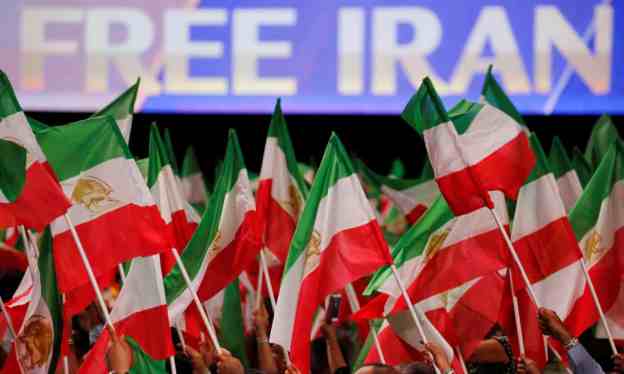
Rally for MEK in Villepinte, near Paris, in June 2018. Photograph: Regis Duvignau/Reuters
The nuclear deal was supposed to chart a new course for Iran. But the Tehran regime remains as it ever was, including when it comes to committing acts of terror in Western homelands. Just don’t expect Europe to reconsider its policy of preserving the nuclear deal at any cost. Continue reading
By Kyle Orton (@KyleWOrton) on 12 December 2018

© AP Photo / Jim Hollander, Pool
Essay: “Zionism is Making Us Stupid”: The Russian Relationship with Israel from the Soviets to Putin Continue reading
By Kyle Orton (@KyleWOrton) on 9 December 2018
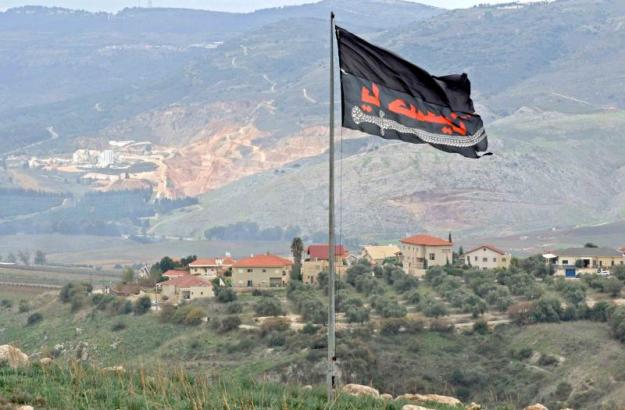
Large black flag with the words “Oh, Husayn” flies near the Lebanon-Israel border (5 December, AFP)
Israel announced an operation to “destroy the threat of the terror tunnels” into northern Israel from Hezbollah, the Levantine branch of Iran’s Islamic Revolutionary Guard Corps (IRGC) in southern Lebanon. Continue reading
Published at The Arab Weekly
By Kyle Orton (@KyleWOrton) on 27 November 2018
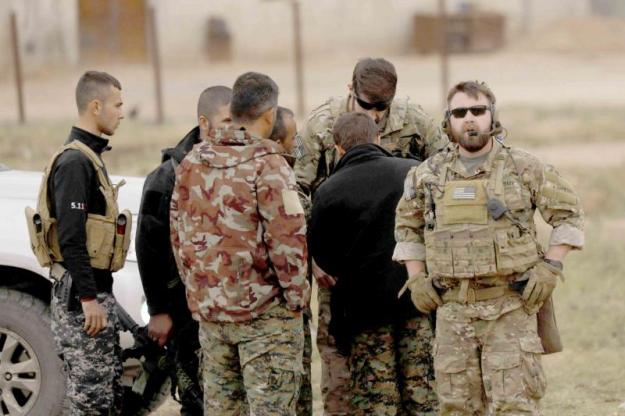
U.S. forces and members of the “Syrian Democratic Forces” (SDF) patrol Al-Darbasiya in northeastern Syria, 4 November 2018. (AFP)
Despite the change of rhetoric between US Presidents Barack Obama and Donald Trump, the United States has continued to lose influence, political and military, in the Middle East to the Iran-Russia axis. Continue reading
By Kyle Orton (@KyleWOrton) on 20 November 2018
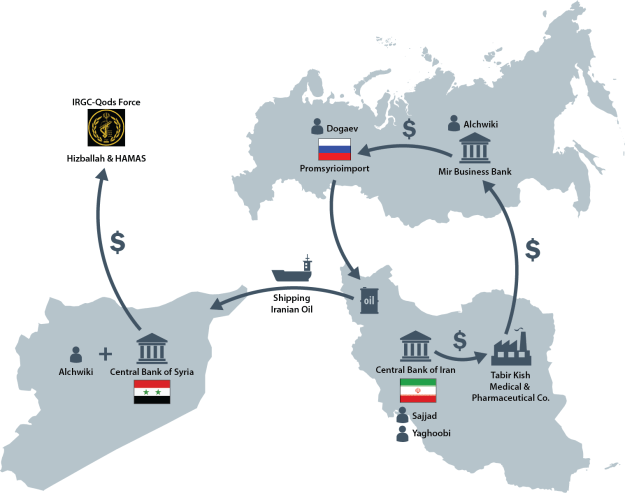
Visual representation of the Alchwiki Network (source: U.S. Treasury)
The United States Treasury Department’s Office of Foreign Assets Control (OFAC) sanctioned ten targets today, targeting an “international network through which the Iranian regime, working with Russian companies, provides millions of barrels of oil to” Bashar al-Assad’s regime in Syria, and “[t]he Assad regime, in turn, facilitates the movement of hundreds of millions of U.S. dollars (USD) to the Islamic Revolutionary Guard Corps-Qods Force (IRGC-QF),” the expeditionary wing of Tehran’s spy-terrorist apparatus, “for onward transfer to HAMAS and Hizballah.” Continue reading
By Kyle Orton (@KyleWOrton) on 5 September 2018
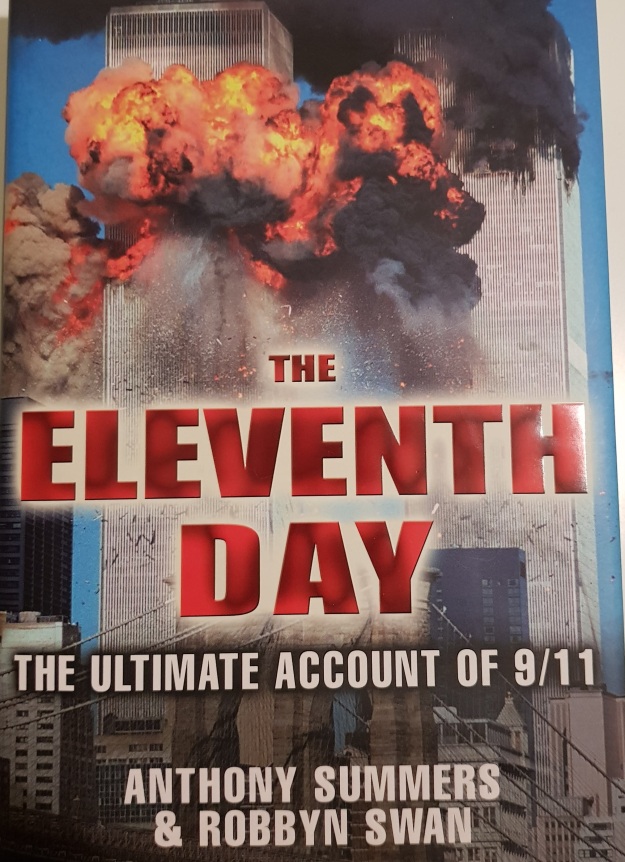
In less than a week, it will be the seventeenth anniversary of al-Qaeda’s “Plane’s Operation”, the assault on the United States. It is a vertiginous enough reflection that many of us have been alive more years since 11 September 2001 than before it, and positively alarming that many of those who will soon move into the government, media, and other leading societal institutions will have been born after an event that still shapes so much of the international scene. As Anthony Summers and Robbyn Swan put it in The Eleventh Day: The Ultimate Account of 9/11 (2011), we are left with “the brief name ‘9/11’,” the context and meaning stripped away all this time later. The book is a useful overview of an event that should always be to some degree fresh in mind, though it is not without its problems in its analytical sections. Continue reading
By Kyle Orton (@KyleWOrton) on 21 August 2018
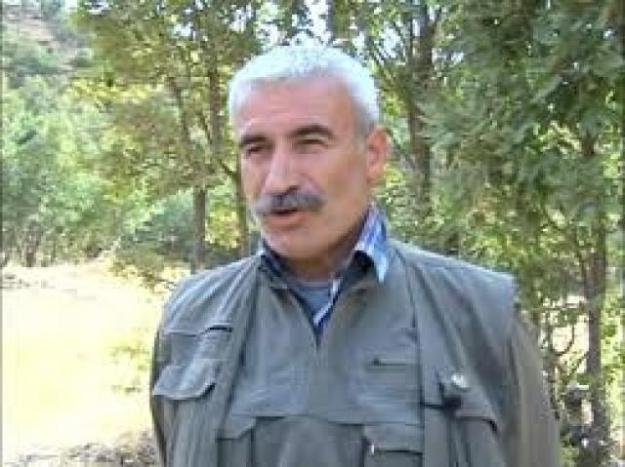
Ismail Özden (image source)
Turkey killed a senior operative of the Kurdistan Workers’ Party (PKK), the internationally-recognised terrorist organisation and narcotics trafficking entity that has been at war with the Turkish state since 1984, in Iraq last week. Turkey launched a wave of airstrikes against PKK targets in Syria and Iraq in April 2017 and for the last several months Ankara has been widening its campaign against the PKK outside Turkey’s borders, particularly in Iraq, where the PKK is not protected by the United States, as it is in eastern Syria. Having feinted in June toward an attack on the historic PKK headquarters in the Qandil Mountains—a somewhat symbolic target at this stage, with the bulk of the PKK’s leadership and resources in Syria—it appears the Turks have opted for a more targeted approach.
This operation underscores the continuance of U.S.-Turkey relations, and the mutual benefits of the relationship, even in its current damaged state, where both sides have a laundry list of legitimate grievances with the other. If a formula for normalisation can be found, the potential to contain and weaken some of the worst, most destabilising elements in the region, saliently the PKK and the Iranian regime, is within reach. Continue reading
A version of this article was published in The Arab Weekly
By Kyle Orton (@KyleWOrton) on 3 August 2018
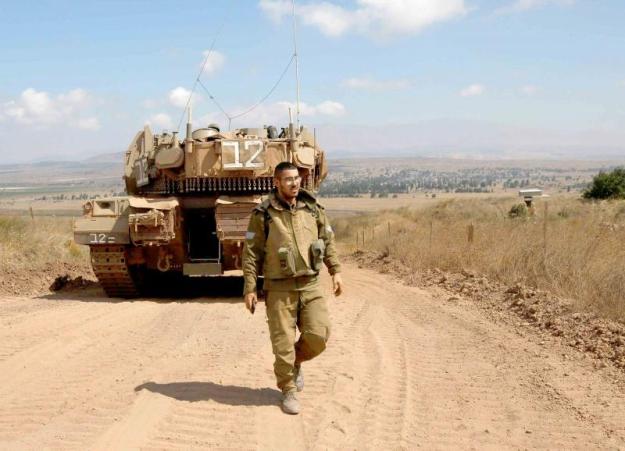
An Israeli Merkava tank patrols on the border between Israel and Syria, on 20 July 2018. (AFP)
Israel has been conflicted on the Syrian rebellion: some saw Bashar al-Assad’s reliance on Iran and thus favoured his departure; some, especially once the uprising militarized and jihadi-Salafists made their appearance among the insurgents, favoured a let-them-both-lose policy; and some saw the risk of chaos and jihadists and preferred to stick with what they knew.
The official Israeli policy, stated in the early months of the protests, was to side with the people “demonstrating for freedoms” since “the devil we know in Syria [i.e. Assad] is worse than the devil we don’t”. Continue reading
 Kyle Orton's Blog