Category Archives: Iran

When Iran Saved Al-Qaeda

By Kyle Orton (@KyleWOrton) on 24 January 2018
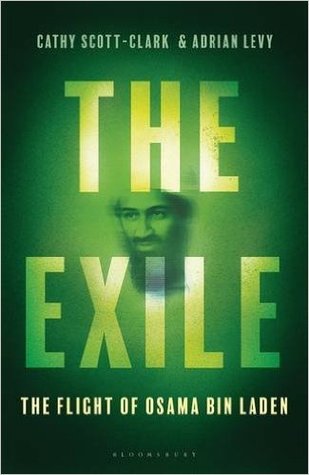
The new book by the investigative journalists Adrian Levy and Catherine Scott-Clark, The Exile: The Flight of Osama bin Laden, charts the career of al-Qaeda’s founder, Osama bin Laden, up to the day he became a household name—11 September 2001—through his downfall in 2011, to the end of 2016, when al-Qaeda was more powerful than ever. It is a thoroughly absorbing account, bringing to light vast tranches of new facts, including many intricate details of how al-Qaeda operated on a human, day-to-day level, and of those states and para-states that shielded the terror network, collaborated with it, and enabled it—and still do.

The gathering of the Bin Laden network in Sudan and then in the Taliban-held areas of Afghanistan in the 1990s is a familiar story, but the splits and debates among the Arab jihadists around Bin Laden, including the opposition of significant numbers of them to the 9/11 massacre, is perhaps less well known. The authors trace out how Bin Laden manipulated his own quasi-institutions to get his way. First, Bin Laden took on the plan of a man, Khalid Shaykh Muhammad (KSM), who was not even a member of al-Qaeda, and then, ahead of the crucial vote, packed the shura (consultation) council with ultra-zealous Egyptians by engineering a merger between al-Qaeda and Islamic Jihad, led by Ayman al-Zawahiri. Continue reading

What The West Can Do About The Iran Protests

By Kyle Orton (@KyleWOrton) on 2 January 2018

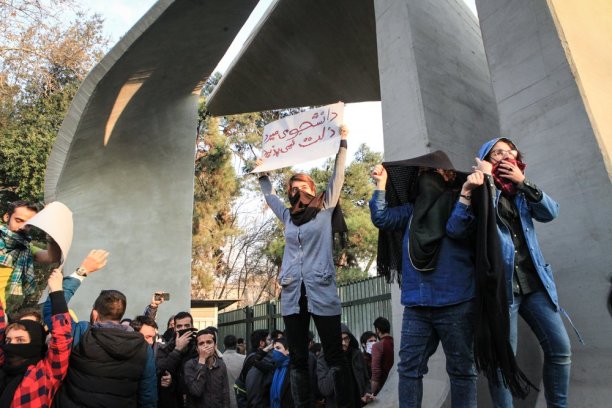
Protests in Tehran, Iran, 30 December 2017. (Photo by Stringer/Anadolu Agency/Getty Images)

Protests broke out against the Iranian government on 27 December, and have achieved a wider geographic spread in the country than even the massive uprising of June 2009, reaching into religiously conservative, working-class towns and districts traditionally regarded as pro-regime. It is likely these demonstrations will be suppressed, but that does not obviate the need for Western policy. To the contrary, the protests exposed several flawed assumptions in recent policy-making, and a course correction is urgently necessary. Continue reading

Further Details Emerge of Obama’s Failed Iran Policy

Published at The New Arab.

By Kyle Orton (@KyleWOrton) on 21 December 2017

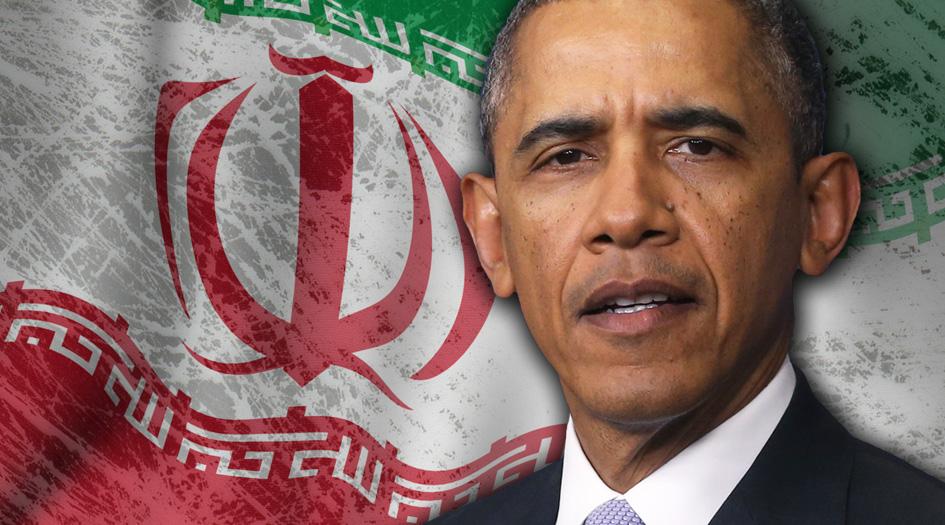
A widely reported, 15,000-word article by Josh Meyer in Politico on Sunday moves us another step closer to finding out the actual terms of President Barack Obama’s nuclear deal with the Islamic Republic of Iran.

Though the Obama administration sold the Iran deal on the narrowest possible terms as an arms control agreement, the reality was that this agreement was intended to facilitate a strategic tilt in Iran’s favour—against traditional allies—that left a regional balance requiring less American commitment.

Because the administration wanted the paper agreement, Iran had the leverage to threaten to walk away, and was therefore appeased on multiple fronts ostensibly unrelated to the nuclear issue.

Continue reading

A Year In, Trump’s Syria Policy Looks A Lot Like Obama’s

Originally published at Ahval

By Kyle Orton (@KyleWOrton) on 18 December 2017

Nearly a year into Donald Trump’s administration, the president has followed the track laid down by his predecessors in Syria, accelerating it in some cases, and reinforcing the negative trends of Barack Obama’s defective policy that will undo even apparent successes, like the destruction of the Islamic State’s (ISIS) “caliphate”. Continue reading

Iran Claims to “Defeat” the Islamic State in Syria, a “Dangerous Conspiracy” by America and Israel

By Kyle Orton (@KyleWOrton) on 22 November 2017

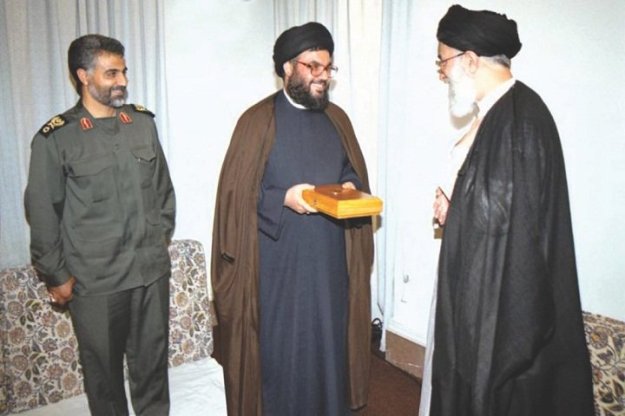
Qassem Sulaymani, Hassan Nasrallah, Ali Khamene’i (c. 2000)

The leader of the Quds Force, the expeditionary unit of Iran’s Islamic Revolutionary Guard Corps (IRGC), Qassem Sulaymani, sent a public letter to Iran’s Supreme Leader, Ali Khamene’i, on 21 November. Sulaymani’s letter followed the apparent expulsion of the Islamic State from its last urban stronghold in Syria, al-Bukamal, on 19 November, by Quds Force-led troops—foreign Shi’a jihadists and the battered remnants of Bashar al-Asad’s army. Sulaymani informs Khamene’i that in overcoming the Islamic State and its caliphate, a “U.S.-Zionist-made” terrorist entity has been defeated. Sulaymani’s letter is reproduced below, with some noteworthy sections highlighted in bold. Continue reading

By Strengthening Iran, the Coalition Has Ensured the Islamic State’s Survival

Published at The Telegraph

By Kyle Orton (@KyleWOrton) on 6 October 2017

The “defeat” of the Islamic State (ISIL), signified by its eviction from Mosul in July, its impending loss of Raqqa, and an apparent resurgence of Bashar al-Assad’s regime in Syria, seemed to augur a new era of stability for the Middle East. The jihadists would be gone and Iranian-backed governments in Syria and Iraq consolidated.

True, Assad murdering those who resisted him with poison gas and concentration camps, and hiding the evidence by installing crematoria, would nag at our conscience. But foreign policy is a cold-blooded business and it has been decreed that ISIL is the greatest—really the only—threat emanating from the region.

It would not be justice, but it would be peace. Or something like that. Continue reading

Iran Raises the Stature of One of Its Shi’a Jihadist Militias: Harakat Hizballah al-Nujaba

By Kyle Orton (@KyleWOrton) on 22 September 2017

Logo of Harakat Hizballah al-Nujaba

Reuters has published a profile of Harakat Hizballah al-Nujaba (HHN), sometimes simply called Harakat al-Nujaba, a Shi’a militia made up of Iraqi citizens that is loyal to Iran’s Supreme Leader Ali Khamene’i and the revolutionary theocracy’s ideology of absolute wilayat al-faqih (guardianship of the jurist). HHN, which first emerged in the summer of 2013, is one of a web of overlapping Shi’a jihadist groups recruited from Iraq, Afghanistan, Pakistan, and beyond—as far afield as the Ivory Coast—that have been used to spearhead Tehran’s imperial push into the Arab world, particularly the rescue of Bashar al-Asad’s regime in Syria that would otherwise have fallen to a popular rebellion. In recent months, Iran has been raising the profile of HHN. Continue reading

Coalition Risks Replacing the Islamic State With the Islamic Republic

By Kyle Orton (@KyleWOrton) on 14 September 2017

By recent reports, one could easily come away with the impression that war and instability across the Fertile Crescent are winding down. Predictions about what comes next, always a risky enterprise in the Middle East, are at a point of unique vulnerability. Chaos and violence for some considerable time to come look like a safe bet, though the timing and scale look more uncertain. Nonetheless, certain trendlines are visible, most clearly the emergence of a regional order, abetted by the international coalition’s campaign against the self-proclaimed Islamic State (ISIS), dominated by the Islamic Republic of Iran. Continue reading

Iran and Russia Are Using the Taliban Against the West

By Kyle Orton (@KyleWOrton) on 5 August 2017

Taliban jihadists (image source)

The New York Times reported on the growing closeness of relations between the governments in Iran and Russia, and the Taliban movement in Afghanistan, something that became especially salient earlier this year and which has been visible for at least two years. Continue reading

The Iranian Regime’s Terrorism Against the West

By Kyle Orton (@KyleWOrton) on 14 June 2017

The destroyed Marine barracks that Iran’s agents blew up in Beirut on 23 October 1983 (image source)

The United States Department of Justice released indictments on 8 June 2017 for two operatives of the jihadist terrorist organisation, Hizballah, the Lebanese branch of Iran’s Islamic Revolutionary Guard Corps (IRGC), which is tasked with exporting the Islamist revolution in Iran through terrorism, subversion, and other means. The two men, Ali Kourani of New York and Samer al-Debek of Michigan, had been arrested on 1 June, and are charged with conducting surveillance for potential future terrorist attacks in the United States.
Continue reading