Category Archives: Jihadi Output

The Structure of the Islamic State

By Kyle Orton (@KyleWOrton) on August 8, 2016

On 6 July 2016, the Islamic State’s al-Furqan Media released its first video for over a year, which was in English and was entitled, “The Structure of the Caliphate“. Continue reading

Islamic State Claims It Follows God’s Law, Jews and Christians Do Not

By Kyle Orton (@KyleWOrton) on August 1, 2016
1

The fifteenth issue of the Islamic State’s English-language magazine, Dabiq, released on 31 July 2016 contained an essay, “By the Sword,” a brief polemic that defends the Islamic State’s brutality on the basis that it is conducted according to the Word of God—laying open claim to genocide and slavery so long as it is undertaken by Muslims and not disbelievers, saying they would have felt no need to have apologized for the atomic bombing of Japan or the use of defoliants in Vietnam and would have been more thorough-going in the extermination of Native Americans and Jews, since these things are vouchsafed by the Creator. The Islamic State contends that the Jewish and Christian religious contain the same prescriptions for the forcible implementation of the Holy Law that the Qur’an does, but these monotheists have lapsed and pay more attention to the edicts of the United Nations. Continue reading

The Islamic State Explains Why It Hates The West

By Kyle Orton (@KyleWOrton) on August 1, 2016

dabiq-15-3

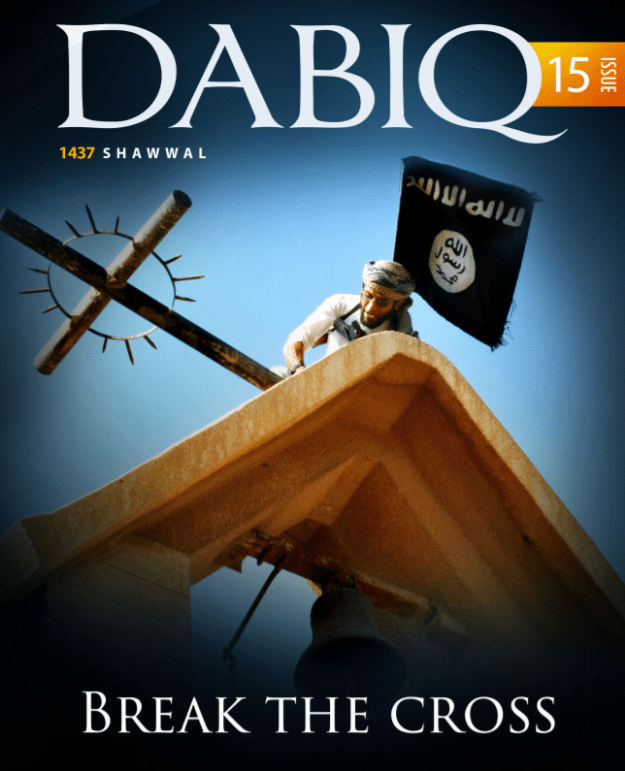
The Islamic State (IS) published its fifteenth edition of ‘Dabiq,’ its English-language magazine, on 31 July 2016. The magazine was entitled, “Break the Cross”. The magazine contained two important articles outlining why IS hates and fights against the West. The most important article, an unsigned piece by an IS operative, simply titled, “Why We Hate You and Why We Fight You”. The second, “How I Came to Islam,” was written by Umm Khalid al-Finlandiyyah, a female Finnish foreign fighter who has joined IS. Those articles are reproduced below with some editions to transliteration and some interesting sections highlighted in bold. Continue reading

Jabhat al-Nusra Claims to Dissociate From Al-Qaeda

By Kyle Orton (@KyleWOrton) on July 28, 2016

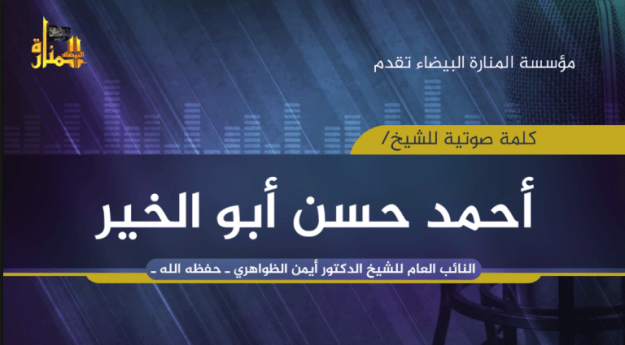
Graphic released with the speech of Ahmad Hassan (Abu Khayr al-Masri) about Jabhat al-Nusra and relations with al-Qaeda

Graphic released with the speech of Ahmad Hassan (Abu Khayr al-Masri) about Jabhat al-Nusra and relations with al-Qaeda

In advance of Jabhat al-Nusra rebranding as Jabhat Fatah al-Sham (JFS) on 28 July 2016, there were carefully coordinated media releases between al-Qaeda “central” (AQC) and al-Nusra. First, al-Manara al-Bayda (The White Minaret), al-Nusra’s media arm, released a six-minute audio speech by Abdullah Muhammad Rajab Abd al-Rahman (Abu Khayr al-Masri),[1] identified as the deputy to al-Qaeda’s leader Ayman al-Zawahiri; then there was the first ever picture of al-Nusra’s leader, Abu Muhammad al-Jolani, whose real name is Ahmad Husayn al-Shara, and shortly thereafter a video of al-Shara ostensibly severing ties with al-Qaeda; and finally the founding document for JFS was published. Continue reading

The Islamic State’s Newsletter Prepares for the End of the Caliphate

By Kyle Orton (@KyleWOrton) on June 9, 2016

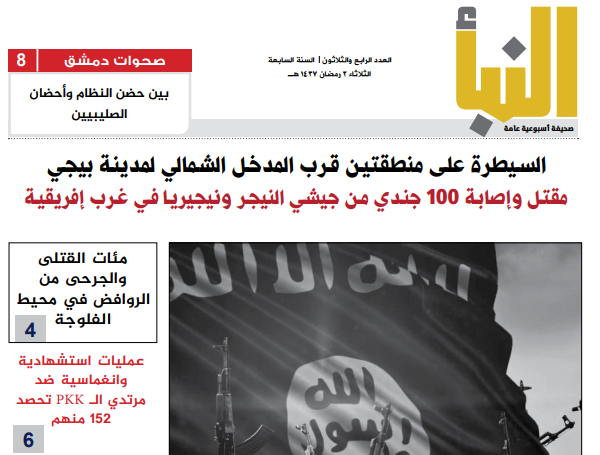
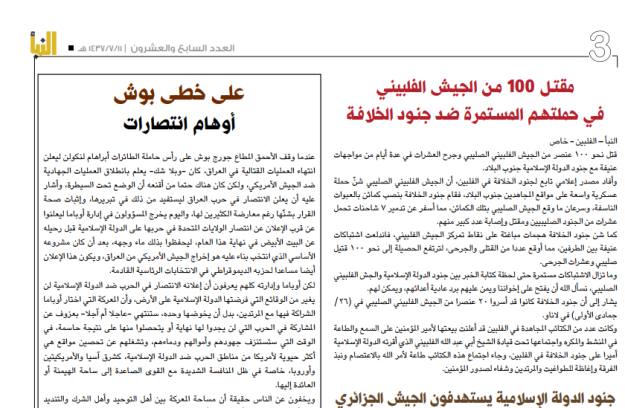
First page of the 34th edition of the Islamic State newsletter, al-Naba

The Islamic State’s (IS) spokesman, Taha Falaha (Abu Muhammad al-Adnani), gave a speech on 21 May that prepared the ground ideologically for the end of IS’s statelet and a return to the deserts where the organization survived after the surge-and-sahwa drove it from the urban zones of Iraq in 2007-08. Al-Naba, IS’s newsletter, is printed within the caliphate on Saturdays and distributed online on Tuesdays. Al-Naba’s 34th edition, published within the territories on 4 June and put on the internet on 7 June, echoed Falaha’s theme that the caliphate was a cause that would outlast the loss of territory since it was now embedded in the hearts of a generation of Muslims, and al-Naba also took a swipe at al-Qaeda and jihadi groups like Ahrar al-Sham that believe the path to an Islamist polity is bottom-up, through the building of popular consent. The Naba editorial is reproduced below with some important sections highlighted in bold.
Continue reading

The Islamic State, Territory, and a Change of Tone

By Kyle Orton (@KyleWOrton) on May 26, 2016

The Islamic State’s spokesman, Taha Falaha (Abu Muhammad al-Adnani), released a speech on 21 May that prepared the ideological ground for the loss of territory by underlining something the Islamic State has long maintained: the caliphate is more a cause than a location. This was a departure, however, from the confident messaging that the Islamic State had emphasized since it announced the caliphate in June 2014. Just a month before Falaha’s speech, on 16 April, the twenty-seventh edition of al-Naba, the Islamic State’s weekly newsletter, carried an editorial that was triumphalist about the march of the jihadists—despite the losses in the prior eight weeks, of Ramadi in early February, al-Shadadi later in February, Palmyra on 27 March, and al-Qaryatayn on 3 April. That editorial from al-Naba 27 is reproduced below. Continue reading

Islamic State Prepares for Retreat, Calls for Foreign Terrorism

By Kyle Orton (@KyleWOrton) on May 23, 2016

1

Taha Falaha (Abu Muhammad al-Adnani) is the governor Islamic State-held territory in Syria and oversees the foreign attacks, a roster of duties which indicates that Falaha so powerful that he is effectively the caliph’s deputy after the demise of Abd al-Rahman al-Qaduli (Abu Ali al-Anbari) in March. Falaha is also IS’s official spokesman, and on 21 May 2016 he gave a very significant speech entitled, “That They Live By Proof”. The speech, released by Al-Hayat Media Centre, is reproduced below with some minor alterations in transliteration, some important sections highlighted in bold, and some notes added for explanation.

Falaha made three major points. First, Falaha was especially adamant that territorial control by IS should not be considered a measure of IS’s success: it lost all urban holdings and went into the deserts last time, after the strategic defeat in 2008, but it held to its cause and America withdrew, and this ideological cohesiveness and determination led it to be more powerful than ever within five years. Second, Falaha made use of the savage conduct of the coalition made up of the Assad regime, Iran, and Russia—and the Western indifference to same—to argue for Sunnis to see IS as a protective barrier against such sectarian foes. And, third, Falaha called for foreign attacks by Western Muslims, saying that if IS’s loyalists were unable to journey to IS-held areas this should not be considered a problem since attacks in the West are “more beloved to [IS] than the biggest act done [within the caliphate]”. Continue reading

Al-Qaeda’s Leader Calls for Jihadi Unity in Syria, Building a Caliphate

By Kyle Orton (@KyleWOrton) on May 9, 2016

1

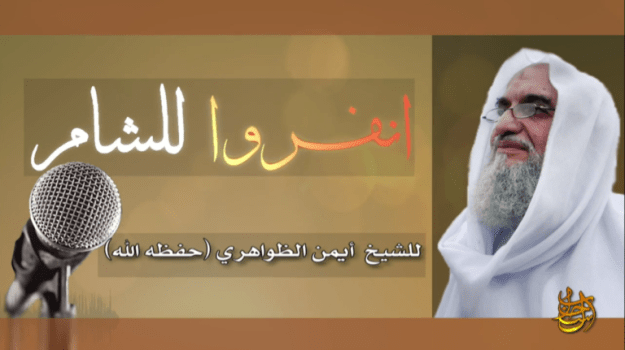
The leader of al-Qaeda, Ayman al-Zawahiri, released an audio statement on 8 May 2016. The speech was entitled, “Hasten to Syria,” “Go Forth to Syria,” or “March Forth to Syria,” depending on translation.[1] An English-language translation has been made available and is reproduced below, with some editions in transliteration and some important sections highlighted in bold. Continue reading

Islamic State Denounces Those Who Make Palestine the Foremost Muslim Cause

By Kyle Orton (@KyleWOrton) on April 2, 2016

An article in the twenty-second edition of al-Naba, the Islamic State’s (IS) newsletter, released on 15 March 2016, explained why the group has not made fighting Israel a priority.

Continue reading

Paris Attackers Had Already Appeared in the Islamic State’s Propaganda

By Kyle Orton (@KyleWOrton) on January 25, 2016

1

It has already been established that the on-the-ground leader of the Islamic State’s atrocities on Paris on November 13, Abdelhamid Abaaoud (Abu Umar al-Baljiki), had already been promoted in IS’s media. Abaaoud appeared in the February 2015 edition of IS’s Dabiq magazine. It now seems likely that at least one more of the Paris attackers, Foued Mohamed Aggad (Abu Fu’ad al-Faransi), had appeared in IS media already—the November 2014 video that was the fifth (of seven) in the series fronted by Mohammed Emwazi (“Jihadi John”), IS’s British executioner. The November 2014 video showed the slaughter of around twenty men, supposedly soldiers and airmen of the Assad regime, in the village of Dabiq, and the beheading of American aid worker Abdul-Rahman (Peter) Kassig. It is also possible that two further Paris attackers, Bilal Hadfi (Abu Mujahid al-Faransi) and Brahim Abdeslam (Abul-Qa’qa al-Baljiki), appeared in the November 2014 video. Continue reading