Category Archives: PKK

America’s Kurdish Allies in Syria Can’t Counter Iran

Published at The Arab Weekly

By Kyle Orton (@KyleWOrton) on 11 February 2018
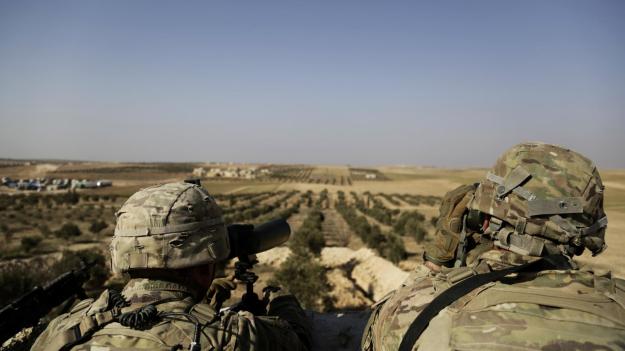
US Secretary of State Rex Tillerson laid out the Trump administration’s vision for Syria, making clear that, contrary to the expectations of many, the United States will stay in Syria beyond the collapse of the Islamic State’s (ISIS) self-proclaimed caliphate, holding the jihadists at bay and establishing an order compatible with US interests.

Crucially, Tillerson—in a sharp break with US President Donald Trump’s predecessor—specified that countering Iranian influence within Syria was a central US objective. The problem with the strategy is that it seems to rely on repurposing the United States’ anti-ISIS Kurdish militia allies against the Iranian revolution. Continue reading

American Intelligence Acknowledges Anti-ISIS Coalition’s Kurdish Partner is a Terrorist Group

By Kyle Orton (@KyleWOrton) on 27 January 2018

YPG/YPJ fighters raise the banner of the PKK leader Abdullah Ocalan in Raqqa city on 19 October 2017 (YPG Press Office)

The Central Intelligence Agency has publicly recognized that the Kurdish partner force the United States-led Coalition against the Islamic State (IS) has been working with in Syria is a subsidiary of the terrorist-designated Kurdistan Workers’ Party (PKK). Continue reading

Turkey’s Afrin Offensive and Russia’s Policy in Syria

Originally published at Ahval

By Kyle Orton (@KyleWOrton) on 21 January 2018

Turkey’s president, Recep Tayyip Erdoğan, threatened on Jan. 13 to begin a military operation “in about a week” to evict Kurdish militants from Afrin in northwestern Syria. Erdoğan has repeatedly threatened to “cleanse” Afrin of the fighters over the last two years. It turned out he really meant it this time: on Jan. 20 Turkey commenced Operation Olive Branch against Afrin.

Kurdish forces, affiliated with the Kurdistan Workers’ Party (PKK), have constituted an important element of the Coalition’s ground force in Syria against the Islamic State (ISIS) since late 2014, expanding their “Rojava” statelet by capturing vast swathes of territory from ISIS in northern and eastern Syria that is connected to Afrin under a deal with the pro-regime coalition—Bashar al-Assad, Iran, and Russia.

Any Turkish government would see this situation as a threat, and be angry at the United States for supporting the Kurds. The PKK regards Rojava and the ruling Democratic Union Party (PYD) as strategic elements in its long war against the Turkish state. Indeed, Kurds in Rojava have already provided at least logistical support for PKK attacks inside Turkey.

Continue reading

A Year In, Trump’s Syria Policy Looks A Lot Like Obama’s

Originally published at Ahval

By Kyle Orton (@KyleWOrton) on 18 December 2017

Nearly a year into Donald Trump’s administration, the president has followed the track laid down by his predecessors in Syria, accelerating it in some cases, and reinforcing the negative trends of Barack Obama’s defective policy that will undo even apparent successes, like the destruction of the Islamic State’s (ISIS) “caliphate”. Continue reading

Is Britain Cracking Down on PKK Terrorist Activity?

Originally published at The Henry Jackson Society

By Kyle Orton (@KyleWOrton) on 16 December 2017

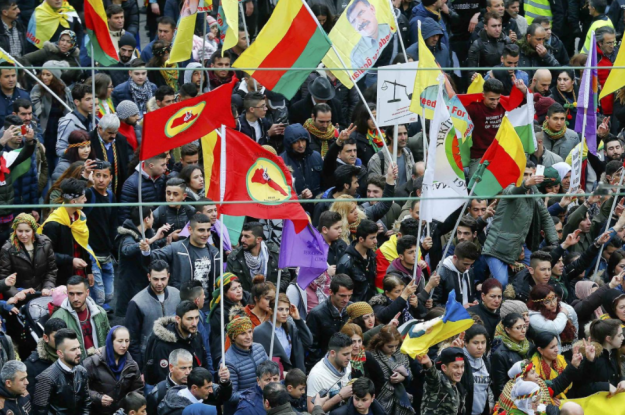
Pro-PKK demonstrators in Frankfurt, Germany, 18 March 2017, REUTERS / Ralph Orlowski

The BBC reported yesterday that on 7 December the Metropolitan Police Service arrested four people—two 17-year-old boys, a 38-year-old woman, and a 50-year-old woman—were arrested in the Haringey area of north London as part of a probe into terrorist fundraising, through money laundering and fraud. The terrorist group at issue is the Kurdistan Workers’ Party (PKK), and those arrested are believed to have contributed to the PKK’s finances through sale and distribution of one of the PKK’s most important propaganda instruments, the Yeni Ozgur Politika (New Free Politics) newspaper. Time will tell if this is a one-off or the beginning of a serious and long-overdue attempt to curtail the PKK’s propaganda-recruitment activity and fundraising in the West. Continue reading

America’s Kurdish Allies in Syria Drift Toward the Regime, Russia, and Iran

By Kyle Orton (@KyleWOrton) on 10 December 2017

Russian soldiers in Efrin, Syria, 1 May 2017 (source)

The American-led Coalition against the Islamic State (IS) partnered with the “Syrian Democratic Forces” (SDF), a political façade for the proscribed Kurdistan Workers’ Party (PKK), as the ground force in Syria. The most ventilated problems with this partnership so far have been the strain it has put on relations with NATO ally Turkey, against which the PKK has run a terrorist-insurgency for more than thirty years, and the deep local suspicion of the PKK’s governing program that might yet reverse the gains against IS and open political space for other jihadists like al-Qaeda. Another of the problems is now gaining salience: the PKK’s long-term alliance with Bashar al-Asad’s regime and the states—Russia and Iran—that keep it alive. Continue reading

A “Syrian Democratic Forces” Defector Speaks About the Role of the PKK and America in Syria

By Kyle Orton (@KyleWOrton) on 3 December 2017

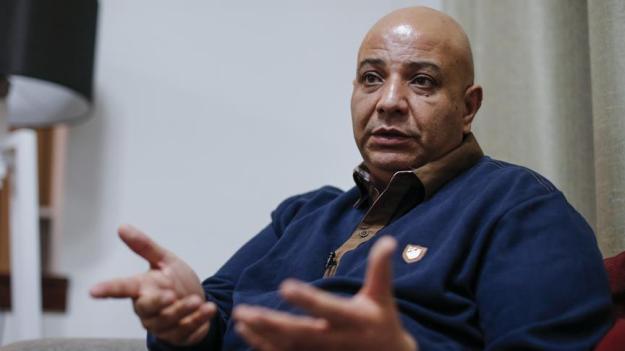
Talal Silo

Talal Silo was the leader of an ethnic Turkoman unit within the Syrian Democratic Forces (SDF), the ground partner in Syria of the American-led international coalition against the Islamic State (IS). Having defected recently, Tilo has now given an interview about his experiences, the nature of the SDF, and the SDF’s links to the Bashar al-Asad regime and its supporters, Russia and Iran. Continue reading

Defining Freedom Fighters and Terrorists in Syria (and Beyond)

By Kyle Orton (@KyleWOrton) on 21 November 2017

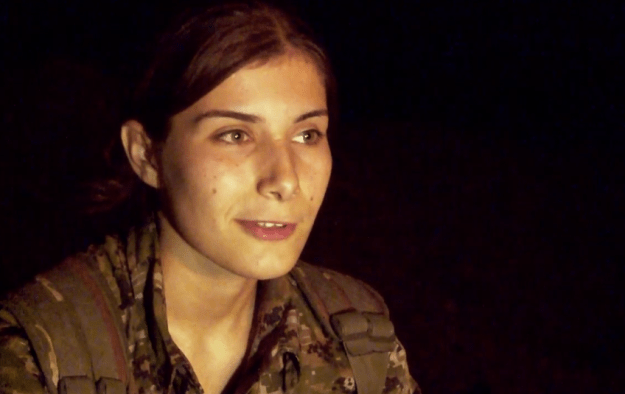
Zozan Temir (Zozan Cudi) in ‘No Free Steps to Heaven’

Yesterday, it was announced that a 15 November Turkish government airstrike in the mountains of the Sirnak area in southeastern Turkey, near the zone where the borders of Turkey, Syria, and Iraq meet, had killed twelve guerrillas from the Kurdistan Workers’ Party (PKK). Given that the PKK has waged war against Turkey since 1984, and the state has obviously fought back, such events are distressingly mundane. But this event was exceptional because among the slain was a female foreign fighter, Zozan Temir. Continue reading

A Defection and the Dictatorship in Syrian Kurdistan

By Kyle Orton (@KyleWOrton) on 17 November 2017

Talal Silo

It was announced on 15 November that Talal Ali Silo, the official spokesman of the Syrian Democratic Forces (SDF), had fled to the EUPHRATES SHIELD zone in northern Aleppo, run by rebels operating under the Free Syrian Army (FSA) brand that are dependent on Turkey. The SDF is the partner force in Syria for the U.S.-led Coalition against the Islamic State (IS). Though the SDF presents itself as a multi-ethnic coalition of Kurds and Arabs, it was initiated as a front for the Kurdistan Workers’ Party (PKK). By attaching non-Kurdish units to a PKK core and using the SDF banner, it circumvented various legal and political obstacles for Coalition states. But all real power has remained in the hands of the PKK, which has systematically purged all genuinely independent power centres within the SDF. Silo, a Turkoman, helped further the narrative of the SDF’s ethnic inclusivity, and his defection underlines the reality of the organization’s political exclusivity. Continue reading

The Controversial End of the Islamic State in Raqqa

By Kyle Orton (@KyleWOrton) on 14 November 2017

IS jihadists arriving south of Deir Ezzor city, September 2017

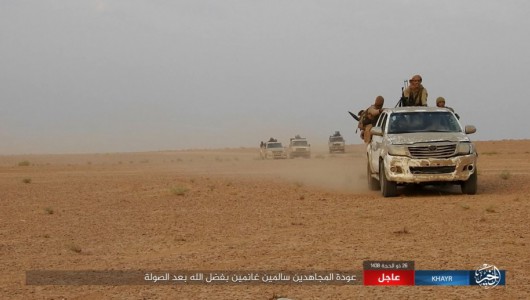
A deal was made between the “Syrian Democratic Forces,” the U.S.-led Coalition’s “partner force” in Syria that is wholly dominated by the Kurdistan Workers’ Party (PKK), and the Islamic State (IS), which ostensibly evacuated the remnants of the IS jihadists—said to be between 300 and 500 militants, plus 400 “hostages” (i.e. women and children)—from Raqqa by 15 October. The U.S.-led Coalition said at the time, “do not condone” the deal, but the Coalition acknowledged that its PKK partner had to make these tactical calls, and there was a lot of local pressure from local tribal leaders to reach this deal given the devastation visited on the city. It now transpires, however, that this deal was the worst of all worlds: the Coalition ruined the city in its efforts to overcome IS’s tactical adaptations to the air campaign, and then allowed a scandalous number of IS jihadists to escape. Continue reading