By Kyle Orton (@KyleWOrton) on 27 May 2021

Israel’s Iron Dome missile defence system [left] activates over southern Israel against incoming HAMAS rockets [right], 14 May 2021
By Kyle Orton (@KyleWOrton) on 27 May 2021
Israel’s Iron Dome missile defence system [left] activates over southern Israel against incoming HAMAS rockets [right], 14 May 2021
By Kyle Orton (@KyleWOrton) on 24 May 2021
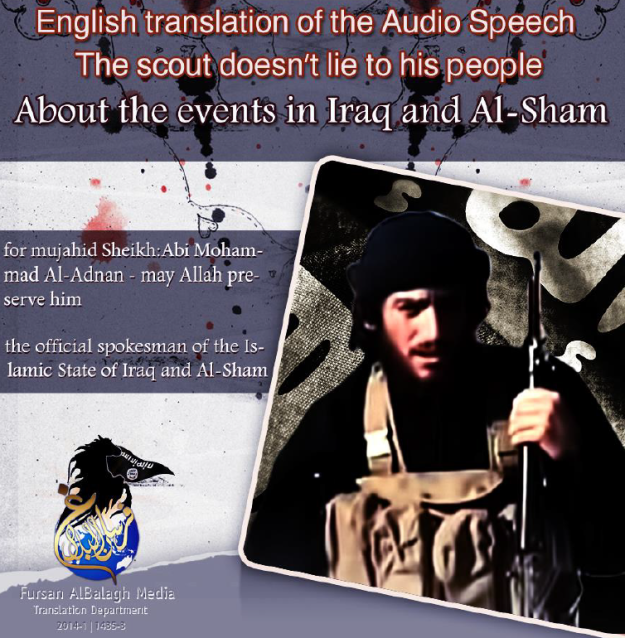
Taha Falaha (Abu Muhammad al-Adnani) is probably most famous for the September 2014 speech he made as the official spokesman for the Islamic State (IS) calling for international terrorist attacks, which initiated a wave of atrocities in Europe and beyond lasting about three years. But Falaha had been in office by that time, formally, since the summer of 2011, and in total he would make two-dozen speeches before he was killed at the end of August 2016. The twelfth speech, entitled, “The Scout Doesn’t Lie to His People”, and reproduced below,[1] was made on 7 January 2014, four days after the onset of a massive assault on IS by the Syrian rebellion that inter alia killed senior jihadist commanders like Samir al-Khlifawi (Haji Bakr or Abu Bakr al-Iraqi). What is interesting about this speech, as revealed in the recent Al-Naba profile of Falaha’s great friend and collaborator, the media emir Wael al-Ta’i (Abu Muhammad al-Furqan), is that Falaha composed this speech while he was besieged by the rebels in Aleppo. Al-Ta’i had evacuated the IS media department and their families, then slipped back into the area surrounded by the rebels to help Falaha compose IS’s first political counter-measure to this unexpected development in Syria, which was followed nearly a fortnight afterwards by a speech from the caliph himself, Ibrahim al-Badri (Abu Bakr al-Baghdadi). Continue reading
By Kyle Orton (@KyleWOrton) on 22 May 2021

Al-Naba 287, page three
The last two issues of Al-Naba, the weekly newsletter of the Islamic State (IS), had a number of interesting items, most obviously finally breaking its silence on the latest flare-up between Israel and HAMAS. Continue reading
By Kyle Orton (@KyleWOrton) on 8 May 2021

Wael al-Ta’i (Abu Muhammad al-Furqan), Al-Naba 285, p. 3
The 285th edition of Al-Naba, the weekly newsletter of the Islamic State (IS), released on 6 May, had a biography of Abu Muhammad al-Furqan, one of the most important IS leaders, the head of its Central Media Department and its operational ruler when he was killed in September 2016. Continue reading
By Kyle Orton (@KyleWOrton) on 3 May 2021
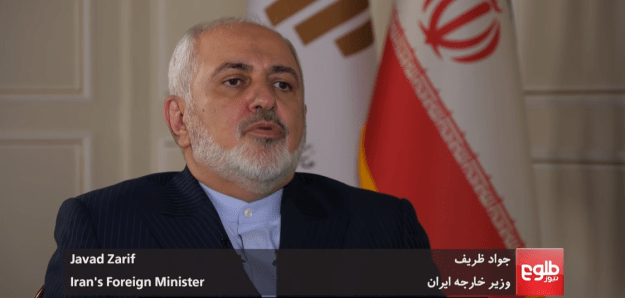
Iranian Foreign Minister Muhammad Javad Zarif, December 2020, during an interview with Lotfullah Najafizada of TOLO News
Iran’s Foreign Minister, Muhammad Javad Zarif, took part in an oral history project intended for internal use by the clerical dictatorship in February and on 25 April the audio was leaked—so goes the story. There is every reason to think this is a controlled leak, which is to say an information operation or a piece of strategic messaging—more pejoratively, propaganda or disinformation: choose the terminology as you will—intended to assist the Iranian theocracy as it works through its negotiations on the nuclear file with the new American administration of President Joe Biden. Still, there are some insights from this episode, as with an interview Zarif gave—focused on Afghanistan—in December. Continue reading
By Kyle Orton (@KyleWOrton) on 25 April 2021
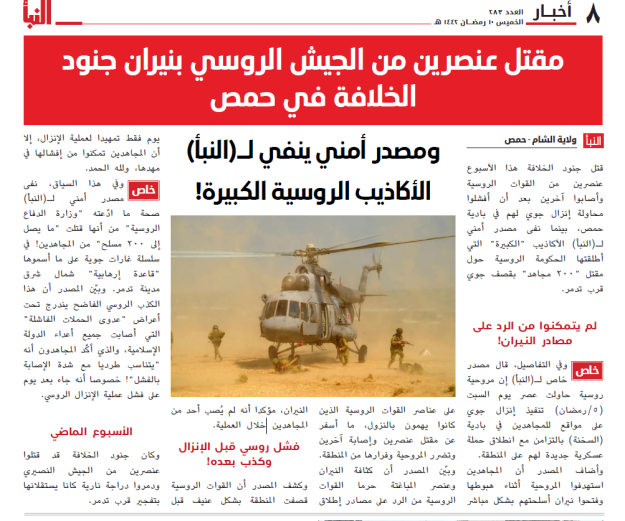
Al-Naba 283, p. 8
The 283rd edition of Islamic State’s (IS) weekly newsletter, Al-Naba, released on 22 April 2021, contained the usual reports on IS’s guerrilla and terrorist operations, stretching from Africa to Syria and Iraq at the “Centre” to South Asia, plus the main editorial and an ideological essay. Amid the reports was IS’s response to a controversial episode in eastern Syria involving the Russians, and a sign of an uptick in IS’s operations in Afghanistan and Pakistan as the U.S.-led NATO forces prepare to abandon Afghanistan. Continue reading
By Kyle Orton (@KyleWOrton) on 20 April 2021
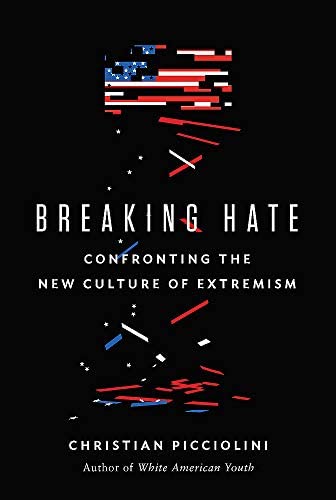
The rise of far-Right extremism in the West, in the United States in particular, has been one of the major media stories since at least 2016. Think tanks have gotten in on the action, and in due course official institutions followed the lead. There has been a significant element of moral panic about this, a result of a search for explanation by liberal ruling classes hit with disorientating political developments, above all in the Anglo-American world, with Brexit and the election of Donald Trump as President. Christian Picciolini’s book, Breaking Hate: Confronting the New Culture of Extremism (2020), is very much a product of this mood of doom among Western liberals. Continue reading
By Kyle Orton (@KyleWOrton) on 17 April 2021

Al-Naba 273, p. 10
The Islamic State (IS) released issue 273 of its weekly magazine, Al-Naba, on 11 February 2021. On pages 10 and 11 (out of 12) it contained a eulogy for Abu al-Hassan al-Adeni, who was IS’s military commander in Al-Bayda area in Yemen. Continue reading
By Kyle Orton (@KyleWOrton) on 5 April 2021
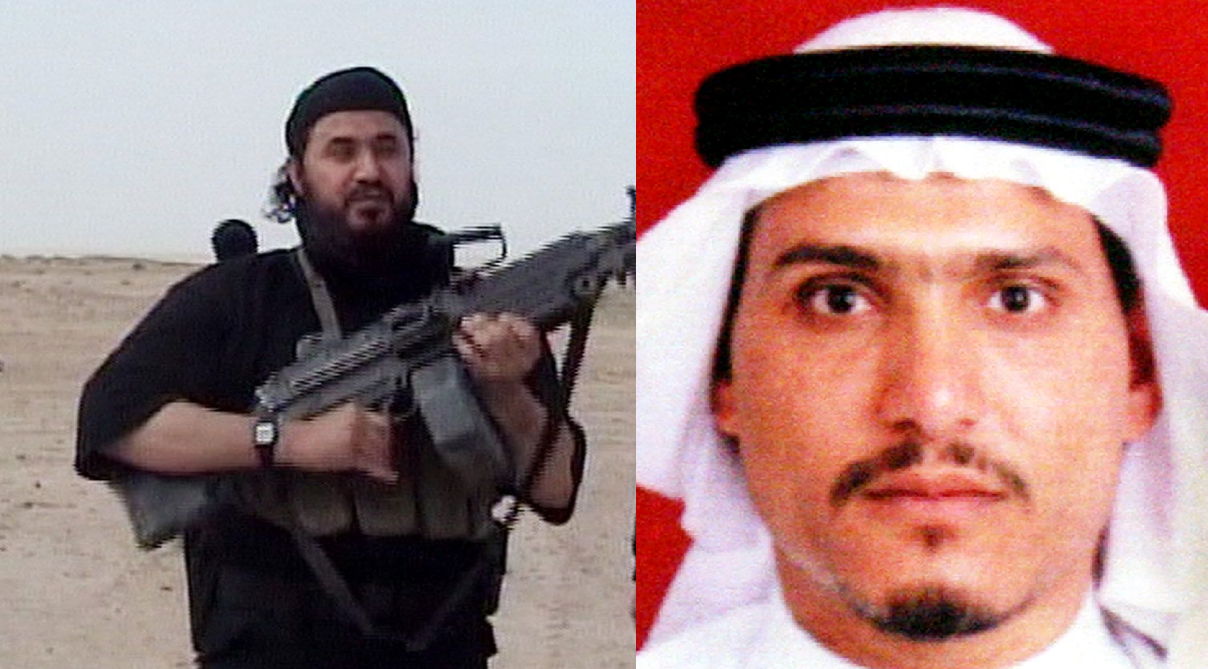
Ahmad al-Khalayleh (Abu Musab al-Zarqawi), the infamous founder of the Islamic State movement, known at the time as Al-Qaeda in Iraq (AQI) and formerly part of the Mujahideen Shura Council (MSC), was killed on 7 June 2006. Zarqawi’s successor was officially announced five days later, in a written statement released on 12 June, as Abu Hamza al-Muhajir, an Egyptian with a long history in and around Al-Qaeda. The next day, 13 June 2006, Abu Hamza gave his first speech as AQI emir, entitled, “The Gathering Will Be Defeated and They Will Turn Their Backs [in Retreat]”, drawn from an ayat of the Qur’an (54:45). The statement and the speech are translated below.
By Kyle Orton (@KyleWOrton) on 3 April 2021
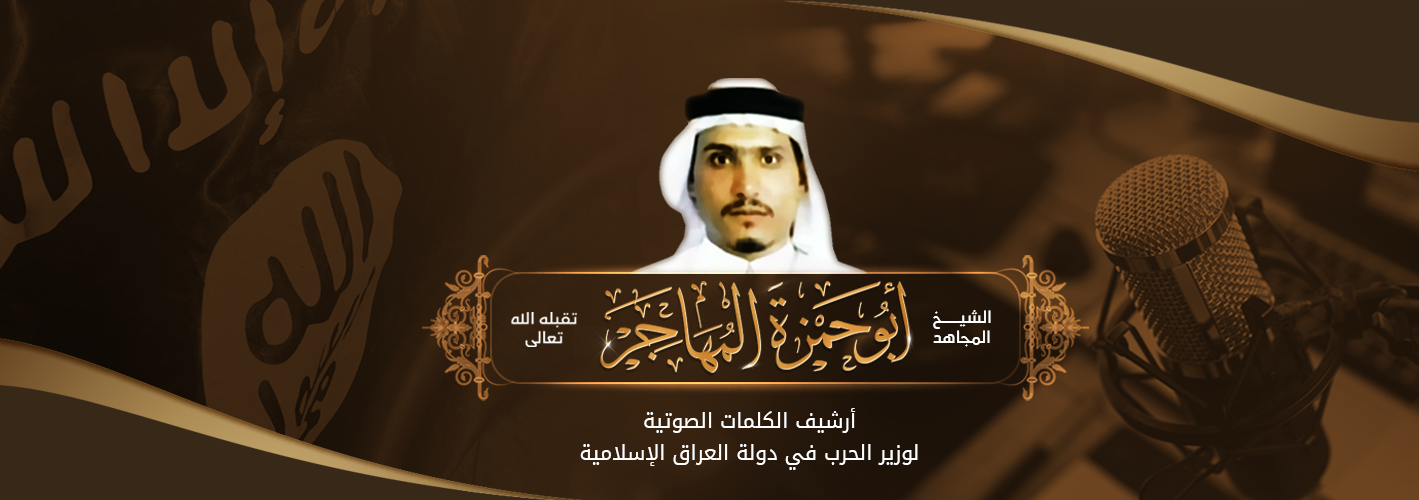
The Islamic State of Iraq (ISI) released a forty-five-minute media product, “The First Audio Interview with Shaykh Abu Hamza al-Muhajir”, on 24 October 2008. A translated transcript of the interview is reproduced below, with some interesting and important sections highlighted in bold.
 Kyle Orton's Blog