The United States Department of State designated Katibat al-Imam al-Bukhari (KIB), the Taliban-loyal insurgent unit in Syria, as a Specially Designated Global Terrorist (SDGT) on 22 March. Over the last few days, KIB and other insurgent groups have issued statements in response. Continue reading →
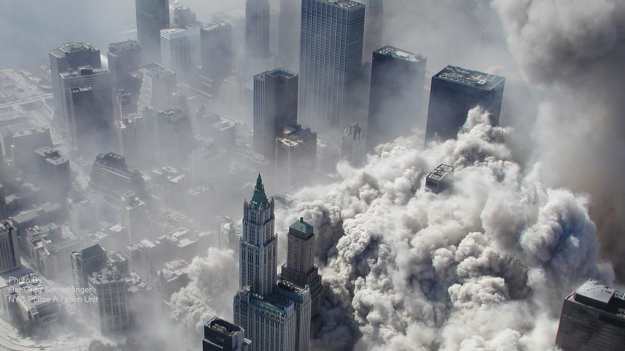
Devastation at the World Trade Centre, 11 September 2001 | NYPD / GREG SEMENDINGER
Al-Qaeda’s leader, Ayman al-Zawahiri, gave a speech on 20 March 2018, “America is the First Enemy of the Muslims”. An English transcript of al-Zawahiri’s speech was released by As-Sahab Media and is reproduced below. Continue reading →
The first leader of the Islamic State (IS) after it was declared in 2006, Hamid al-Zawi (Abu Umar al-Baghdadi), gave a series of twenty-three speeches until he was killed in April 2010. Al-Zawi’s speeches laid out the strategic and ideological vision of the movement. The fifth speech, “And If You Cease, It Will Be Better for You” or “Should You Desist [in attacking the Islamic State], Then That Is Better for You”, was given as an audio statement on 8 July 2007. An English transcript of the speech was released by IS’s Al-Furqan Media and is reproduced below with some important and interesting sections highlighted in bold. Continue reading →
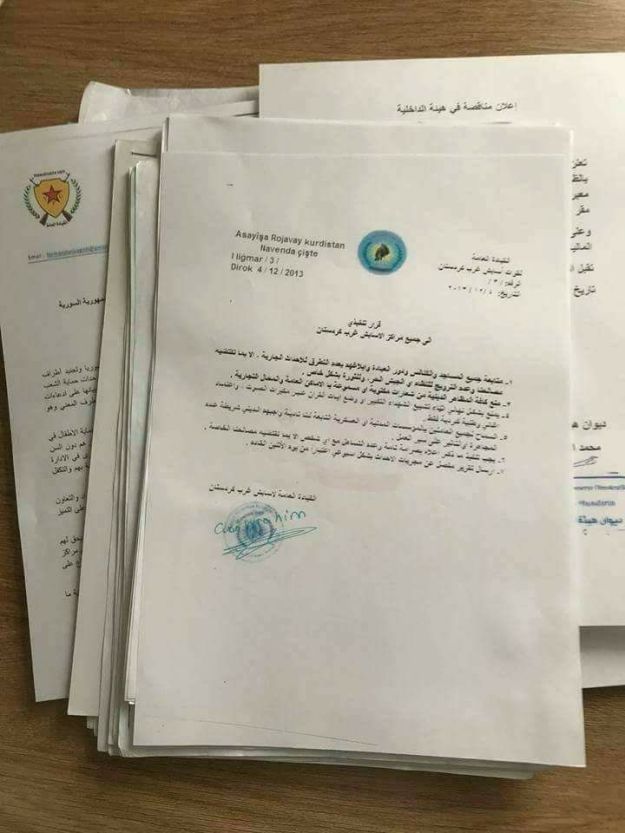
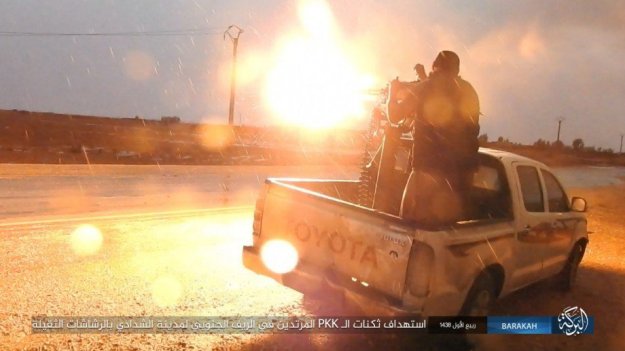
Among the artefacts found in Efrin after the Kurdistan Workers’ Party (PKK), which uses the names Democratic Union Party (PYD) and People’s Protection Units (YPG) in Syria, was pushed out by Turkey and its Arab dependencies in the OLIVE BRANCH operation, is the above document, which sheds some light on how the PKK treated religious institutions in the province. Continue reading →
Turkey and Syrian rebel allies captured Afrin city in north-western Syria from the Kurdish People’s Protection Forces (YPG) this weekend. The YPG has gained notice as the partner force of the US-led international coalition against the Islamic State. But, as Pentagon spokesman Robert Manning acknowledged on March 6, the YPG has been diverting its troops from the fight against IS in eastern Syria to the war with Turkey on the other side of the country. Manning presented this as a temporary setback, but the shifting dynamics might prove to be the undoing of the Coalition’s mission in Syria. Continue reading →
The first leader of the Zarqawi’ist branch of the jihadi movement in Iraq after the declaration of the Islamic State of Iraq (ISI), Hamid al-Zawi (Abu Umar al-Baghdadi), gave his second speech on 3 February 2007, an audio statement entitled, “A Conquest From Allah and an Imminent Victory”. The speech attacks those Sunni Islamist insurgents who would be drawn into the American-backed, Shi’a-led Iraqi government and declares the Karama (Dignity) operation against such organisations and all other foes. Al-Zawi frames much of the speech in starkly sectarian terms and believes that ISI has annexed the anti-American cause. Al-Zawi also claims to believe that the U.S. is on the path to defeat; there is an admission that ISI is struggling, but a reassurance that it is worse for the Americans. An English-language version of the speech was released by Al-Furqan Media and is reproduced below. Continue reading →
After the formation of the Islamic State of Iraq (ISI), the leader, Hamid al-Zawi (Abu Umar al-Baghdadi), made his first speech on 23 December 2006. An English translation of the speech was released by ISI and is reproduced below. Continue reading →
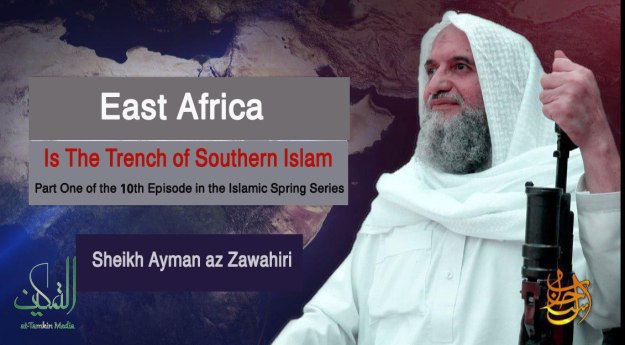
Al-Qaeda’s leader, Ayman al-Zawahiri, gave a speech on 18 March 2018, “East Africa Is The Trench of Southern Islam”, which is the tenth in the “Islamic Spring” series. An English translation of al-Zawahiri’s speech was released by an al-Qaeda channel on Telegram and is reproduced below. Continue reading →
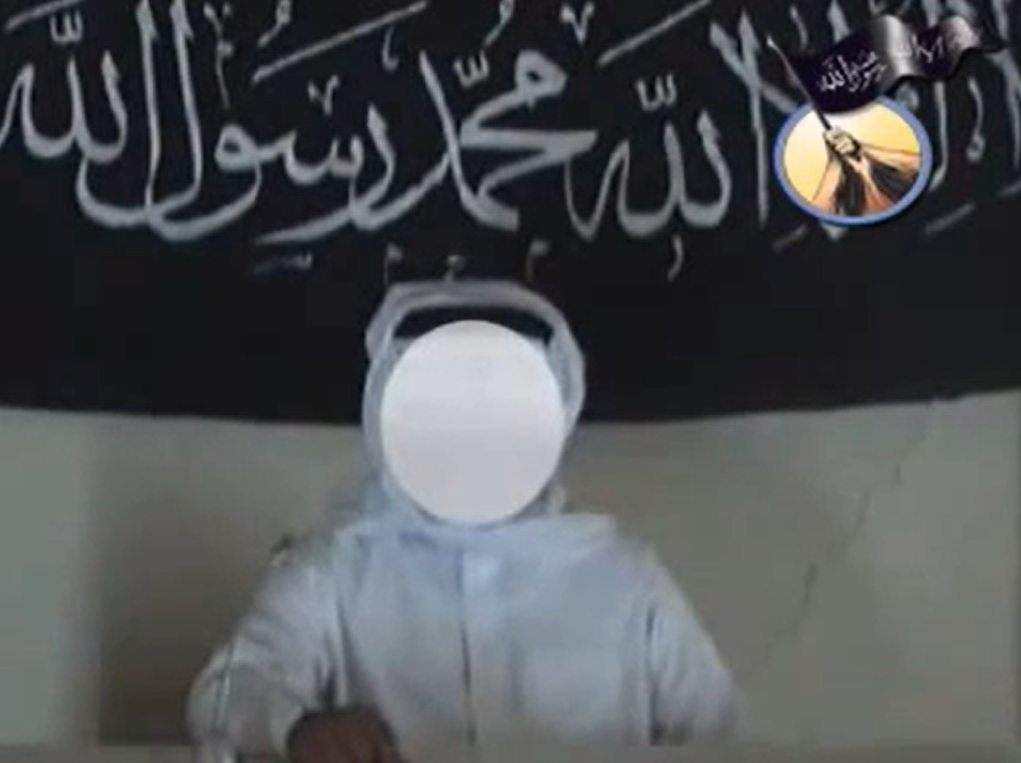
A video statement was put out on 15 October 2006 by the official spokesman of what was then called the Mujahideen Shura Council (al-Majlis Shura al-Mujahideen or MSM), the entity in which Al-Qaeda in Iraq (AQI) had nominally subsumed itself in January 2006, announcing the creation of the Islamic State of Iraq (ISI). The MSM spokesman, Muharib al-Jubouri, seen above, who had not been in the job long—the first AQI/MSM spokesman, Abu Maysara al-Iraqi, had been killed a few months earlier—was now the ISI spokesman,[1] and his speech made clear that a coalition of tribesmen and insurgents announced by MSM three days earlier, the Alliance of the Scented Ones (Hilf al-Mutayibeen), was also incorporated in this “State”. The transcript of Muharib’s speech, entitled (unimaginatively enough), “Announcement on the Establishment of the Islamic State of Iraq”, is translated below.
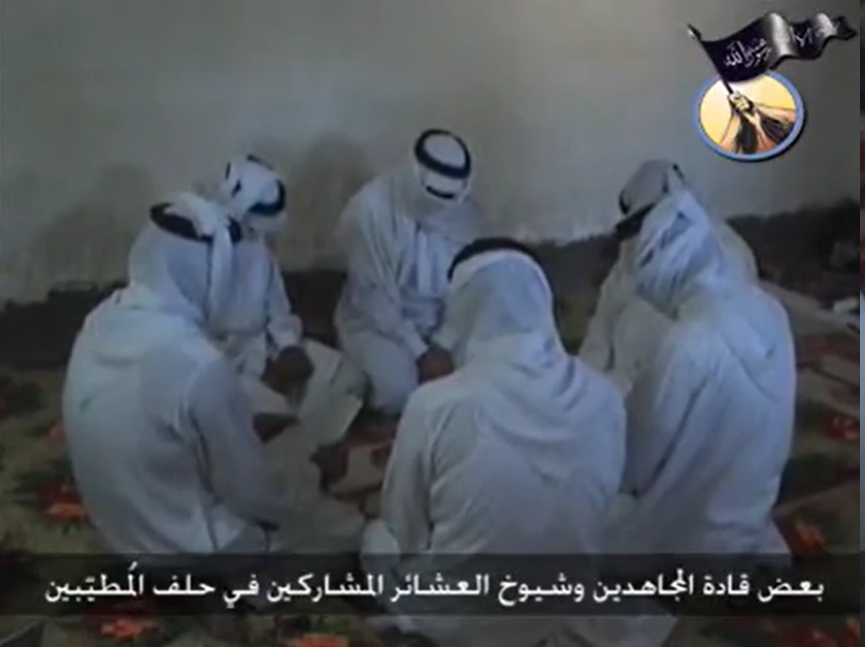
The Mujahideen Shura Council (al-Majlis Shura al-Mujahideen, MSC or MSM), the umbrella organisation that in January 2006 had nominally subsumed Al-Qaeda in Iraq (AQI) as the Islamic State movement was known at the time, put out a video on 12 October 2006 showing MSM being joined in an oath with tribal and insurgent groups to create Hilf al-Mutayibeen (the Alliance of the Scented Ones),[1] named after a pact reported in the Tradition to have been made by the Prophet Muhammad in Mecca, intended to uphold justice for the fledging community as it endured persecution, which was sealed in the home of Abdullah bin Jud’an by dipping their hands in perfume (al-teeb).


 Kyle Orton's Blog