The Structure of Al-Qaeda

By Kyle Orton (@KyleWOrton) on August 14, 2016
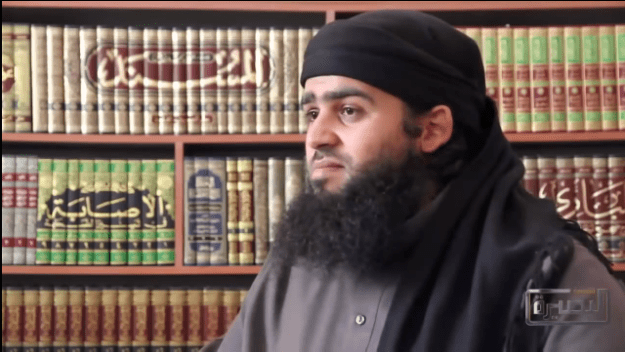
Screenshot of Mostafa Mahamed (Abu Sulayman al-Muhajir) during a video interview, 12 April 2014

Screenshot of Mostafa Mahamed (Abu Sulayman al-Muhajir) during a video interview, 12 April 2014

Mostafa Mahamed (Abu Sulayman al-Muhajir) is an Australian citizen who was born on 14 February 1984 in Port Said, Egypt. Mahamed currently occupies a “senior leadership position” within al-Qaeda in Syria—formerly Jabhat al-Nusra, now Jabhat Fatah al-Sham (JFS)—according to the sanctions levied against him in May by the U.S. Treasury. In an indication of Mahamed’s seniority, he moved from Australia to Syria in late 2012 and within a few months led the mediation efforts between al-Nusra and the then-Islamic State of Iraq and Syria (ISIS), now the Islamic State (IS), that began with a breach in April 2013 and ended with al-Qaeda expelling ISIS from its command structure in February 2014. Mahamed is also one of the public faces of al-Qaeda in Syria, now calling himself the “Director of Foreign Media Relations of JFS”. In this capacity, Mahamed has inter alia recently communicated with CNN to further the narrative that al-Nusra/JFS has “split” with al-Qaeda—something, let it be noted, neither the leader of al-Nusra/JFS nor Mahamed have actually said.

With regard to both the ongoing narrative war between IS and al-Qaeda over what their actual relationship was in the lead-up to the schism and al-Qaeda’s structure—the two things very much interlinked—Mahamed gave a very useful interview on 12 April 2014, about ten weeks before ISIS became IS when it declared its caliphate. Mahamed also touches on other interesting matters, such as those jihadi ideologues al-Nusra/JFS regards as guides, and—small point—al-Qaeda’s continuing claim that IS’s founder, Abu Musab al-Zarqawi would have sided with them. (This is matched on the other side by IS continuing to feature Usama bin Ladin in their propaganda as one of their forebears, while regarding Ayman al-Zawahiri as deviant.)

In watching the video back, I ended up taking notes, which turned into a partial (though fairly substantial) transcript that will perhaps be of use to others as well, so it’s posted below. Continue reading
The West’s Kurdish Allies in Syria Can’t Escape Their Authoritarian Legacy

By Kyle Orton (@KyleWOrton) on August 13, 2016

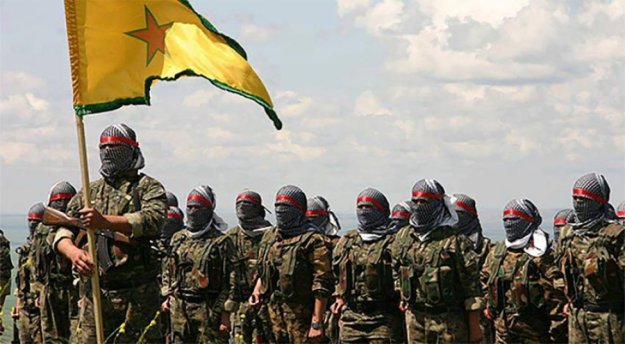
PYD/YPG fighters

PYD/YPG fighters

The Islamic State (IS) was driven from the city of Manbij yesterday, a key supply route to the Turkish border in northern Syria, the conclusion of an operation launched on 31 May by the Syrian Democratic Forces (SDF), a front-group for the Kurdistan Workers’ Party (PKK), represented in Syria by the Democratic Union Party (PYD) and its armed wing, the People’s Protection Units (YPG). The SDF was backed by U.S. airstrikes. It is difficult not to see the defeat of IS as a positive development. It is, however, worth more closely examining the forces that are being enabled by Western power to fasten their rule across northern Syria, whose vision is deeply problematic—even in narrow terms of the fight against IS. Continue reading

Ahrar al-Sham and Al-Qaeda

By Kyle Orton (@KyleWOrton) on August 12, 2016

The Islamic State’s (IS) weekly newsletter, al-Naba, interviewed a high-ranking al-Qaeda defector, Abu Ubayda al-Lubnani, across two issues in February and March 2016. Abu Ubayda announced his defection from al-Qaeda to IS in April 2014 via al-Battar and Abu Ubayda’s name appeared on a list of prominent clerics supporting IS’s caliphate declaration that was circulated not long after the declaration. Abu Ubayda is described by al-Naba—as best as can be told accurately—as having been a member of al-Qaeda’s Shura or Consultation Council, a training officer in its Military Committee, and a counter-intelligence officer. Abu Ubayda is advertised as speaking about many secret aspects of al-Qaeda.

Among the topics Abu Ubayda covers is the alleged infiltration and manipulation of al-Qaeda by foreign intelligence services, specifically Pakistan’s Inter-Services Intelligence (ISI), which is not only a violation of jihadist doctrine by collaborating with an “infidel” and illegitimate state but led to the deaths of a number of senior al-Qaeda leaders.

Perhaps the most intriguing aspect of what Abu Ubayda has to say relates to al-Qaeda’s attempt to take advantage of the Syrian revolution. This persistent campaign has followed a pattern of disguising al-Qaeda’s presence and attempting to influence and eventually co-opt the rebellion against Bashar al-Assad’s regime. One lever al-Qaeda relied upon, according to Abu Ubayda, was Ahrar al-Sham, an organization that disclaims all connections to al-Qaeda and dissimulates about its ideology. Whatever Ahrar’s dominant ideology, it is simply a fact that it has served as the bridge between the foreign-led jihadists and Syrian Islamists, and its connections to al-Qaeda are evident enough. Abu Ubayda suggests Ahrar’s connections to al-Qaeda are even deeper than they appear. Continue reading

Did Assad Recruit the Leader of Al-Qaeda in Syria?

By Kyle Orton (@KyleWOrton) on August 11, 2016

1

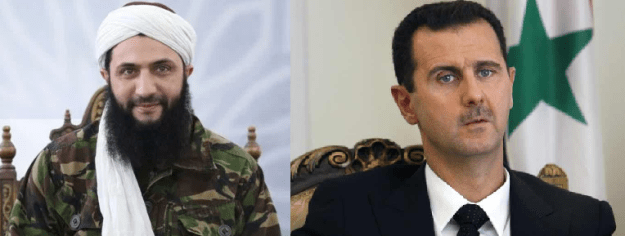
In the course of al-Qaeda’s rebranding operation in Syria two weeks ago—the full implications of which are discussed here—the organization showed the face of its leader, Abu Muhammad al-Jolani, for the first time. Soon afterward it was revealed that al-Jolani’s real name was Ahmad al-Shara, originally from Deraa in southern Syria, who had lived in Damascus. A report in Al-Monitor has now added details that purportedly show the hand of Bashar al-Assad’s regime in al-Shara’s path to joining the predecessor organization of the Islamic State (IS), from which he eventually split, and underlines the role the Assad regime has played in fostering the terrorism it now claims to be defending the Syrian population and the world from. Continue reading

The Structure of the Islamic State

By Kyle Orton (@KyleWOrton) on August 8, 2016

On 6 July 2016, the Islamic State’s al-Furqan Media released its first video for over a year, which was in English and was entitled, “The Structure of the Caliphate“. Continue reading

Profile of the Islamic State Caliph: Abu Bakr al-Baghdadi

By Kyle Orton (@KyleWOrton) on August 7, 2016

This post is drawn from a recent report I published profiling the leadership of the Islamic State.

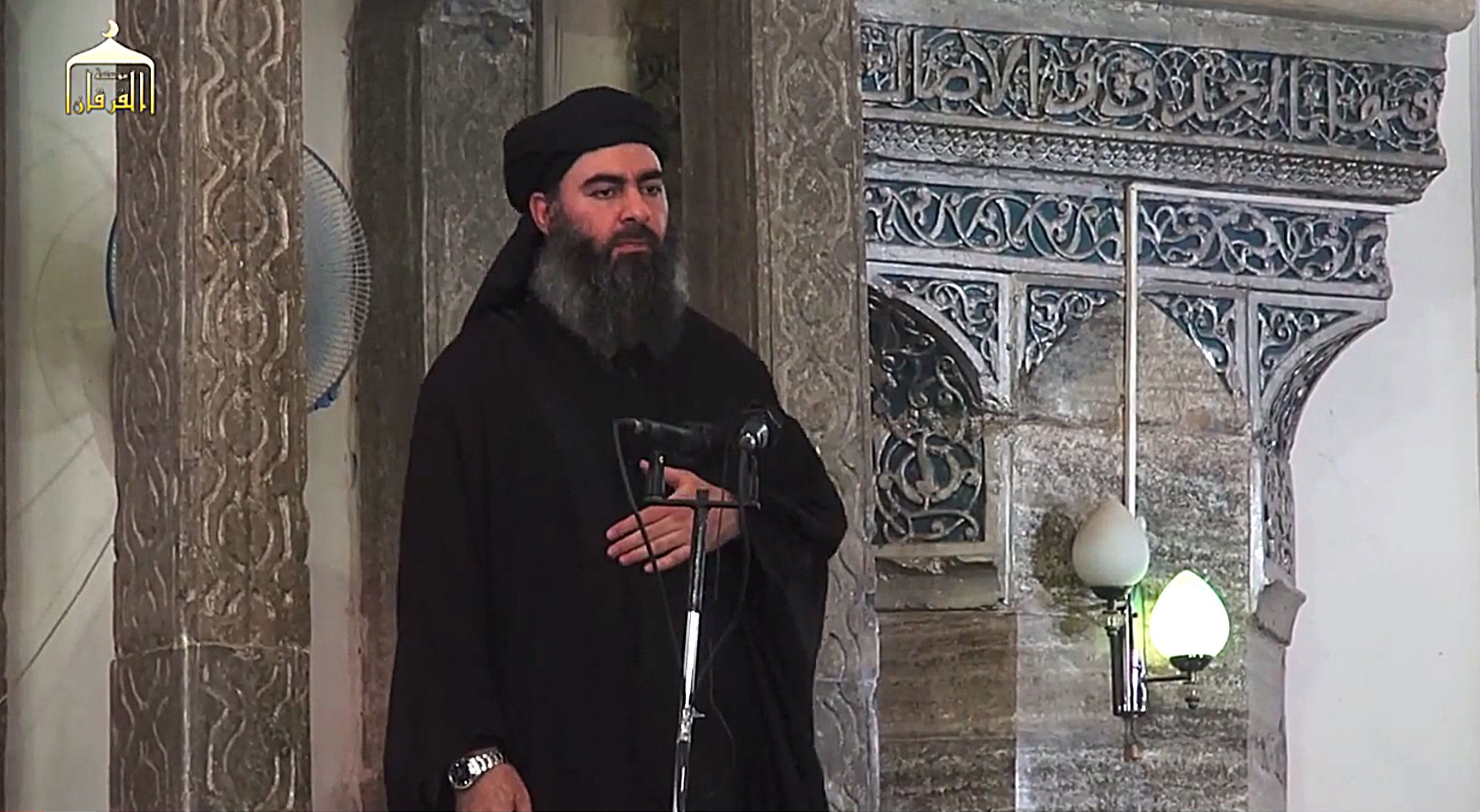
The leader of the Islamic State (IS) since 2010 has been Abu Bakr al-Baghdadi, previously known as Abu Dua or Abu Awad, and his real name—acknowledged by IS itself since the declaration of the so-called Caliphate in 2014—is Ibrahim Awwad Ibrahim Ali Muhammad al-Badri al-Samarrai.

Continue reading

More Police Are No Substitute for Tackling Islamist Ideology

By Kyle Orton (@KyleWOrton) on August 5, 2016

Published at Newsweek

In the past two years, and especially over the last month, the Islamic State militant group has launched a coordinated campaign of terrorism in Europe. Among these recent attacks was the murder of 84 people in Nice by a man who ploughed a truck into Bastille Day crowds, and the brutal killing of a priest in Normandy when two young men stormed a church.

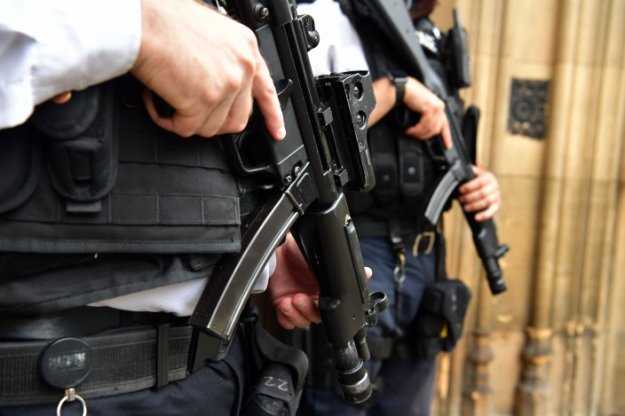
Now, the number of armed police in London, and ultimately across the U.K., is set to increase significantly. These additional forces will patrol landmarks and other areas where large numbers of people congregate. An attack in Britain is “highly likely … a case of when, not if,” according to the commissioner of the Metropolitan Police Sir Bernard Hogan-Howe. A stabbing in the British capital Wednesday is not currently being treated as an extremist act but has underlined the perceived need for an increased police presence. Continue reading

Al-Qaeda Rebrands, Marches on in Syria

By Kyle Orton (@KyleWOrton) on August 2, 2016

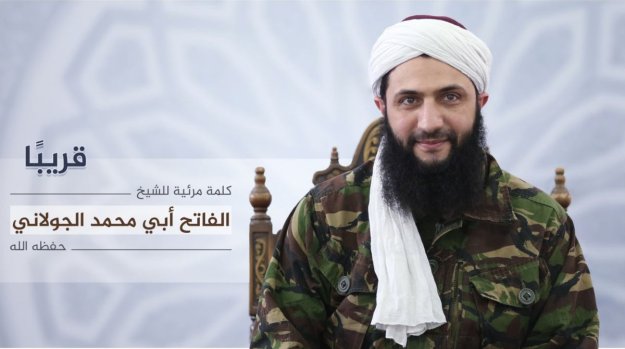
First ever picture of the leader of Jabhat al-Nusra (al-Qaeda in Syria), Ahmad al-Shara (Abu Muhammad al-Jolani), 28 July 2016

First ever picture of the leader of Jabhat al-Nusra (al-Qaeda in Syria), Ahmad al-Shara (Abu Muhammad al-Jolani), 28 July 2016

The leader of Jabhat al-Nusra (al-Qaeda in Syria), Abu Muhammad al-Jolani, whose real name is Ahmad al-Shara, ostensibly broke the link between his organization and al-Qaeda last week. This is another stage in al-Qaeda’s long-term strategy of embedding itself into local societies so that it can more effectively reshape the faith and shield itself from the international community. Continue reading

Islamic State Claims It Follows God’s Law, Jews and Christians Do Not

By Kyle Orton (@KyleWOrton) on August 1, 2016
1

The fifteenth issue of the Islamic State’s English-language magazine, Dabiq, released on 31 July 2016 contained an essay, “By the Sword,” a brief polemic that defends the Islamic State’s brutality on the basis that it is conducted according to the Word of God—laying open claim to genocide and slavery so long as it is undertaken by Muslims and not disbelievers, saying they would have felt no need to have apologized for the atomic bombing of Japan or the use of defoliants in Vietnam and would have been more thorough-going in the extermination of Native Americans and Jews, since these things are vouchsafed by the Creator. The Islamic State contends that the Jewish and Christian religious contain the same prescriptions for the forcible implementation of the Holy Law that the Qur’an does, but these monotheists have lapsed and pay more attention to the edicts of the United Nations. Continue reading

The Islamic State Explains Why It Hates The West

By Kyle Orton (@KyleWOrton) on August 1, 2016

dabiq-15-3

The Islamic State (IS) published its fifteenth edition of ‘Dabiq,’ its English-language magazine, on 31 July 2016. The magazine was entitled, “Break the Cross”. The magazine contained two important articles outlining why IS hates and fights against the West. The most important article, an unsigned piece by an IS operative, simply titled, “Why We Hate You and Why We Fight You”. The second, “How I Came to Islam,” was written by Umm Khalid al-Finlandiyyah, a female Finnish foreign fighter who has joined IS. Those articles are reproduced below with some editions to transliteration and some interesting sections highlighted in bold. Continue reading