Tag Archives: 9/11

When Iran Saved Al-Qaeda

By Kyle Orton (@KyleWOrton) on 24 January 2018

The new book by the investigative journalists Adrian Levy and Catherine Scott-Clark, The Exile: The Flight of Osama bin Laden, charts the career of al-Qaeda’s founder, Osama bin Laden, up to the day he became a household name—11 September 2001—through his downfall in 2011, to the end of 2016, when al-Qaeda was more powerful than ever. It is a thoroughly absorbing account, bringing to light vast tranches of new facts, including many intricate details of how al-Qaeda operated on a human, day-to-day level, and of those states and para-states that shielded the terror network, collaborated with it, and enabled it—and still do.

The gathering of the Bin Laden network in Sudan and then in the Taliban-held areas of Afghanistan in the 1990s is a familiar story, but the splits and debates among the Arab jihadists around Bin Laden, including the opposition of significant numbers of them to the 9/11 massacre, is perhaps less well known. The authors trace out how Bin Laden manipulated his own quasi-institutions to get his way. First, Bin Laden took on the plan of a man, Khalid Shaykh Muhammad (KSM), who was not even a member of al-Qaeda, and then, ahead of the crucial vote, packed the shura (consultation) council with ultra-zealous Egyptians by engineering a merger between al-Qaeda and Islamic Jihad, led by Ayman al-Zawahiri. Continue reading

Further Details Emerge of Obama’s Failed Iran Policy

Published at The New Arab.

By Kyle Orton (@KyleWOrton) on 21 December 2017

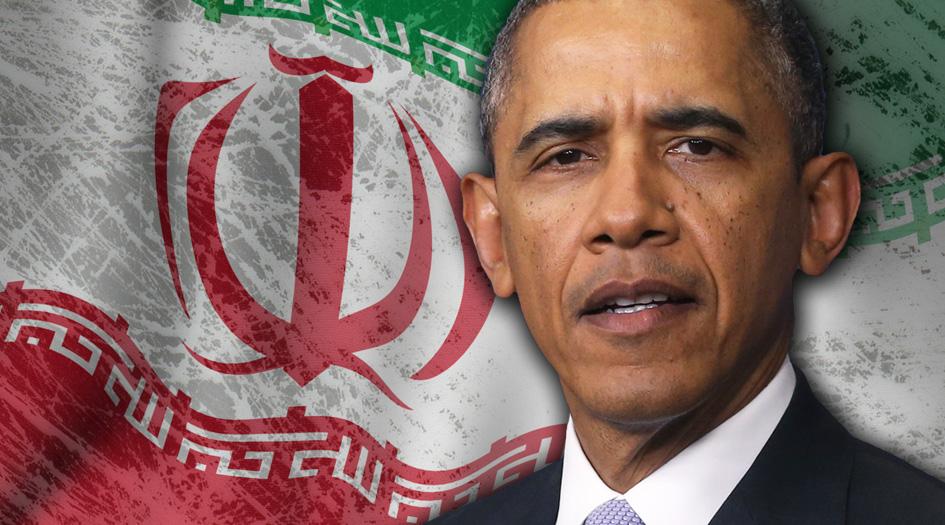
A widely reported, 15,000-word article by Josh Meyer in Politico on Sunday moves us another step closer to finding out the actual terms of President Barack Obama’s nuclear deal with the Islamic Republic of Iran.

Though the Obama administration sold the Iran deal on the narrowest possible terms as an arms control agreement, the reality was that this agreement was intended to facilitate a strategic tilt in Iran’s favour—against traditional allies—that left a regional balance requiring less American commitment.

Because the administration wanted the paper agreement, Iran had the leverage to threaten to walk away, and was therefore appeased on multiple fronts ostensibly unrelated to the nuclear issue.

Continue reading

An Ideological Founder of Islamic State is Killed in Syria

UPDATE: It has subsequently become clear that the “Abu Abdullah al-Muhajir” who was killed in Syria on 18 November 2016 was not Muhammad al-Saghir, who is profiled below. The slain man, like al-Saghir a veteran of the war get the Soviets out of Afghanistan and an Egyptian jihadist with close links to al-Qaeda, also used the kunya “Abu Afghan al-Muhajir”.

By Kyle Orton (@KyleWOrton) on November 20, 2016

Abu Abdallah al-Muhajir (source)

A week ago, it became clear that the air war being waged by the U.S.-led Coalition, which primarily targets the Islamic State (IS), was going to expand its campaign against the leadership of Jabhat Fatah al-Sham (JFS), al-Qaeda’s rebranded branch in Syria. In the evening of 18 November 2016, the Coalition killed Abu Abdullah al-Muhajir, whose real name is Muhammad Ibrahim al-Saghir. Al-Saghir also uses the name Abd al-Rahman al-Ali. This killing would appear to be part of the Coalition’s new effort.

Al-Saghir has a long record as an important jihadi religious ideologue, though his exact relationship with al-Qaeda’s network remains unclear. Al-Saghir’s most lasting contribution to jihadi-salafism is as a key guide to the founder of IS, Ahmad al-Khalayleh. Continue reading

America Escalates the War Against Al-Qaeda in Syria

By Kyle Orton (@KyleWOrton) on November 11, 2016

On the right: Abdullah al-Muhaysini (source)

The United States and therefore the international Coalition is about to step up its operations against Jabhat Fatah al-Sham (JFS), al-Qaeda’s recently rebranded Syrian branch. This is a necessary policy, but pursued in isolation—without replacing the capacities that JFS provides to the insurgency—this action will strengthen the coalition supporting the regime of Bashar al-Assad, the actors chiefly responsible for the humanitarian abomination in Syria that has deliberately given rise to the security menace of the Islamic State (IS) and the flow of refugees into Europe that has destabilized Western security. Assad’s coalition also includes the Islamic Republic of Iran, a more significant global terrorism threat than IS which has repeatedly attacked the West. Continue reading

Fifteen Years After 9/11

By Kyle Orton (@KyleWOrton) on September 11, 2016

Originally published at The International Business Times

1

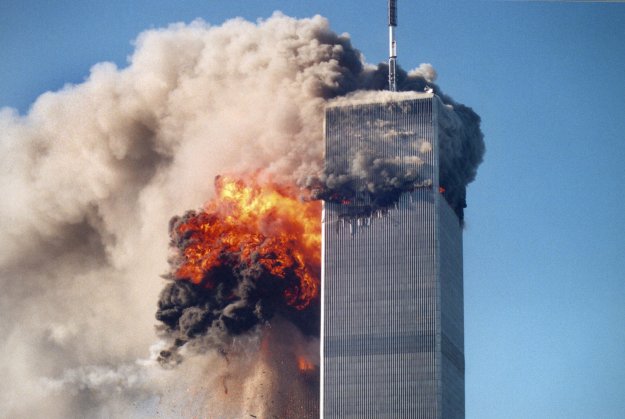
Fifteen years on from the 11 September 2001 terror attacks on the US, al-Qaeda is better-positioned than ever before. Its leadership held, and it has rebuilt a presence in Afghanistan. More importantly, al-Qaeda has built powerful regional branches in India, North Africa, Somalia, Yemen and Syria.

Rebranding itself away from the savagery of Iraq, al-Qaeda has sought to embed itself in local populations by gaining popular legitimacy to shield itself from retribution if, or when, it launches terrorist strikes in the West. This is proceeding apace, above all because of a failure to assist the mainstream opposition in Syria, sections of which were forced into interdependency with al-Qaeda to resist the strategy of massacre and expulsion conducted by the Assad regime. Continue reading

Iran’s Partnership with al-Qaeda and Unanswered Questions

By Kyle Orton (@KyleWOrton) on September 19, 2015

Imad Mughniyeh and Osama bin Laden

Imad Mughniyeh and Osama bin Laden

The Islamic Republic of Iran released five senior al-Qaeda terrorists in March, ostensibly as part of a prisoner exchange for an Iranian diplomat kidnapped in Yemen by al-Qaeda in the Arabian Peninsula (AQAP). But the murky circumstances in which al-Qaeda’s leaders were “held” in Iran and other inconsistencies cast some doubt on this version of events, and draw attention to some old questions about Iran’s support for al-Qaeda and its affiliates and offshoots. Continue reading

Intra-Jihadi Competition, Iran, and Western Staying Power in Afghanistan

By Kyle Orton (@KyleWOrton) on September 1, 2015

1

The Taliban on August 31 finally confessed all: its leader, Mullah Muhammad Omar, had been dead since April 23, 2013. The Taliban admitted that Mullah Omar had passed from this veil of tears on July 30 but had been distinctly vague about when. Omar’s death was kept secret because of “jihadi considerations,” namely the “testing” time the mujahideen were having with the “foreign invaders,” the Taliban says. While the Taliban places the emphasis on its struggle with NATO, the reality is that NATO is drawing down and the Taliban’s burgeoning foe is the Islamic State (I.S.). The Taliban is tied to al-Qaeda’s faltering brand, and conditions are militating to help I.S., not al-Qaeda, in “Khorasan”. Continue reading

A Myth Revisited: “Saddam Hussein Had No Connection To Al-Qaeda”

Book Review: The Connection: How al-Qaeda’s Collaboration With Saddam Hussein Has Endangered America (2004) by Stephen Hayes
By Kyle Orton(@KyleWOrton) on June 21, 2015


More than twelve years after the fall of Saddam Hussein, the conventional wisdom is that Saddam’s regime had no connection with al-Qaeda, and such “evidence” as was adduced was tortured out of Ibn al-Shaykh al-Libi in the Bush administration’s desperation to cobble together a casus belli. But if one puts ideology on hold, and considers the evidence of Stephen Hayes’ The Connection, a rather different picture emerges. Continue reading

Further Evidence of Mohammed Emwazi’s Radical Ties—And CAGE’s Meltdown

By Kyle Orton (@KyleWOrton) on March 7, 2015

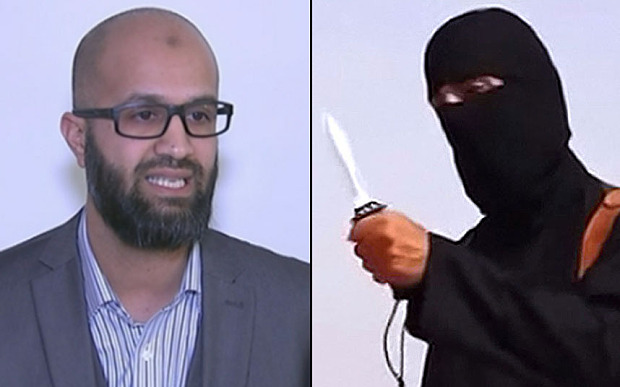
Asim Qureshi; Mohammed Emwazi (

Asim Qureshi; Mohammed Emwazi (“Jihadi John”)

Earlier this week I wrote of the unmasking of “Jihadi John,” the Islamic State’s (ISIS) video-beheader, as 26-year-old British citizen Mohammed Emwazi. I had two purposes. One was to gloat over the implosion of CAGE (formerly Cageprisoners), an Islamist terrorist-advocacy group that had gotten itself called a “human rights organisation”. And the second was to point out that the narrative peddled by CAGE and other apologists, that Emwazi had been radicalised by heavy-handed British security methods, was plainly absurd.

Emwazi had been associating with al-Qaeda agents and sympathisers and was part of a London-based network that dispatched fighters to al-Qaeda’s Somali branch al-Shabab years before he came into contact with the security services—indeed the security services had only taken an interest in Emwazi because he was already radicalised. In the last few days both of these trends have continued: CAGE’s total collapse moves closer and Emwazi’s known nefarious associations are multiplying. Continue reading

Iran and Global Terror: From Argentina to the Fertile Crescent

By Kyle Orton (@KyleWOrton) on February 27, 2015

Khobar Towers, which Iran jointly bombed with al-Qaeda

Khobar Towers, which Iran jointly bombed with al-Qaeda

Argentina’s government yesterday announced it was dissolving the Secretariat of Intelligence (S.I.), an intelligence agency tainted by the “Dirty War” regimes (1974-83), and more recent abuses as President Cristina Kirchner has taken Argentina back toward autocracy, and replacing it with a Federal agency. Just two days before, charges of corruption were levelled against Antonio Stiusso, S.I.’s director until Kirchner fired him in December. At the beginning of this month, Stiusso went missing. It now seems Stiusso has taken shelter in a neighbouring State.

These events are the latest twist in an extraordinary saga that has followed the discovery of the body of Alberto Nisman on Jan. 18 in his apartment in Buenos Aires, shot in the head in an apparent suicide. Nisman was a prosecutor investigating the July 18, 1994, bombing of the Argentine Israelite Mutual Association (AMIA) building in Argentina’s capital. All the evidence that Nisman had gathered pointed to Iran as the perpetrator. Few believe Nisman committed suicide, and—the history of Argentines being “suicided” considered—most fingers are pointing at Iran. Continue reading